

15 Winter Nursery Decor Ideas That Keep Your Baby’s Room Warm and Cosy
The nursery is the one room that has to feel warm at 3am, when the heating has dipped and you are up for a feed with a sleepy baby in your arms. These winter nursery decor ideas add soft layers, gentle light and draught-proofing to a baby’s room, without a single loose blanket near the cot.
Every idea below is reversible, baby-safe and easy to undo in spring, and each one works in a small nursery just as well as a big one. Start with the cot, then the chair, then the window — the room changes faster than you would expect.
If you want the same warmth in your own room, our cozy winter bedroom ideas show how these layers work for grown-ups too, and our winter home decor ideas carry the same feeling through the rest of the house. When spring comes, our spring nursery inspiration ideas lighten the same room back up again.

1. Keep Blankets on the Chair, Not in the Cot

The warmest-looking thing in a nursery is a soft blanket, and the safest place for it is anywhere except the cot. Babies under twelve months should sleep with nothing loose around them, so let the chair do the cosy work instead: drape a knitted blanket over its back, keep a soft toy on the seat, and hang a little bunting above it. The corner looks dressed for winter, and the cot stays bare and safe.
A wicker basket tucked under the chair holds the spares — muslins, a second blanket, the sleep sack for tonight — so everything you reach for at 3am is already warm from the room, not cold from a cupboard. Choose a basket with a wide mouth so you can drop things in one-handed while you are holding the baby.
Tip: Keep one blanket on the chair and one in the basket, and rotate them through the wash — a nursery blanket that smells of home is worth more than a brand-new one.
2. Pick a Sleep Sack in the Right Tog

A sleep sack is the winter answer to the blanket question: it keeps your baby warm all night and cannot ride up over their face. In winter, a 2.5 tog sack over a long-sleeved sleepsuit suits most rooms, and a 1.0 tog is there for the milder nights when the heating has been on all evening. Fold a small stack in the drawer — one in use, one in the wash, one spare — and the 3am change is a thirty-second job.
Keep the colours calm and the pile neat, because this stack is on show every time you open the drawer. Camel, cream and oatmeal look warm without shouting, and they match whatever the rest of the nursery is doing. Check the tog on the label, not the thickness in your hand — two sacks can look identical and be a full tog apart.
Tip: Feel your baby’s chest or tummy to check their temperature, not their hands — hands are almost always cool, and they will mislead you into adding a layer that is not needed.
3. A Chunky Knit Throw for the Nursing Chair

The nursing chair is where you will spend the coldest hours of the night, so it deserves the warmest layer in the room. A chunky knit throw, folded over the arm or draped across your lap, turns a plain chair into the warmest seat in the house — and it is yours, not the baby’s, so it never goes near the cot. Pink reads soft and gentle here, but cream or oatmeal works just as well if the room is neutral.
Choose a knit with a tight, even stitch rather than a loose open weave: it holds its shape after washing, it does not snag on buttons or zips, and it feels substantial the moment you pick it up. Drape it so it falls over the front of the chair, where your hands rest, rather than bunching behind you.
Tip: Wash the throw once before the first use — a fresh knit softens up after one wash and stops shedding little fibres onto dark clothes.
4. A Waffle-Knit Throw That Stays Put

Some throws slide off the moment you stand up; a waffle knit does not. The little squares grip the bedding underneath, so the throw stays where you left it through a feed, a change and a rock back to sleep. In cream it reads as a soft neutral against pink or sage bedding, and it adds texture to a room that can otherwise look flat in winter light.
Keep the throw at the foot of the bed or folded over the chair arm, never inside the cot, and let it be the layer you reach for when you sit down with the baby. A waffle knit dries fast too, which matters when it has been through the wash twice in one week.
Tip: Buy the throw one size larger than you think you need — a throw that covers your lap and the baby’s legs at the same time is the one you will actually use.
5. Fairy Lights, Hung High and Out of Reach

Winter afternoons go dark by four, and a nursery lit only by the ceiling light feels harsh at bedtime. Warm-white fairy lights, strung high along the wall or the top of a shelf, give the room a low golden glow that is gentle on sleepy eyes — yours and the baby’s. Choose warm white, never cool blue-white, and keep the whole string well above grabbing height.
Battery lights on a timer are the easiest version: they switch themselves on at dusk and off at bedtime, and there is no plug or trailing wire to worry about. Run the wire along the top of the wall with clear adhesive clips, and check every week that nothing has slipped down within reach.
Tip: Put the lights on a timer for the bedtime hour only — a nursery should be properly dark overnight, and a timer means you never have to remember to switch them off.
6. A Star Garland for the Darkest Wall

Every nursery has one wall that never gets any light in winter, and a star garland is the cheapest way to wake it up. Gold stars and soft globe lights catch the eye without adding any real brightness, so the room feels festive and calm at the same time — a little bit of night sky, indoors. Rest the garland on a high shelf or drape it across the top of a picture rail, never low enough for small hands to pull.
Keep the palette to gold and warm white and the garland will suit the room from November to February, long after the darker days have passed. If the stars are metal or wood, they will survive being taken down and put back up next winter, which is more than you can say for paper ones.
Tip: Hang the garland on the wall your baby faces during feeds, not the wall behind the cot — you get to enjoy it, and it stays out of the baby’s sightline when they are trying to sleep.
7. Pre-Warm the Cot, Then Lift the Layer Off

A cold mattress is the reason so many babies wake the moment they are put down, and the fix takes ten minutes, not a new mattress. Lay a thick faux-fur throw over the cot mattress while you run the bath and the bedtime routine, so the sheet is warm when the baby goes in — then lift the throw straight off, along with any cushion, before your baby goes down. The cot itself stays bare: a fitted sheet and a sleep sack, nothing else.
Faux fur works better than a hot-water bottle here because there is nothing to leak and nothing to forget — you can see it, you lift it off, and the job is done. Keep the throw folded at the end of the changing table so it is part of the routine, not an extra chore you have to remember.
Tip: Never use a hot-water bottle or an electric blanket in the cot, even briefly — a thick throw warmed by the room is all the pre-warming a mattress needs.
8. Ball Lights Along the Rail, Well Out of Reach

When your baby graduates to a toddler bed, a string of soft ball lights along the top rail turns bedtime into something to look forward to. The warm globes glow like little moons, the plush toys perched beside them make the bed feel friendly, and the whole corner reads as a storybook den rather than a plain wooden frame. Keep the lights on the outside of the rail, fixed firmly, with the wire tucked behind so nothing dangles where it can be grabbed.
This one is for the toddler stage, not the cot — a baby who can pull up should never have lights within reach. For a cot-age baby, enjoy the same lights on a high shelf across the room instead, and save the bed rail for later.
Tip: Use battery lights with a remote so you can dim them from the doorway — the glow stays on for reassurance, and you never have to cross a sleeping child’s room to switch them off.
9. A Warm-White Floor Lamp for Night Feeds

Night feeds need light you can see by and a baby can sleep through, and a floor lamp with a warm-white bulb is the simplest way to get both. A tripod lamp with a plain white drum shade throws a soft pool of light at chair height and leaves the cot end of the room in gentle shadow, so nobody is properly woken up — and a dimmer or a low-watt bulb keeps it that way.
Place the lamp beside the chair, not the cot, and choose a heavy, stable base that cannot be pulled over when your baby starts cruising. A patterned cushion and a small soft toy on the chair arm finish the corner, and the lamp becomes the thing that makes 3am feel manageable instead of miserable.
Tip: Fit a warm-white bulb of 2700K or lower — anything cooler reads as daylight and will wake both of you up properly, which is the opposite of what a night feed needs.
10. Animal Prints Above the Changing Table

A changing table is where your baby spends a surprising amount of time looking up, so the wall above it is the best gallery in the house. A row of soft animal prints — a giraffe, a lion cub, a panda, a little leopard — gives them something gentle to look at during changes, and gives you something cheerful to look at too. Hang the frames in a neat grid, high enough that they cannot be reached, and keep the frames light in case one ever slips.
Eight small prints beat one big one here: the grid fills the wall without overwhelming it, and you can swap a single print when the seasons change instead of rehanging the whole wall. White frames keep the look calm against a pale wall, and the animals themselves bring the warmth.
Tip: Hang the lowest row at least a full arm’s reach above the changing table — a baby who can grab a frame will, usually at the worst possible moment.
11. A Window Seat That Doubles as a Reading Nook
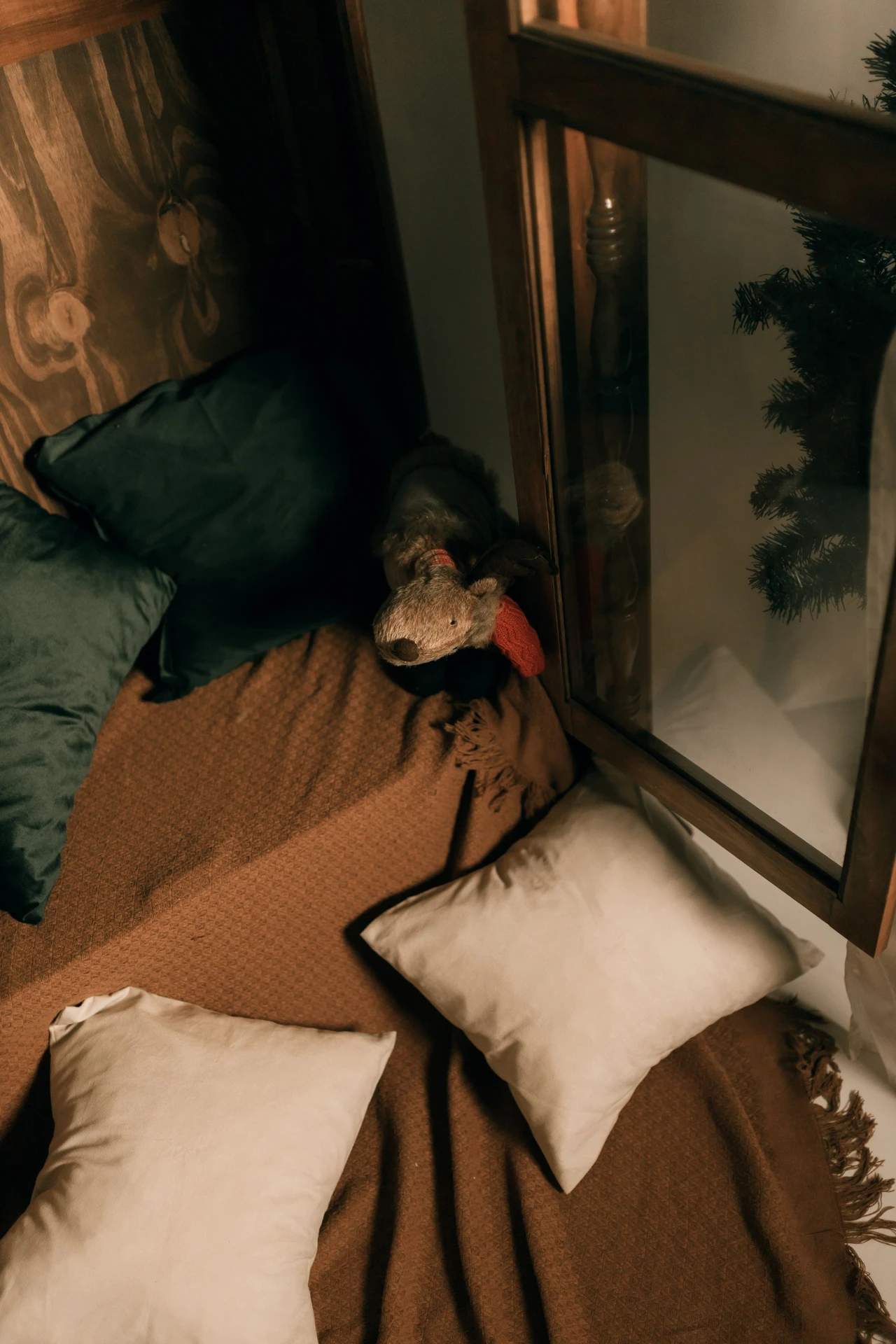
A window seat is the warmest spot in the nursery on a bright winter morning, and it doubles as the bedtime-story corner once the light goes. Layer it with a thick throw and two or three cushions in deep green and cream, add one soft toy — a plush reindeer is exactly right for winter — and the seat becomes the place you both head for without thinking about it. The window itself stays clear of clutter so the daylight can do its work.
Keep the cushions firm and the throw washable, because this seat will be sat on, spilled on and slept on in equal measure. A darker throw hides the marks better than a pale one, and a cushion with a removable cover is worth every penny in a baby’s room.
Tip: Check the window seat for draughts with the back of your hand on a cold day — if you can feel cold air, a rolled towel along the sill works as a quick fix until you fit proper draught excluder tape.
12. A Rug That Warms the Floor for Tummy Time
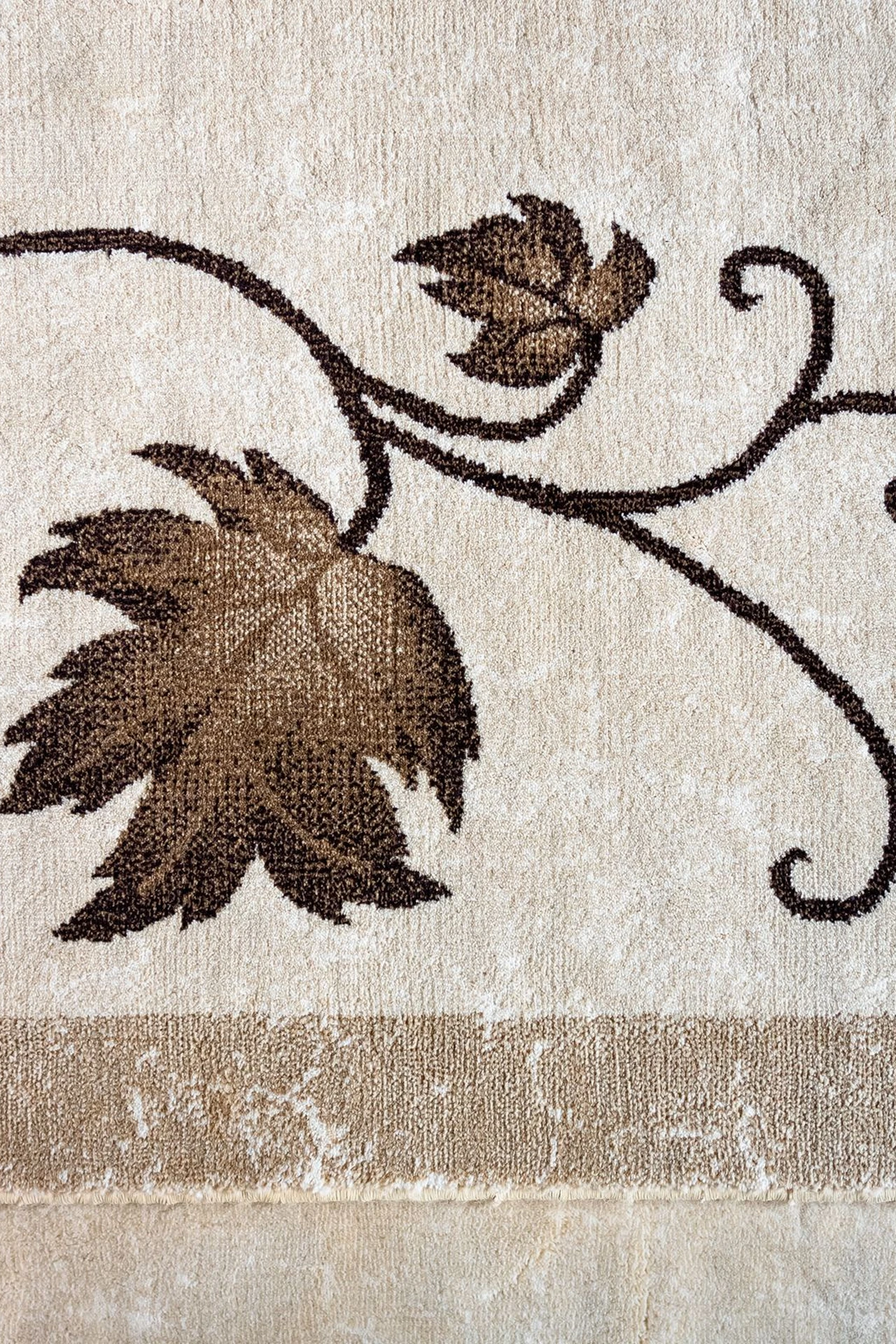
Wooden floors are beautiful and freezing in January, and tummy time happens on the floor — so the rug is not decoration, it is part of the heating plan. A thick rug in a warm beige with a soft leaf pattern insulates the boards, gives your baby a warm surface to lie on, and makes the whole room look finished. Choose low pile over deep pile: it is easier to vacuum, it does not shed into little hands, and a crawling baby can grip it properly.
Size the rug to the play area, not the room — big enough for a play mat and a parent sitting beside it, small enough to lift and shake outside. A non-slip underlay underneath stops the rug creeping across the boards, which matters the moment your baby starts to push up.
Tip: Pick a rug you can wash or steam-clean at home — a nursery rug will meet milk, nappy cream and worse, and one that has to go to the cleaners will spend more time away than on the floor.
13. A Soft Toy That Lives on the Shelf

A soft toy in a knitted winter scarf is the cosiest thing in the nursery, and the safest place for it is on the shelf, not in the cot. Let the teddy sit where your baby can see it from the changing table — a familiar face at eye level makes changes easier — and save it for cuddles in your arms, not for unsupervised sleep. The red Nordic scarf with its little reindeer brings the whole winter feeling into the room in one small object.
Choose a toy with embroidered eyes, not buttons, and no scarf or ribbon that can come loose. A quick tug-test once a month — pull the ears, the scarf, the stitching — takes ten seconds and is the only safety check a soft toy ever needs.
Tip: Keep one special toy for the shelf and a plainer one for the nappy bag — the shelf toy stays clean and familiar, and the travel toy can be washed without a bedtime crisis.
14. A Basket for Blankets, Within Arm’s Reach

Winter in a nursery means a constant small pile of things — the spare sleep sack, the muslin that got sick on, the blanket that needs washing — and a woven basket is where they all belong. Keep one basket on the floor by the chair and one on the changing table, and the room never looks untidy even when it is mid-chaos. Natural fibres suit a nursery better than plastic: they are quiet, they do not show every scuff, and they warm the room up just by being there.
A couple of pinecones on the shelf above the basket are the only decoration this corner needs — a nod to the season outside, well out of reach, and gone in spring. Keep the basket itself free of anything small or chewable, because a baby who can reach it will try everything in it.
Tip: Line the basket with a cotton pillowcase so you can lift the whole load out for the wash in one move — no more fishing individual muslins out of the bottom.
15. Layered Window Dressing Against the Draught

The nursery window is where most of the room’s heat escapes, and layered dressing fixes it while looking like a styling choice. Sheer curtains soften the daylight, white blinds close the gap at night, and together they trap a pocket of still air against the glass — which is exactly what a draught is not. A little garland on the curtain rod adds the nursery touch without adding anything a baby can reach.
Keep the cords short and fitted with a safety cleat, or choose cordless blinds: a cord hanging near a cot is a risk that is easy to forget and easy to fix. Close the blinds at dusk, draw the sheers behind them, and the room will hold its heat through the night instead of losing it to the glass.
Tip: Run the back of your hand around the window frame on a windy day — if you feel cold air, a strip of self-adhesive draught excluder tape costs almost nothing and fixes the worst of it in minutes.
Winter Nursery Night Checklist
Run through this list once at the start of winter and your baby’s room will stay warm and safe until spring:
| Check | What to do | Why it matters in winter |
|---|---|---|
| Room temperature | Keep the nursery at 16–20°C with a simple room thermometer | Too warm is as risky as too cold — a steady temperature protects sleep |
| Cot | Fitted sheet and sleep sack only; no pillows, blankets or toys inside | A bare cot is the safest place for a baby to sleep, every night |
| Sleep sack | 2.5 tog for cold nights, 1.0 tog for milder ones, over a long-sleeved sleepsuit | The right tog replaces a blanket without any loose fabric |
| Pre-warming | Lay a thick throw over the mattress during the bedtime routine, then lift it off | A warm sheet stops your baby waking the moment they are put down |
| Light | Warm-white lamp or fairy lights on a timer for feeds; dark overnight | Soft light for night feeds, proper darkness for real sleep |
| Window | Sheers plus blinds, cords on a safety cleat, draught excluder tape on gaps | Stops the room losing heat to the glass and keeps cords out of reach |
| Floor | Thick low-pile rug with a non-slip underlay in the play area | Warm floors for tummy time and crawling, and a rug that stays put |
| Chair | Chunky knit throw on the nursing chair, basket of spares underneath | The parent stays warm through the 3am feed, and everything is in reach |
Frequently Asked Questions
What temperature should a nursery be in winter?
Between 16 and 20 degrees Celsius is the comfortable range for most babies, and a simple room thermometer takes the guesswork out of it. Dress your baby in one more layer than you are wearing yourself, and check their chest or tummy — not their hands, which are almost always cool — to judge whether they are warm enough.
Can my baby have a blanket in the cot?
No — babies under twelve months should sleep without loose blankets, pillows or soft toys in the cot, because loose fabric can cover their face. A fitted sheet and a sleep sack in the right tog give the same warmth with nothing loose, and the blankets in this article are for your chair, the window seat and the basket, never the cot.
How do I keep the nursery warm without overheating it?
Warm the room, not the baby: keep the thermostat steady at 16 to 20 degrees, dress your baby in layers you can remove, and check their chest rather than their hands. A sleep sack in the right tog, a pre-warmed mattress and layered curtains do most of the work, and a room thermometer tells you when to stop adding layers.
Are fairy lights safe in a nursery?
Yes, if they are hung high and out of reach, with no trailing wires and no plugs your baby can touch — battery lights on a timer are the safest version. Keep them on for the bedtime routine and the night feeds, then let the room go properly dark overnight, and check every week that nothing has slipped down within grabbing height.
How do I stop draughts from the nursery window?
Layer the window with sheer curtains behind blinds, close both at dusk, and run the back of your hand around the frame on a windy day to find the gaps. Self-adhesive draught excluder tape seals the worst of them for almost nothing, and a rolled towel along the sill works as a quick fix until you fit it properly — just keep cords on a safety cleat or choose cordless blinds.
Read Next
If the nursery is starting to feel like a proper winter corner, keep going: our butterfly nursery ideas show a lighter, playful take on the same room, our spring nursery inspiration ideas lighten the room back up when the cold lifts, and our cozy winter bedroom ideas bring the same warm layers into your own room.