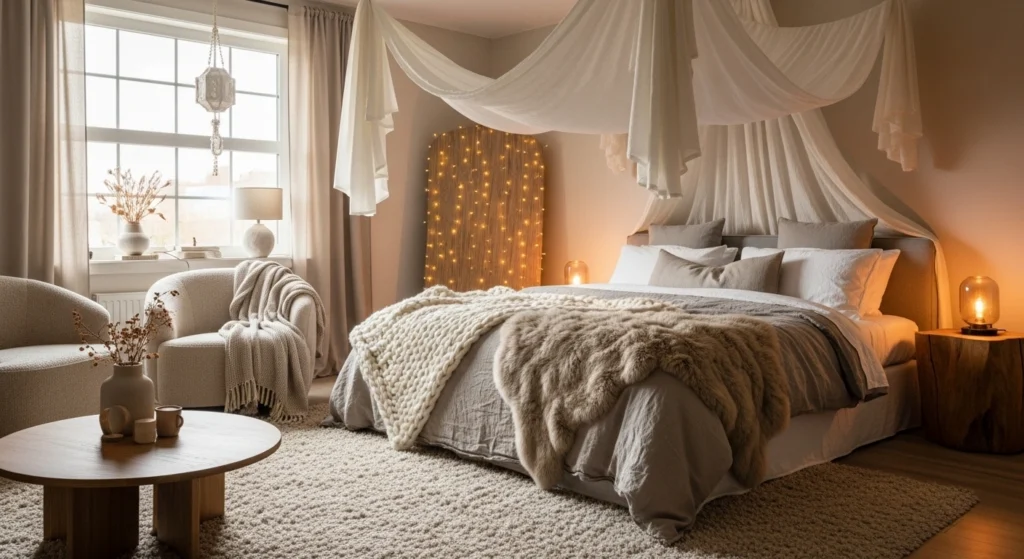

A standard bed eats up to 70% of a small bedroom’s floor. That leaves no room for a desk, a dresser, or anywhere to just sit. Most people assume a loft bed means turning the room into a college dorm — but a well-designed elevated bed is the single best space tool for a tiny room.
Push the mattress up, and you unlock an entire second floor underneath: desk, lounge, wardrobe, storage. Here are 17 ways to do it right, for kids, teens, and adults.
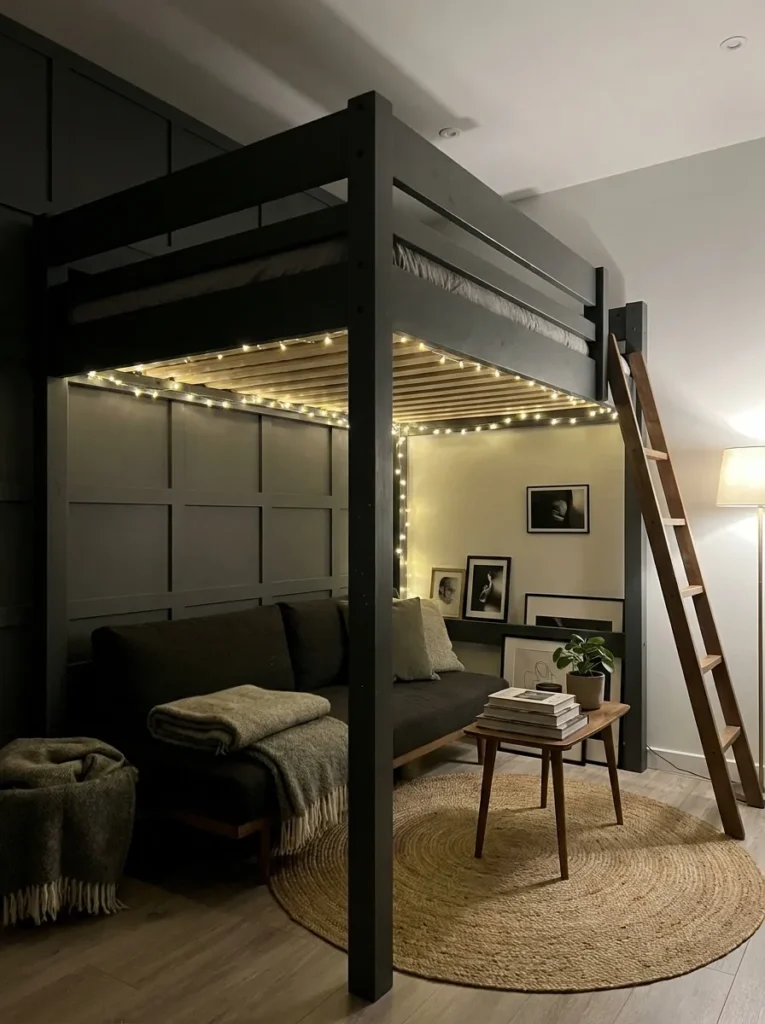
1. The Charcoal Adult Loft
Natural wood can read rustic; for a grown-up studio or guest room, go matte charcoal or soft black on a heavy timber or steel frame — and paint the wall behind it the same color. The color-drenching makes bed and wall read as one architectural piece. Tuck a low charcoal velvet chair and dark rug underneath for an intimate lounge.
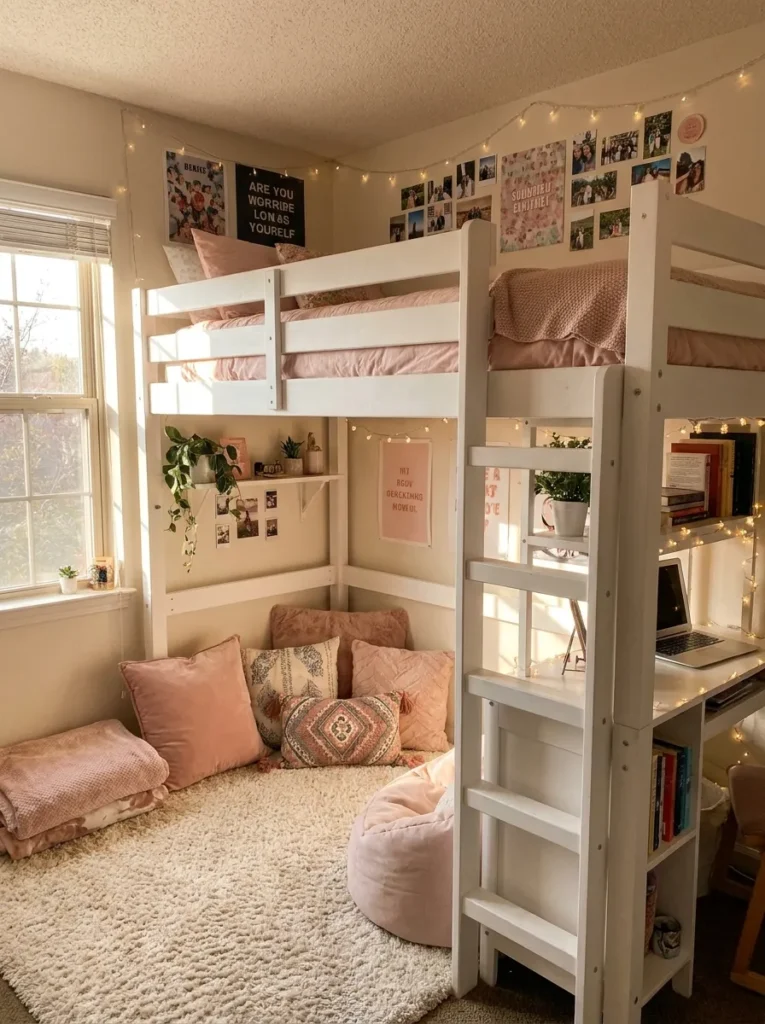
2. The Blush Teen Loft
For teens, keep it light: a crisp white frame, a blush pink or soft lavender accent wall behind the ladder, cream faux-fur rug and floor cushions below, floating white book ledges. The pale palette bounces window light around so the whole footprint stays airy.
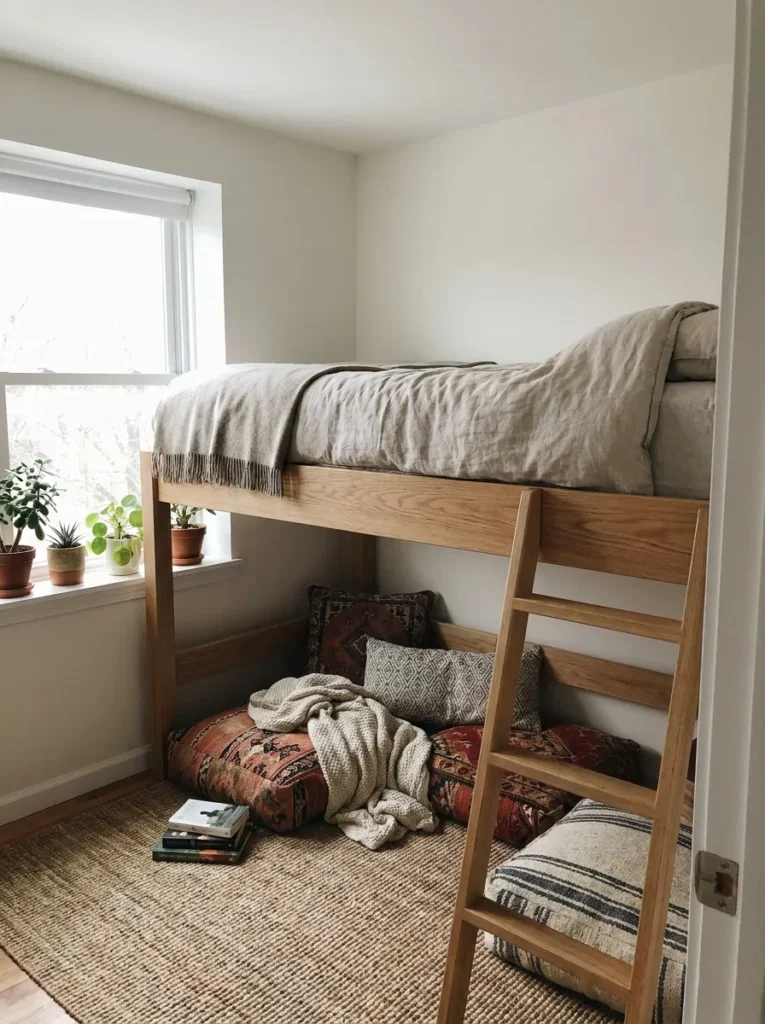
3. The Short Loft (Low Ceilings)
Under 8-foot ceilings, a full-height loft leaves you slouching in bed. Build the platform 40–46 inches high instead — not enough for a standing desk underneath, but perfect for a sink-in floor lounge with a thick tufted pad and throw pillows. Both levels stay fully usable.
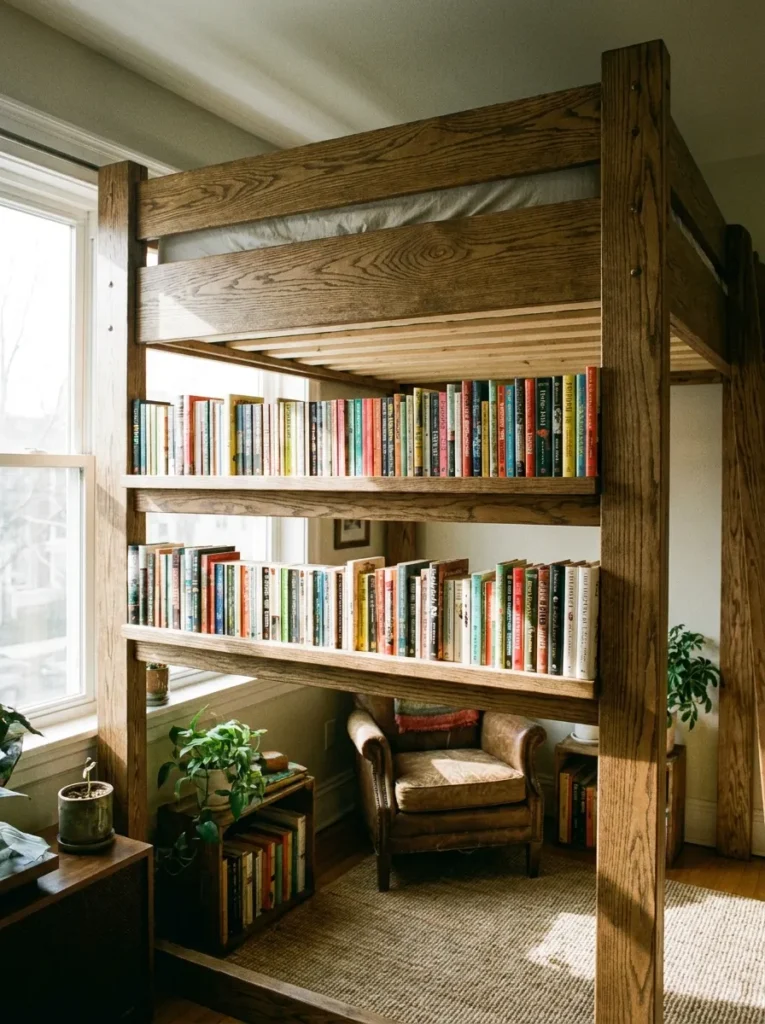
4. Book Ledges Built Into the Frame
Mount three or four shallow front-facing oak ledges directly to the bed frame’s inner posts. Book covers face outward — your library becomes wall art, always within arm’s reach of the lounge seat below. Zero floor space used.
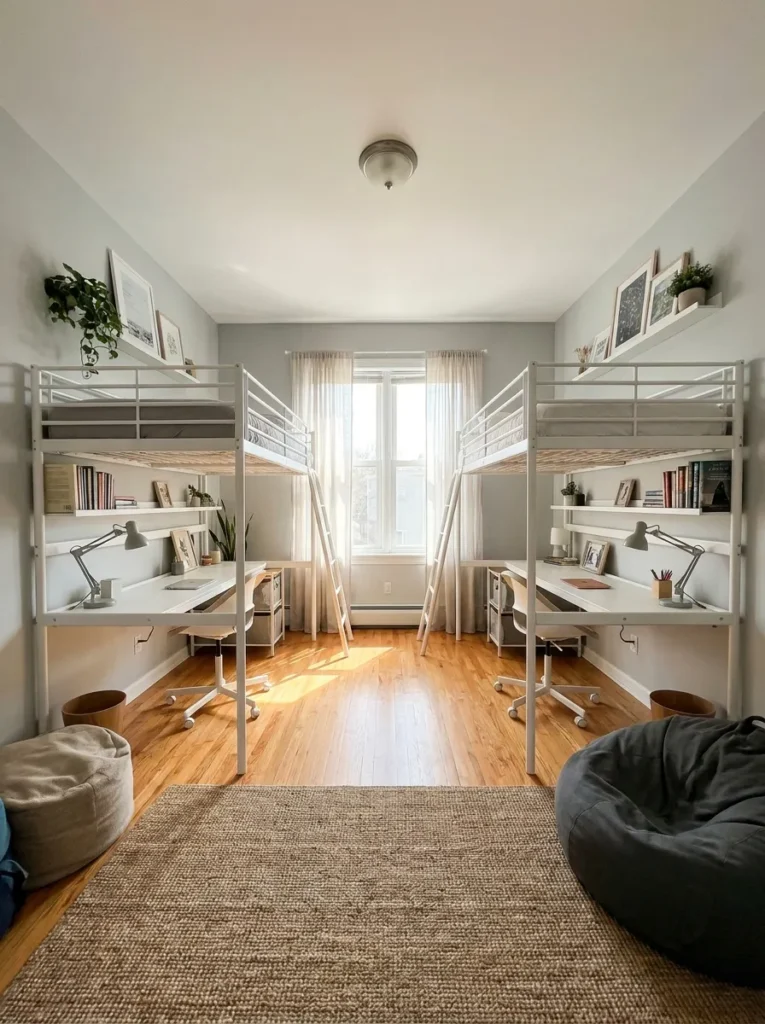
5. Parallel Twins for Siblings
Two regular twins in a shared room leave no play space. Instead: two identical lofts, one on each wall. The center floor stays completely open. Under Bed A goes a shared double desk; under Bed B, a reading corner with a beanbag. Each kid gets a private retreat.
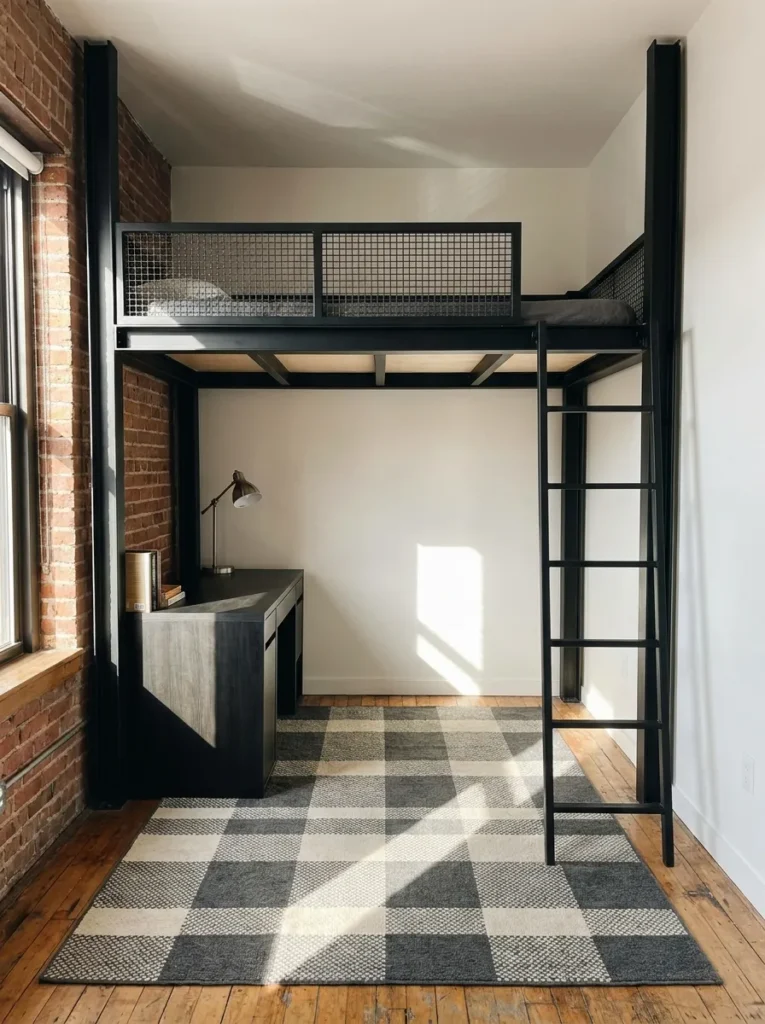
6. Industrial Steel + Desk
Matte black iron frame, straight ladder rungs, grid safety rails — clean structural lines for a modern or teen boy’s room. Slide a charcoal tech desk underneath that doubles as a gaming station. A black-and-white checkerboard rug grounds the lower zone.
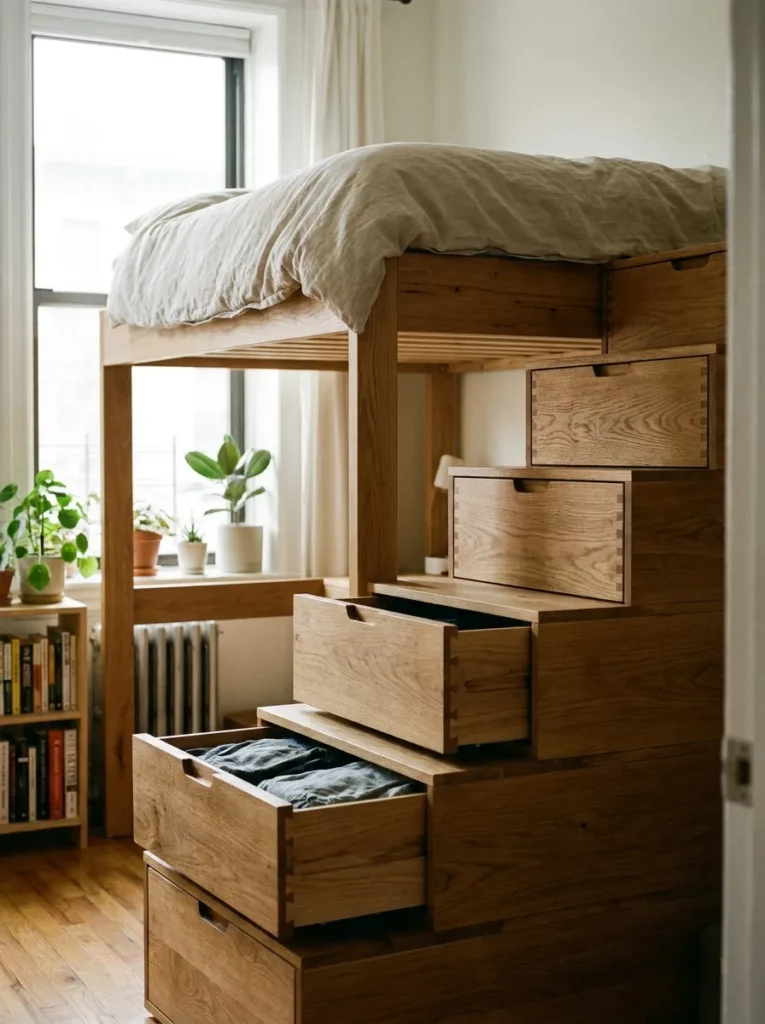
7. Stairs That Are Drawers
Ladders hurt bare feet and store nothing. Replace the ladder with a staircase unit where every step is a deep pull-out drawer. You’ve just replaced a dresser with your access stairs — and freed an entire wall.
8. The Under-Bed Floor Nest
One thin cushion on hard floor won’t cut it for long reading sessions. Layer up: thick high-density foam floor mattress as the base, then oversized cushions in ribbed corduroy or waffle-weave linen. It contours to your body — the coziest seat in the house.
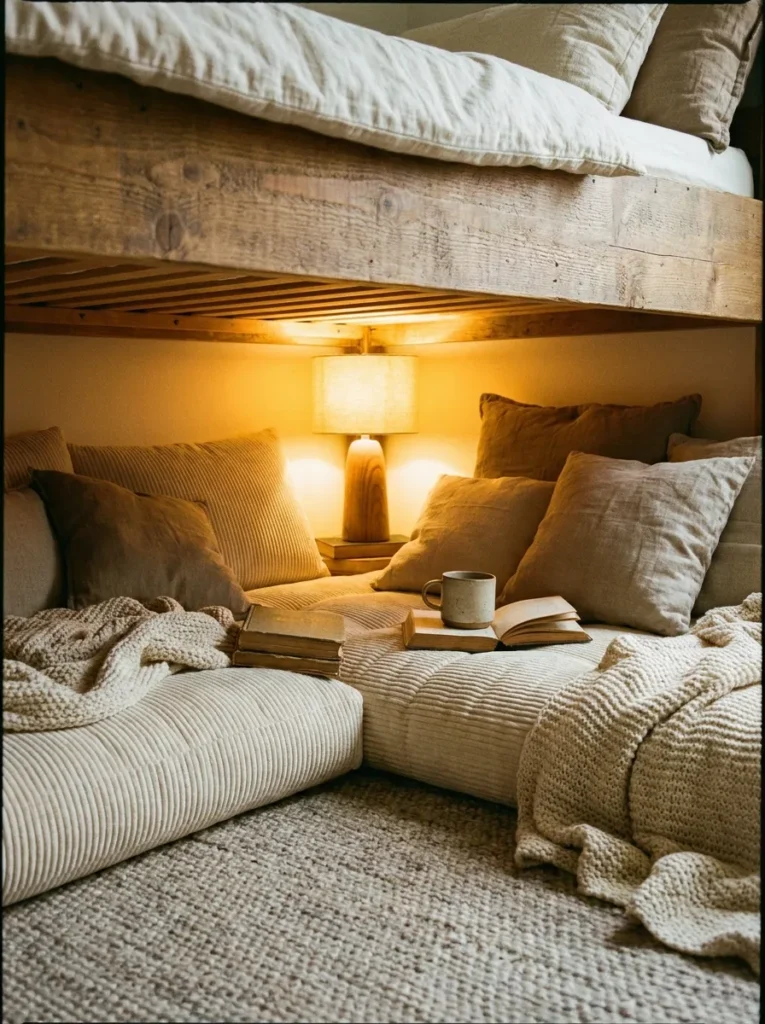
9. A Sconce Inside the Nook
Table lamps eat the little surface you’ve gained. Mount an adjustable swing-arm sconce — matte black or antiqued brass — on the wall studs inside the lower nook. Swing it over your book, push it flush when done. Zero footprint, perfect light.
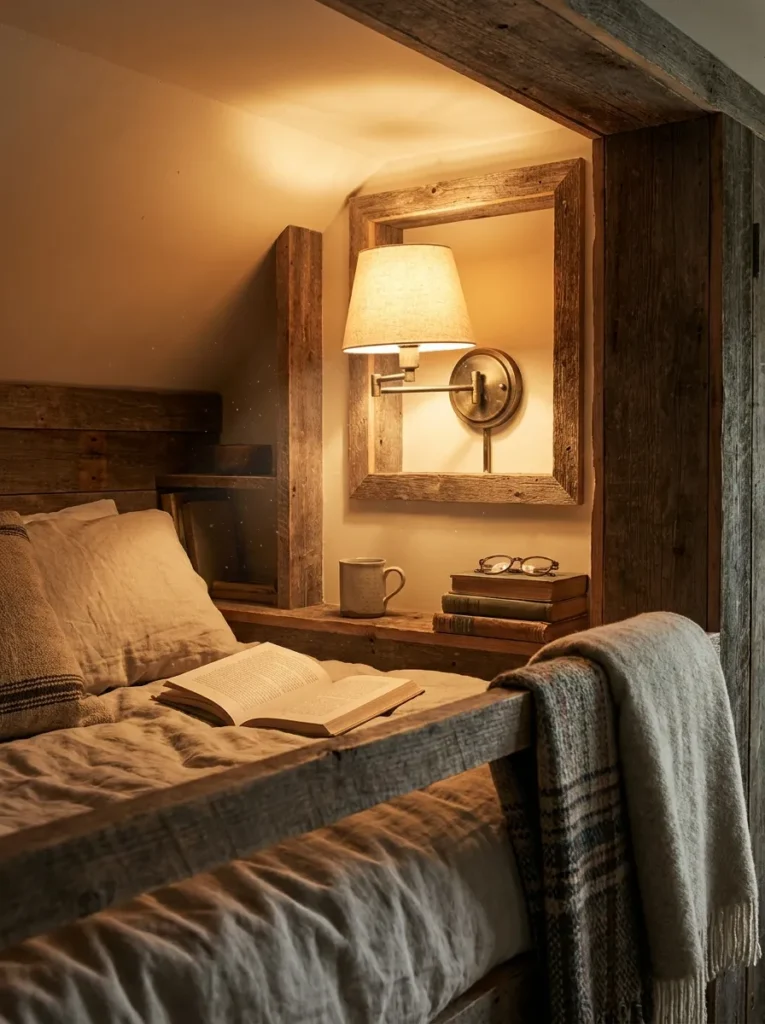
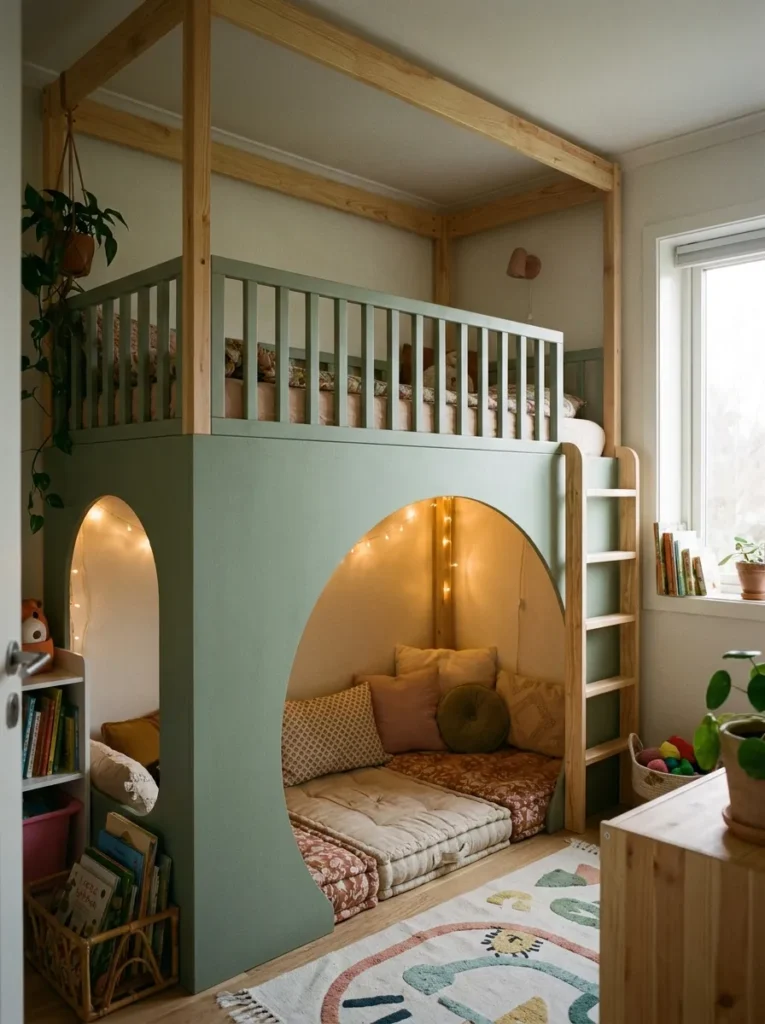
10. An Archway for Kids
An exposed metal under-bed can feel cold to a small child. Build a lightweight plywood facade across the lower opening with a wide archway cut into it — a secret reading cabin. Paint it sage green or warm taupe. Cozy containment that makes story time feel magical.
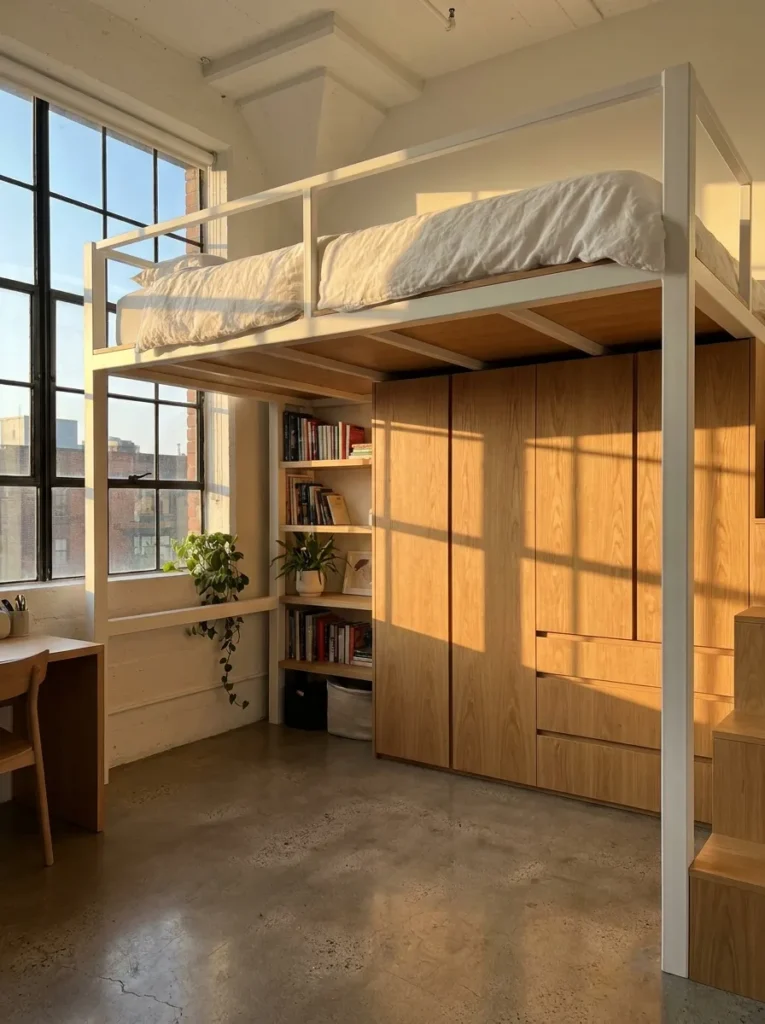
11. A Wardrobe Underneath
Fill the void under a high loft with full-height, handle-less wardrobe cabinets, doors flush with the frame edge on touch-latches. Closed, it reads as a clean wood wall — deep clothing storage with zero intrusion into the walkway.
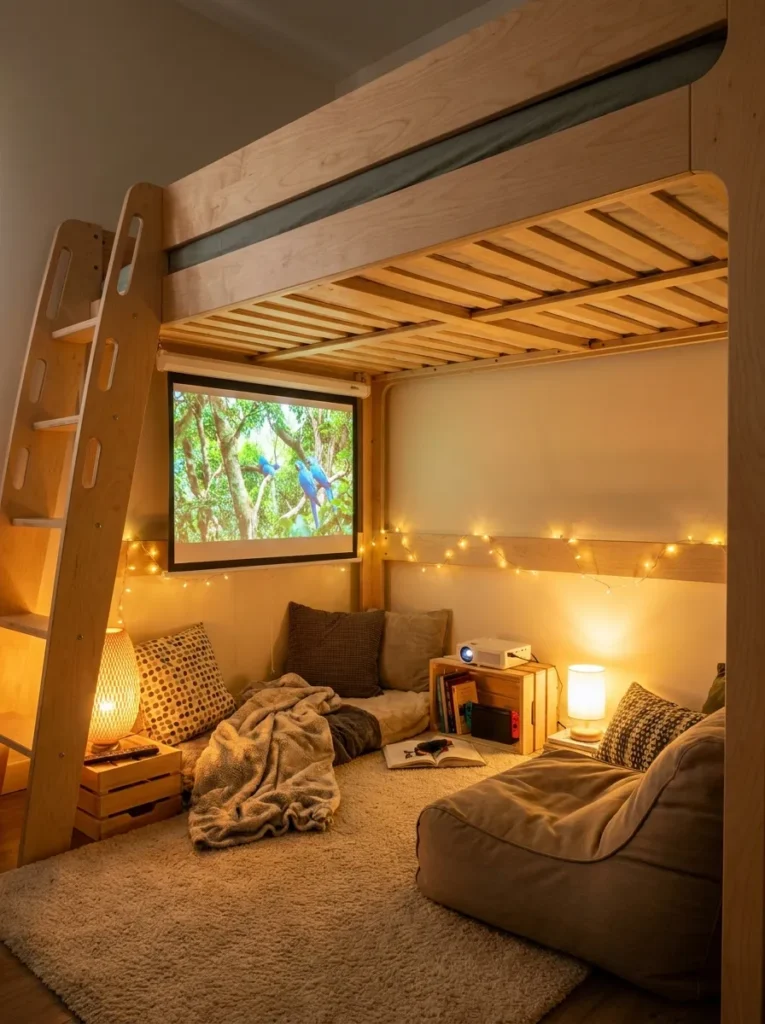
12. The Hidden Cinema
Mount a compact motorized projector screen inside the frame’s upper joists. Lower it for movie night in the cushion nest; retract it after and the wall goes visually silent. A private cinema that disappears.
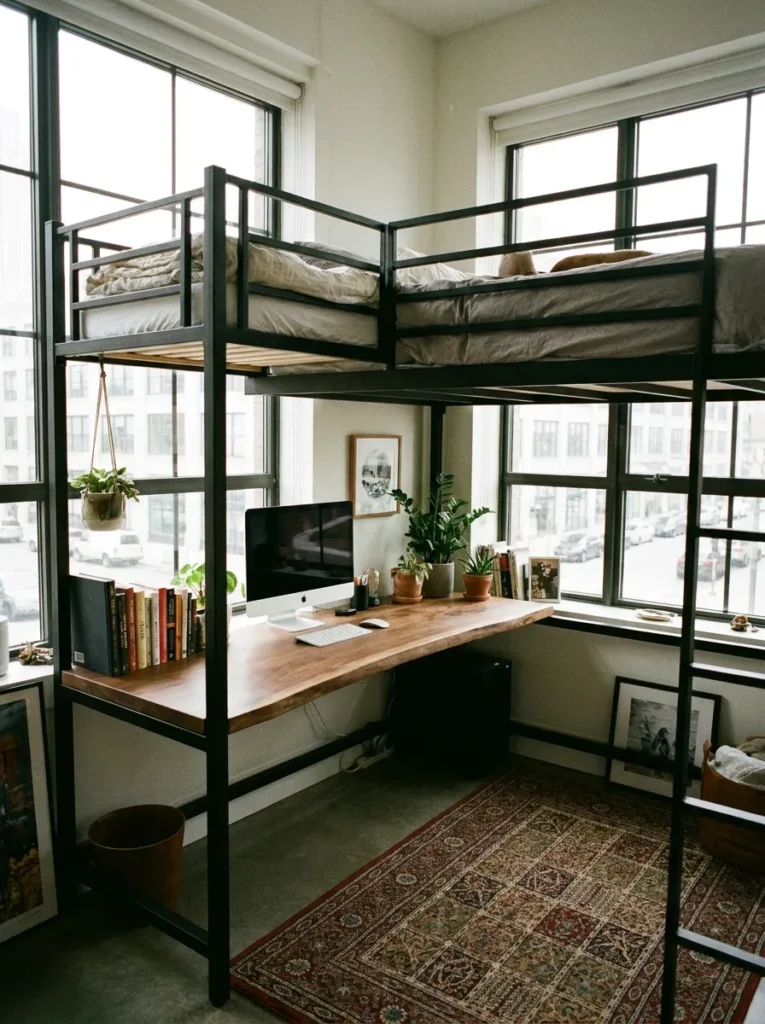
13. A Floating Desk, Post to Post
Skip the freestanding desk with its awkward legs. Span a solid timber plank from one structural post to the other directly under the mattress deck — a floating workstation for monitor, keyboard, and notebooks. One footprint, two functions.
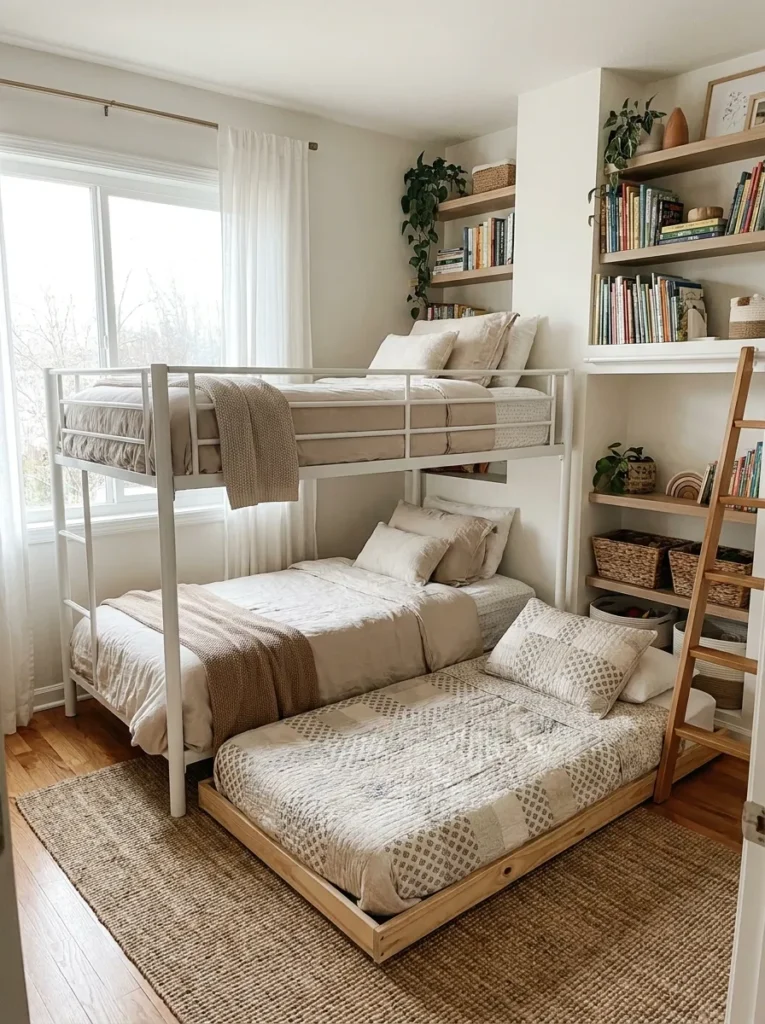
14. The L-Shape for Shared Rooms
Two parallel beds can leave a miserable narrow walkway. Instead, run them perpendicular: one twin lofted high against the back wall, the second low twin tucked underneath at 90 degrees. The open corner fits a shared storage chest or low bookshelf.
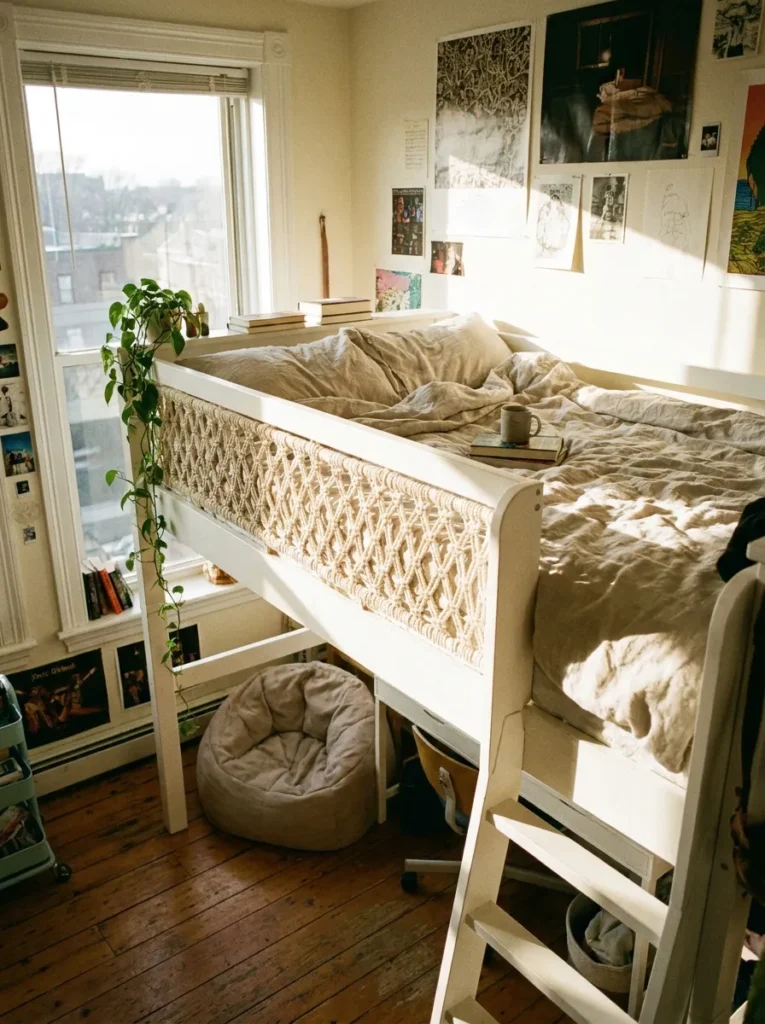
15. Macramé Safety Rails
Solid wood or metal rails block light and make the top bunk feel boxed in. Heavy-duty hand-woven macramé or cotton rope netting, secured top to bottom, gives real fall protection while letting morning sun stream through. Airy, boho, safe.
16. Curtains That Hide Everything
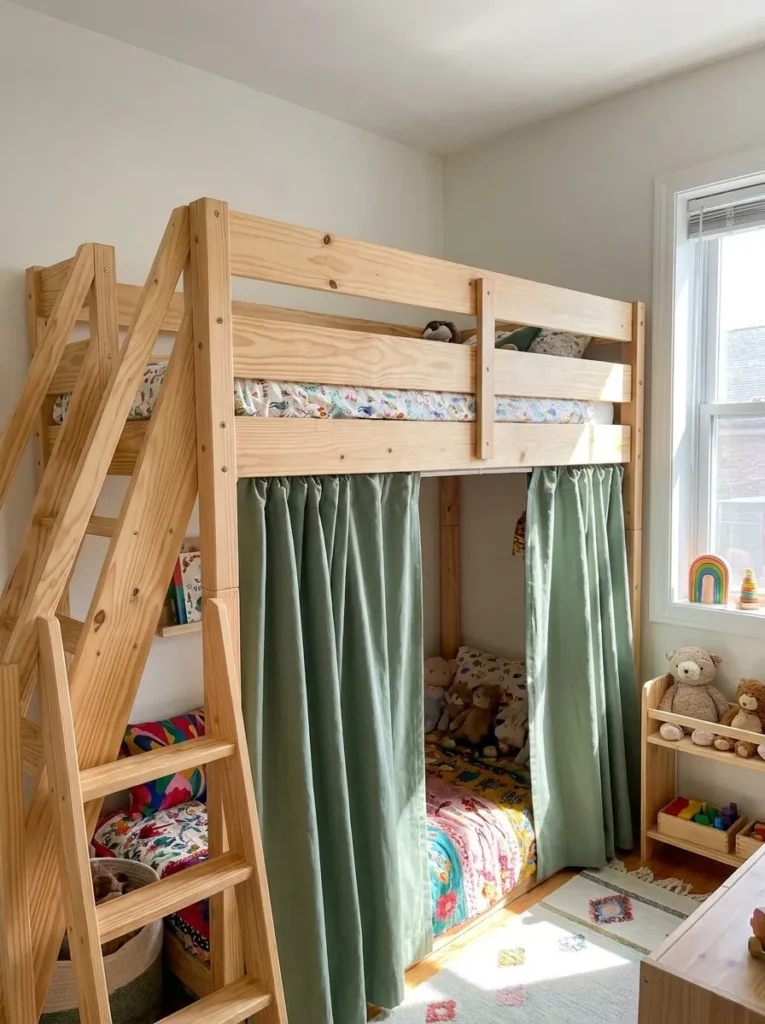
Run a low-profile drapery track under the platform and hang thick canvas panels in sand or sage. Slide them closed and toy bins, games, and clutter vanish — the lower zone becomes a private canvas play shack. The fastest tidy-up in parenting.
17. The Floating Loft (No Legs)
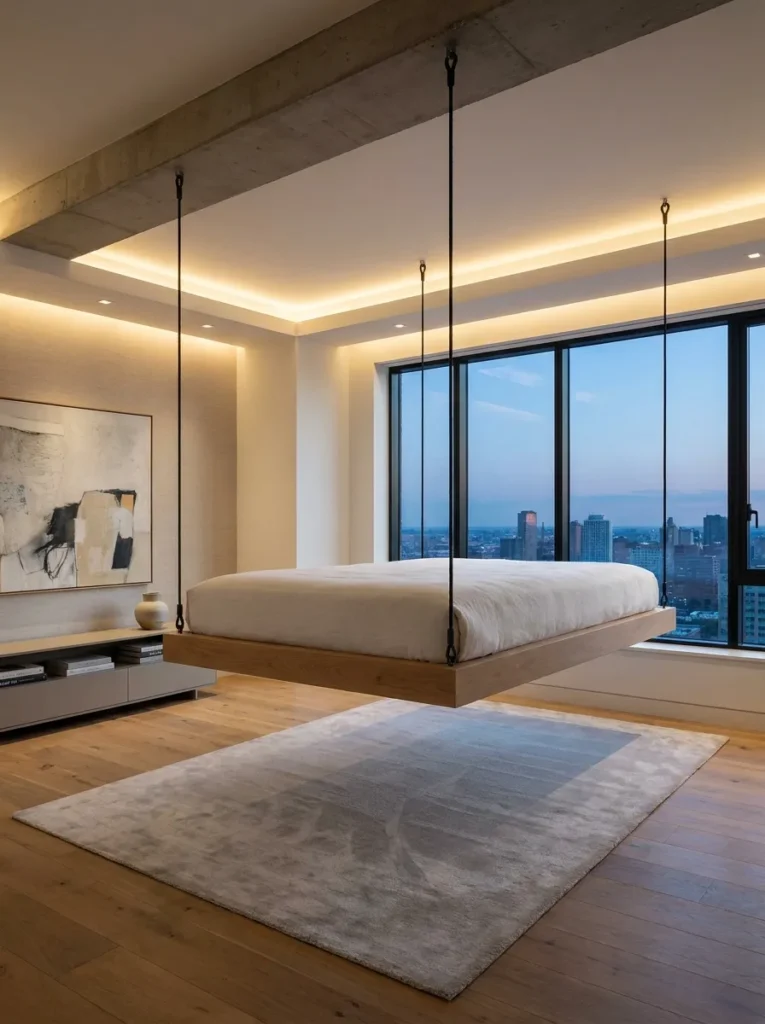
The extreme move: bolt the platform into wall studs on two sides and hang the outer corner from ceiling joists with marine-grade steel cables. No legs, 100% of the floor freed, museum-clean architectural profile. (Get an engineer to bless the anchors.)
Safety Notes (Read Before Building)
Guardrails on both sides of the top bunk, gaps under 3.5 inches. Mattress foundation secured so it can’t shift. Anchor tall frames to wall studs. And respect the age guidance: top bunks are for kids 6 and up — no exceptions.
Pairing a loft with smart storage? Our small bedroom storage guide covers everything else — under-bed zones, closets, and doors.
Quick Answers
How much ceiling height do I need for a loft bed?
For sitting up comfortably, you want 30–36 inches between mattress top and ceiling. With 8-foot ceilings, a standard loft works; under 8 feet, consider a short loft (idea #3).
Are loft beds safe for adults?
Yes — choose a heavy-duty frame rated for adult weight (look for 400+ lb capacity), anchor it to studs, and use proper guardrails.
What age is safe for a loft bed?
Top bunks are recommended for ages 6 and up. For younger kids, keep the mattress low or use the under-bed zone as the play area.