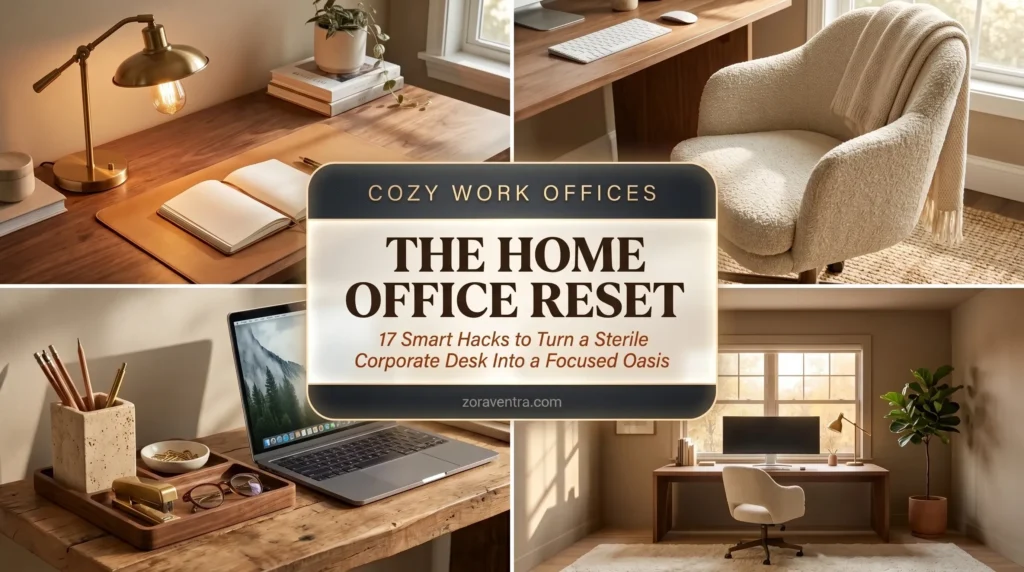
You know the feeling: you sit down at a sterile, cluttered desk on Monday morning and your energy drains before you’ve opened your laptop. When you spend 40 hours a week somewhere, the environment isn’t decoration — it’s fuel. Or it’s friction.
A comforting workspace doesn’t mean unprofessional. It means intentional lighting, tactile materials, and smart organization that lower your stress without slowing you down. These 17 ideas work whether you’re in a corporate office or a spare bedroom — pick the ones that fix your biggest friction points.
1. Swap Harsh Overheads for a Warm Desk Lamp
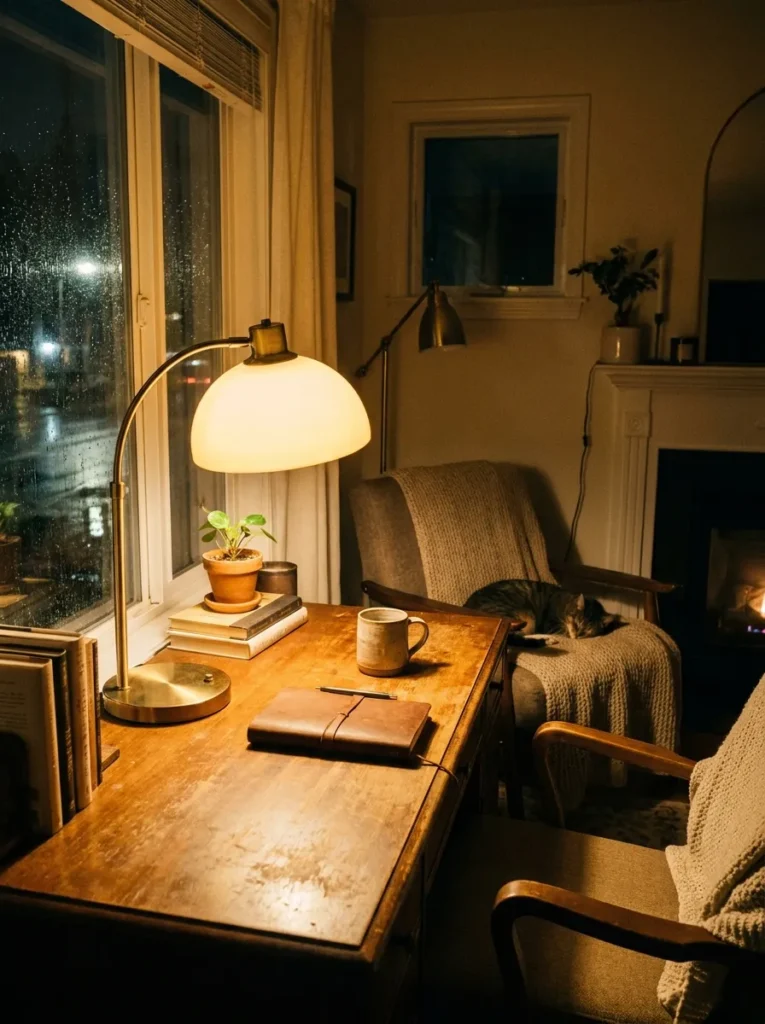
Fluorescent panels throw hard shadows across your documents and your face on video calls. Try this instead: turn off the ceiling light and use a solid brass desk lamp with an opaque shade or amber bulb, placed at the corner of your desk. One warm pool of light across your work surface changes the whole mood of the room.
A reader favorite: Brass Desk Lamp with Opaque Shade
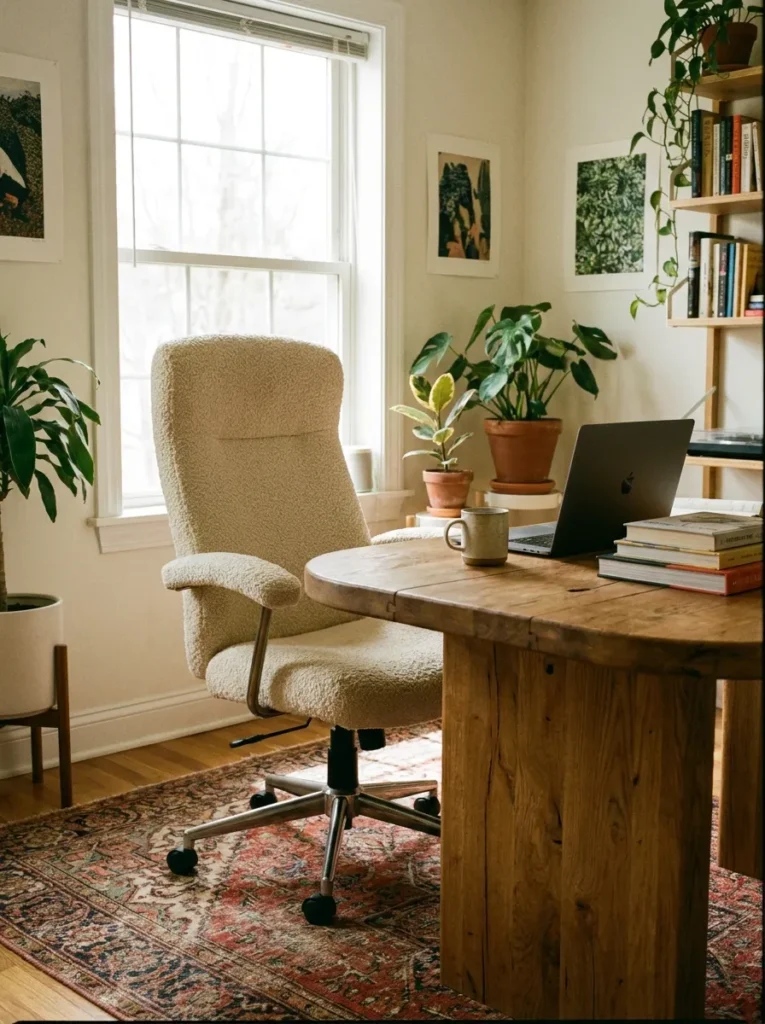
2. Ground the Space with a Vintage Rug
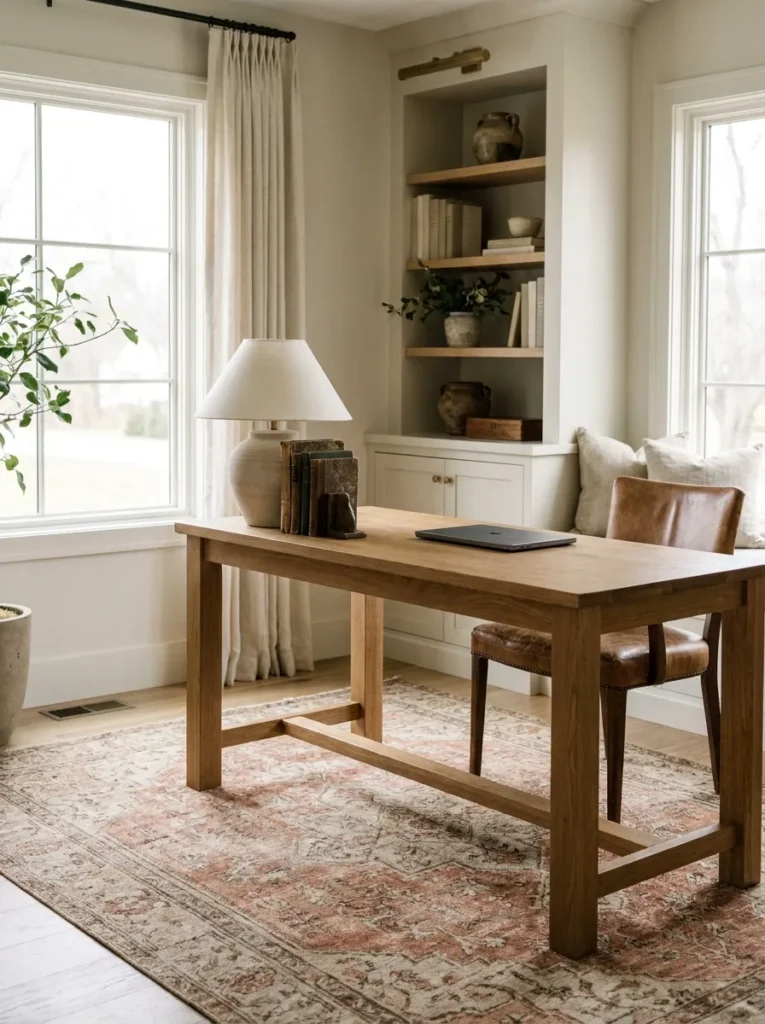
Bare hard floors bounce every keystroke and make the lower half of the room feel sterile. A vintage-inspired wool rug in muted olive, terracotta, or warm sand — flat-weave or low-pile so your chair rolls — dampens sound (your video calls will thank you) and instantly warms the room.
3. Upgrade to a Bouclé or Velvet Task Chair
Mesh-back task chairs scream cubicle. Keep the ergonomics (lumbar support, height adjustment) but swap the shell for nubby bouclé or dense velvet upholstery. You get the same spinal support wrapped in something that actually feels like furniture.
Worth the upgrade: Boucle Ergonomic Office Chair
4. Make Cubicle Walls Livable with Peel-and-Stick Wallpaper
Gray fabric partitions are depressing. Measure your panels and apply peel-and-stick linen-textured wallpaper right over them — grasscloth or a neutral pinstripe. Renter-friendly, facility-friendly (it peels off), and it completely changes the texture of your little box.
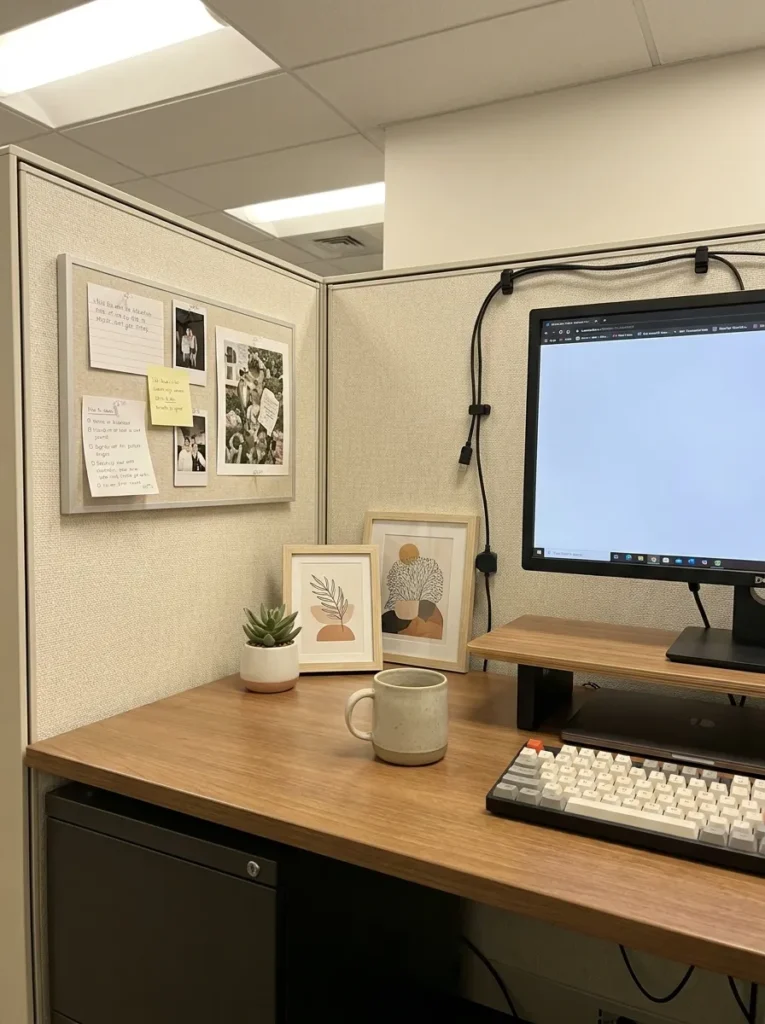
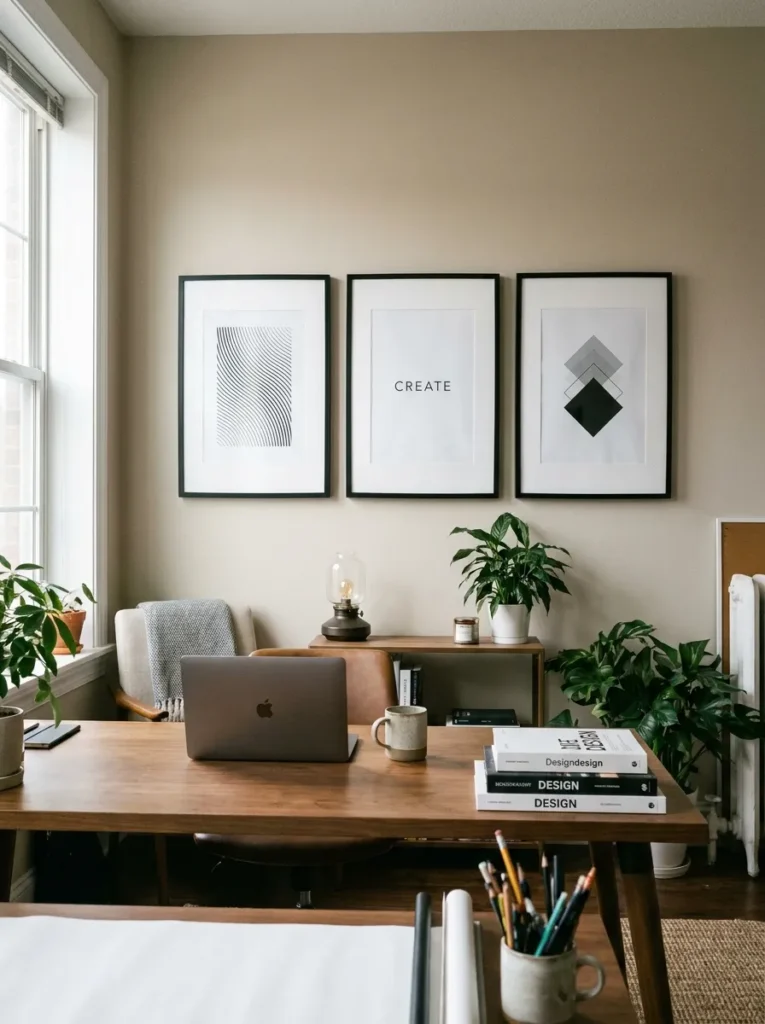
5. Frame Your Personal Photos (Properly)
Photos taped to the wall with pushpins read as clutter, not personality. Three matching frames with wide white mats, hung in a row above your monitor — black-and-white landscapes, architecture sketches, whatever’s yours. Memories visible, standards intact.
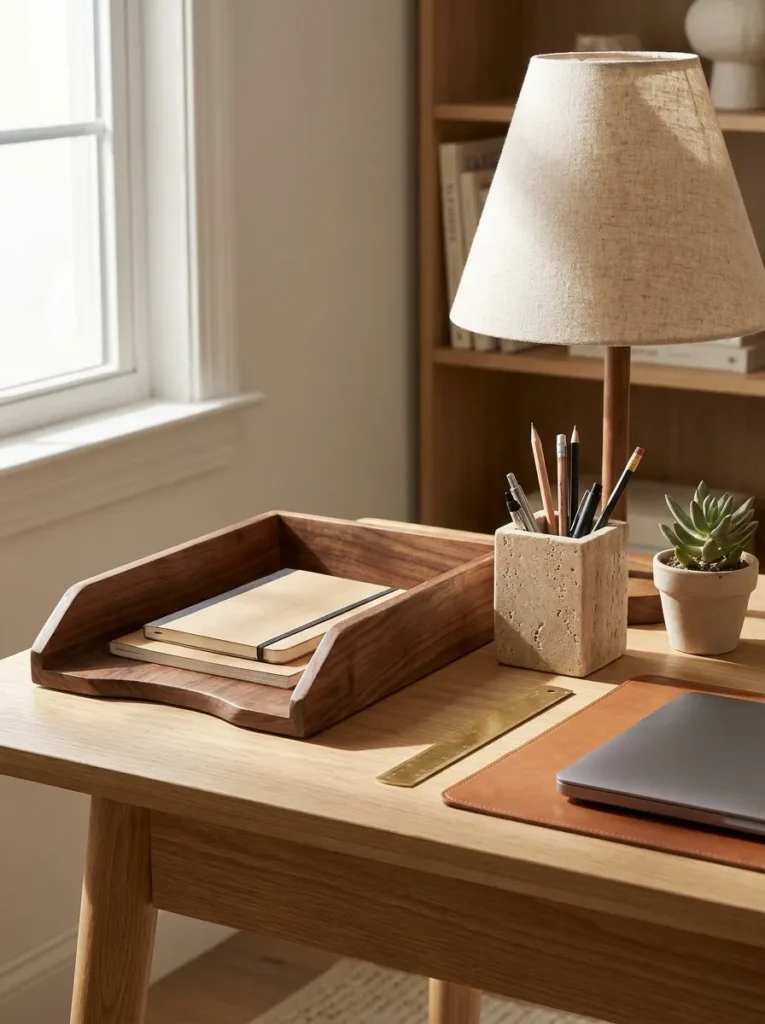
6. Ditch Plastic Organizers for Stone and Wood
Neon pen cups and wire trays keep your desk feeling like a supply closet. A travertine pen cup, a walnut paper tray, a small marble dish for clips — natural materials with real weight. Your tools stay organized and your desktop stops looking disposable.
7. Hide Every Cable
Nothing kills a calm desk faster than wire spaghetti. Run everything along the underside of the desktop with adhesive cable wraps, and drop the power strip into a lidded cord box on the floor. Ten minutes of work, permanent visual quiet.
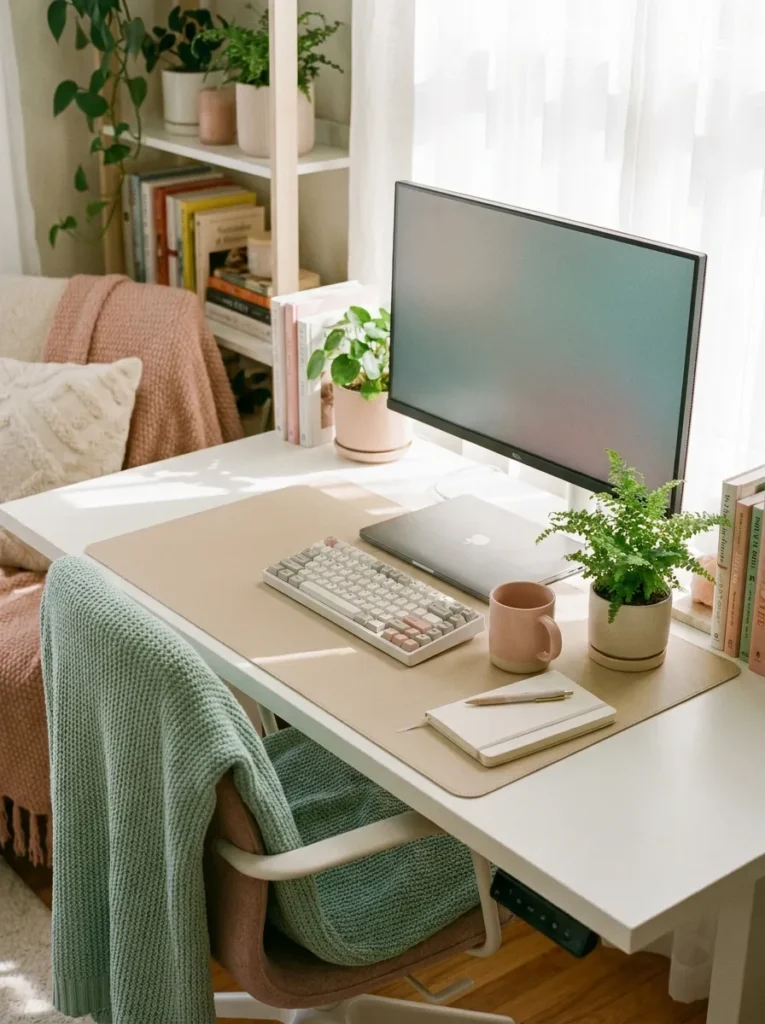
8. Raise Your Monitor to Eye Level
A monitor sitting flat forces your neck down all day; stacked on printer paper it looks sloppy. A low-profile solid wood riser (oak or walnut to match your desk) fixes your posture and creates a keyboard-parking slot underneath. Ergonomics that look like furniture.
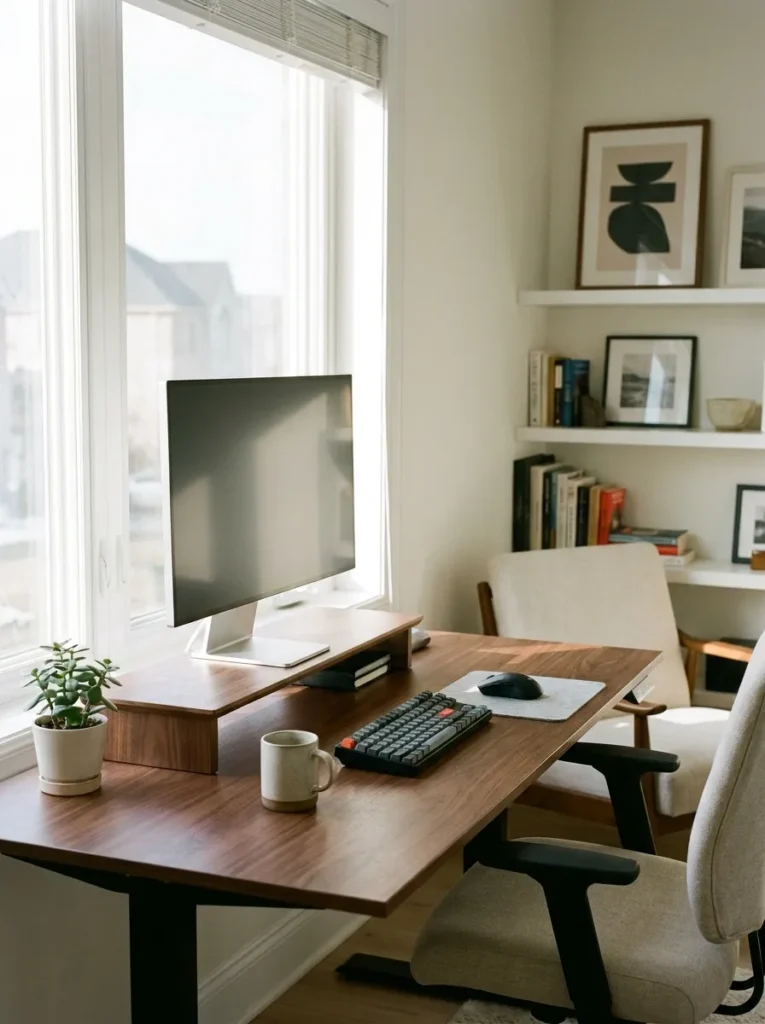
9. Soften Echo with Felt Wall Panels
Spare-bedroom offices echo — and clients hear it. Modular acoustic felt panels (recycled PET, heather gray or charcoal) in a tight grid behind your workstation kill the hollow sound and double as architectural texture. Your calls sound professional; your wall looks designed.
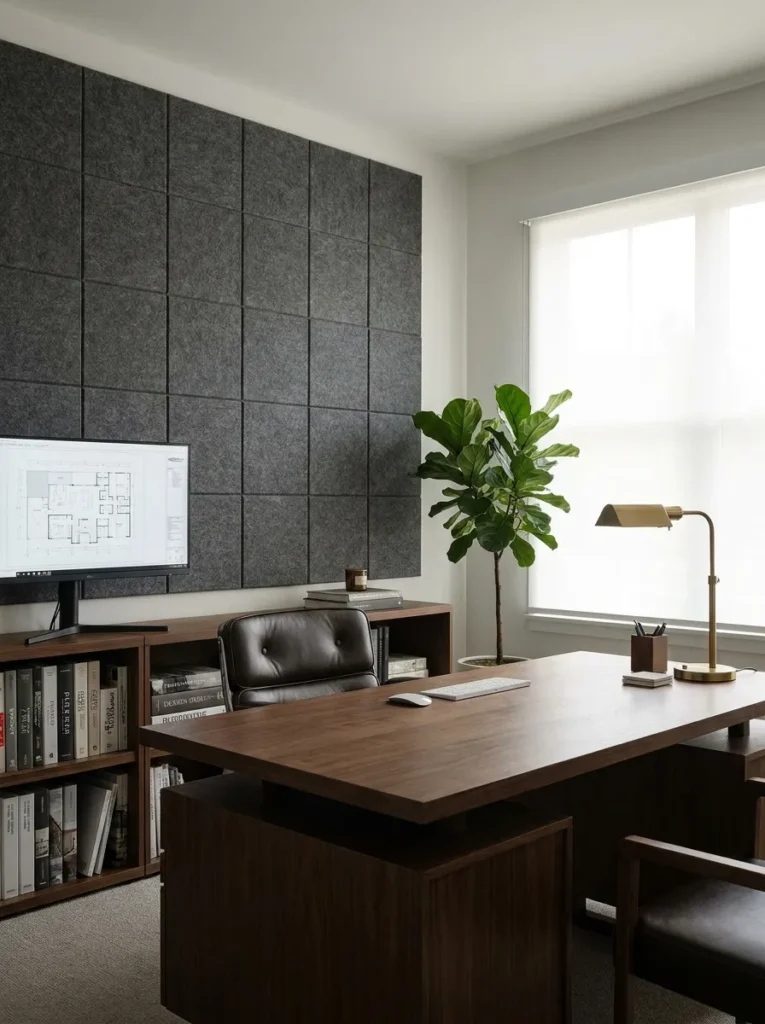
10. Define Your Zone with a Leather Desk Mat
An oversized vegan leather desk blotter in olive, saddle brown, or cream does three jobs: cushions your wrists, works as a giant mousepad, and draws a clear boundary around your work zone. Forearms on matte leather beats cold laminate all day.
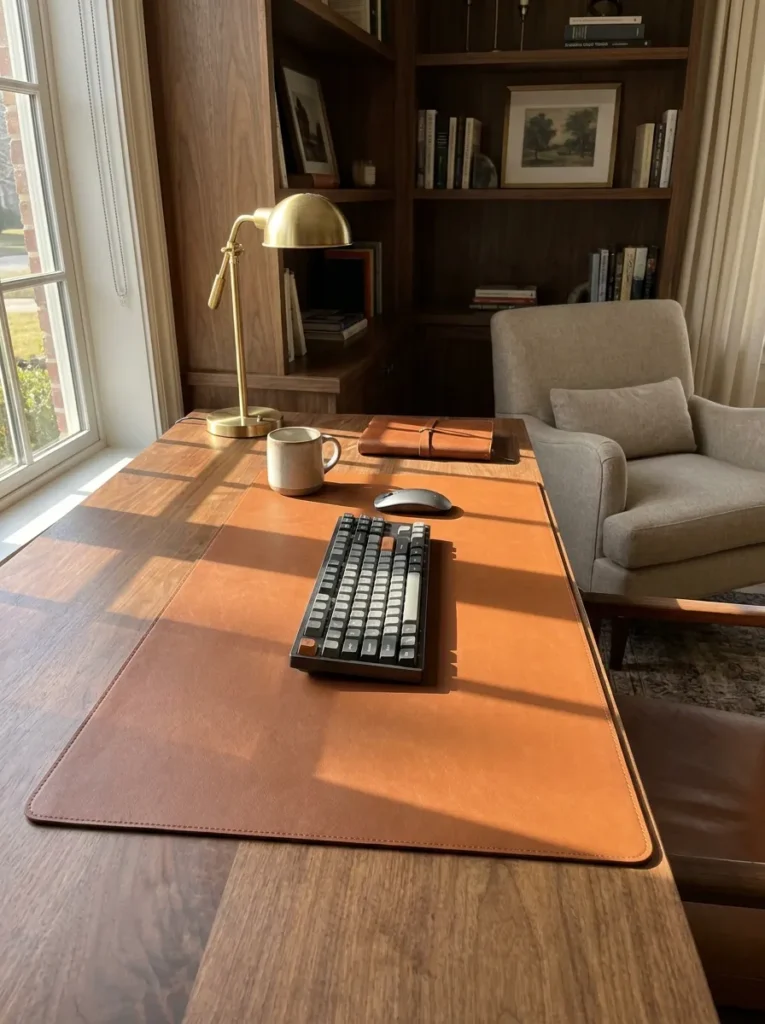
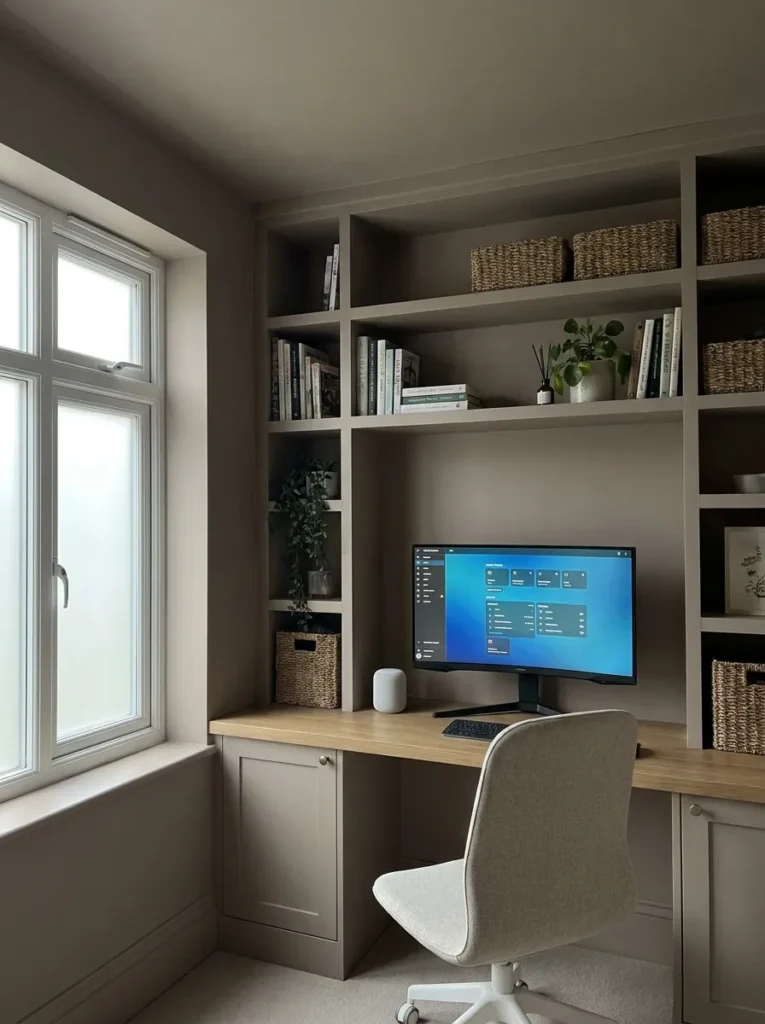
11. Try Color Drenching
White walls plus dark trim means your eyes never rest. Paint everything — walls, baseboards, crown, casings — one muted tone: soft sage, warm mushroom, dusty slate blue. Erasing the architectural breaks creates a continuous cocoon that’s measurably calmer to work in.
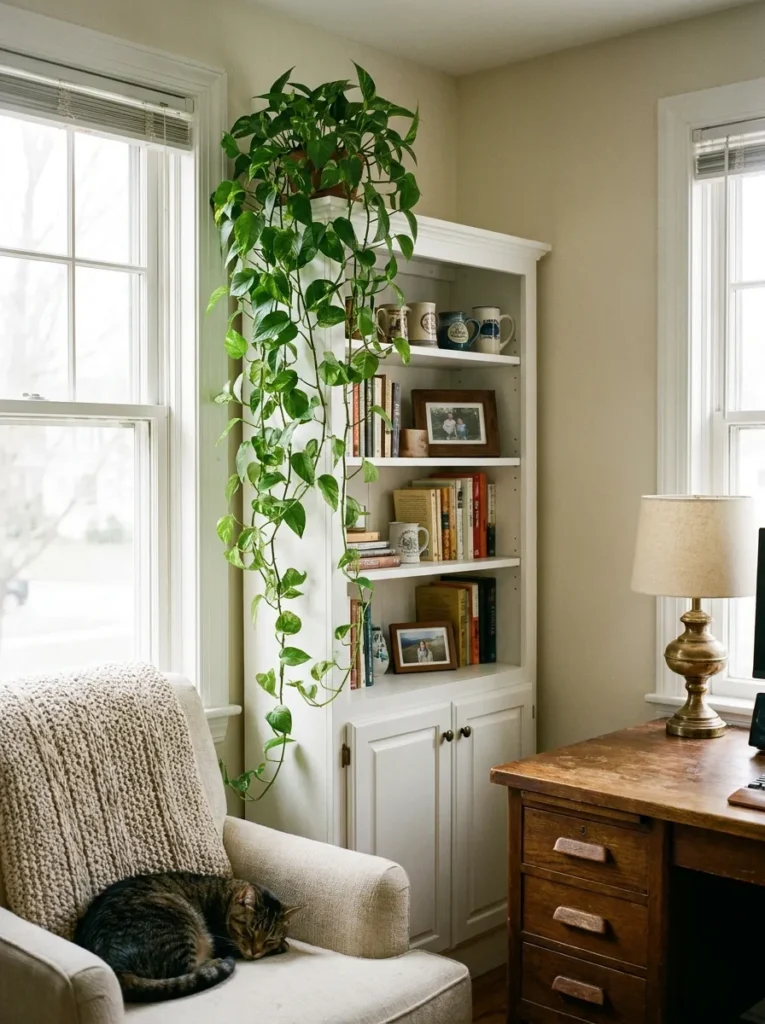
12. Add One Trailing Plant
Windowless offices go stale fast. A pothos or heartleaf philodendron in a terracotta pot on a high shelf, vines draping down — nearly unkillable, and the organic movement breaks up all the rectangles. The cheapest mood upgrade on this list.
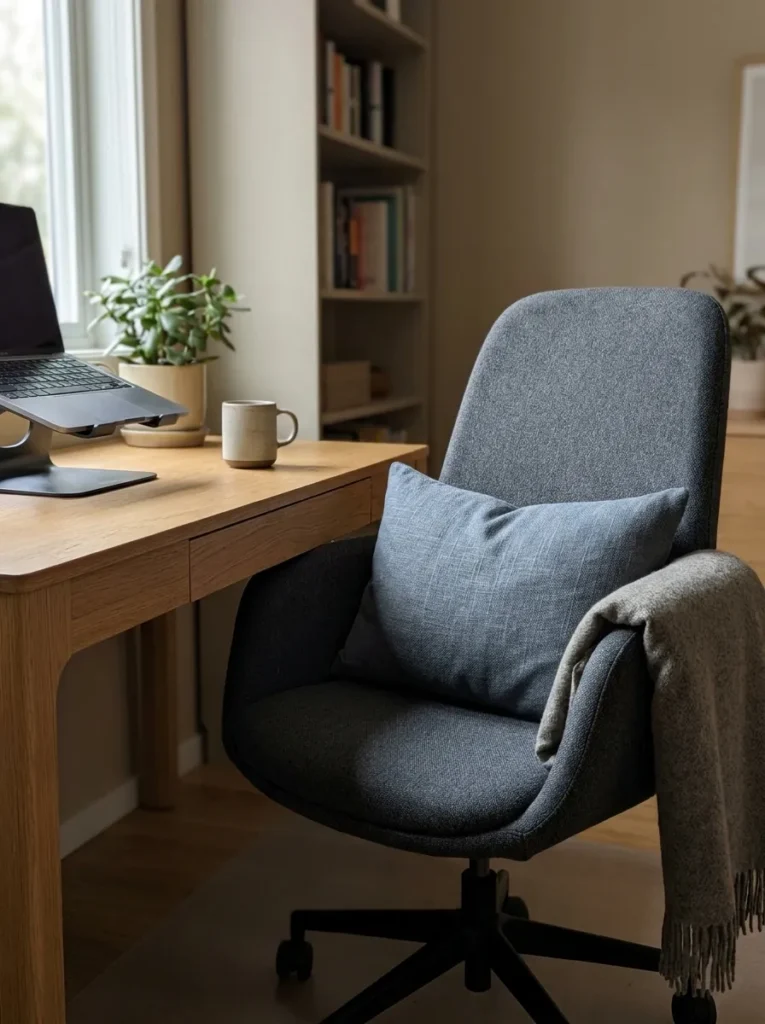
13. Add a Lumbar Cushion (Not a New Chair)
Before replacing a decent task chair, try a dense memory-foam lumbar cushion in a linen or wool cover matched to your upholstery. It stops the post-lunch slouch for a fraction of a new chair’s price — and adds a textile layer the chair was missing.
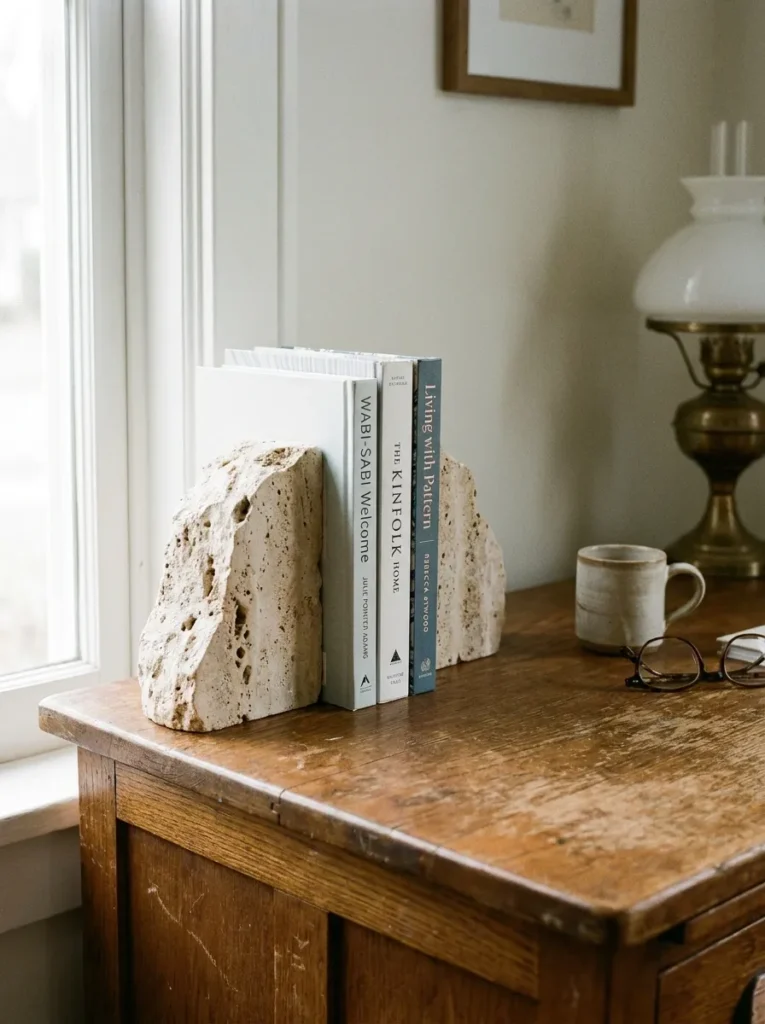
14. Corral Books with Real Bookends
Piles of reference books eat your writing space. Heavy architectural bookends — travertine, cast iron, petrified wood — clamp them into a vertical library at the back of the desk. Reference tools become a design element instead of clutter.
15. Scent the Air (Subtly)
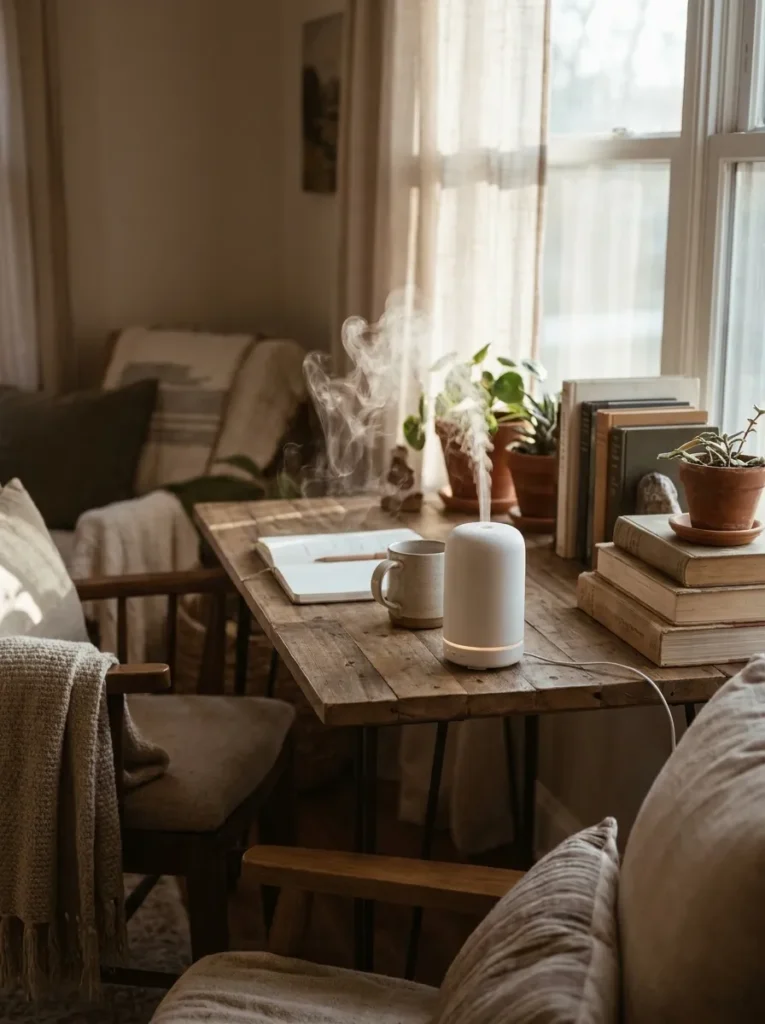
A silent ultrasonic diffuser in white porcelain or raw stone — peppermint for focus, sweet orange for energy. No aerosol harshness, no sinus irritation. Scent is the most underrated focus tool in a workspace; use it lightly.
16. Free Your Desk with a Swing-Arm Sconce
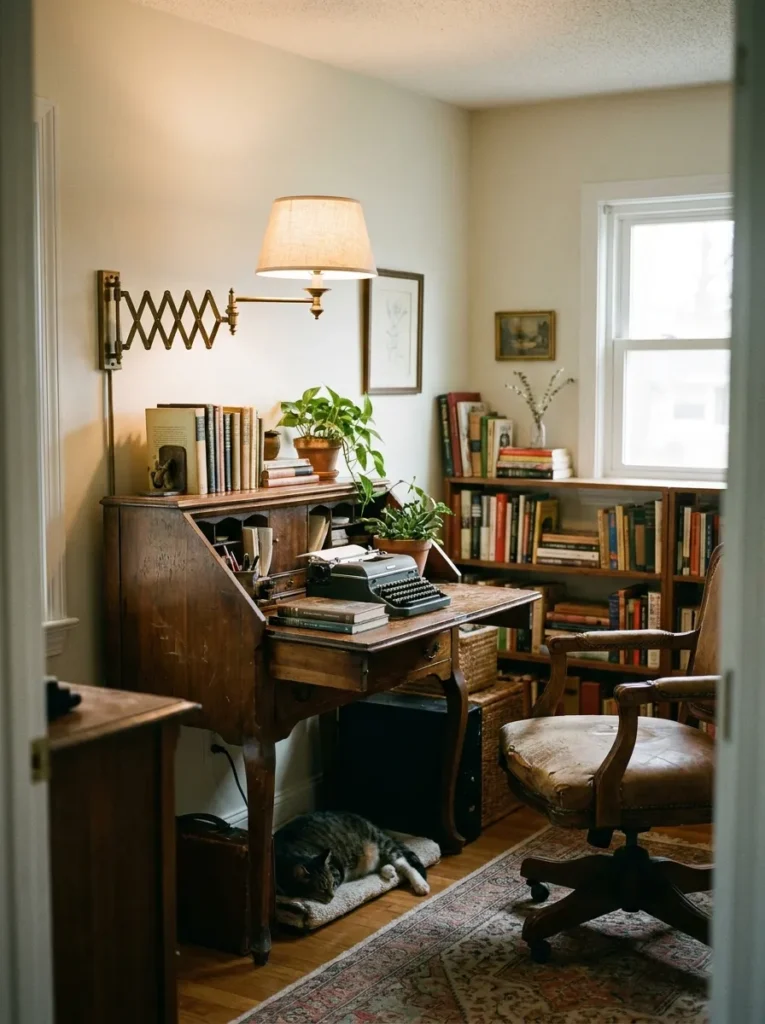
On a narrow desk, even a lamp base is too much. Mount an adjustable swing-arm sconce — matte black or antiqued brass — on the wall beside you. Swing it over your papers when working, push it flush when done. Your entire desktop stays clear.
17. The 10-Minute Reset
Here’s the meta-idea: coziness is maintenance. End each day with a 10-minute reset — papers filed, mug to the kitchen, chair pushed in, tomorrow’s top task on a sticky note. You arrive to a calm desk instead of yesterday’s chaos. No product required; highest ROI on the list.
Styling the desktop itself? Our desk decor guide goes deeper — and for a full room transformation, see home office remodel ideas.
Quick Answers
How do I make my home office cozy on a budget?
Lighting first (warm bulb, $15), then a rug, then a plant. Those three change the feel more than any furniture swap.
How can I make a corporate cubicle feel less depressing?
Peel-and-stick wallpaper on the partitions, a warm desk lamp instead of overheads, framed photos, and one plant. All removable, all transformative.
What’s the best color for a home office?
Muted, low-contrast tones: warm mushroom, soft sage, dusty blue. Avoid stark white walls with dark trim — the contrast fatigues your eyes over a full workday.