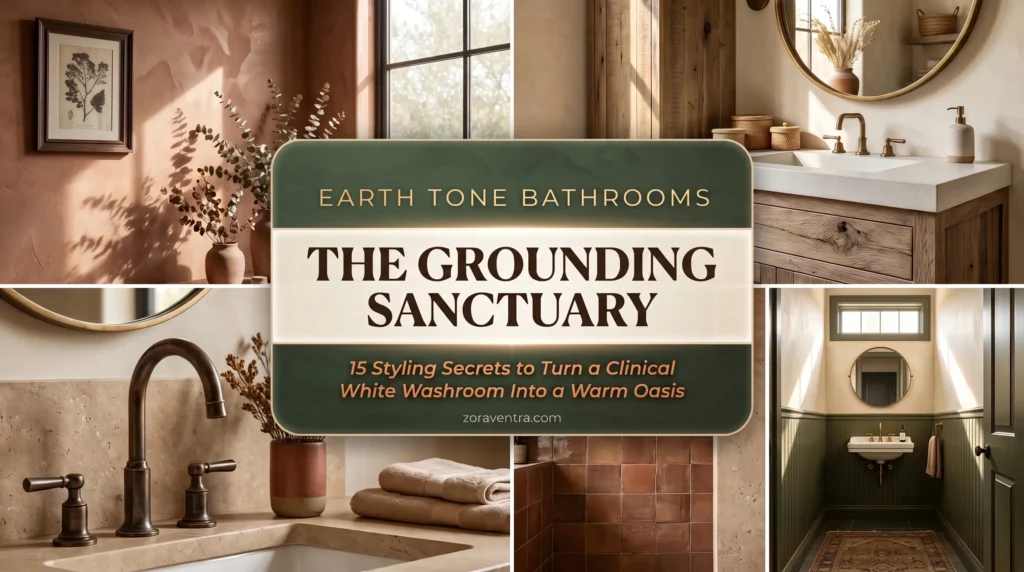
We’ve hit peak all-white-bathroom fatigue. Years of white subway tile, white grout, and chrome started feeling less “clean” and more… clinical. Cold. A little depressing at 7am.
The pivot to warm, earthy bathrooms makes sense — but it’s easy to get wrong. Flat brown paint reads as muddy; too much dark wood feels like a 1970s time capsule. The trick is texture: plaster that catches light, wood with real grain, metals that age. Here are 15 ideas that get the balance right.
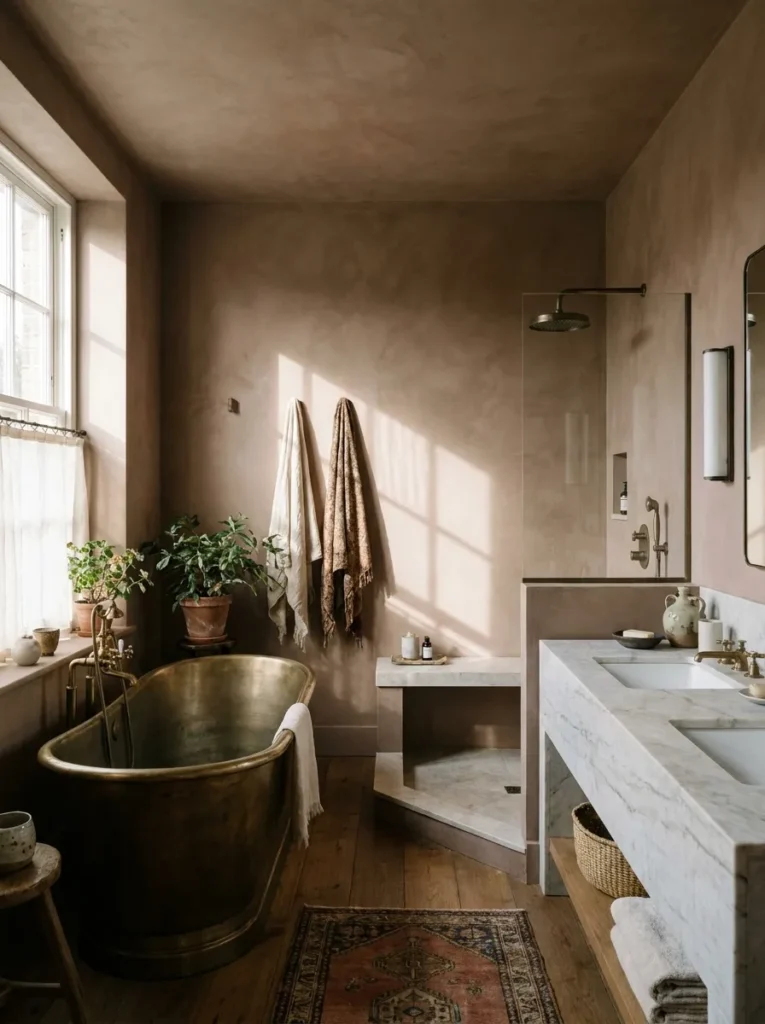
1. Terracotta Roman Clay Walls
Flat latex in an earth tone can look like dull cardboard. Roman clay or limewash — troweled on in overlapping layers — gives you a matte, stone-like surface with subtle tonal shifts that moves with the light. A windowless bathroom suddenly has depth instead of flatness.
Weekend project: Limewash and Roman Clay Paint Kit
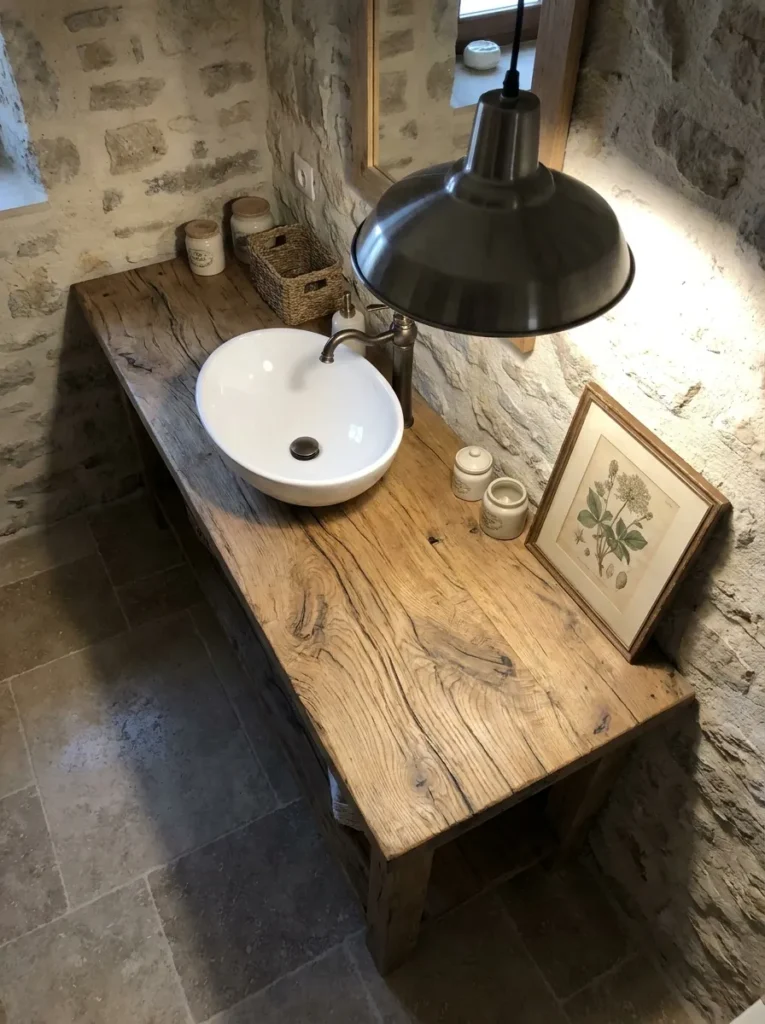
2. A Reclaimed Wood Vanity
A glossy manufactured vanity fights everything earthy around it. Swap it for reclaimed raw wood — weathered white oak, old barn timber — with visible knots and grain. Seal it with a clear matte moisture-resistant finish and you keep the raw look without the water damage.
3. Unlacquered Brass Fixtures
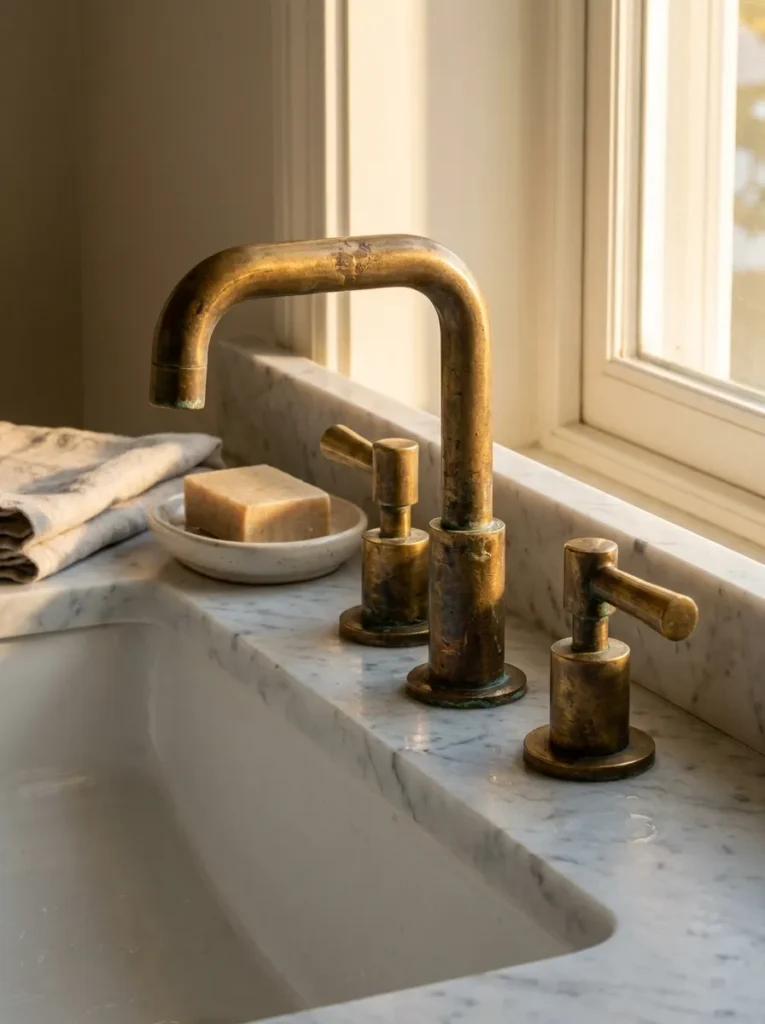
Chrome is cold; unlacquered brass is alive. With no protective coating, the metal reacts with air and water, developing a deep gold-brown patina that’s unique to your bathroom. Swap the faucet, hooks, and towel bar — small change, completely different feel.
4. Saturated Wainscoting in a Tiny Bath
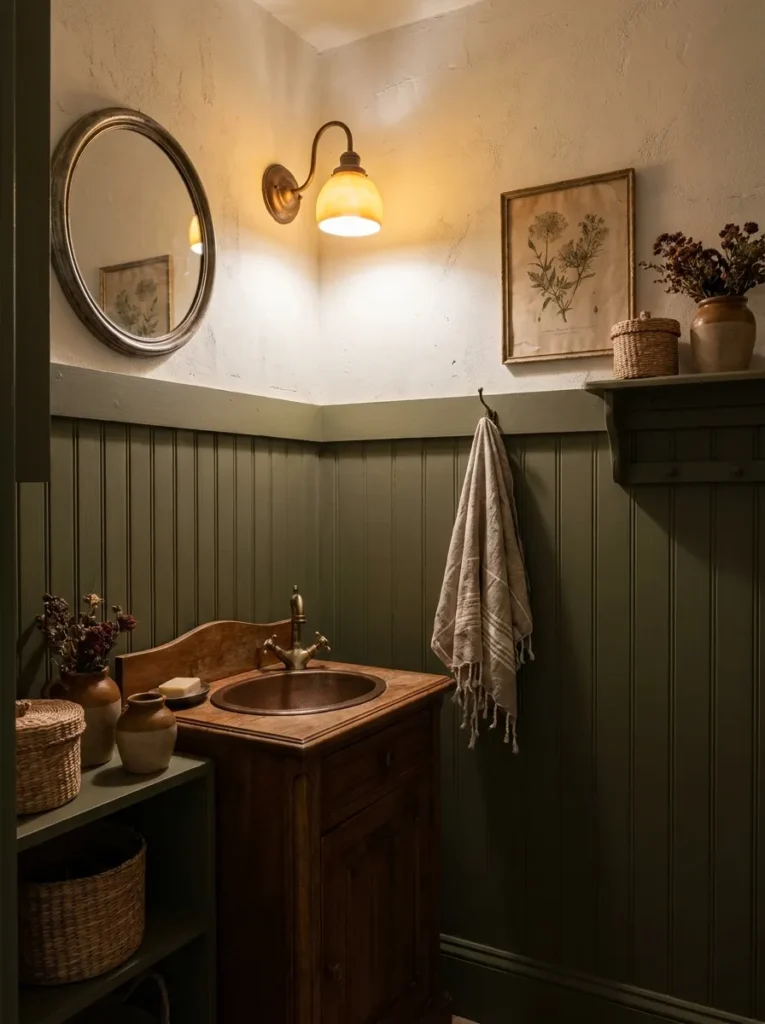
Small powder room? Don’t fight it with white — embrace it. Run beadboard or tongue-and-groove wainscoting up the lower two-thirds of the walls and paint it deep olive, warm taupe, or dark espresso. A tiny space becomes a moody jewel box that feels intentional and expensive.
5. Amber Sconces at Eye Level
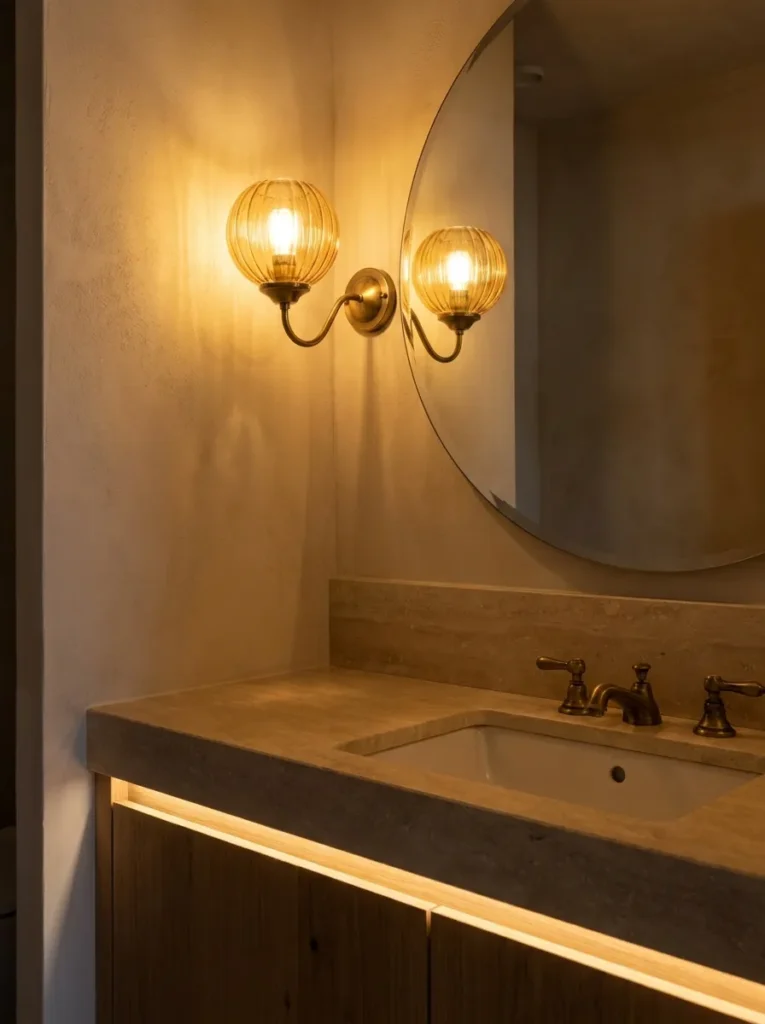
Overhead recessed lights cast harsh shadows down your face. Move the light to eye level: matching sconces with amber glass globes or pleated linen shades flanking the mirror, on dimmable warm LEDs (2200K–2700K). Soft, low-glare, spa-like. This one change transforms how the whole room feels.
6. Vintage Art on the Walls
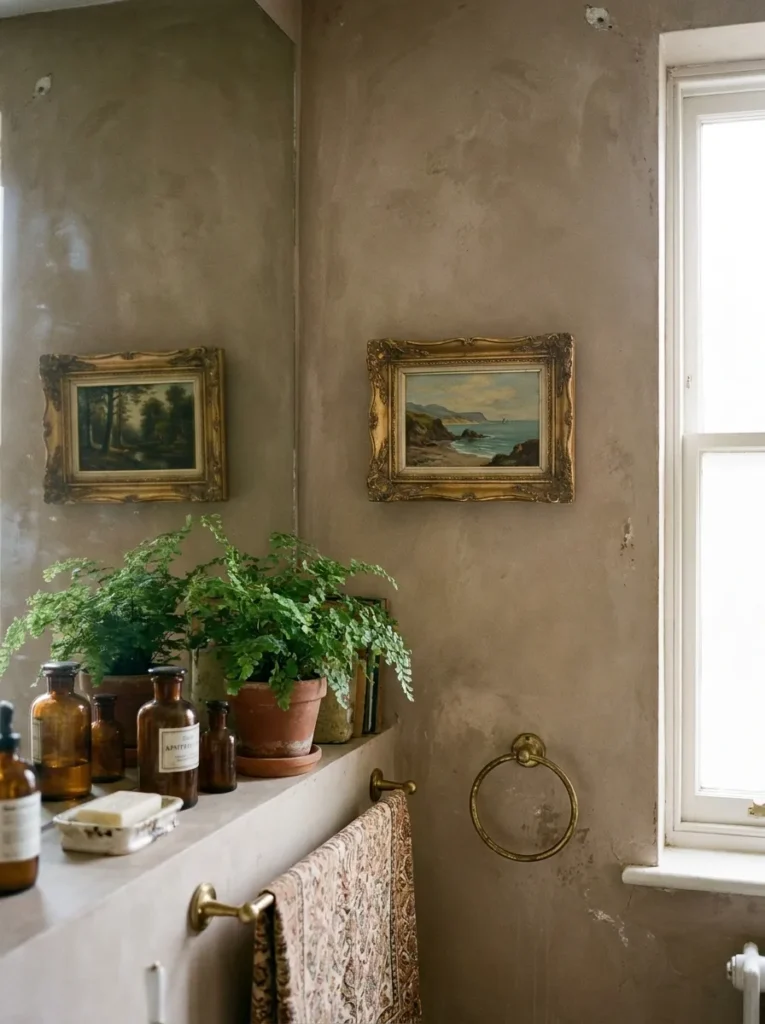
All-neutral rooms go flat without something personal. Two or three small thrifted oil landscapes or botanical sketches — moss green, dark mustard, burnt umber — in mismatched dark wood or brass frames. Historic character against clean porcelain: instant depth.
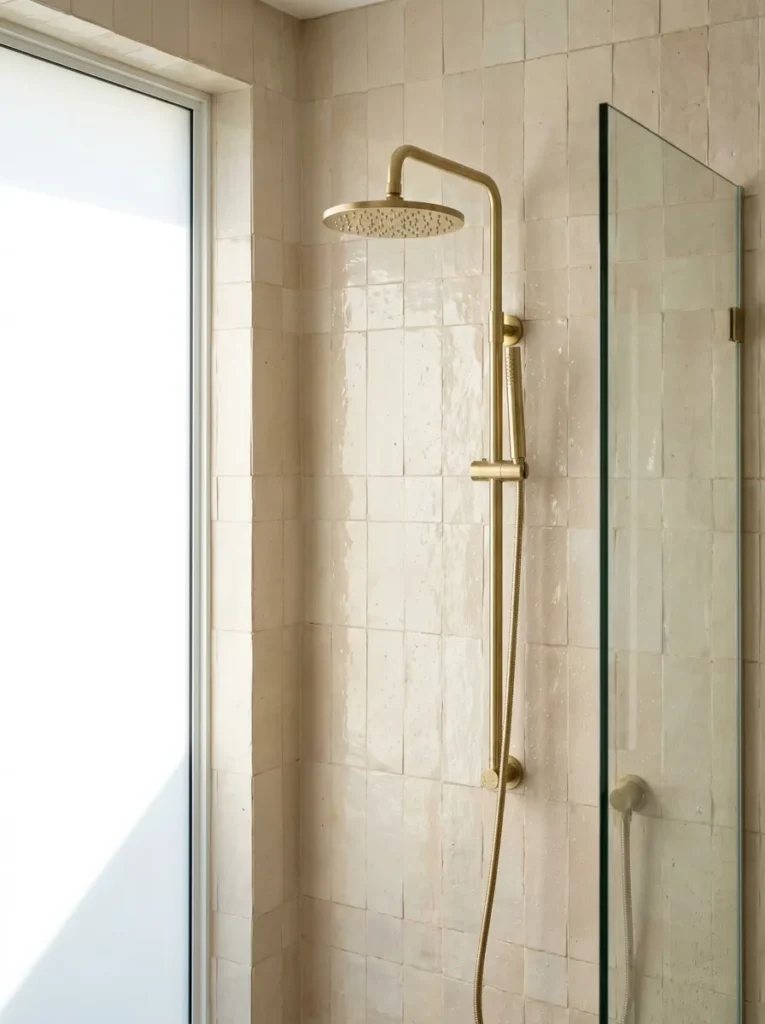
7. Handmade Zellige Tile
Machine-cut tile looks stiff and industrial. Handmade zellige — each tile molded and fired individually — has uneven edges and varying glaze that catches light like water. In warm sand, clay, or pale olive, a shower wall becomes the room’s art piece.
Test it first: Handmade Zellige and Terracotta Tile Sample Box
8. Woven Baskets Instead of Plastic
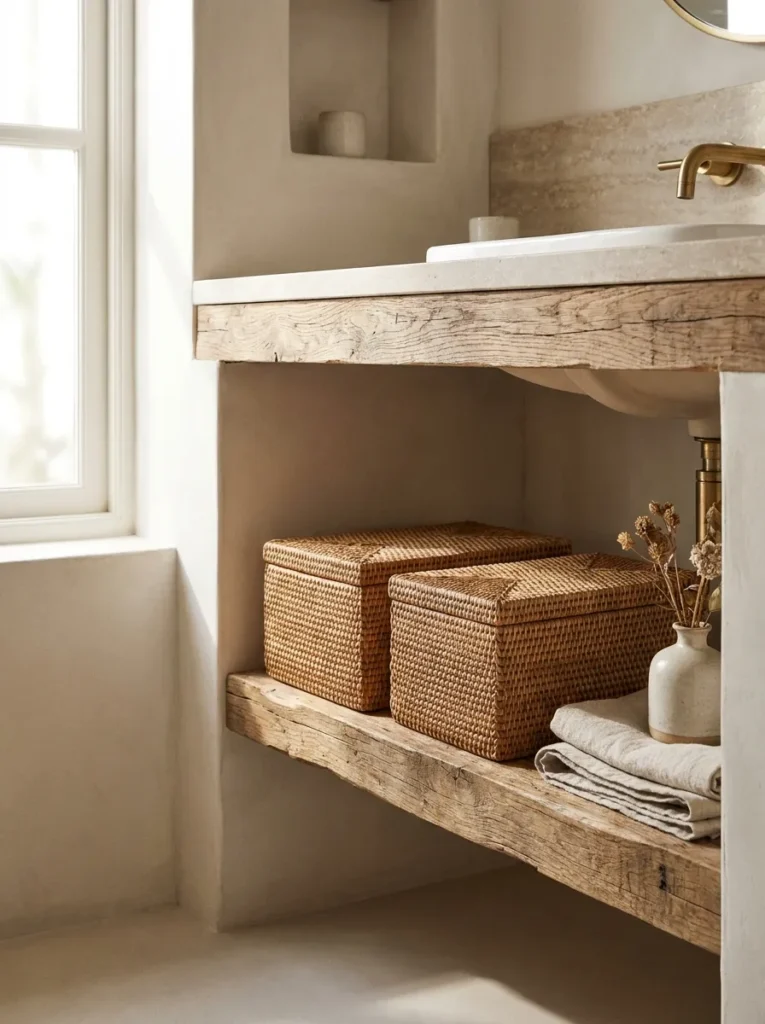
Toilet paper, towels, cleaning supplies — out in the open they kill the calm. Heavy woven rattan or bamboo baskets with lids: one large cylinder as a hamper, smaller ones on shelves. Natural fiber hides the plastic packaging and adds texture.
9. One Taupe, Everywhere
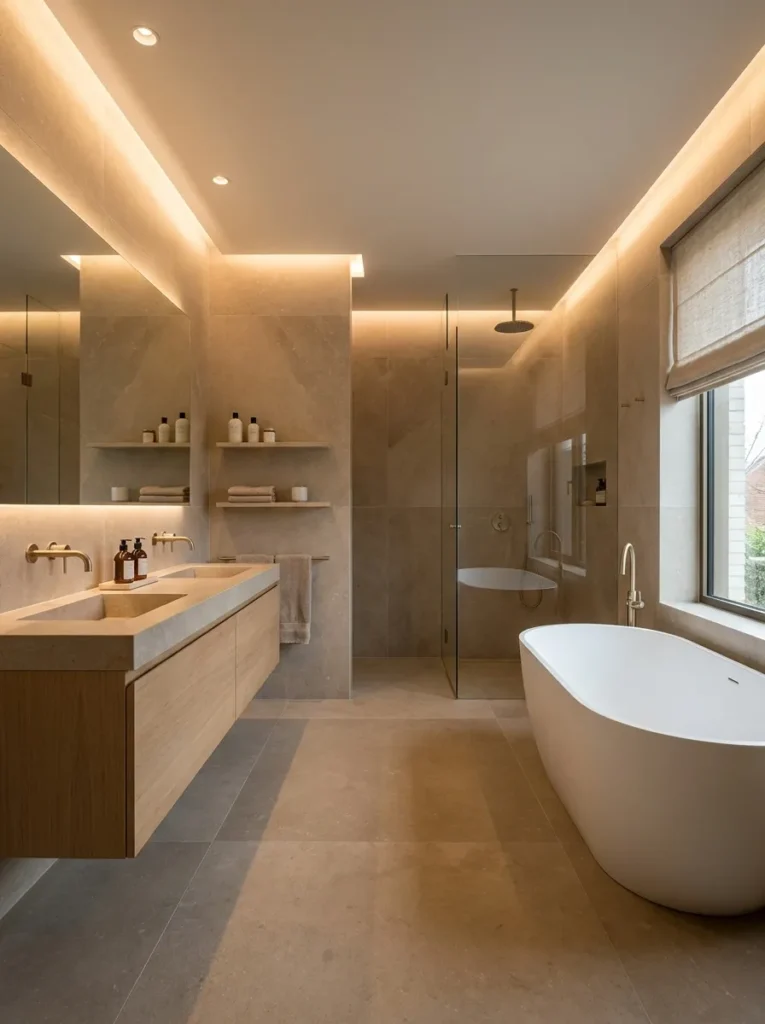
Contrasting floor, walls, and trim chop a small bathroom into visual pieces. Instead, commit to one warm tone — rich taupe, warm mushroom — across floor tile, wall plaster, and textiles. Erasing the boundaries makes the room feel larger and deeply soothing.
10. A Thrifted Ornate Mirror
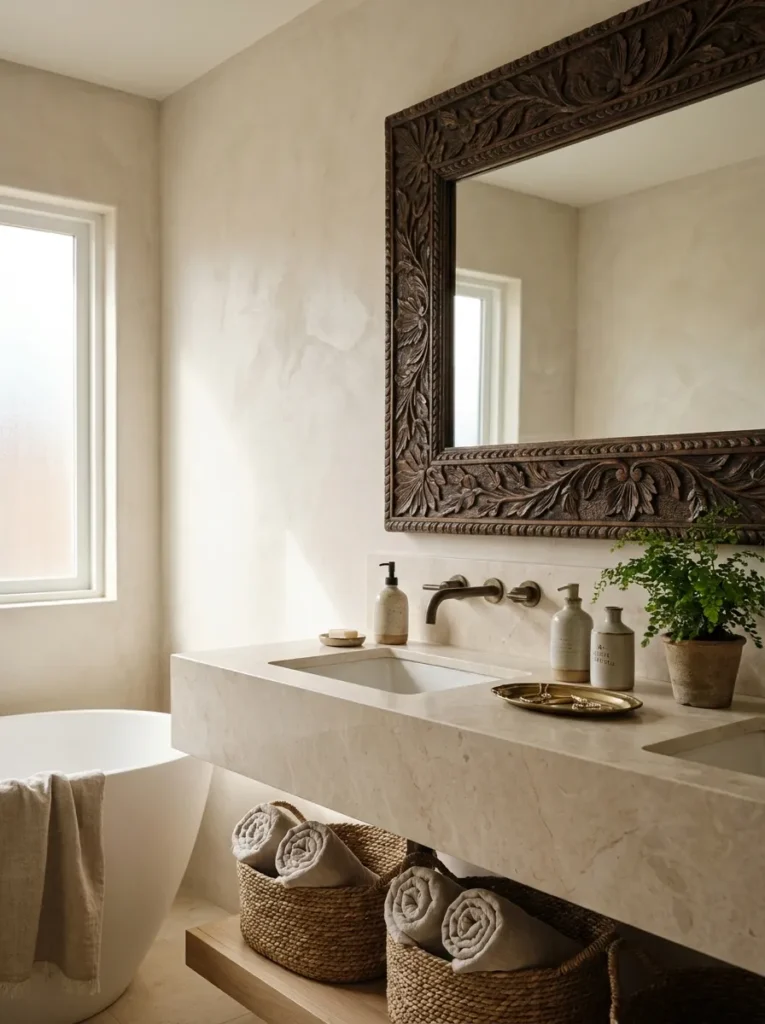
That frameless plate-glass slab glued to the drywall is the definition of builder-grade. Hunt down a vintage mirror with a carved wood or tarnished brass frame — the worn, imperfect frame against a clean stone counter creates more design depth than anything new at twice the price.
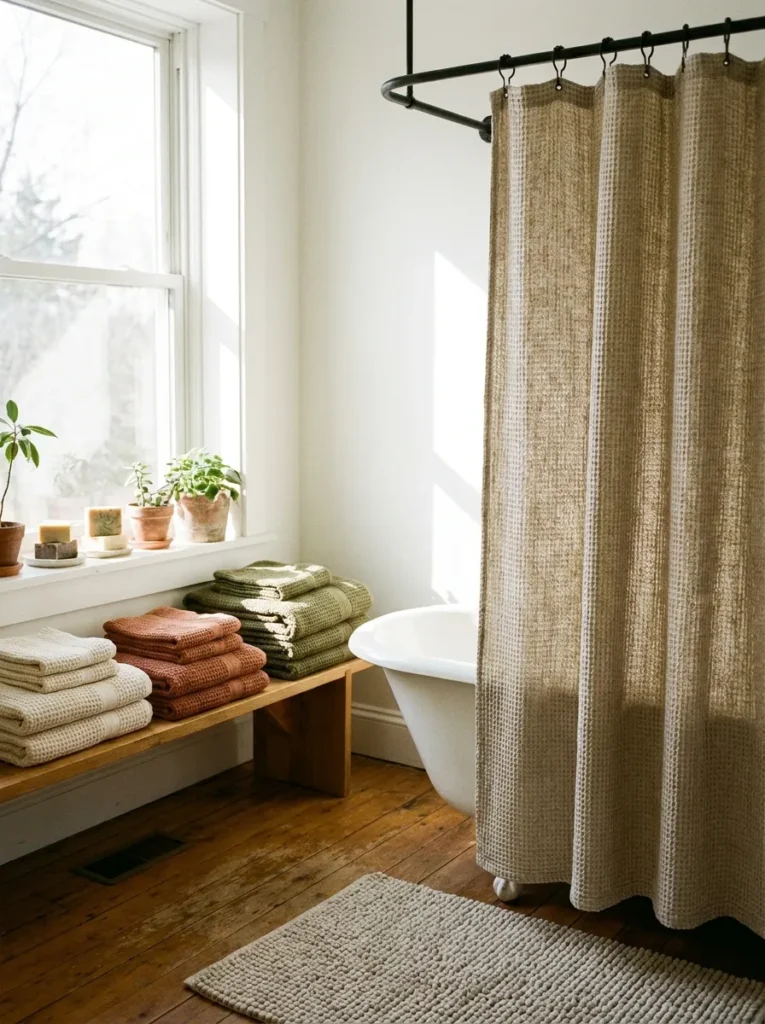
11. A Linen Shower Curtain
Porcelain, tile, and stone bounce sound and feel hard. Swap the plastic liner for a heavy un-dyed linen curtain in oatmeal, clay, or moss — deep waffle-weave texture. It moves, it softens echoes, it makes the room quiet in every sense.
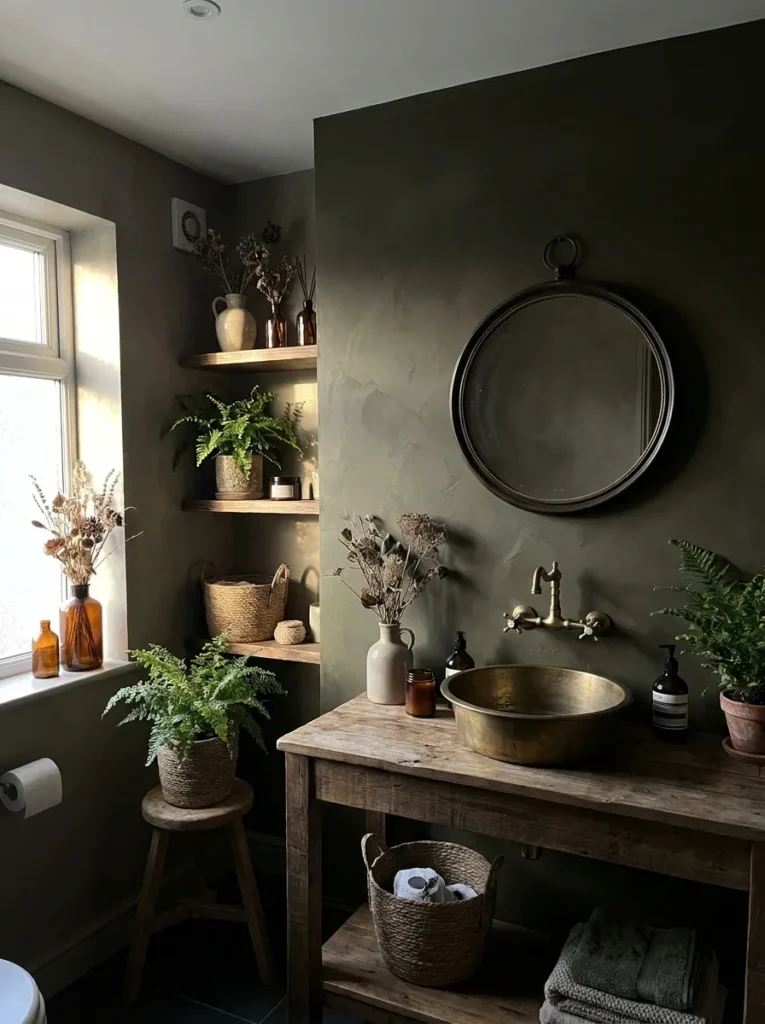
12. One Deep Olive Wall
Love moody but scared of painting the whole room dark? Paint just the plumbing wall — behind the vanity or toilet — in deep matte olive, keeping the rest warm cream plaster. One saturated wall gives you the drama; the light walls keep it breathable. Brass fixtures pop beautifully against it.
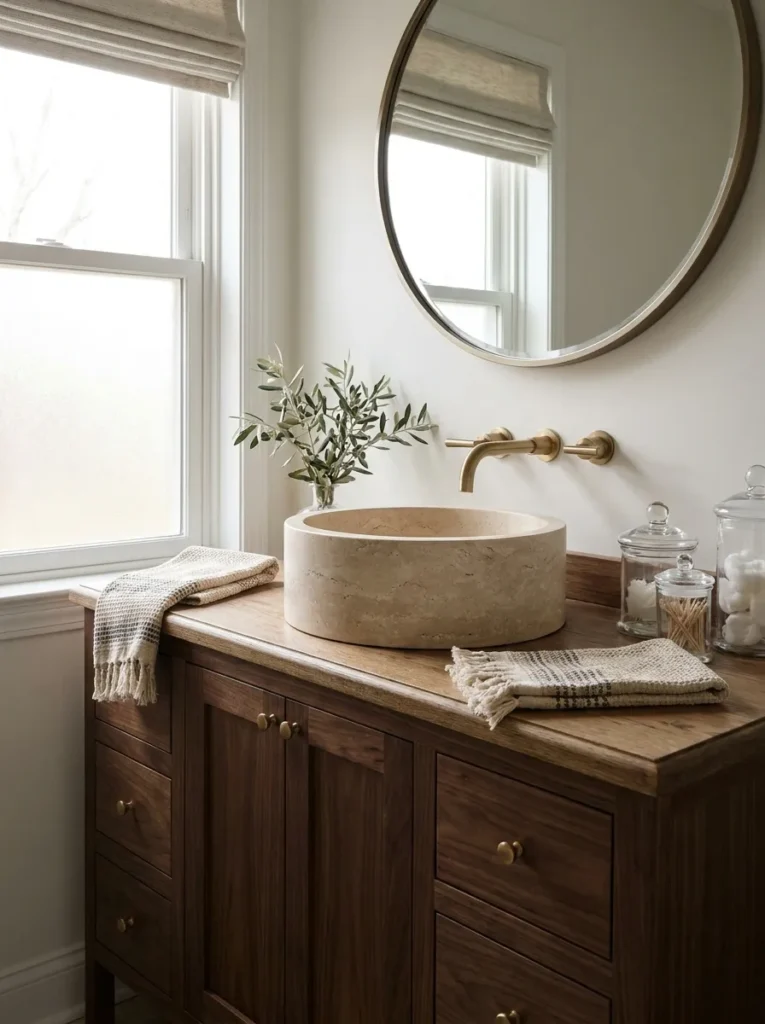
13. A Travertine Vessel Sink
A standard white undermount is fine — and forgettable. A honed travertine vessel sink, with its porous cavities and sandy striping, is a piece of earth art on your counter. Pair it with a wall-mounted brass tap and your morning routine feels tactile and considered.
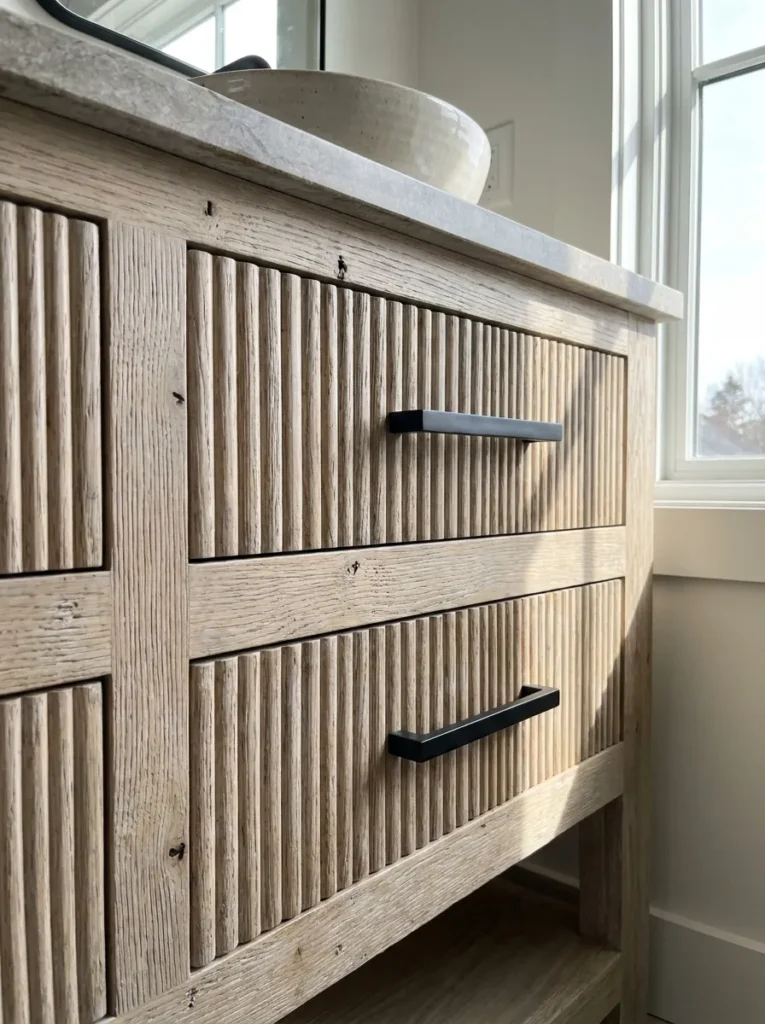
14. Reeded Wood Cabinet Fronts
Flat plywood vanity doors look heavy and plain. Reeded or fluted detailing — slender vertical ridges across the drawer fronts — catches moving shadows and breaks up the wood’s visual weight. Architectural texture that keeps big storage pieces feeling light.
15. Curated (Not Matching) Shelves
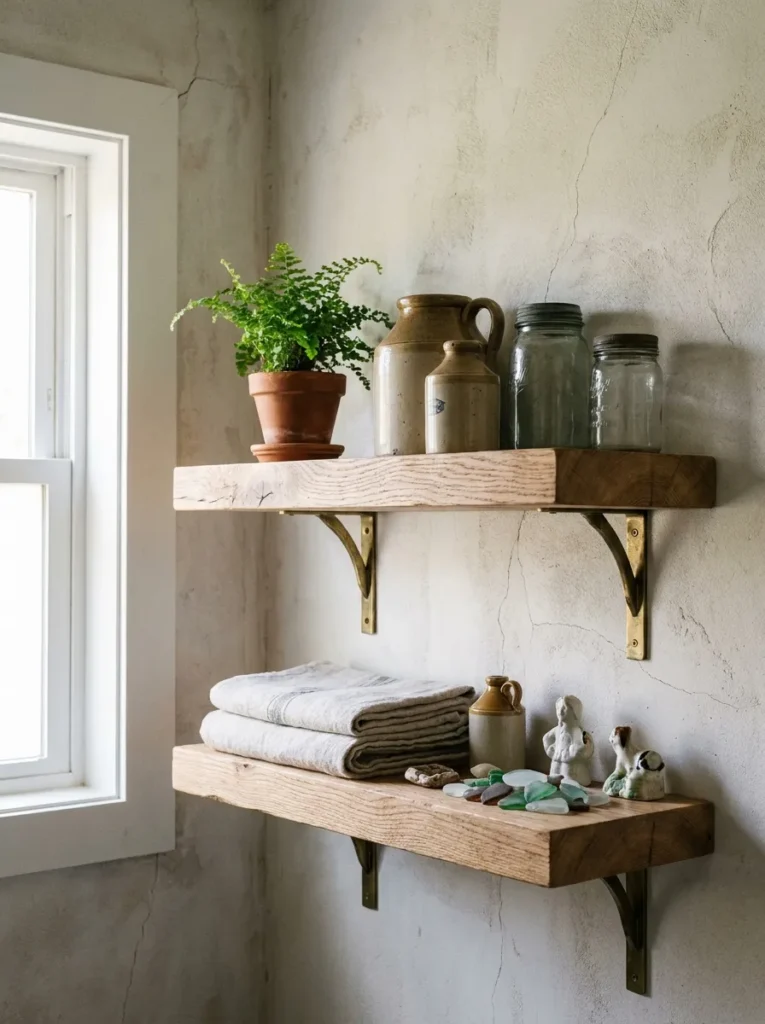
Everything matchy-matchy kills the collected charm earth tones need. Two thick raw-edge floating shelves above the toilet: white hand towels, a trailing pothos, an antique ceramic crock for combs, one small thrifted brass object. Utility meets old-world charm — lived-in, warm, yours.
The Palette Formula
Foundations: Roman clay, limewash, travertine — texture instead of flat paint.
Structures: reclaimed oak, walnut — raw grain to balance cold porcelain.
Hardware: unlacquered brass, oil-rubbed bronze — living finishes that age.
Accents: woven rattan, vintage art — hiding clutter, adding story.
Going darker and moodier? Our dark green bathroom ideas take the same earthy palette into jewel-box territory.
Quick Answers
How do I warm up an all-white bathroom without renovating?
Textiles and metals first: a linen shower curtain, woven baskets, vintage art, and swapping chrome for brass hardware. Paint or limewash one wall if you can.
What colors count as “earth tone” for bathrooms?
Terracotta, clay, warm taupe, olive green, mushroom, sand, espresso — warm neutrals drawn from natural materials, not grays.
Will earth tones make my small bathroom feel smaller?
Not if you keep it monochromatic — one warm tone across surfaces erases visual boundaries and actually makes the room feel larger. Contrast and chopping is what shrinks rooms.