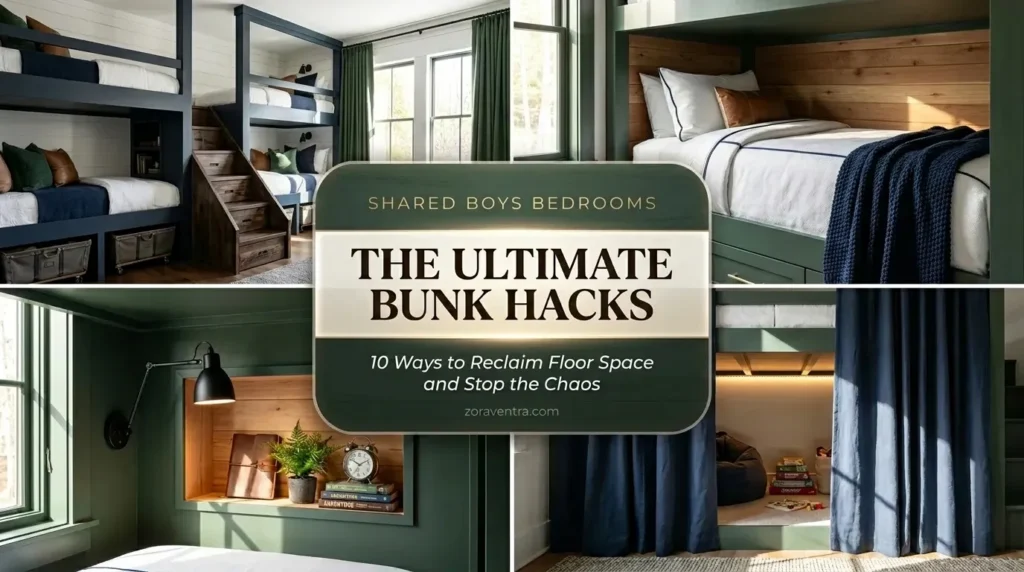
Let’s be real: putting multiple boys in one bedroom is controlled chaos. Wrestling matches, overflowing toy bins, the invisible line down the middle of the room. Making it functional and peaceful feels impossible.
But bunk beds aren’t just a sleeping arrangement — they’re an architectural hack. Build vertically and you reclaim the floor for play while giving each kid a defined zone that’s actually theirs. Forget wobbly metal frames; here are 10 ideas built for roughhousing that grow into the teen years.
1. Build Them Into the Walls
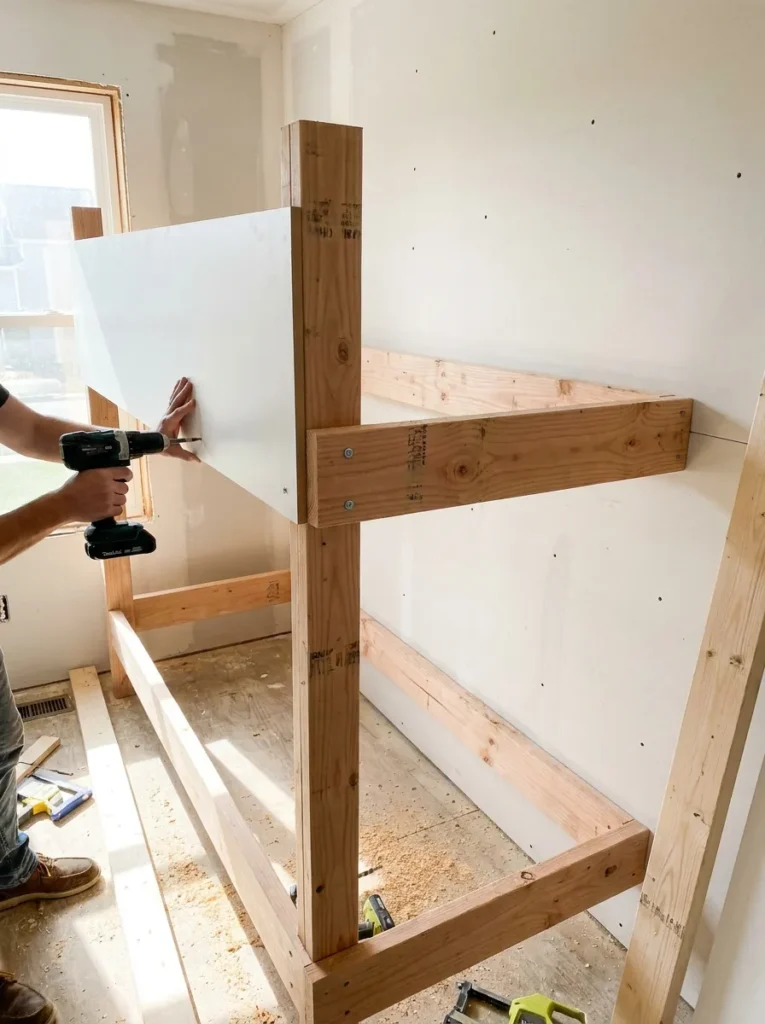
Freestanding bunks rattle, squeak, and waste floor space. Frame the beds directly into the walls with standard 2×4 lumber and MDF panels, anchored to studs. Immovable, silent, and it looks like expensive custom millwork for a fraction of a carpenter’s price.
The foundation: Heavy-Duty L-Brackets and Hardware Kit
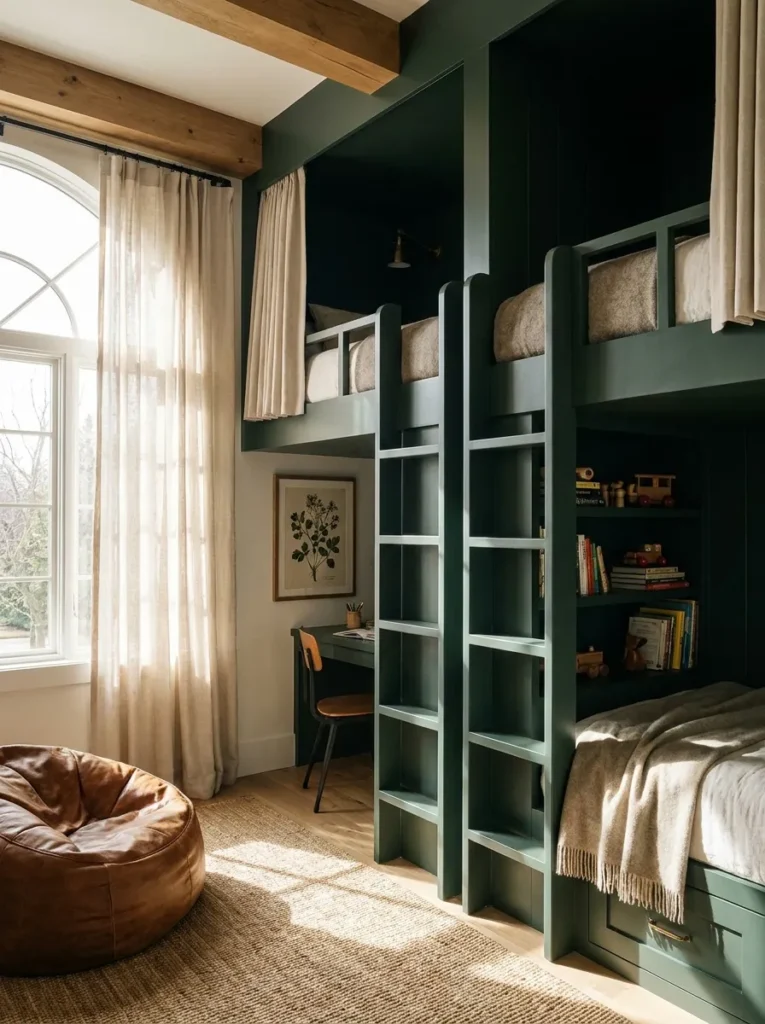
2. Paint Them Moody (It Hides Everything)
Don’t paint baby blue if you want the room to survive to the teen years. Coat the entire bunk structure — trim, rails, everything — in deep navy, charcoal, or forest green. Monochromatic, masculine, modern. Bonus: dark paint hides scuff marks from toys and dirty feet like nothing else.
3. Stairs Instead of Ladders
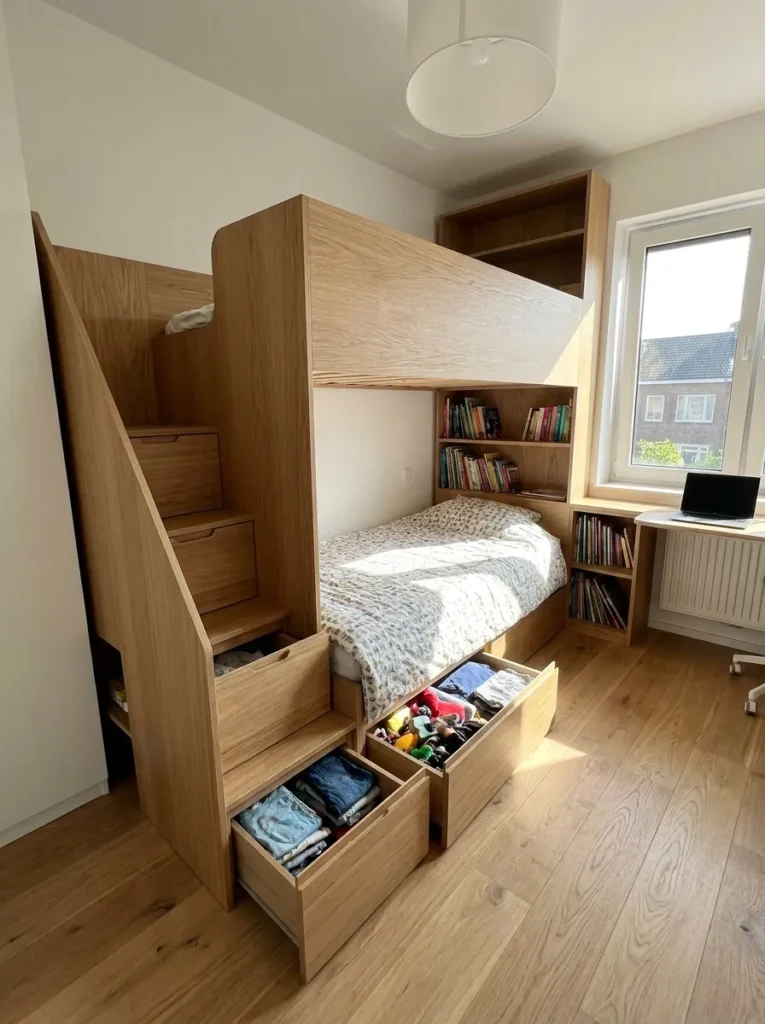
Ladders hurt bare feet and are treacherous at 2am. Build a staircase where every step is a pull-out drawer or a cubby with a hinged lid. Safe climb up, massive hidden storage for Legos and action figures — the stairs replace a dresser.
4. Zipper Bedding (The Sanity Saver)
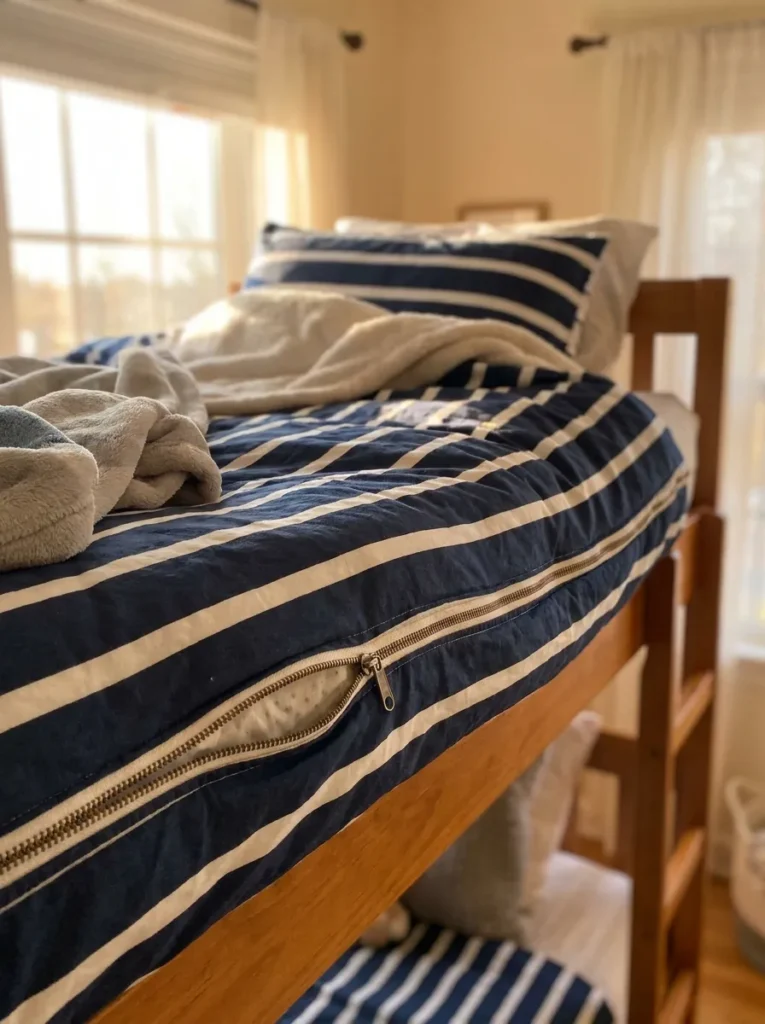
Making a top bunk is an Olympic sport. Zipper bedding sets fit the mattress like a sleeping bag — comforter zips to the fitted base. In the morning the kids pull one zipper and the bed looks made in three seconds. Holy grail of shared rooms.
Morning miracle: Zipper Bedding Sets for Bunk Beds
5. Give Each Kid Their Own Light
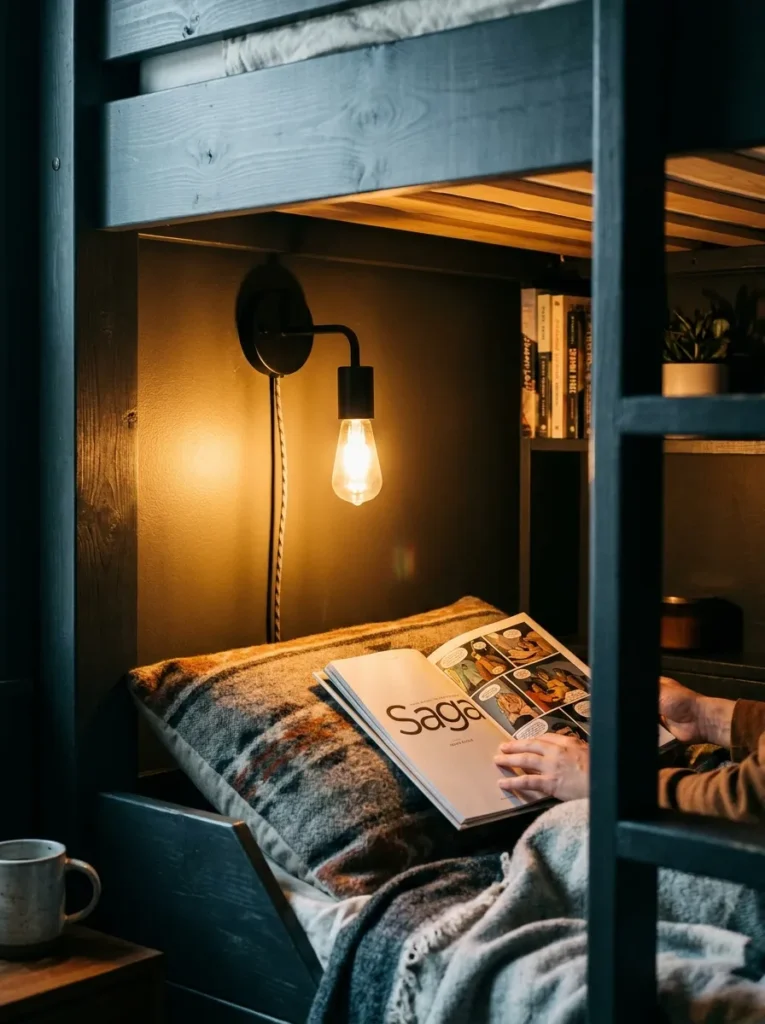
Different schedules, different needs — one wants to read, one wants to sleep. Ditch the single overhead: install individual plug-in sconces inside each bunk with their own switch. Each bed becomes a private cabin with its own lighting.
Each bunk, its own light: Plug-In Wall Sconces for Bunk Beds
6. Alcove Shelves (Built-In Nightstands)
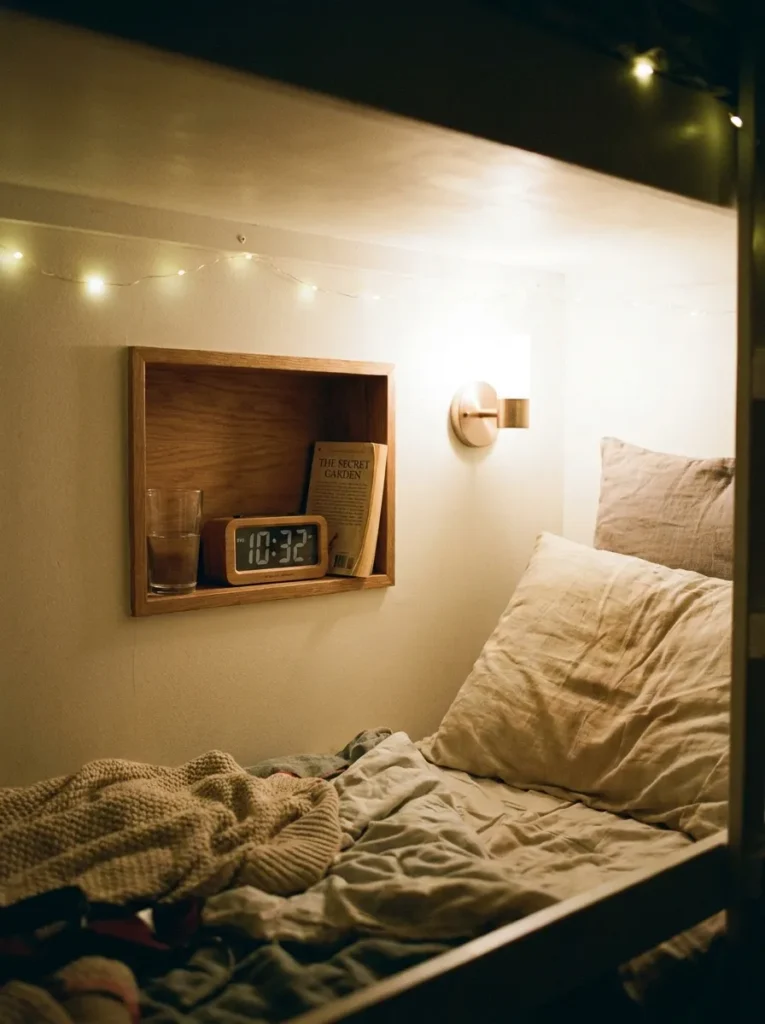
Where does the top-bunk kid put a water cup or alarm clock? Cut a small recessed niche into the drywall at the head of each bed, lined with wood trim. A tiny dedicated nightstand built into the wall — mattresses stay clear.
7. Privacy Curtains (Fight Reducer)
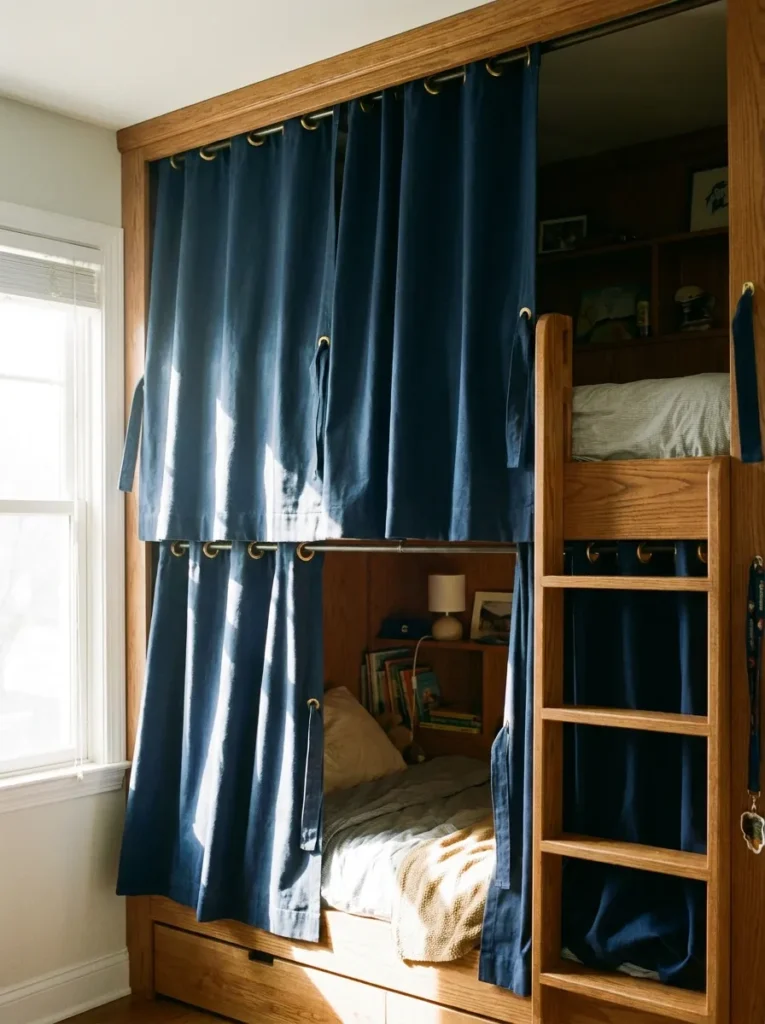
In a shared room, privacy is currency. A ceiling track or tension rod across each bunk opening with heavy linen or canvas curtains: kid needs a break, curtain closes, instant private fort. Fewer sibling arguments, guaranteed.
The peace treaty: Blackout Bunk Bed Privacy Curtains
8. Warm It Up With Real Wood
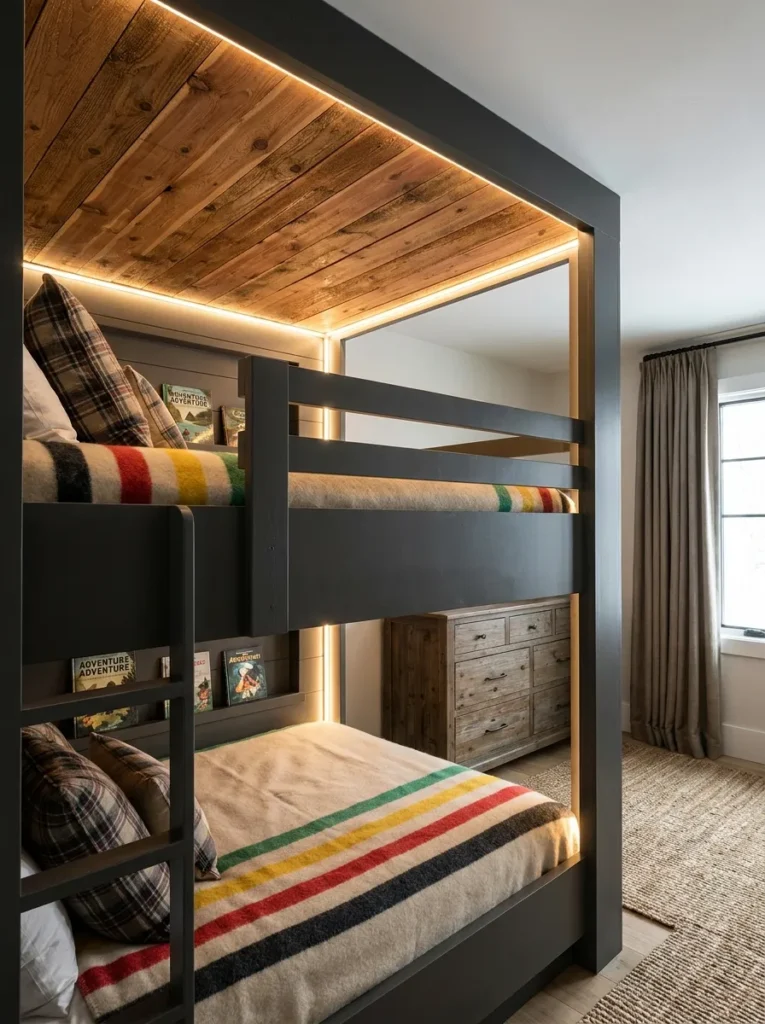
Dark paint can feel cold — balance it with organic texture. Line the ceiling inside each bunk with warm cedar or pine planks, or add raw-wood safety rails. Dark modern paint against rugged wood: sophisticated, outdoorsy, exactly what boys like.
9. Keep the Floor Open
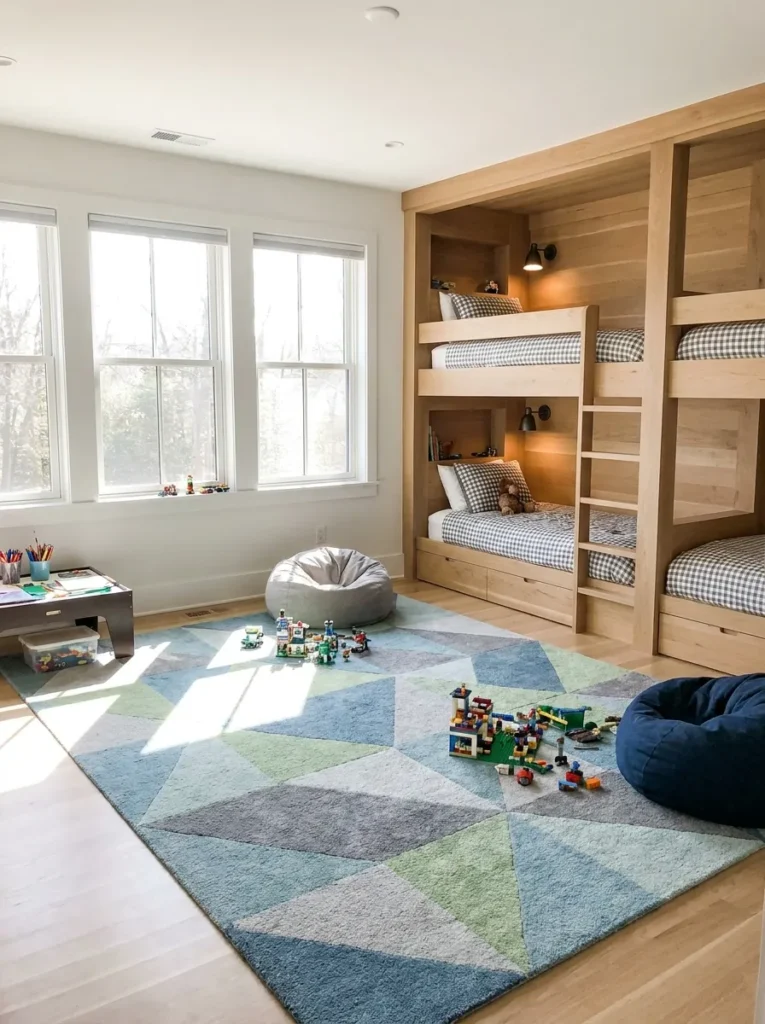
The whole point of bunks is the reclaimed floor — don’t fill it back up with bulky desks and giant toy chests. One large soft washable rug for wrestling, building, and gaming. Open center = room feels twice as big.
10. Rolling Storage Underneath
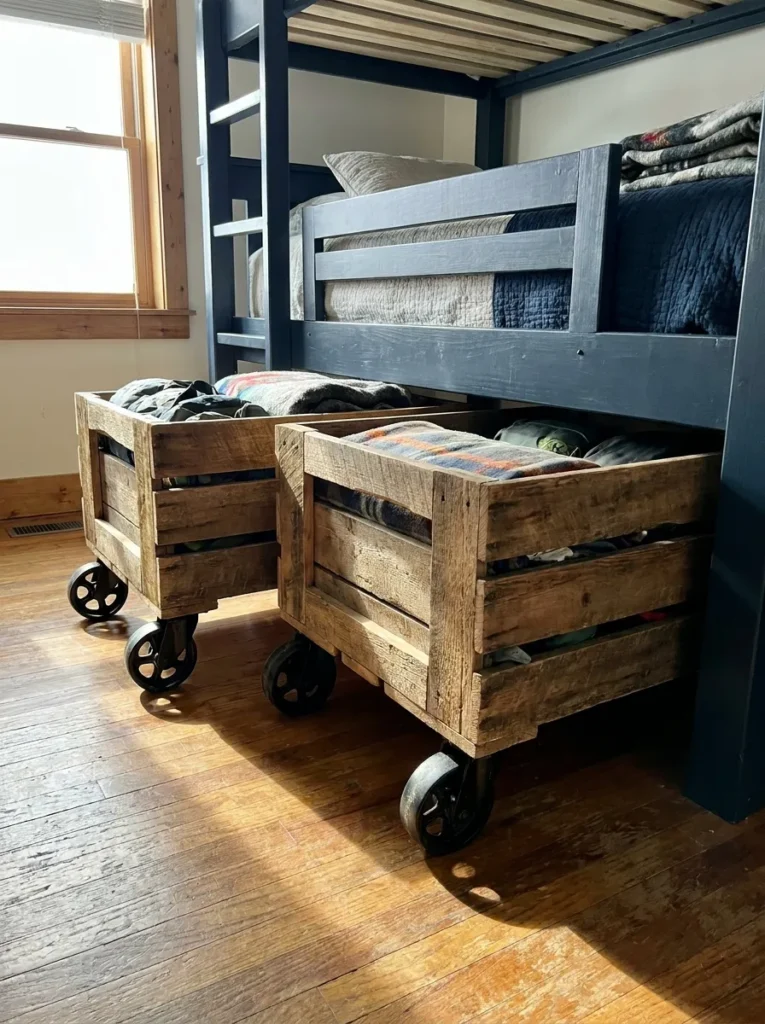
Sports gear, Nerf arsenals, dirty laundry — it never ends. Design the bottom bunk 12–14 inches off the floor and slide heavy-duty rolling wooden or metal bins underneath. Bulky toys out of sight, still accessible at playtime.
Hide the chaos: Rugged Rolling Under-Bed Storage Bins
Safety Checklist
Guardrails on both sides of the top bunk with gaps under 3.5 inches. Mattress foundation secured against shifting. Frame anchored to wall studs — non-negotiable for DIY builds. Top bunks for ages 6 and up only. And if the room is truly tiny, our loft bed ideas show how to stack sleep over desk space instead.
Quick Answers
Are built-in bunk beds safe?
Yes — when anchored to wall studs with proper hardware, they’re sturdier than any freestanding frame. Use guardrails on both sides of the top bunk and keep mattress-to-rail gaps under 3.5 inches.
What age can kids sleep on a top bunk?
Six and up, per safety guidance. Younger kids get the bottom bunk — no exceptions.
How do I stop sibling fights in a shared room?
Defined personal zones: privacy curtains, individual lights, and an alcove shelf per kid. When each child controls their own space, the invisible line stops mattering.
Affiliate Disclosure: As an Amazon Associate, I earn from qualifying purchases. If you click a link and buy, I may receive a small commission at no extra cost to you. Thank you for supporting my content!