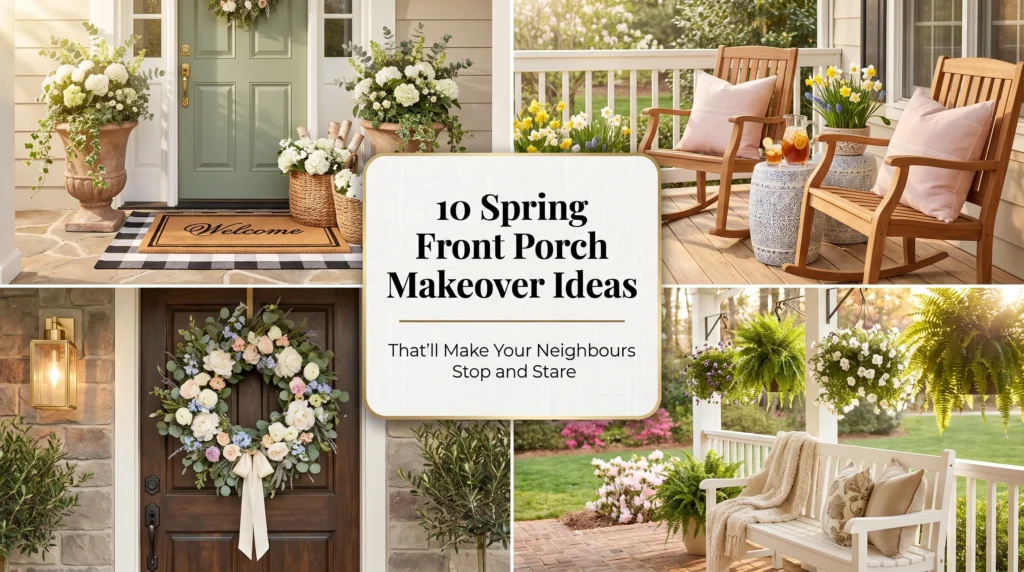

Your front yard is the first thing visitors see and the last thing you see coming home. Yet most homeowners treat it as one big blank space instead of what it should be: outdoor rooms with purpose. The smartest approach is designing zone by zone — flower beds, porch, walkway, entryway. Eleven practical ideas, most of them budget-friendly and low-maintenance:
1. Layered Flower Beds
Bare or messy beds are the #1 curb appeal killer. Use the thriller-filler-spiller method: tall perennials at the back, medium flowers in the middle, low spillers at the front — with a clean curved border and fresh mulch. Expensive-looking, genuinely low-maintenance.

2. The Porch as Outdoor Living Room
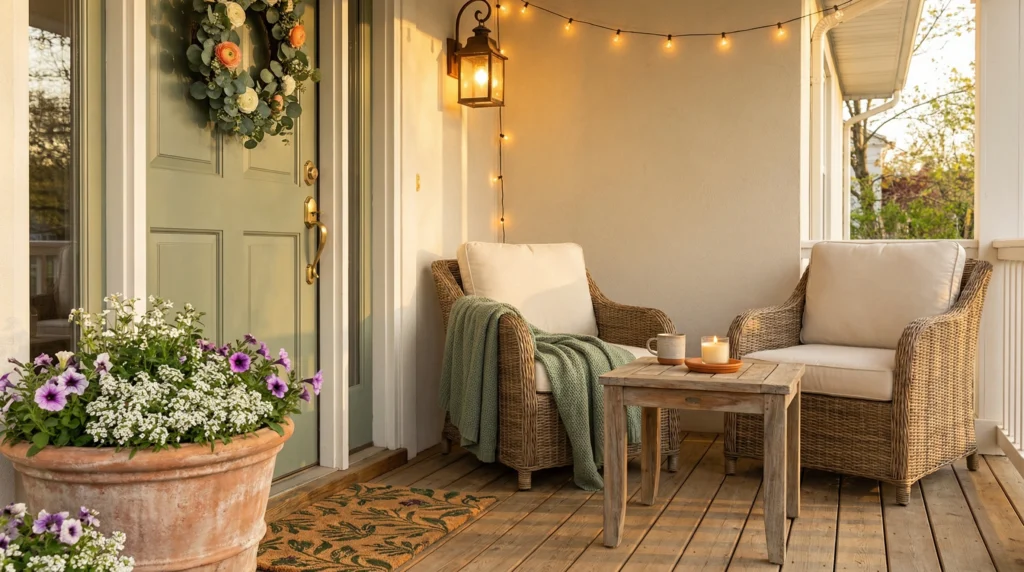
An empty porch makes the whole house feel unwelcoming. Two or three planters (tall, medium, trailing plants flanking the door), a small seating area with cushions, a welcome mat — instant charm. A large artificial fern fence panel adds instant greenery with zero watering.

3. Mulch and Edging (The Budget Miracle)
No expensive landscaping needed. Remove grass in a gentle curve, lay landscape fabric, add 3 inches of mulch, finish with a basic border. The yard instantly looks intentional and well-kept. A solar watering can light adds charm after dark for almost nothing.

4. Strategic Plant Placement
Tall plants near the house, shorter ones toward the street to frame the home; repeat the same plants in groups for rhythm. Depth, polish, and the yard feels larger — from placement alone.

5. Containers for Beginners
New to gardening? Start with 3–5 large containers in different heights near the entrance or walkway, each with thriller-filler-spiller plants. Low-risk, easy to rearrange, instantly effective.

6. Perennials That Return Every Year
The smartest money: hostas, daylilies, coneflowers, ornamental grasses. They come back fuller each season, saving money and effort long-term.

7. The Low-Maintenance Formula
Heavy mulch + drought-tolerant plants (sedum, yarrow, Russian sage) = minimal watering and weeding, neat all season. Busy homeowners, this is your formula.

8. Outdoor Accessories
Plants alone don’t finish the job. A stylish welcome sign, lanterns, a small bench near the walkway — the finishing touches that make the yard feel complete and personal.

9. Small Yard, Smart Moves
Vertical planters, narrow borders, one strategic small tree or shrub. Keep it clean and uncrowded — restraint makes small spaces feel larger.

10. Seasonal Color, Year-Round
Spring bulbs, summer perennials, fall-interest grasses — plants with seasonal changes keep curb appeal alive all year without constant replanting.

11. Go Vertical in Tight Spaces
Wall planters, hanging baskets, tall narrow planters along the foundation or fence. The eye travels up; the yard feels larger and more dynamic.

Your Curb Appeal Checklist
Define beds with edging and mulch. Layer 3 plants per bed (tall, medium, low). Add one focal point (bench, sign, large pot). Repeat plant varieties in groups. Add solar path lighting for evenings. Keep edges trimmed and weeds out. Start with one zone this weekend — small consistent improvements compound.
More outdoor wins: our low-maintenance front yard landscaping and front yard flower beds on a budget.
Quick Answers
What is the cheapest way to improve curb appeal?
Mulch and edging: define beds with a clean border and 3 inches of mulch. It’s the single highest-impact, lowest-cost move you can make.
What plants are best for low-maintenance curb appeal?
Perennials that return yearly (hostas, daylilies, coneflowers, ornamental grasses) plus drought-tolerant picks (sedum, yarrow, Russian sage) with heavy mulch.
How do I make a small front yard look bigger?
Go vertical (wall planters, hanging baskets), keep borders narrow and uncrowded, repeat a few plant varieties, and use one strong focal point instead of many small ones.
Affiliate Disclosure: As an Amazon Associate, I earn from qualifying purchases. If you click a link and buy, I may receive a small commission at no extra cost to you. Thank you for supporting my content!