

There’s something special about having a place that’s reserved for slowing down. It doesn’t need to be an entire library or a perfectly designed sunroom — sometimes all it takes is a comfortable chair, a nearby window, and a quiet moment with a good book to create a space you’ll return to every day.
Spring is an especially fitting time to refresh that corner. Longer daylight hours, blooming gardens, and lighter fabrics naturally encourage us to open the windows, bring greenery indoors, and make our homes feel brighter after winter. A thoughtfully designed reading nook captures that seasonal shift, turning an overlooked corner into one of the most relaxing spaces in the house.
The beauty of a reading nook is that it can fit almost anywhere. A bedroom corner, an unused landing, a bay window, a section of the living room, or even a wide hallway can become a comfortable retreat with the right combination of seating, lighting, and personal touches.
Refreshing the whole room while you’re at it? These guides pair beautifully with a new reading corner: spring coffee table decor ideas, spring console table decor ideas, and spring living room shelf decor ideas. And if little readers share your home, don’t miss our reading nook ideas for kids.
Before You Start: Decide How You Want the Nook to Feel
Before you buy a single cushion, think about how you’ll actually use the space. A morning reader wants gentle eastern light and a landing spot for coffee; an evening reader needs a genuinely comfortable chair and warm, layered lighting. You might also journal, knit, or simply escape the busy parts of the house here — knowing the nook’s real job makes every decorating decision easier, from the chair you choose to the storage you add.
The most inviting reading nooks aren’t the most elaborate ones. They’re simply the ones comfortable enough to use every single day.
1. Choose a Chair You’ll Actually Love Sitting In
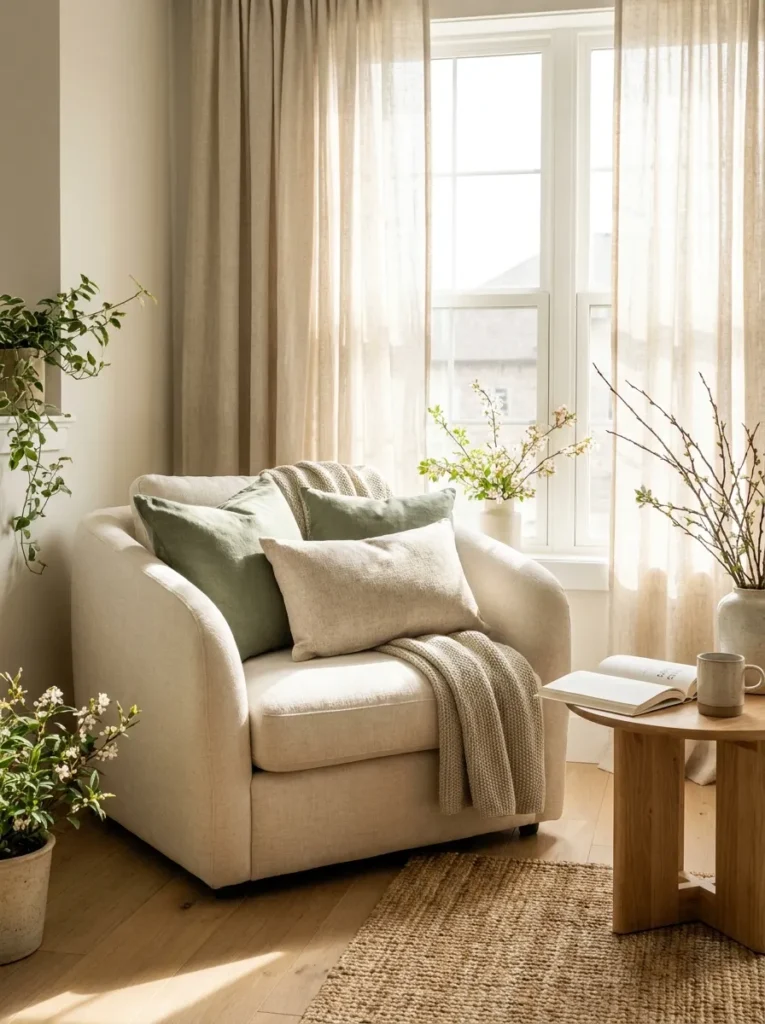
Every great reading nook starts with one decision: seating comfortable enough that you never want to get up. A chair can photograph beautifully and still be miserable after twenty minutes, so comfort comes first and style second.
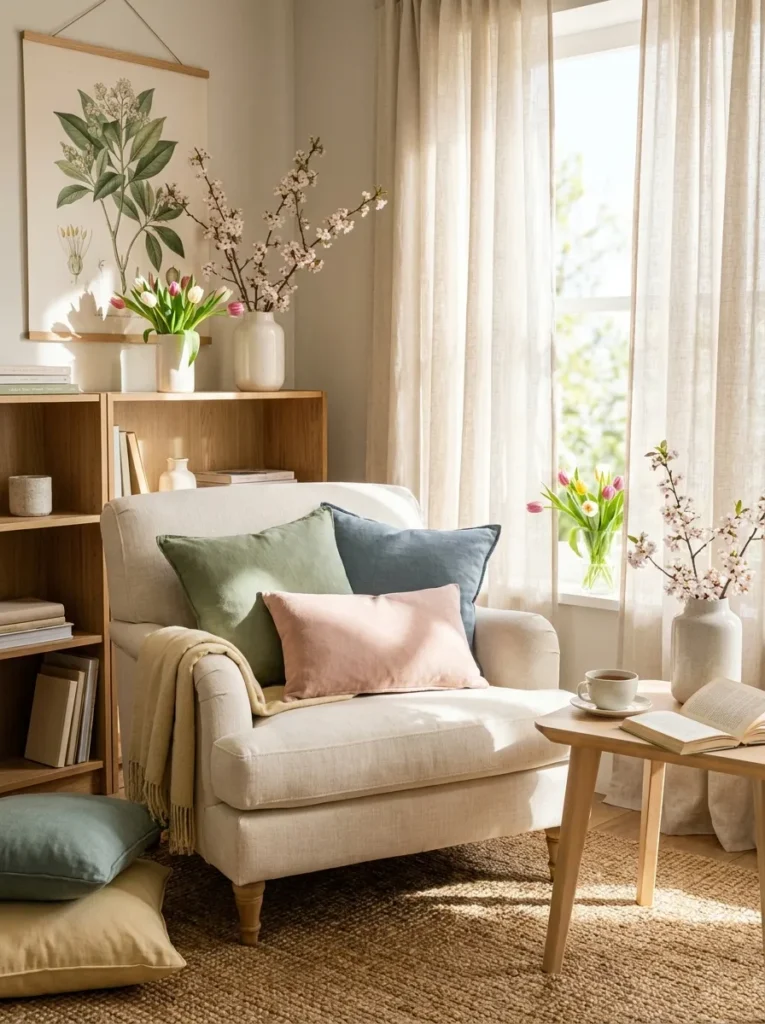
Think about how you naturally read — upright with good back support, or curled up under a throw with your feet tucked in? Buy for that posture. Breathable fabrics like linen, cotton, or bouclé feel made for spring, and a lightweight throw plus two or three cushions in cream, sage, soft blush, or pale yellow adds comfort and quiet seasonal color. Working with a compact room? An apartment-sized armchair delivers real comfort with a lighter visual footprint.
2. Let Natural Light Do the Heavy Lifting
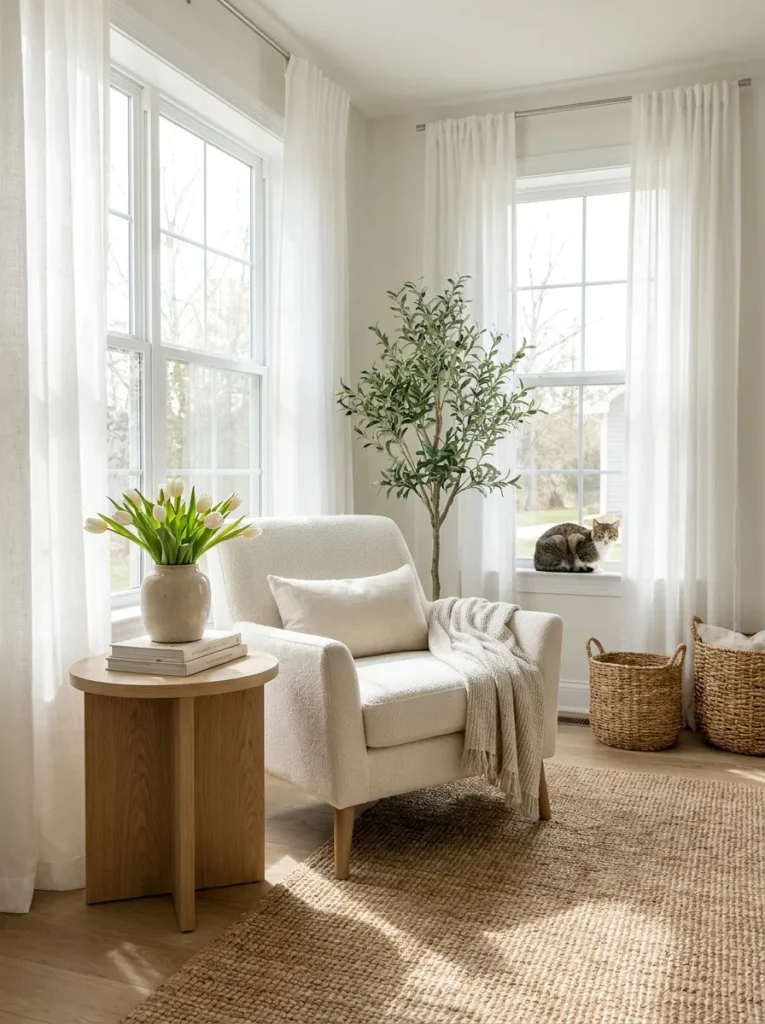
Where you place the chair shapes the atmosphere as much as the furniture itself. Set it near a window and daylight becomes part of the experience — the space feels brighter, calmer, and more connected to the changing season.
Sheer curtains are the perfect partner: they soften harsh sun without blocking it, and they drift beautifully on breezy spring afternoons. No big windows? A quiet corner beside built-in shelving, the end of a hallway, or an unused stretch of living room works just as well with thoughtful lighting. Leave enough room to move comfortably around the chair — sometimes angling it a few inches toward the window completely transforms how the space feels.
3. Make a Small Space Feel Cozy, Not Crowded
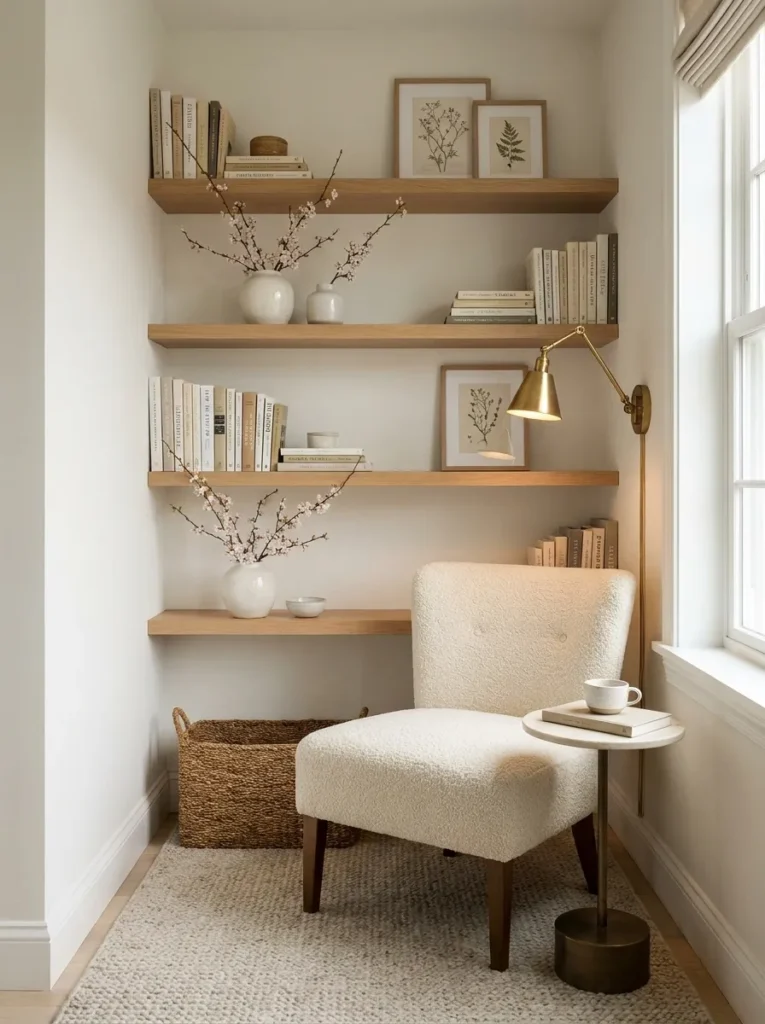
Small rooms often make the best reading nooks — they’re naturally intimate. The trick is scaling the furniture to the room: a slim accent chair, a floating shelf for books, and a compact side table are usually plenty.
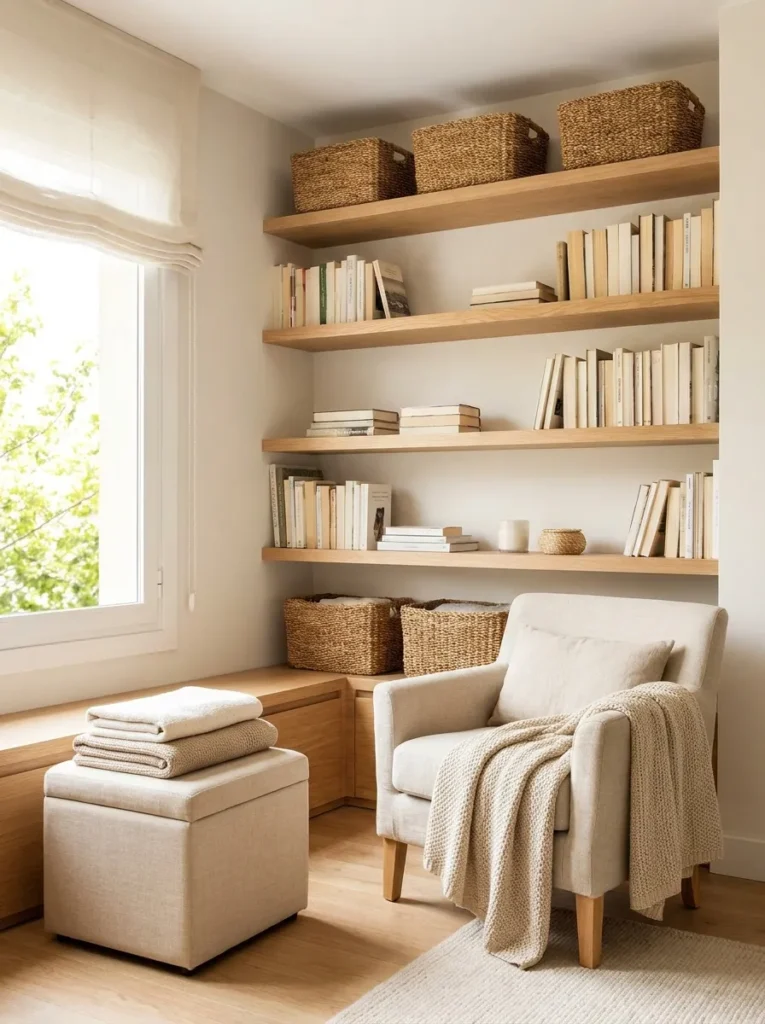
Go vertical to save floor space — floating shelves, wall-mounted sconces, or narrow book ledges keep essentials within reach, and a soft area rug defines the nook as its own little destination. Keep the palette light, too: warm whites, pale greens, soft blues, and natural wood reflect spring light beautifully and keep even a tiny corner feeling airy.
4. Add a Side Table for Coffee, Books, and Glasses
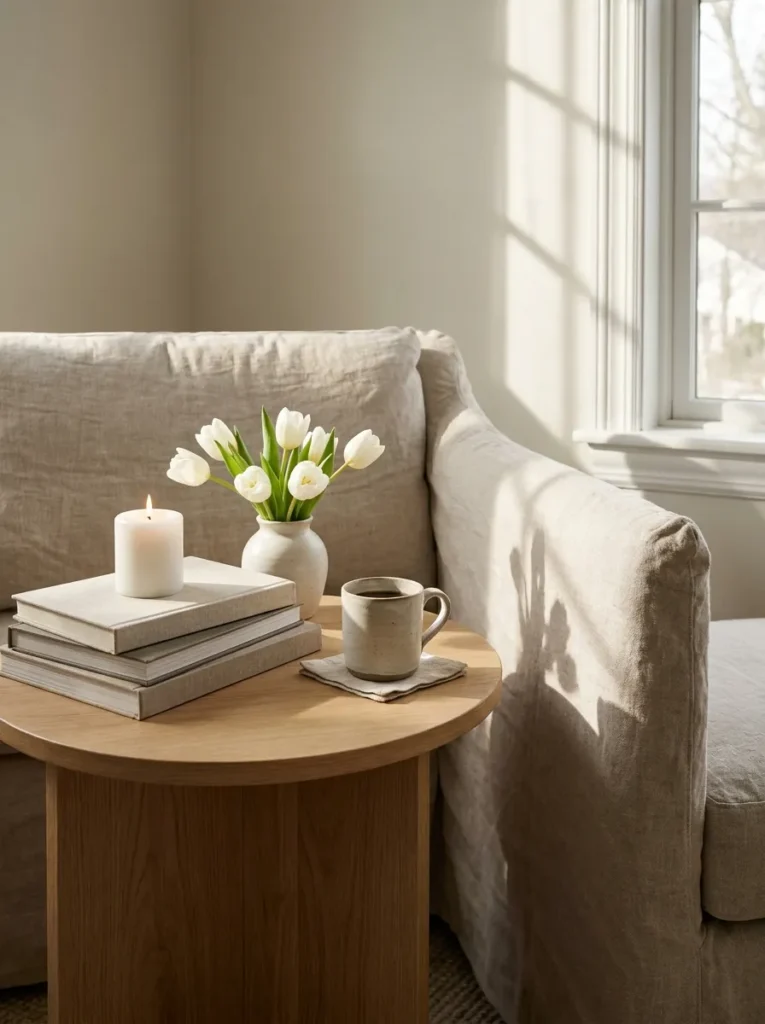
A side table is what turns a comfortable chair into a true retreat — somewhere for your coffee, reading glasses, and current book, so you never have to get up mid-chapter. It seems like a small detail, but it makes the nook dramatically more usable.
Keep it proportionate to the chair: a compact round table or slim wooden pedestal, ideally with a lower shelf or small drawer for bookmarks, notebooks, and charging cables. Style the top simply — a small vase of fresh spring flowers, your current read, a scented candle or ceramic coaster — and leave some open space. It looks more intentional and leaves room for your mug.
5. Layer Soft Textures for That Springtime Feel
Comfort comes from layers, not just furniture. Anchor the nook with a soft area rug, keep a lightweight throw within arm’s reach for cooler spring mornings, and mix your cushion fabrics — linen, bouclé, cotton, something woven — instead of matching everything perfectly. Different finishes create visual interest while keeping the mood calm.
Don’t forget the surrounding décor: a woven basket for spare blankets, a ceramic planter, or a natural jute rug adds subtle texture without overwhelming the space. Aim for layers that feel collected over time rather than bought as a matching set.
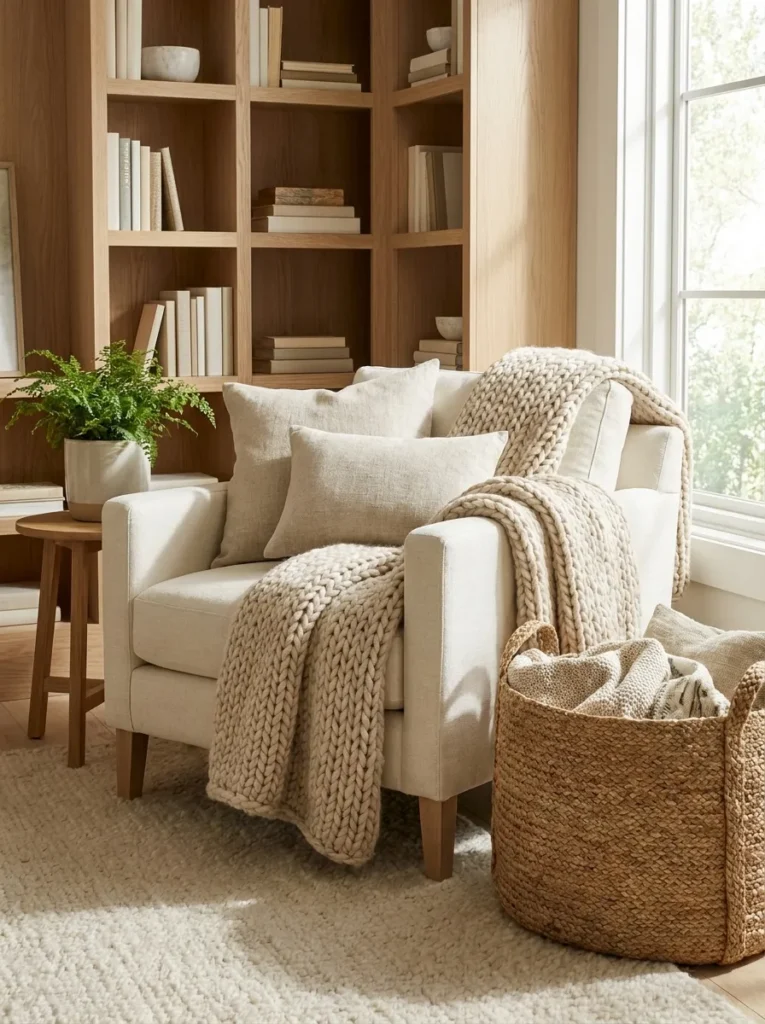
6. Bring the Outdoors In with Fresh Greenery
Nothing says spring like celebrating the return of nature indoors. Plants add life, soften hard edges, and connect your nook to the season unfolding outside the window.
Got a sunny spot? A fiddle leaf fig, olive tree, or bird of paradise makes a gorgeous focal point. Less light? Snake plants, pothos, and ZZ plants ask for almost nothing. A simple arrangement of tulips, daffodils, or eucalyptus on the side table adds instant seasonal charm — and remember, one healthy, well-placed plant makes a stronger statement than a crowded jungle. If real plants aren’t practical, high-quality faux greenery still softens the space beautifully.
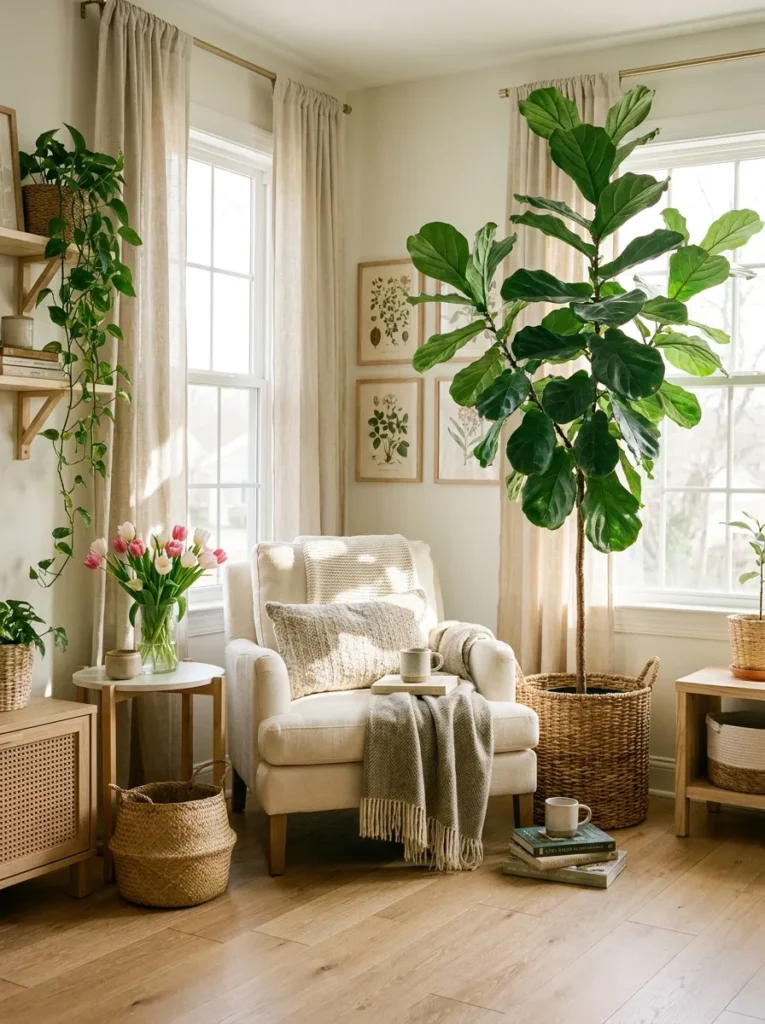
7. Light It Right for Evening Reading
A nook you can only enjoy by daylight is only half finished. As the sun sets, a thoughtfully placed floor lamp lets you keep reading without straining your eyes — and it wraps the corner in a warm, relaxing glow.
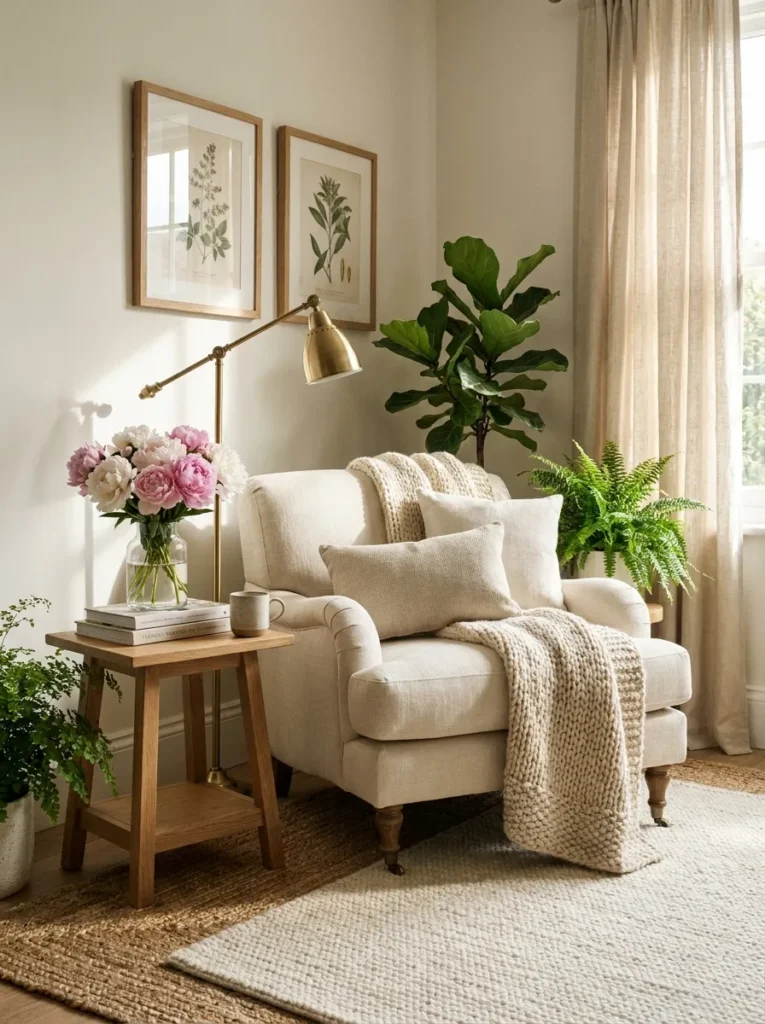
Choose a lamp that directs light onto your book rather than into your eyes; adjustable or arched designs are ideal, especially beside high-backed chairs. Place it slightly behind and beside the chair to minimize glare, and stick with warm white bulbs (2700K–3000K) — cool white feels harsh and kills the cozy mood. A lamp in matte black, antique brass, natural wood, or a linen shade doubles as décor.
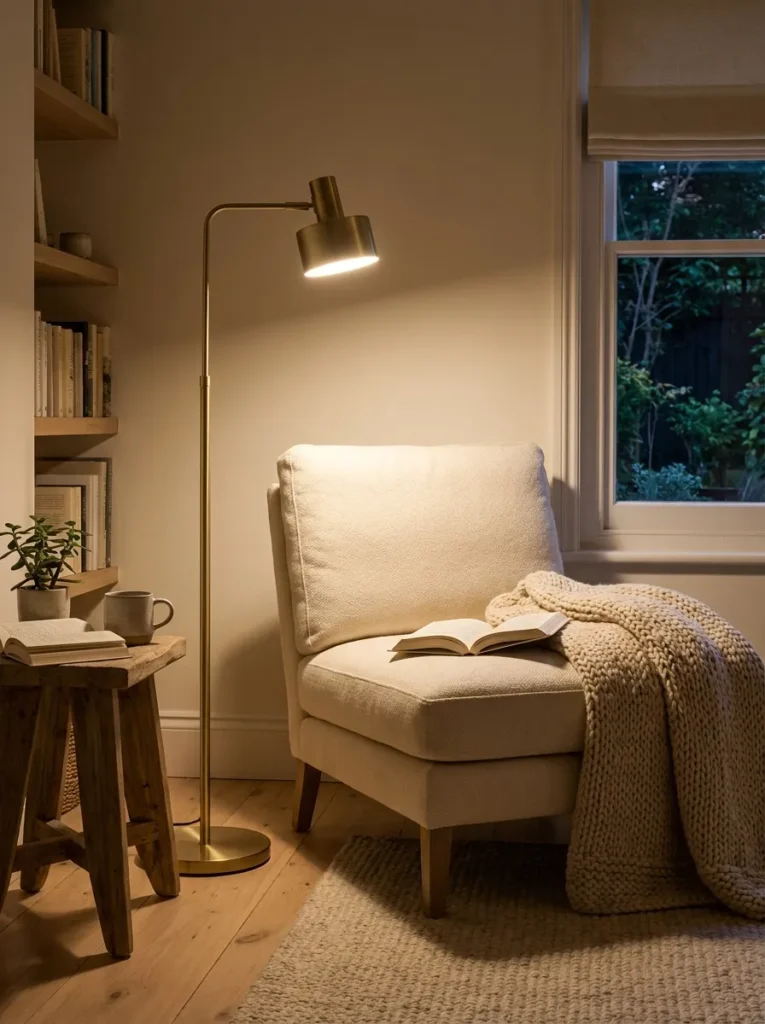
8. Style Your Bookshelves with Beauty and Function
Books belong in a reading nook, but how you display them shapes the whole mood. Instead of packing every shelf end to end, mix vertical stacks with a few horizontal piles, leave breathing room between groups, and tuck in small accents — a framed photo, a ceramic vase, a candle, a tiny potted plant.
Keep accessories in a cohesive palette of wood, stone, and woven textures so they complement the books instead of competing with them, and use baskets on lower shelves to swallow blankets, chargers, and magazines. The goal is personal and lived-in — display books you genuinely love alongside a few meaningful pieces.
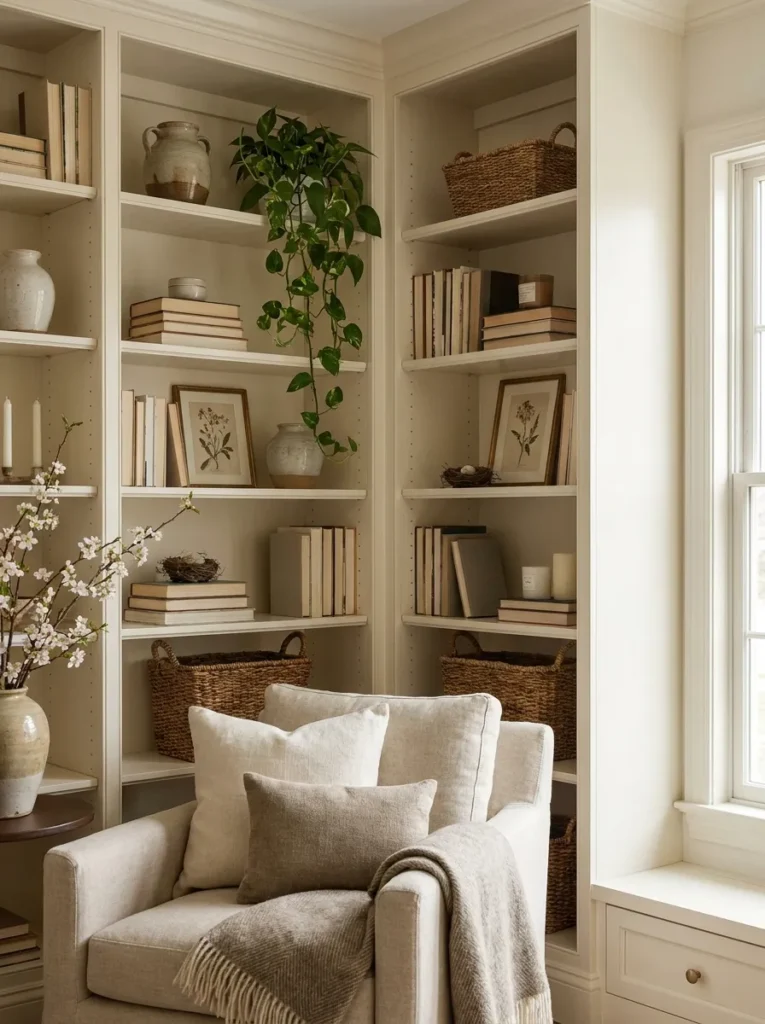
9. Add Soft Spring Color in Small Doses
You don’t need to redecorate to get a spring look — just layer seasonal color over a neutral base of warm white, cream, beige, or soft gray, and let the accents do the talking.
Swap in cushion covers, a lighter throw, fresh flowers, or a new print in sage green, dusty blue, blush pink, lavender, or pale yellow. Woven baskets, light oak, and linen reinforce the feeling naturally. These small updates are inexpensive, so refreshing the nook again for summer or autumn won’t require touching the big furniture pieces.
10. Make It Personal with Meaningful Décor
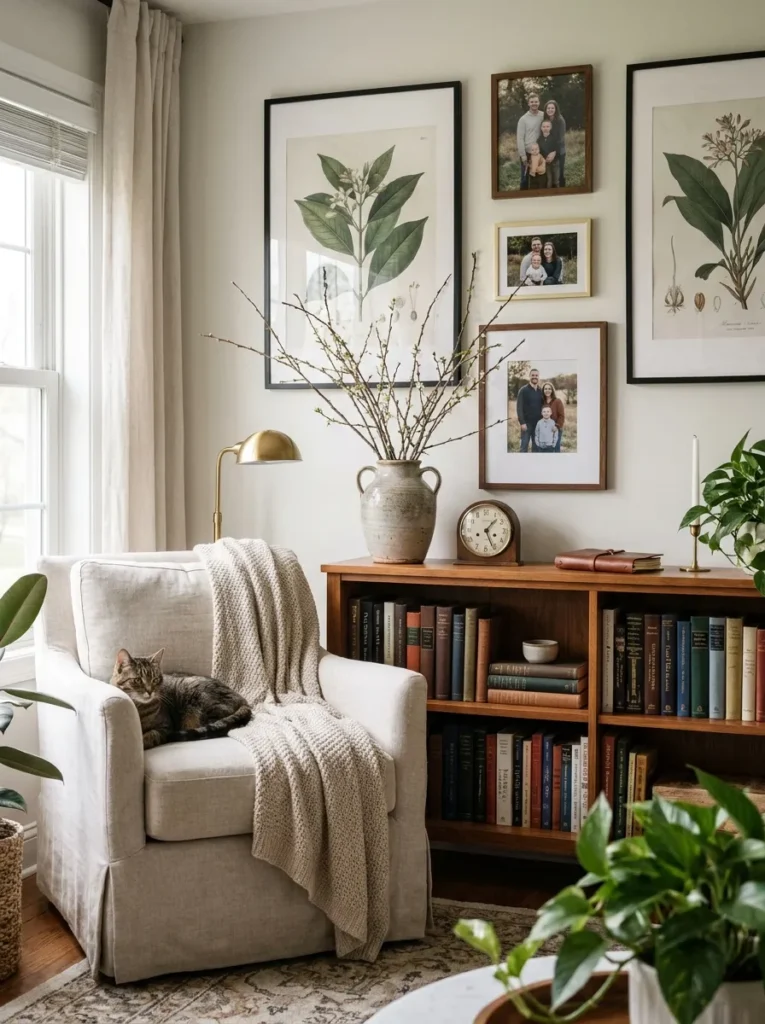
The nooks people remember aren’t copied from catalogs — they reflect the person who reads in them. A favorite framed print, a vintage clock, a handcrafted ceramic vase, or a treasured keepsake tells your story without cluttering surfaces, and makes the space feel lived in rather than staged.
Hang artwork at seated eye level so it becomes part of the reading experience — botanical prints, landscapes, line art, and calming abstracts all suit a spring mood. Then edit ruthlessly: a few meaningful pieces with room to breathe make a stronger impression than a dozen random objects.
11. Keep Clutter Away with Smart Storage
Even the prettiest nook loses its charm when books, blankets, and everyday bits start piling up. Smart storage protects the calm, organized feeling that makes the space so inviting.
A woven basket beside the chair is the simplest solution — it corrals throws, magazines, and knitting while adding natural texture. Prefer a cleaner look? Try a storage ottoman or a side table with a hidden compartment. Floating shelves add book space without eating floor area, which is gold in apartments and small bedrooms. Keep daily essentials within reach, surfaces mostly clear, and the nook stays relaxing instead of busy.
12. Ground It All with the Right Rug
A rug is what turns “a chair in a corner” into a destination. It visually anchors the arrangement and creates the feeling of stepping into a dedicated retreat — even in the middle of a larger living space.
For spring, look for soft neutrals with subtle pattern or natural woven texture — wool, cotton, or jute all suit the relaxed mood. Size matters: the chair’s front legs (and the side table) should rest comfortably on the rug so everything feels connected. In neutral rooms, try layering a smaller patterned rug over a larger natural-fiber one for extra richness.
Common Reading Nook Mistakes to Avoid
A few easy-to-miss details separate a nook you photograph from a nook you actually use. Watch out for these:
Choosing Style Over Comfort
A gorgeous chair you can’t sit in for an hour is just sculpture. Test seating for real, extended reading sessions before falling for the color or silhouette.
Relying Only on Overhead Lighting
A ceiling light washes the room but leaves your book in shadow. Add a floor lamp, adjustable sconce, or table lamp for focused, warm light in the evening.
Using Furniture That’s Too Large
Oversized chairs and bulky tables swallow a small corner. Scale every piece to the available space so the nook feels inviting rather than cramped.
Forgetting a Spot for Everyday Essentials
Books, glasses, drinks, and blankets all need a home within arm’s reach — a side table, storage basket, or nearby shelf keeps the nook functional and tidy.
Overdoing the Accessories
Not every surface needs styling. A few meaningful pieces with breathing room feel calmer and more sophisticated than shelves packed end to end.
Ignoring Natural Light
If a window is available, use it — daylight makes the nook brighter and more enjoyable all day long. When that’s not possible, layered warm lighting recreates the same welcoming feel.
Never Refreshing for the Season
Small swaps — new cushion covers, fresh flowers, a lighter throw, a new plant — keep the nook feeling current without a full redesign.
Quick Answers
What’s the best chair for a reading nook?
The one you’ll happily sit in for hours: an armchair with genuine back support, ideally upholstered in a breathable fabric like linen, cotton, or bouclé. If space is tight, look at apartment-sized armchairs — many offer full-size comfort with a smaller footprint. Think about how you actually read (upright versus curled up) and buy for that posture first.
Where’s the best place to put a reading nook?
Anywhere with decent light and a little quiet works: beside a window, in a bedroom corner, on a landing, in a bay window, or at the unused end of a living room. Morning readers do best near an east-facing window for gentle early light; evening readers should prioritize the comfiest chair and the warmest lamp over the view.
How do I light a reading nook for nighttime reading?
Layer it. A floor lamp or adjustable sconce placed slightly behind and beside your chair gives focused, glare-free light on the page, while warm white bulbs (2700K–3000K) keep the mood cozy. Avoid cool white bulbs, and don’t rely on a single overhead light — it brightens the room but leaves your book in shadow.
How can I decorate a small reading nook without making it feel crowded?
Scale the furniture to the room, use vertical space (floating shelves, wall sconces, narrow book ledges), keep the palette light, and define the zone with a rug. One slim chair, one small side table, and a shelf or two are genuinely enough — restraint is what makes a tiny nook feel intentional rather than cramped.
Final Thoughts
A reading nook doesn’t have to be large or expensive to become the best seat in the house. With a comfortable chair, thoughtful lighting, natural textures, and a few personal touches, even an unused corner can become a peaceful retreat where you slow down and unwind.
The best nooks evolve over time as you discover what makes the space most comfortable for you. Start with the essentials, adjust gradually, and choose pieces you’ll still love long after spring has passed.
Happy decorating!