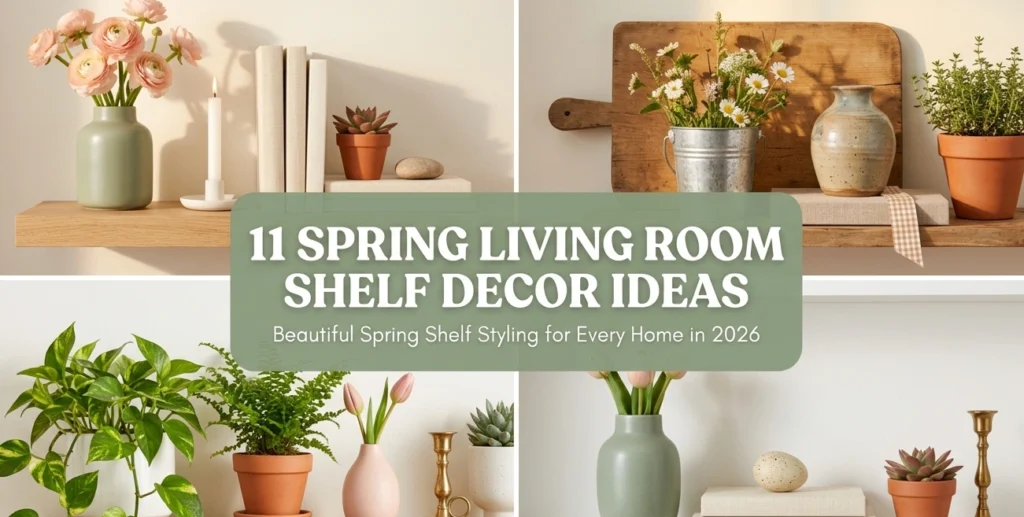
Living room shelves are some of the most personal surfaces in your home — they tell your story and show which season you’re celebrating. A spring refresh takes very little time and even less money, yet it changes the entire feel of the room.
These eleven ideas work for floating shelves, built-in bookshelves, and open display units alike, and they suit every style and budget. And the same spring touch works wonders elsewhere too — try it on your spring console table, a spring coffee table, or a cozy spring reading nook.
Start With a Colour Story
Before you place a single object on your shelf, decide on your palette. Two or three spring colours, chosen deliberately, make every decision after that feel effortless — blush pink with sage green and warm cream, butter yellow with soft white and natural linen, or lavender with terracotta and warm wood tones.
When every object belongs to the same colour family, the whole display looks intentional rather than randomly collected. This palette-first approach works across every shelf style — floating shelves, built-in bookshelves, and open display units alike.
Use the Rule of Three
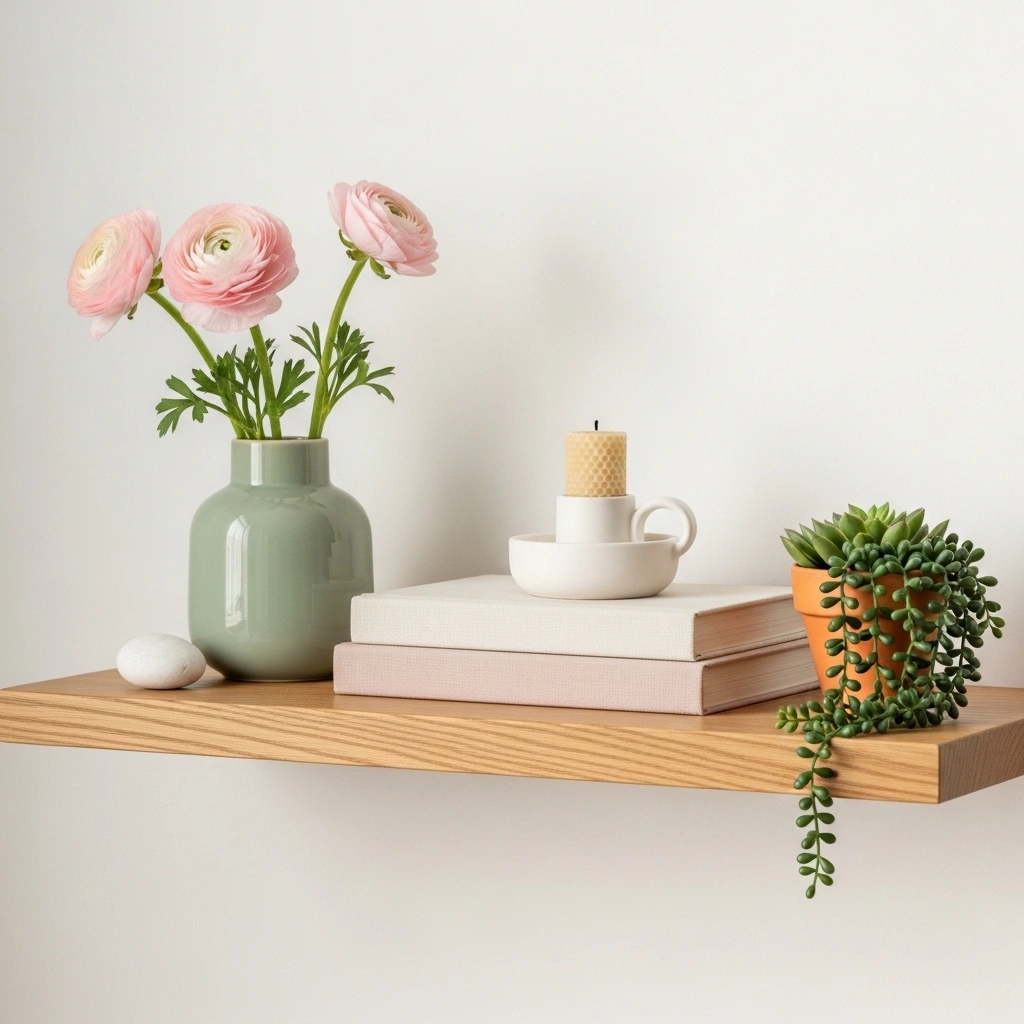
Two rules make every shelf arrangement look beautiful: odd numbers and height variation. Group objects in threes — one tall, one medium, one low — and vary the groupings at different points along the shelf. Never let everything sit at the same height.
Build each grouping around one hero piece at medium height, place something taller behind it — a vase of stems, a slim candle — and anchor the front with something lower, like a smooth stone or a tiny plant. This triangle of heights creates a visual rhythm that carries the eye naturally across the display.
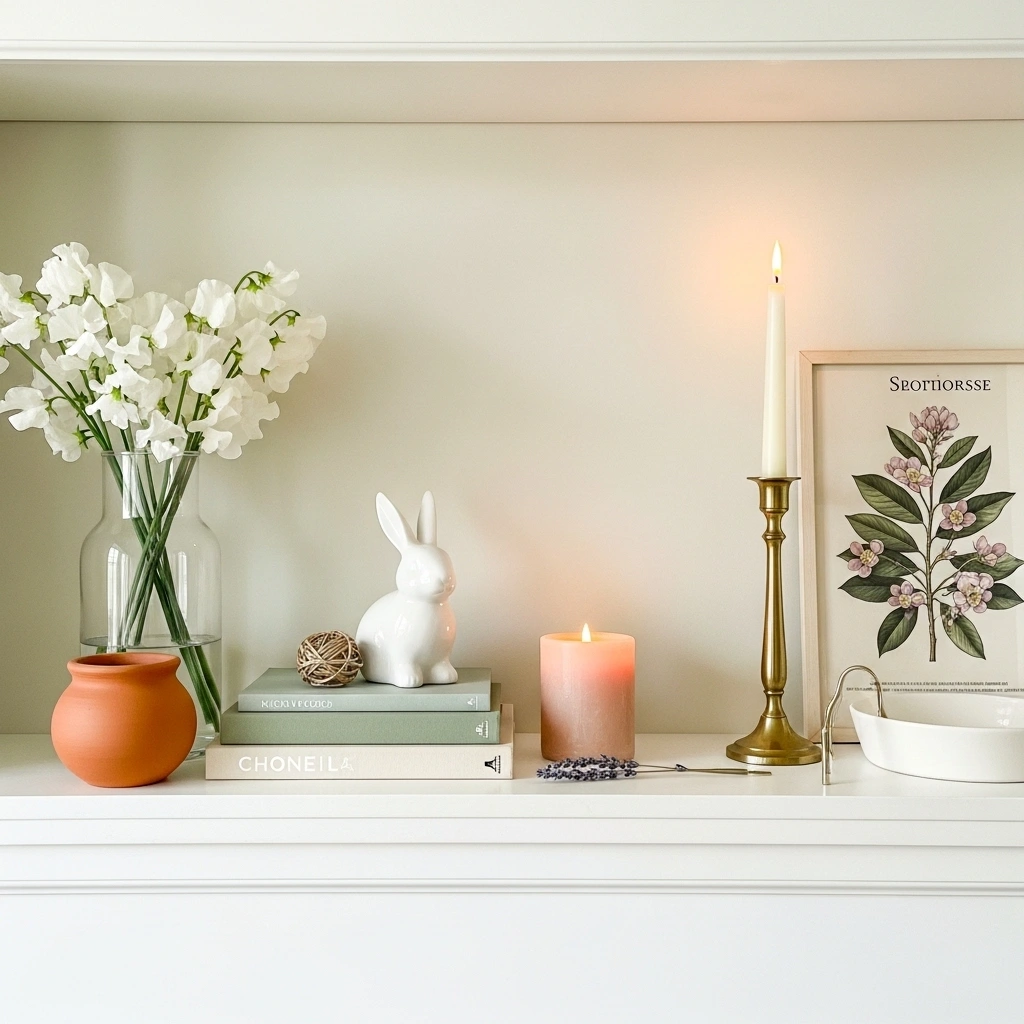
Swap Five Objects for an Instant Refresh
The fastest spring shelf refresh is a simple seasonal swap. Remove everything that feels heavy, dark, or winter-like, and replace it with lighter, airier alternatives: a dark pine cone for a speckled ceramic egg, a heavy dark candle for a slim blush taper, a dense woven basket for a light rattan tray.
Each one-for-one swap takes seconds, but five or six of them across the same shelf add up to a genuinely dramatic change. It costs nothing and works immediately — the most underrated spring update there is.
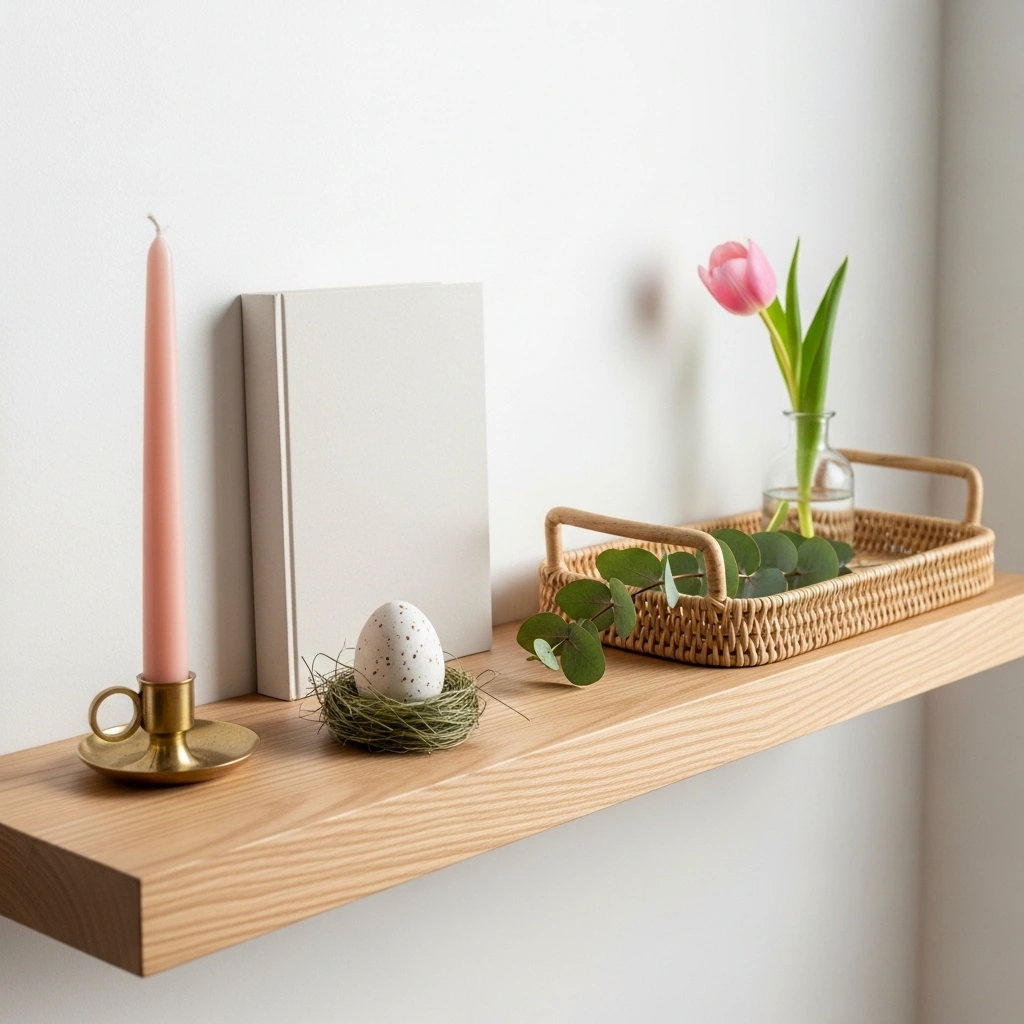
Follow a Four-Step Formula
Styling shelves for spring doesn’t need to be complicated. One: clear everything off and wipe the surface clean. Two: lean one piece of art or a botanical print against the back wall to create a backdrop. Three: build a height-varied grouping of three to five objects in front of it. Four: add one living element — a fresh flower, a plant, or a botanical sprig — as the final touch.
Then step back and look at the shelf from across the room. What you see from a distance is what your guests will see — and adjusting from a distance always produces the most balanced result.
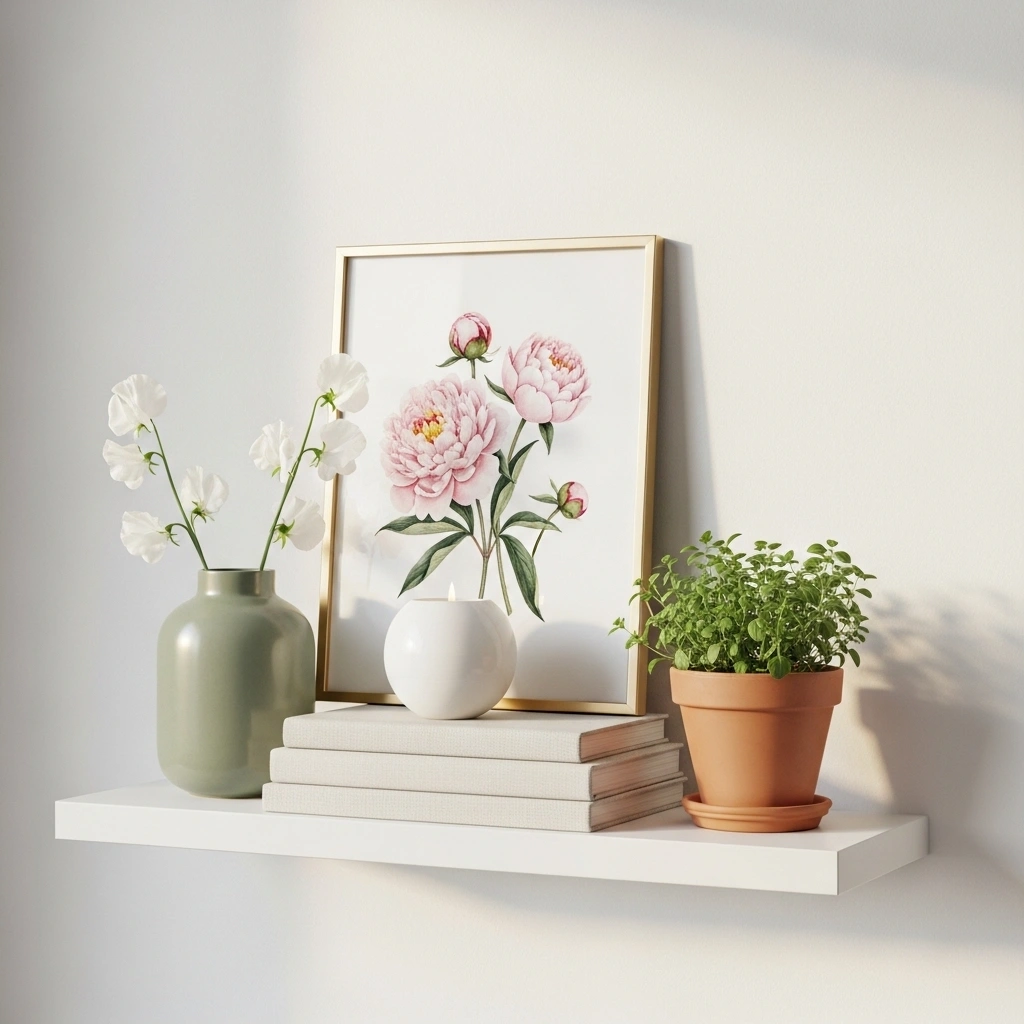
Use Books as Colour
Books are one of the most powerful shelf styling tools you already own. Pull out every book in your spring palette — sage spines, cream spines, blush covers — and group them together. Stack some horizontally as risers, turn some backward so their cream page edges face outward, and stand some upright in a colour-coordinated cluster.
A horizontal stack topped with a small object creates instant height variation for free, and mixing vertical and horizontal orientations keeps the eye moving across the display. This is the most editorial-looking trick on Pinterest, and it costs nothing.
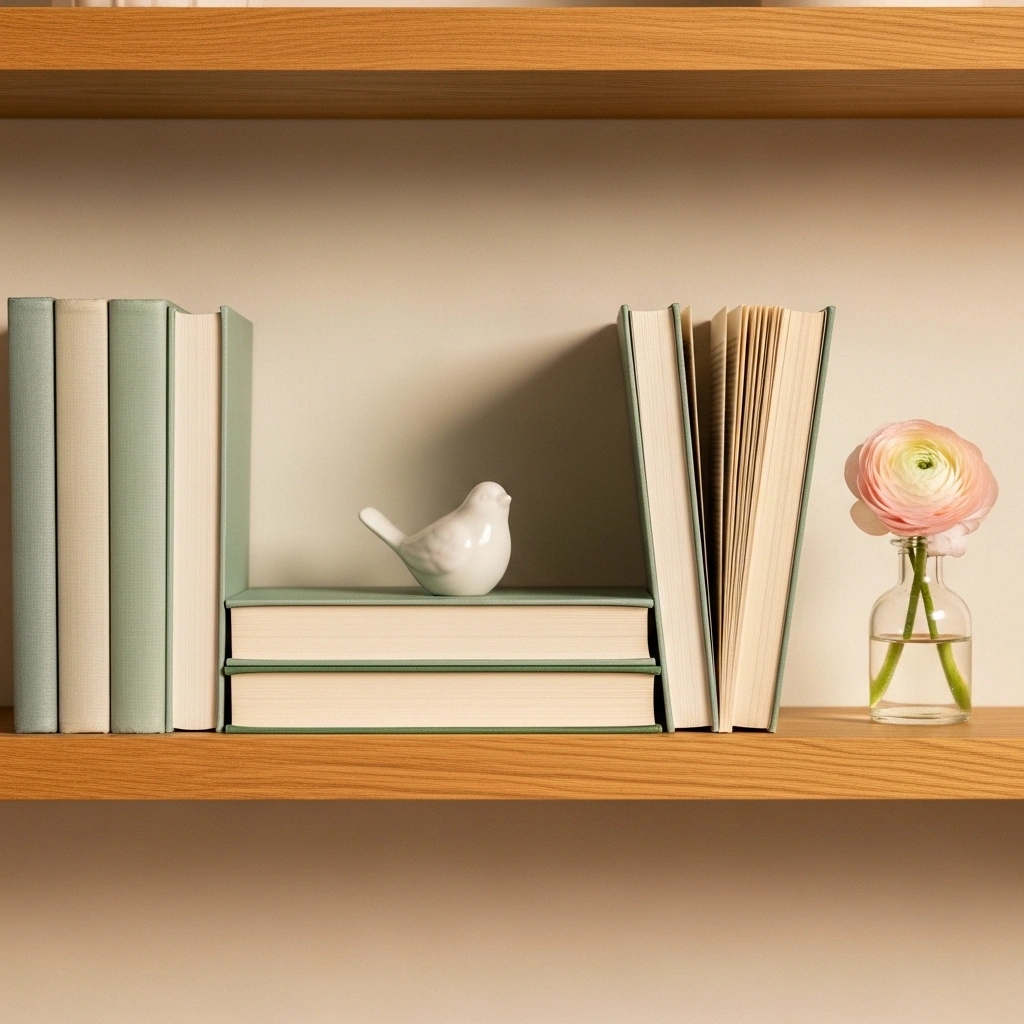
Leave Breathing Room
Empty space on a shelf is not wasted space — it’s part of the design. The most common styling mistake is filling every inch; crowded objects leave the eye nowhere to rest, while breathing room makes each piece look intentional and important.
Leave at least one-quarter of each shelf surface completely empty. It keeps the display feeling light and airy — exactly the direction spring decorating should go — and makes the objects you do place look more carefully chosen. Often, removing things is the most impactful styling decision you can make.
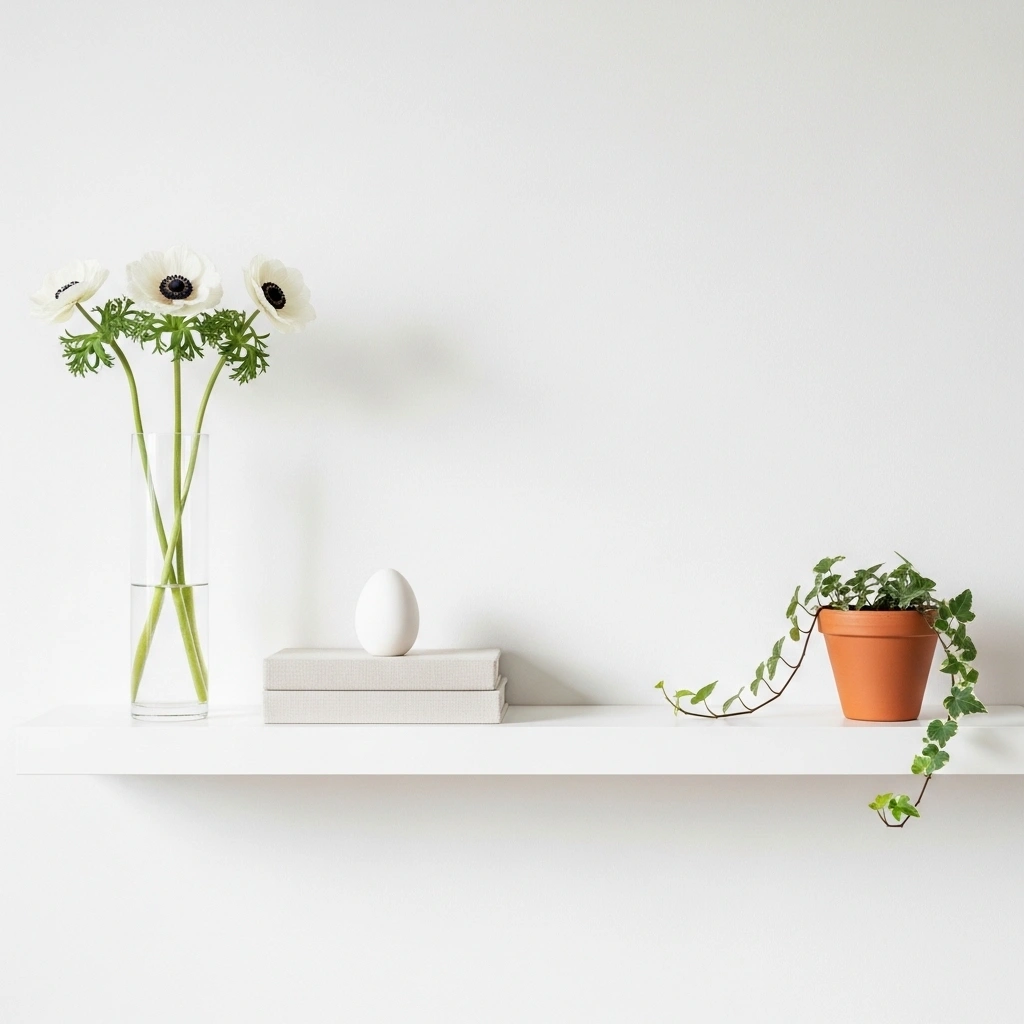
Mix Four Textures
Texture is what separates a beautiful shelf from a flat one. When everything is the same material — all ceramic, all glass, all smooth — the display looks lifeless. Mix deliberately instead: smooth ceramic beside rough terracotta, shiny glass beside matte linen, woven rattan beside polished wood.
Each contrast makes both textures look better than they would alone. Mixing fresh and dried botanicals on the same shelf adds a natural, collected quality that feels personal and genuinely beautiful.
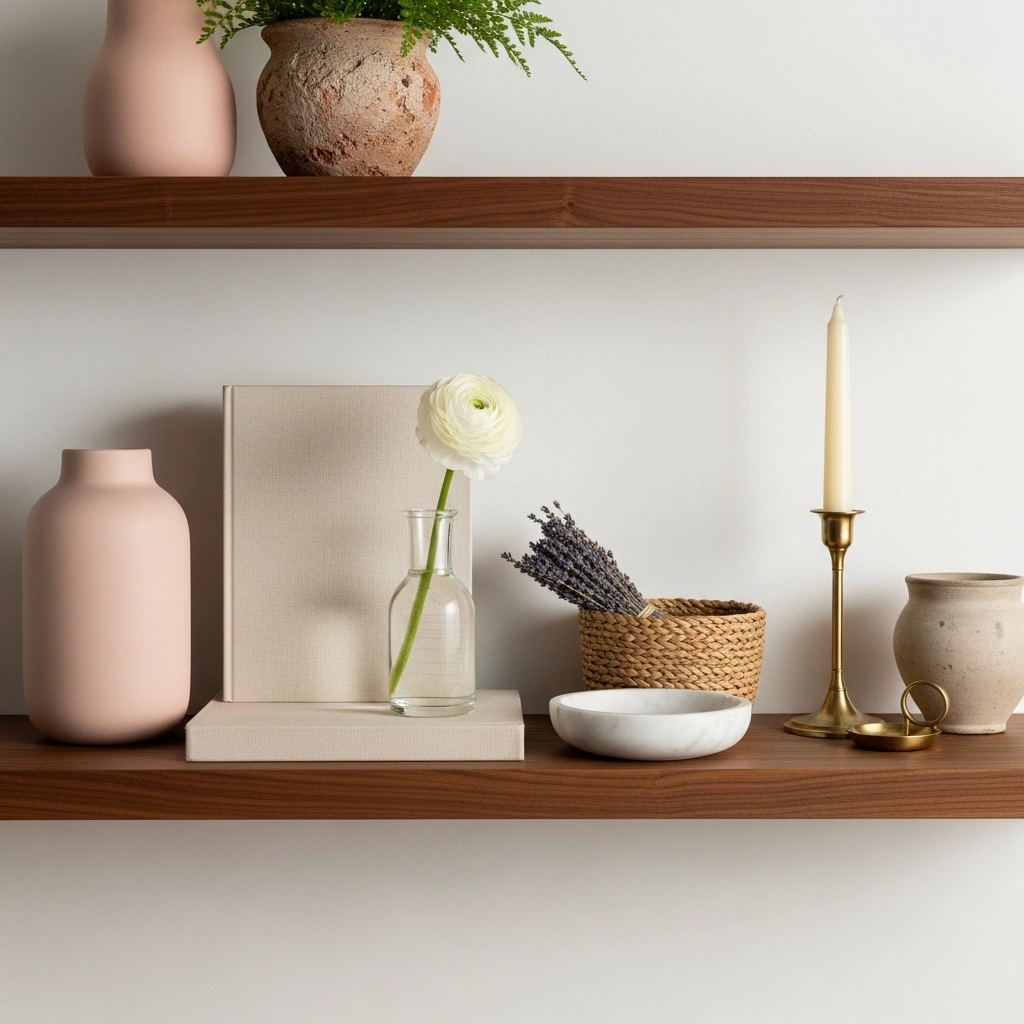
Give Each Shelf One Focal Point
Every shelf level needs one clear focal piece. When one strong piece anchors the level, the eye finds it immediately and then moves outward to the supporting elements. When everything competes at the same visual weight, the display just feels scattered.
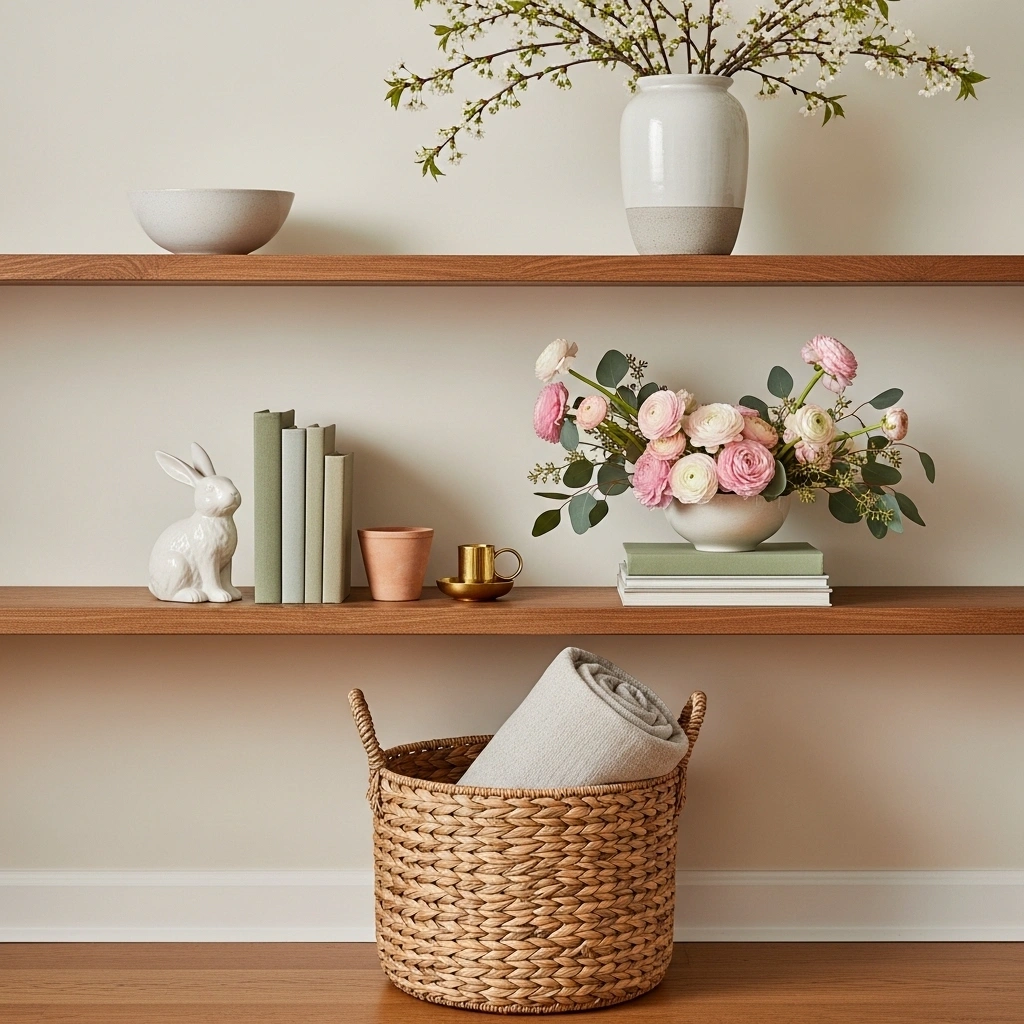
Choose the focal piece first for each level — a tall glass vase of spring stems up top, a lush ceramic bowl of florals in the middle, a small framed botanical print lower down — and make sure the focal pieces relate to each other through colour, material, or scale so the whole unit reads as one story.
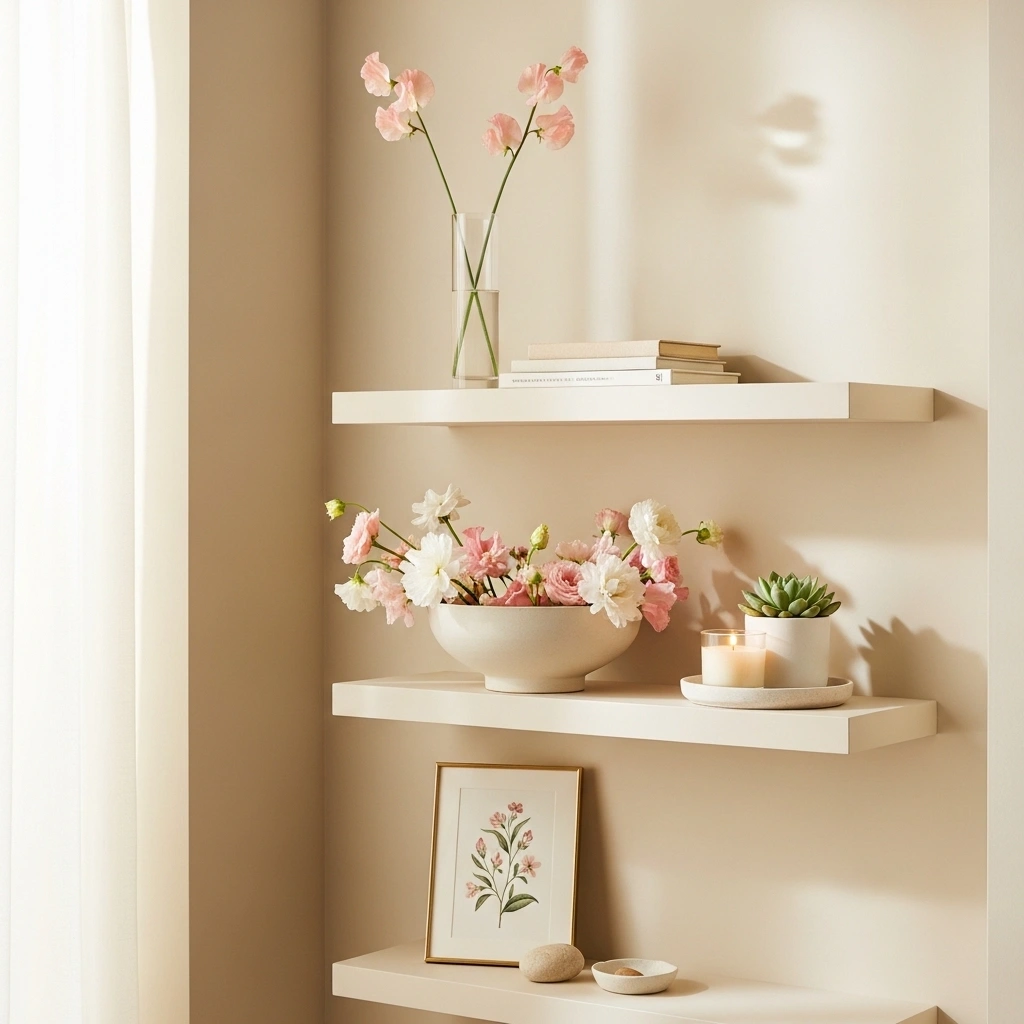
Style Floating Shelves With Five Objects
Floating shelves are the most saved spring shelf format — and the easiest to over-style. With no enclosure or backing, every object is fully visible, so each piece needs to be genuinely intentional.
Apply one simple rule: five objects maximum per shelf. One tall, one medium, one low, one living element, one personal piece. One or two statement pieces — a large ceramic, a tall vase, a generous plant — create far more impact than ten small objects. Keep the wall space above and below clean, and the whole display looks more deliberate.
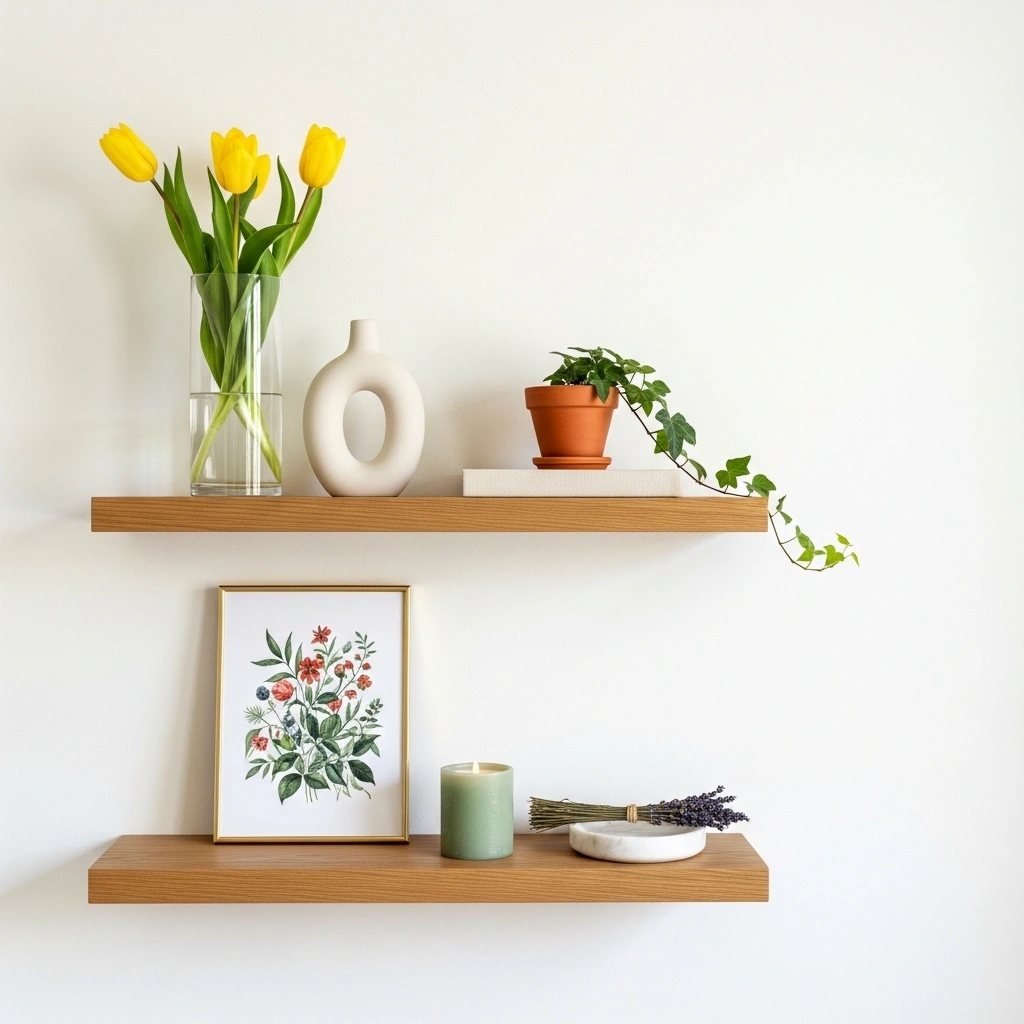
Tell a Story Across Open Shelves
Multiple open shelves are the most exciting spring opportunity of all. Give each level a role: the top shelf creates height and drama, the middle shelves carry the main visual weight, the lower shelves ground the display with heavier natural materials.
Create a visual diagonal flow — tallest element top left, a medium element middle right, a low grounding piece bottom left — so the eye travels through the entire display. Then connect the levels with one repeating element: a single colour on every shelf, or one material like terracotta or brass threading through. The shelves read as one cohesive spring statement.
Add One Living Plant Per Shelf
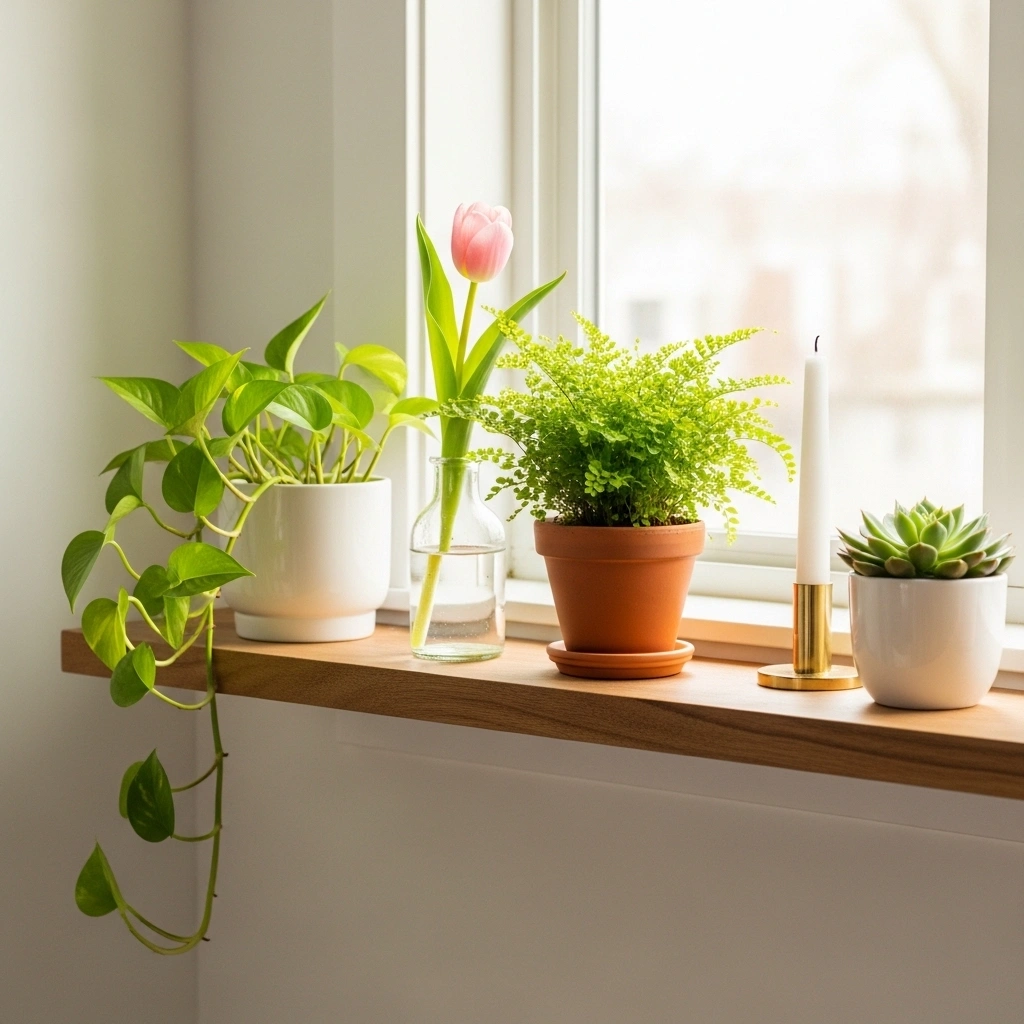
Plants are the one element no other shelf object can replace. A trailing pothos spilling over the edge, a compact fern in terracotta, a tiny succulent in white ceramic, a growing herb — any of these makes the shelf feel genuinely alive rather than just decorated.
Mix fresh flowers with living plants for the richest combination: a tulip in a slim bud vase beside a terracotta succulent, ranunculus beside a trailing pothos. Living things create a quality no static object can match — which is why plant-forward shelves get saved the most.
Five Golden Rules for Every Spring Living Room Shelf
These work every single time. No exceptions.
Palette before placement. Choose two or three spring colours before you touch a single object — anything that fails the palette test stays off the shelf.
Odd numbers always. Three objects, five pieces, seven stems. Odd groupings look collected; even groupings look staged.
Vary every height. Tall, medium, low — never everything at the same level.
Leave breathing room. Keep at least a quarter of each shelf surface empty. Empty space is part of the design.
Add one living thing. A plant, a fresh flower, a growing herb — one living element makes every shelf feel alive.
Quick Answers
What should I put on living room shelves for spring?
A mix of books in your spring palette, one focal piece per shelf level, fresh and faux greenery, warm textures like terracotta and wood, and one living plant per shelf. Keep to three to five objects per level and leave breathing room.
How many items should be on each shelf?
Three to five, always an odd number, with at least a quarter of the surface left empty. On floating shelves, five is the absolute maximum — fewer, better-chosen pieces always win.
How do I keep styled shelves from looking cluttered?
Start from a blank slate, give each level one focal point, leave breathing room, repeat one colour or material across levels, and check your work from across the room. If a shelf still feels busy, remove one more thing.
What’s the quickest spring shelf update?
The five-object swap: trade dark, heavy winter pieces for lighter ones you already own. Turn books backward for cream page edges and add grocery-store stems. Ten minutes, zero cost, completely different shelf.
Final Thoughts
Your living room shelves are where your style lives. Start with your palette, clear the shelves, build in threes, add something living and something personal — then step back across the room. If it makes you stop and smile, it’s perfect exactly as it is.