15 Jewel-Tone Christmas Decor Ideas (Rich Color, Zero Clutter)
There is something instantly cozy about a home dressed in deep, rich color at Christmas. Emerald greens, ruby reds, sapphire blues, and soft amethyst purples glow against warm lights and gold accents, making even a simple tree look thoughtful and expensive. Jewel tones feel festive without shouting, and they work just as well in a small apartment as they do in a big family living room.
The trick is balance. Pick two or three deep colors, repeat them around the room, and let warm metallics and soft textures do the rest. Start with the full Christmas decor ideas for 2026 collection for the big picture, then steal one jewel-toned moment for the table from our Christmas centerpiece ideas, or soften all that richness with a calmer corner inspired by Scandinavian Christmas decor. Below are fifteen ways to bring the look home.
1. Go All-In on an Emerald Green Tree
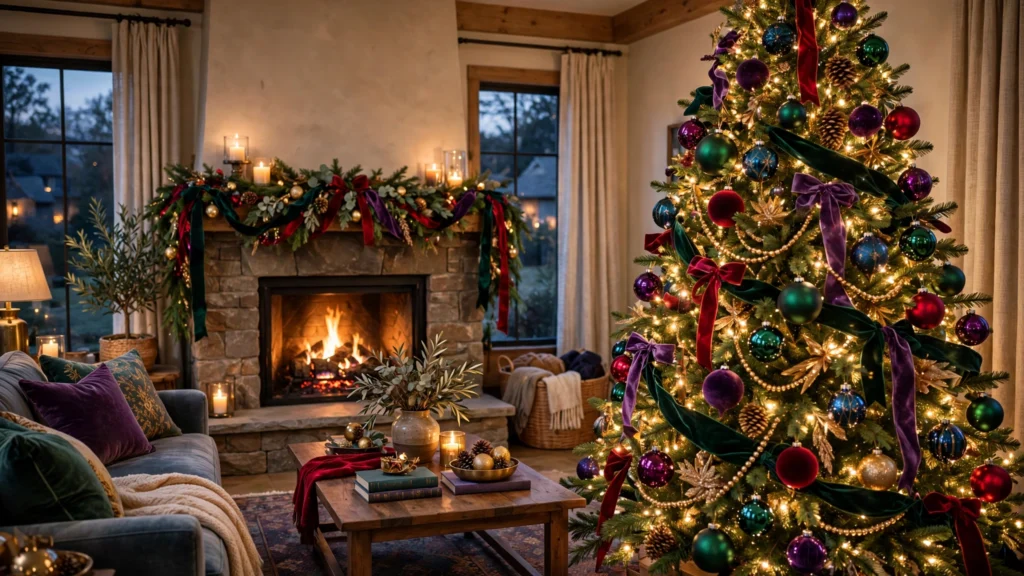
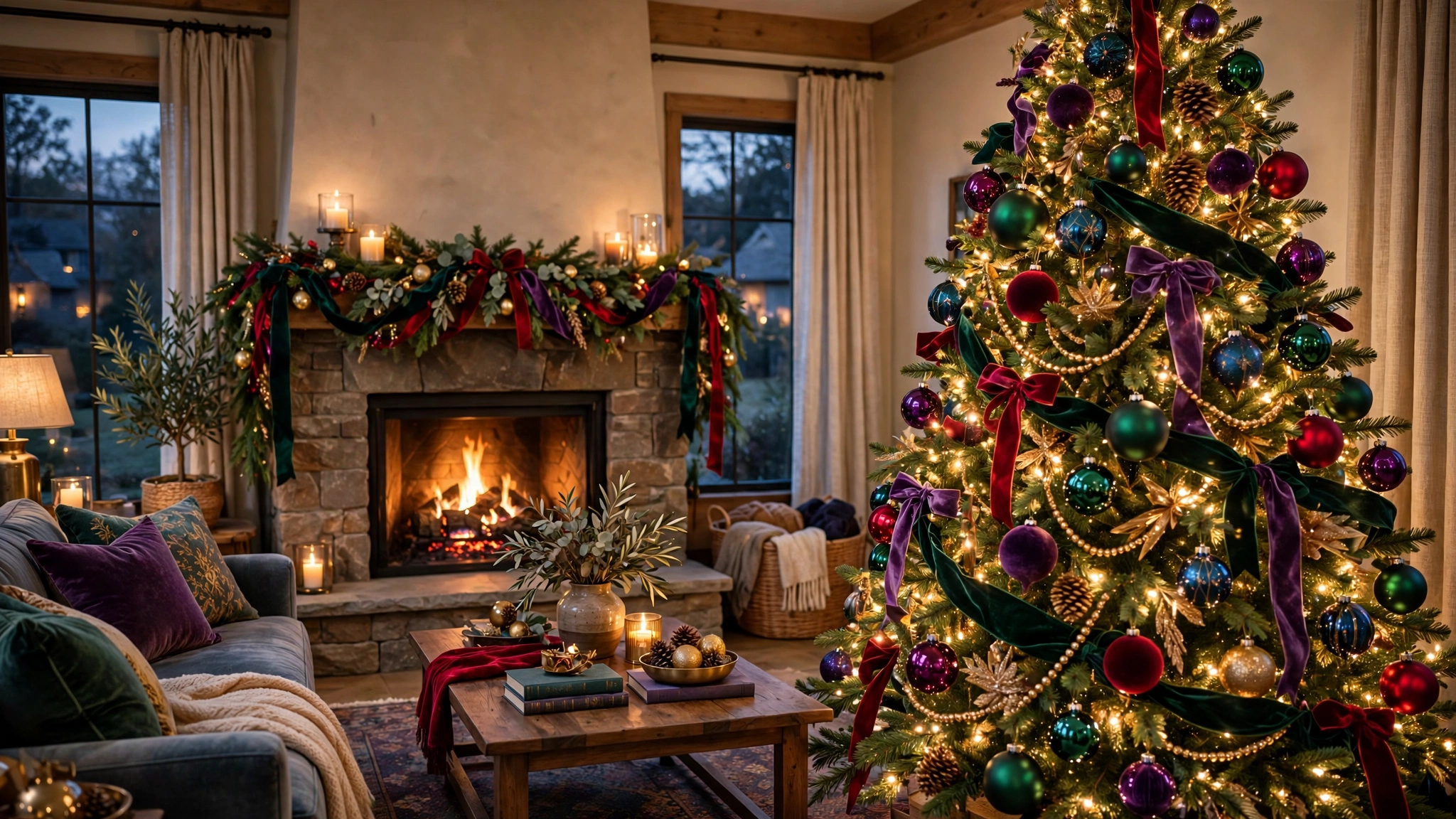
Emerald is the easiest jewel tone to start with because it already lives in the tree itself. Layer emerald ornaments in different finishes — shiny, matte, and frosted — so the tree has depth instead of one flat shade of green.
Add gold ribbon and warm white lights to keep the look glowing rather than dark. The gold lifts the green beautifully and stops the tree from disappearing into a corner at night.
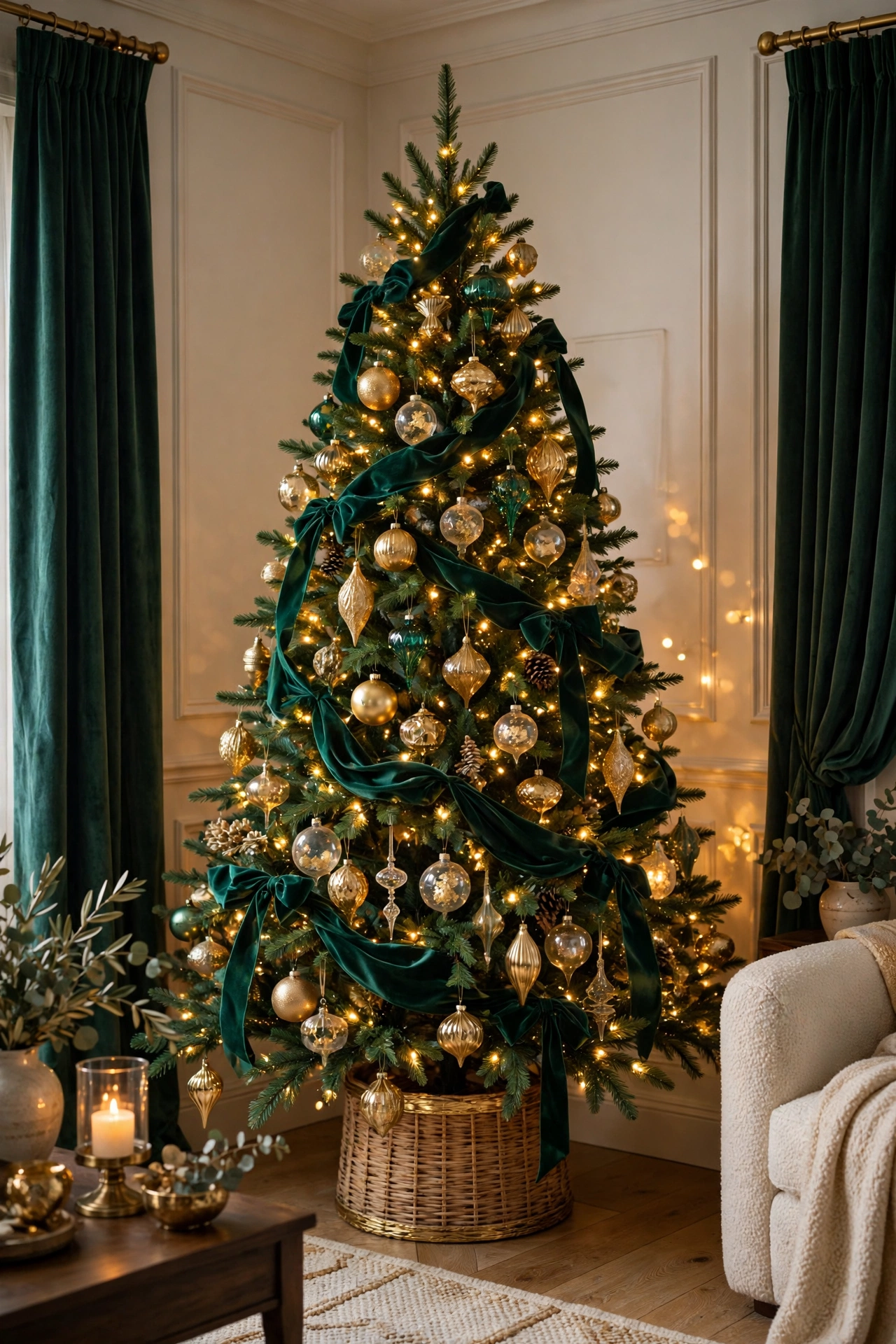
Tip: Mix three emerald finishes (glossy, matte, glitter) and keep the ribbon to one gold tone for a polished finish.
2. Dress the Tree in Ruby Red Velvet Ornaments
Velvet ornaments are what make jewel-tone decorating feel soft and luxurious instead of merely colorful. Ruby red velvet baubles catch the light gently and add a texture that shiny plastic simply cannot match.
Cluster them in small groups of three rather than spacing them evenly. Grouping makes the tree look styled by a designer, and it leaves room for a few gold or glass pieces to sparkle between the velvet.
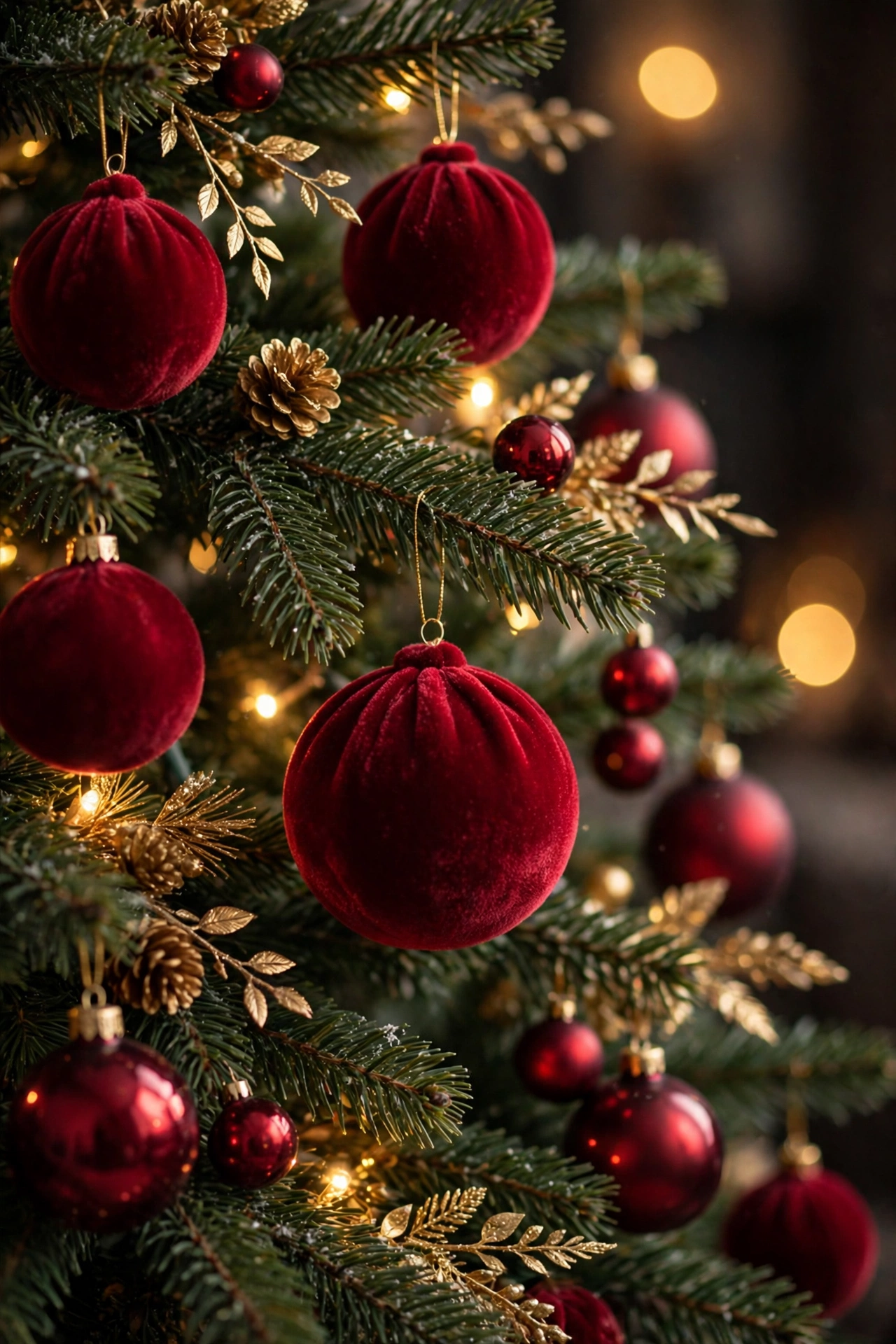
Tip: Hang velvet ornaments slightly forward on the branches so their texture shows instead of hiding behind greenery.
3. Try a Sapphire Blue Tree for a Cooler Glow
If red and green feel too expected, sapphire blue is a beautiful surprise. Deep blue ornaments with silver and warm white lights give the tree a cool, evening glow that still feels unmistakably festive.
Keep the rest of the room calm — cream cushions, a simple garland, maybe one silver tray — so the blue stays the star. Too many competing colors will fight with a sapphire tree instead of supporting it.
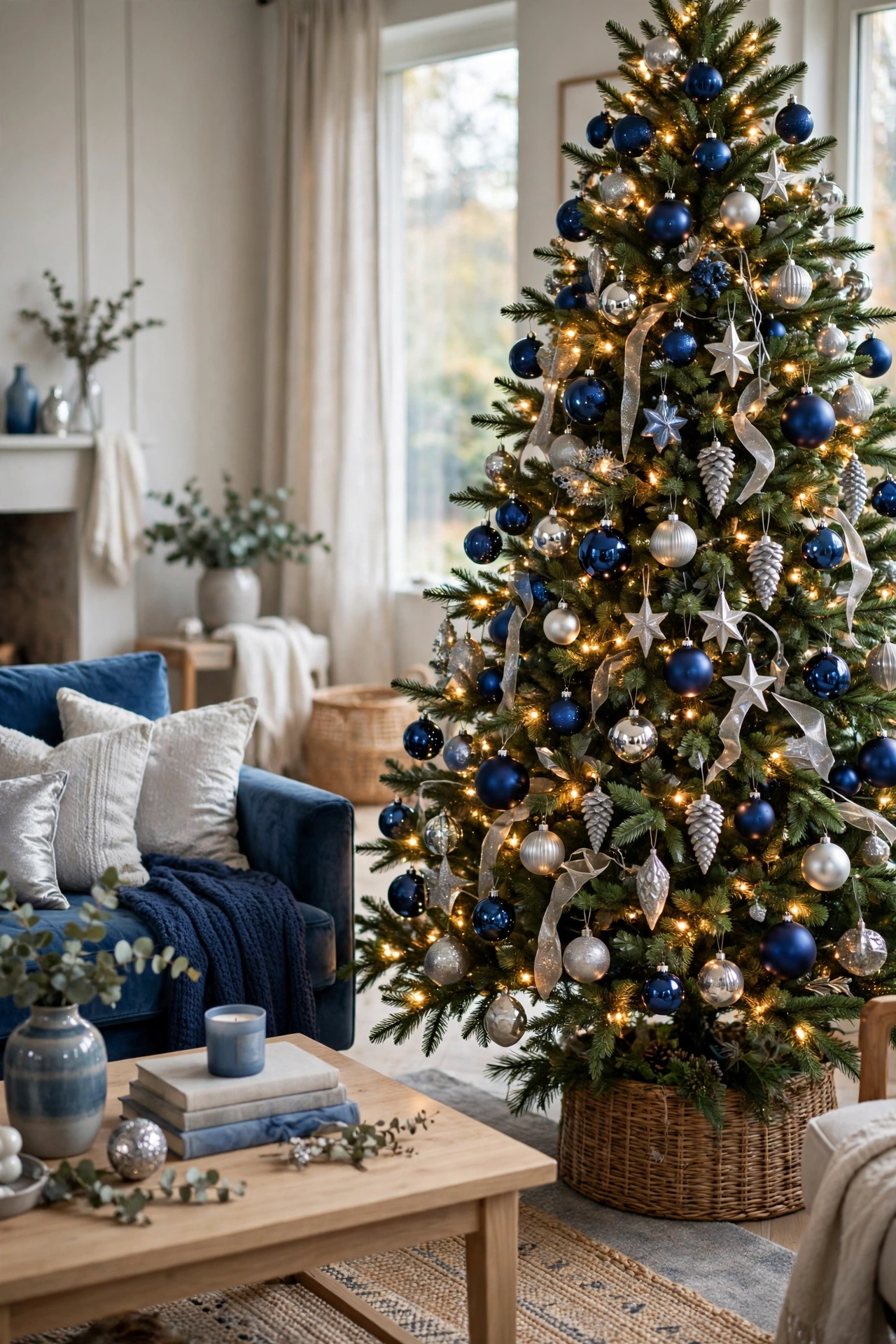
Tip: Pair sapphire with silver, not gold, for the crispest, most modern version of this look.
4. Add Amethyst and Plum Accents
Amethyst and plum are the quiet jewel tones, and that is exactly why they work so well. A few purple ornaments, a plum throw, or a violet candle can make a traditional red-and-green scheme feel fresh and grown-up.
Use purple as an accent, not the main event, unless the whole room is built around it. A little plum goes a long way, especially when it sits next to gold.
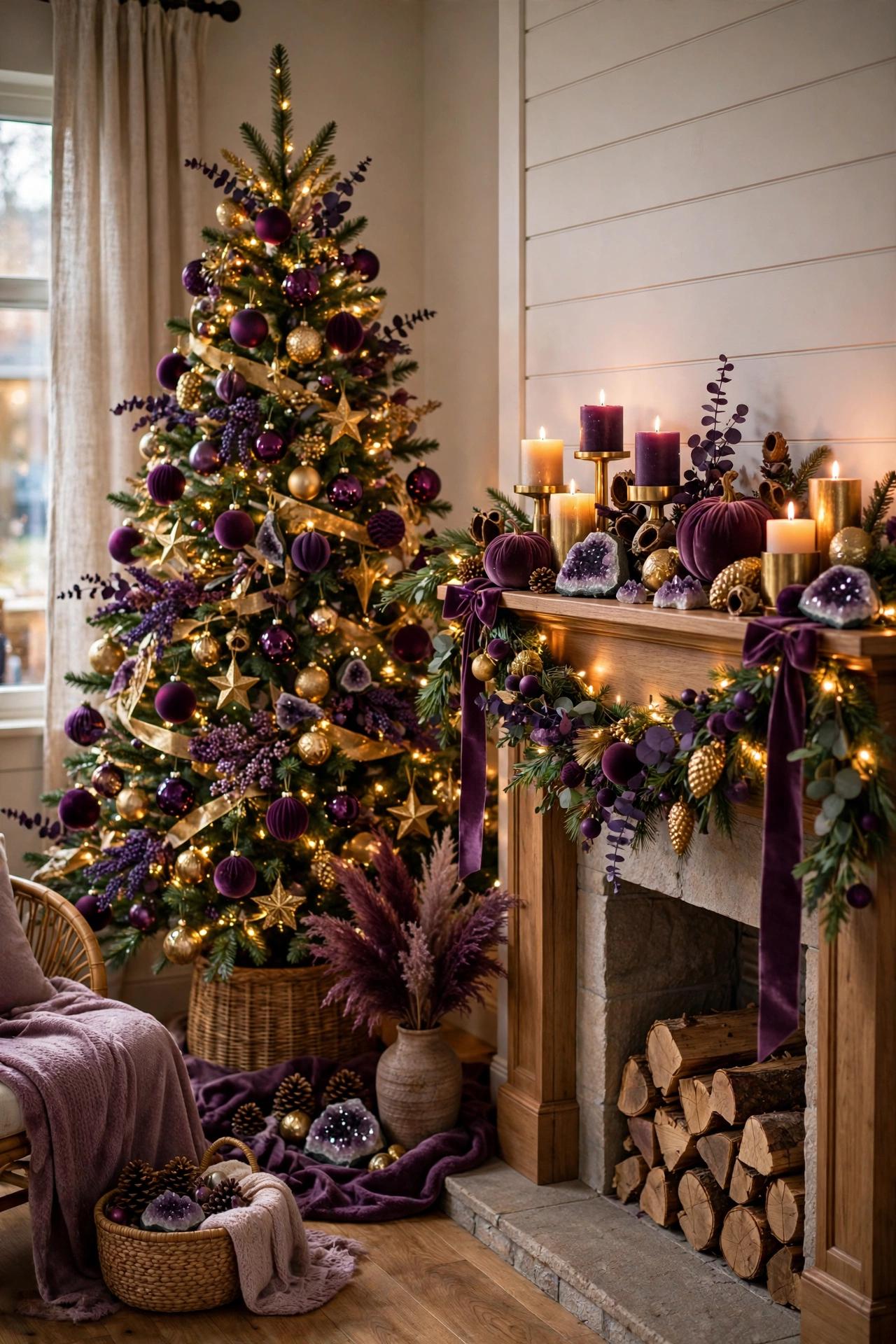
Tip: Limit amethyst to about a quarter of your ornaments so it reads as a rich accent, not a theme takeover.
5. Dress the Mantel in Mixed Jewel Tones
The mantel is the perfect place to mix all your jewel tones at once, because garland forgives a lot. Wind emerald, ruby, and sapphire ornaments through the greenery, then add candles in gold holders to tie everything together.
Step back and squint: if one color jumps out far more than the others, move a few ornaments around until the mix feels even. A mantel should feel abundant, not lopsided.

Tip: Place the largest ornaments deepest in the garland and smaller ones at the front for a layered, full look.
6. Set a Jewel-Tone Tablescape
A jewel-tone table does not need fancy china. Deep green napkins, ruby glasses, and gold cutlery on a plain white or cream tablecloth already look like a celebration, especially by candlelight.
Keep the centerpiece low so guests can see each other across it — a simple garland runner with a few ornaments does the job without blocking conversation.

Tip: Choose just two jewel tones for the table (emerald and ruby is a classic pair) and let gold be the third, neutral accent.
7. Wrap the Tree in Wide Velvet Ribbon
Wide velvet ribbon is the fastest way to make a tree look expensive. One or two generous loops of emerald or burgundy velvet, cascading down the tree, instantly read as intentional and soft.
Cut the ribbon into separate lengths rather than spiraling one endless piece. Short, tucked lengths are easier to arrange, easier to fix, and they sit more naturally among the branches.

Tip: Use wired velvet ribbon if you can find it — it holds its shape and will not collapse by New Year.
8. Fill Bowls and Trays with Ornament Clusters
Not every jewel-tone moment needs a tree. A bowl of mixed ornaments on a console table, a tray on the coffee table, or a cluster on a bookshelf spreads color through the house with almost no effort.
Mix sizes — a few large baubles, plenty of medium ones, and a scattering of tiny gold beads — and tuck in a sprig of pine so the arrangement still smells and feels like Christmas.

Tip: Stick to one container color (gold, brass, or clear glass) so the ornaments, not the bowl, get the attention.
9. Hang a Jewel-Tone Wreath on the Door
A wreath is the first thing guests see, so let it set the tone. Start with a full green wreath, then add jewel-tone ornaments, a velvet bow, and a few pinecones for texture.
Hang it slightly lower than you think — at eye level rather than high on the door — so the color and detail are actually seen and enjoyed.

Tip: Wire ornaments on rather than gluing them, so the wreath survives wind, rain, and storage for next year.
10. Welcome Guests with a Jewel-Tone Entryway
The entryway is often forgotten at Christmas, which is a shame because it is where the festive feeling begins. A small tree, a garland over the console, and a lantern or two are all it takes.
Repeat one color from the living room here — emerald is an easy choice — so the house feels connected from the moment someone walks in.
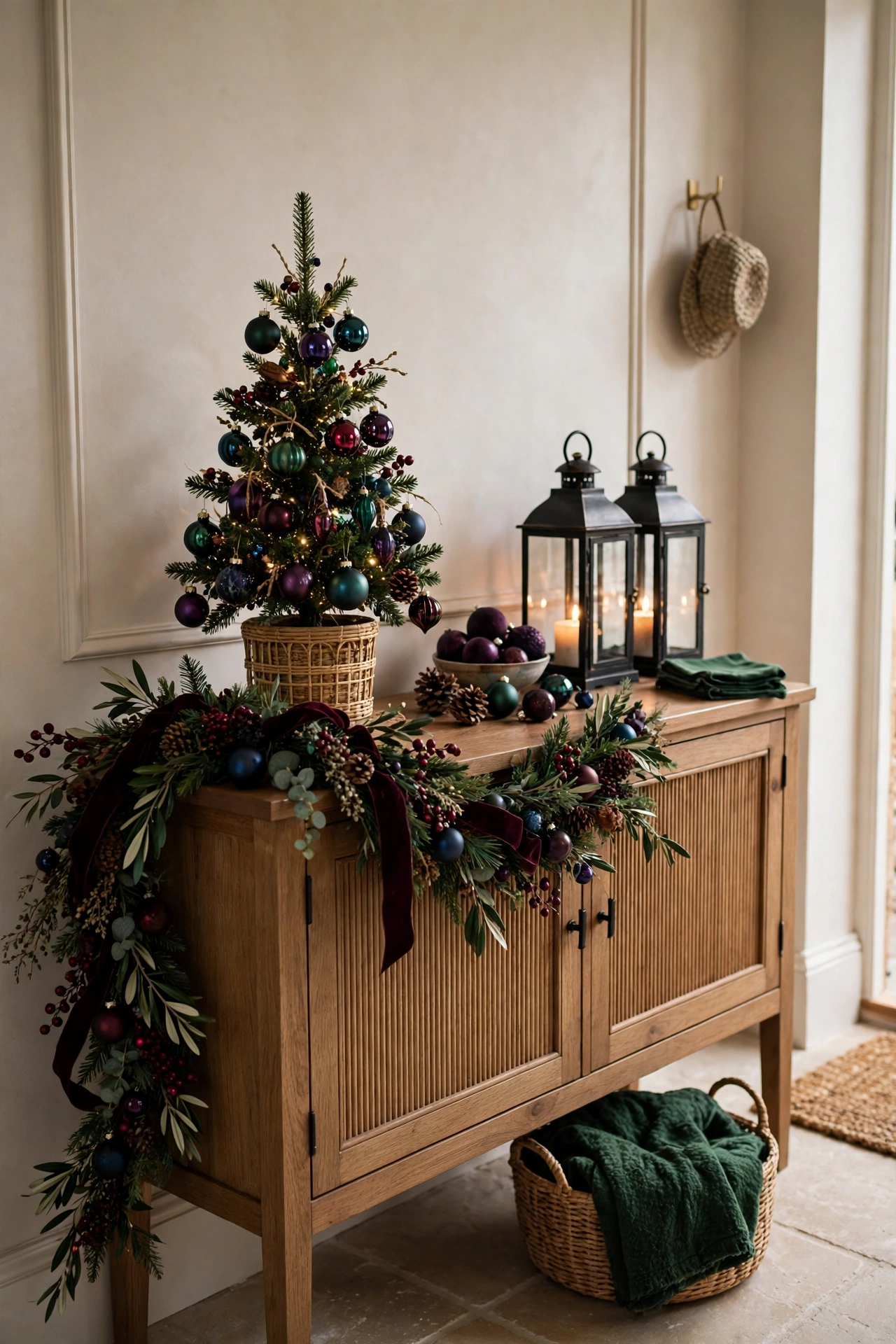
Tip: Keep the entryway arrangement narrow and off the walking path, so it looks welcoming instead of cluttered.
11. Bring Jewel Tones into the Bedroom
Christmas does not have to stop at the living room door. In the bedroom, a small tree, jewel-tone cushions, and warm string lights make December evenings feel extra cozy.
Keep it softer here than in the main rooms — one deep color plus warm light is plenty. The bedroom should still feel restful, just with a festive glow.

Tip: Swap just the cushion covers and throw for jewel tones instead of redecorating — it takes ten minutes and transforms the room.
12. Garland the Staircase in Jewel Tones
A staircase garland is one of the most photogenic spots in a decorated home, and jewel tones make it sing. Drape the garland along the banister, then weave in ornaments and velvet bows at intervals.
Leave the handrail itself clear enough to hold comfortably. Beauty matters, but so does getting safely up and down the stairs with a mug of cocoa.

Tip: Space bows evenly — one every three or four spindles — for a rhythm that looks deliberate rather than random.
13. Wrap Gifts in Jewel-Tone Paper
Gifts under the tree are decoration too, so wrap them to match. Emerald, ruby, sapphire, and plum paper with velvet ribbon and gold bows look like part of the display long before anyone opens them.
Stick to two or three paper colors and one ribbon style for a coordinated pile. A jumble of every pattern in the shop will fight with the tree instead of complementing it.

Tip: Add a simple sprig of pine or a single small ornament to each gift instead of fussy tags — it looks elegant and costs almost nothing.
14. Build a Candlelit Jewel-Tone Centerpiece
For evenings at the table, nothing beats candlelight on jewel tones. A low arrangement of pine branches, deep-colored ornaments, and candles in gold holders glows beautifully and photographs wonderfully.
Use unscented candles if the centerpiece sits near food, and keep flames well away from greenery. Battery candles give the same glow with zero worry if little ones are around.
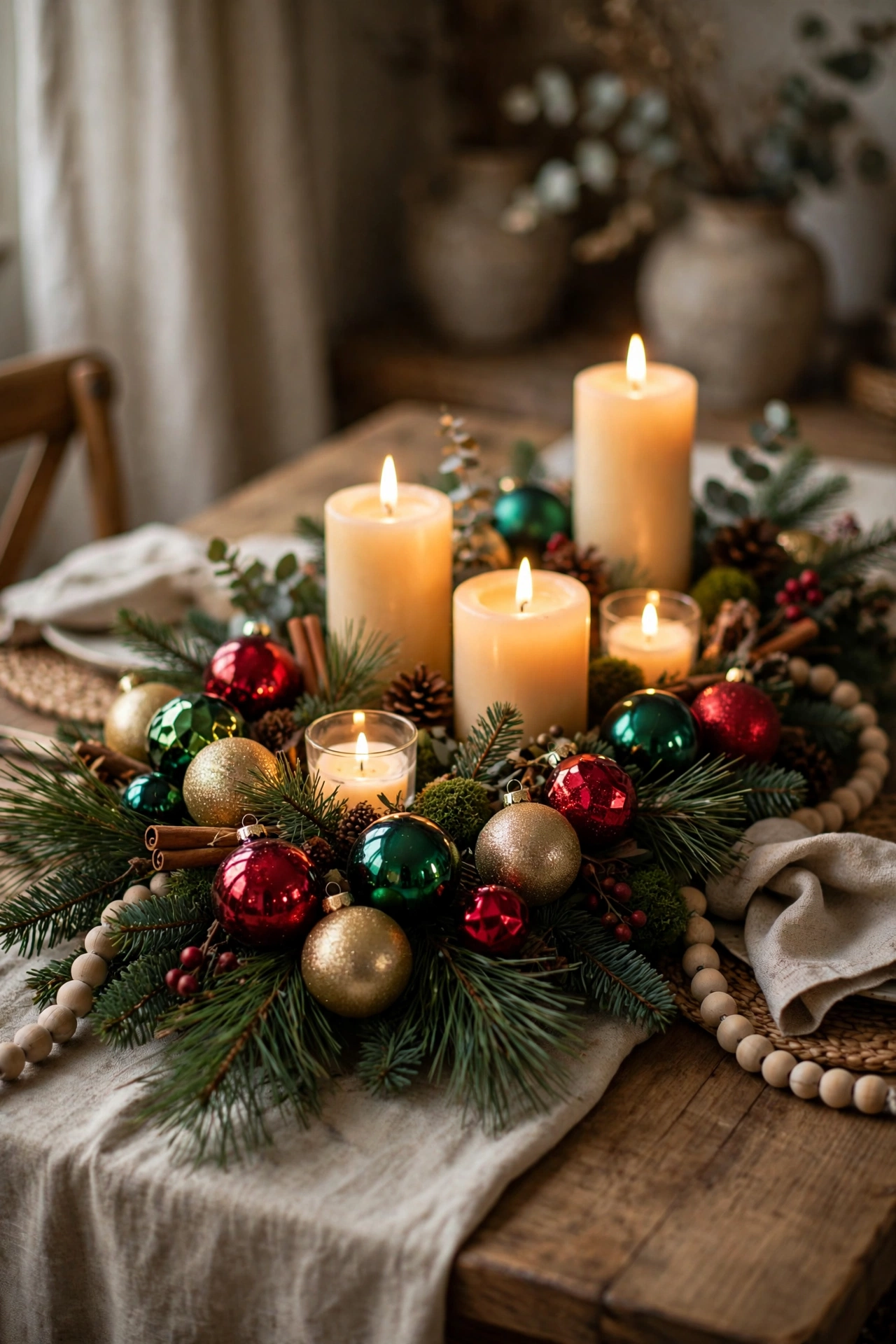
Tip: Vary candle heights — tall tapers at the back, short pillars at the front — for a centerpiece with real dimension.
15. Create a Jewel-Tone Window Nook
Finally, claim one quiet corner for yourself. A window seat or armchair with jewel-tone cushions, a small tree, and warm lights becomes the best spot in the house on a cold December evening.
This is the corner where the look stops being decoration and starts being a feeling — rich color, soft light, and somewhere cozy to sit with a warm drink.

Tip: Add one jewel-tone throw in the nook and keep the rest of the cushions neutral, so the corner feels layered rather than loud.
Frequently Asked Questions
What colors are jewel tones for Christmas decor?
Jewel tones are the deep, saturated colors of gemstones: emerald green, ruby red, sapphire blue, amethyst purple, and sometimes topaz gold or garnet. They are rich rather than bright, which is why they pair so well with warm lights and metallic accents.
How do you decorate a Christmas tree with jewel tones without it looking busy?
Pick two or three jewel tones, repeat them evenly around the tree, and use one metallic — gold or silver — as a unifier. Group ornaments in small clusters instead of scattering every color everywhere, and let warm white lights soften the whole effect.
What goes with emerald green Christmas decor?
Gold is emerald’s classic partner, and it instantly makes green feel festive and warm. Ruby red adds traditional Christmas contrast, while cream, brass, and natural wood keep the look grounded and elegant.
Can jewel-tone Christmas decor work in a small living room?
Yes — in fact, deep colors can make a small room feel cozier rather than smaller, as long as you balance them with warm light and a few lighter elements like cream cushions or a pale rug. Keep the biggest jewel-tone moments on the tree and one accent area, rather than coloring every surface.
How do you mix jewel tones with gold or silver?
Choose one metallic and stick with it for the main pieces — gold warms up emerald, ruby, and plum, while silver sharpens sapphire and amethyst. Mixing both metals in small amounts is fine, but one dominant metal keeps the whole scheme looking intentional.