
Christmas Decor Ideas for Small Spaces: Why It Feels Crowded
Every December the same thing happens in a small home. The tree goes up, the garland comes out, the boxes open — and by the second weekend the living room feels smaller, darker and more cluttered than it did in November. These Christmas decor ideas for small spaces explain why a small home feels crowded instead of festive at Christmas, and the simple fix for each reason, so the season fits the home you actually live in.
A small space does not need less Christmas. It needs Christmas at the right scale, in the right places, with room left over to actually live in. Every fix below is a small, practical change — a slimmer tree, one decorated surface instead of five, one warm strand of lights — and each one works in a studio flat just as well as in a small house. Start with the tree, then the surfaces, then the lights, and the room will feel festive by the weekend instead of full.
If the tree is the first thing to sort, our small Christmas tree decorating ideas show how a little tree can carry the whole season. If the whole flat needs the same treatment, our apartment living room ideas on a budget keep a small room calm and liveable, and our Christmas bedroom decor ideas carry the feeling into the smallest room in the house.
The Tree Is Too Big for the Room
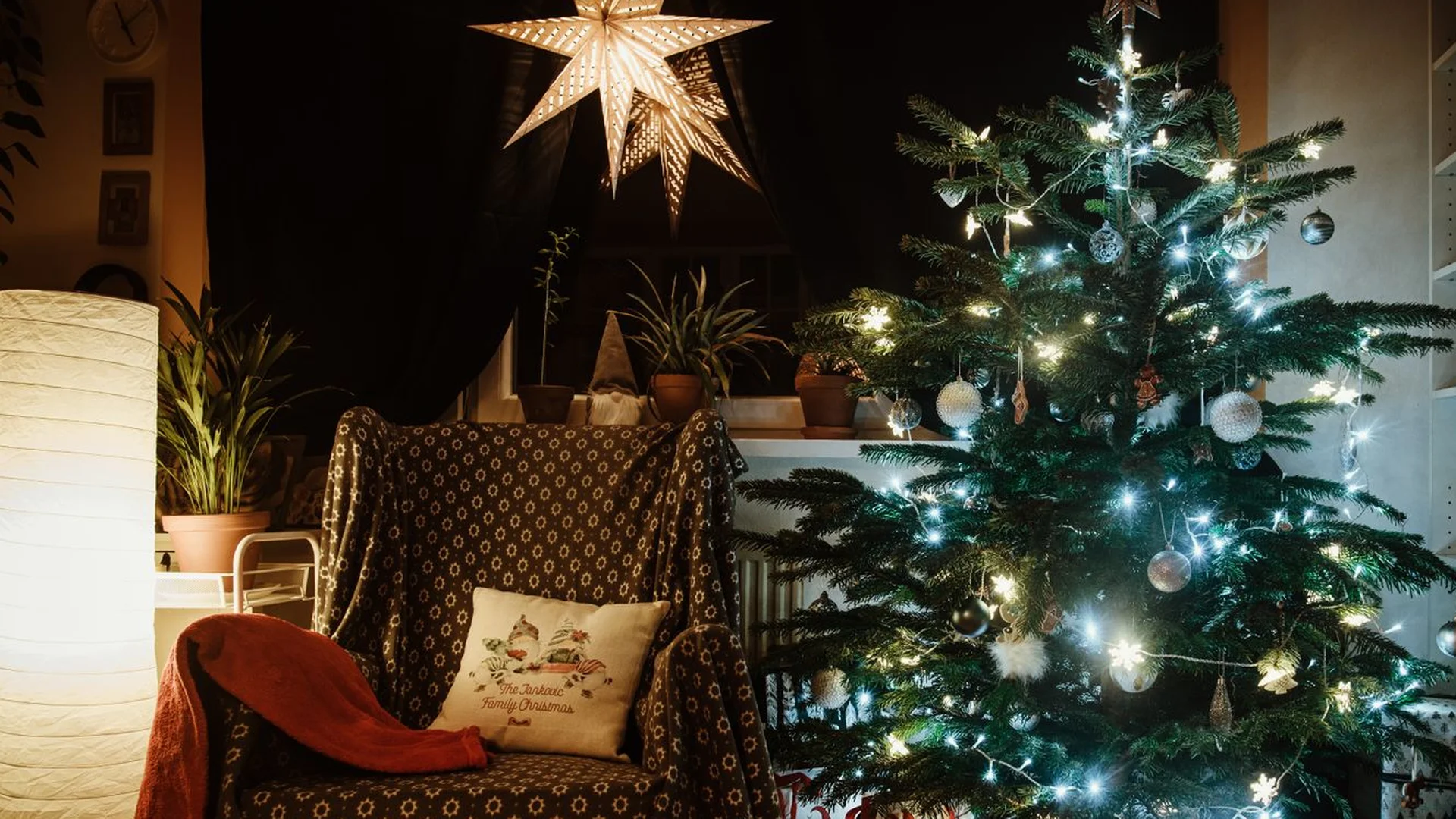
This is the reason most small homes feel crowded before anything else goes wrong. A full seven-foot tree with a four-foot spread eats the one corner the room can spare, and then it eats the walkway past it, and then the sofa has to shift, and suddenly the whole room is arranged around a tree instead of around the people who live there. The tree is not the problem — the size of it is. In a small room, a tree that is too wide reads as clutter no matter how beautifully it is dressed.
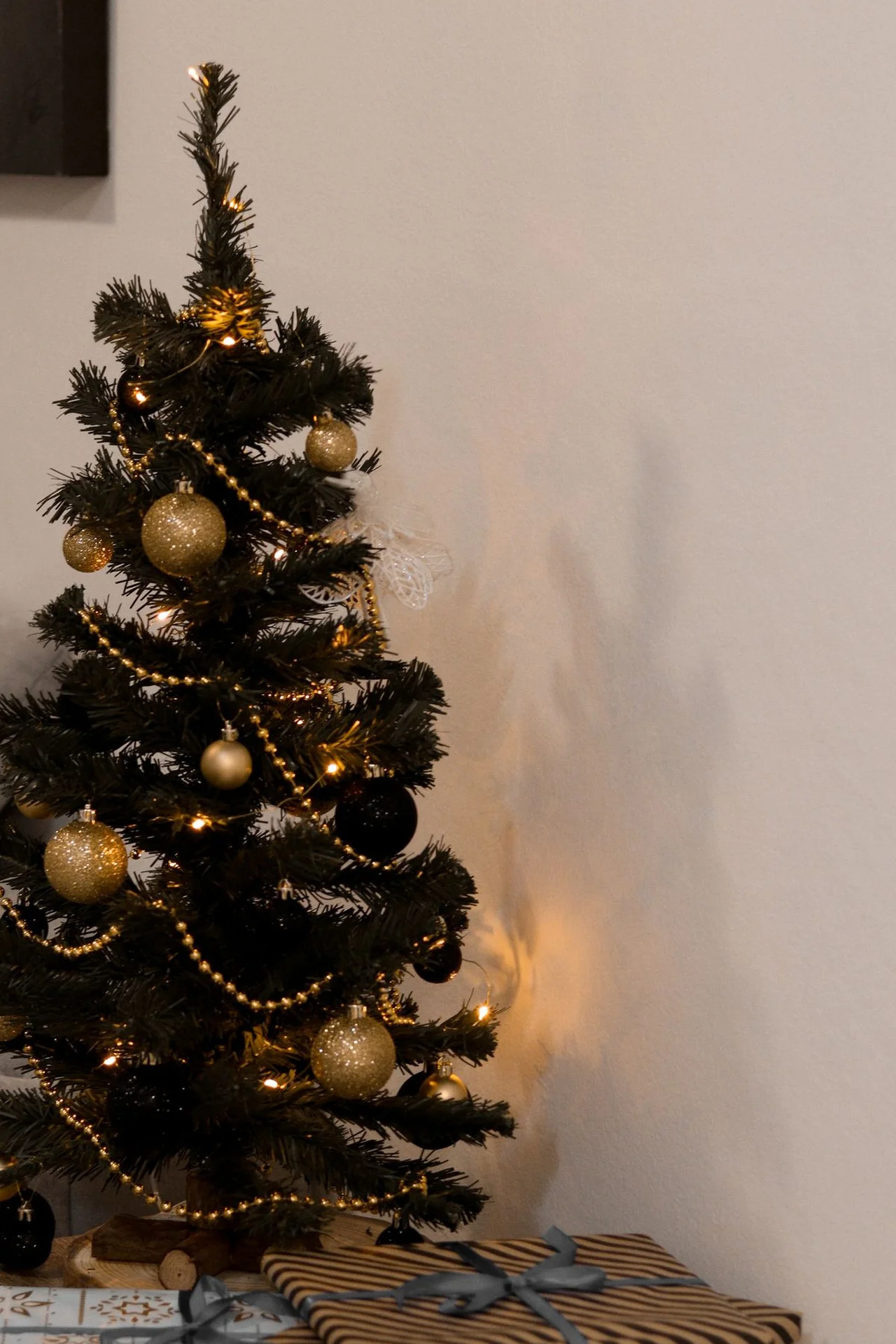
The fix is a tree shaped for the room, not shrunk from a big one. A pencil tree gives you the height and the lights with half the width, and a tabletop tree gives you the whole ritual — the decorating, the gifts underneath, the glow in the evening — on a sideboard or a cabinet, with the floor left free. Measure the corner before you buy: if the tree is wider than the space between the wall and the nearest chair, it will always feel like it is in the way.
| Room size | Tree that fits | Where it goes |
|---|---|---|
| Studio or bedsit | 2–3 ft tabletop tree | On a sideboard or cabinet |
| Small living room | 4–5 ft slim or pencil tree | One corner, clear of walkways |
| Small house, open plan | 6 ft slim tree | Beside the sofa, not in front of it |
Tip: Put the tree where you can see it from the sofa and from the front door, and nowhere else. One good view of the tree is worth more than a tree you have to walk around.
Every Surface Gets Decorated

In a big house, decor spreads out. In a small home, it piles up — a garland on the mantel, candles on the coffee table, a village on the windowsill, baubles on every shelf — until every flat surface is holding something and there is nowhere left to put a mug down. Each piece is lovely on its own. Together they read as mess, because the eye has nowhere to rest and the hands have nowhere to land.
The fix is to decorate one surface properly and leave the rest alone. Pick the surface people actually look at — the sideboard under the mirror, the console by the door, the top of the bookcase — and give it the full treatment: the small tree, the lights, the one cluster of baubles. Then clear everything else back to how it normally looks. A single dressed surface says Christmas the moment you walk in, and the empty surfaces around it are what make it look deliberate instead of crowded.
Tip: If you cannot put a mug down on a surface without moving something, that surface is over-decorated. Take one thing off it and the whole room breathes again.
Too Many Colours Are Competing

Red and gold and green and silver and blue, all at full strength, in a room you can cross in six steps. In a large room the colours have space to settle. In a small one they shout over each other, and the room feels busy even when it is tidy. The classic Christmas palette is generous, but a small room can only hold so much of it before the whole thing looks like a shop window rather than a home.
The fix is one palette, repeated everywhere. Pick two colours and one metallic — green and white with gold, or red and cream with warm wood, or blue and silver with white — and let everything in the room answer to it. The tree, the cushions, the wrapping paper, the candles: when they all speak the same two colours, the room reads as calm and finished, and the few pieces you own look like a collection instead of a pile. A set of mini bottle-brush trees in green and white, with warm fairy lights, does more for a small room than a box of mixed baubles ever will.
Tip: Wrap all the gifts in the same two papers as your palette. Matching wrapping is the cheapest way to make a small room look considered, and it costs nothing extra.
There Is No Focal Point

Walk into a small room at Christmas and ask yourself where your eye lands first. If the answer is everywhere at once — a bit of garland here, a candle there, a wreath on the far wall — then the room has no focal point, and that is why it feels cluttered. The eye keeps moving because nothing tells it where to stop, and a room the eye cannot settle in feels restless no matter how tidy it is.
The fix is one hero corner. Give the tree, the best chair and the warmest light to a single corner, and let that corner be the Christmas in the room. Everything else stays ordinary. It sounds like less decorating, and it is — but it reads as more, because the room now has a place to look. A flocked tree in a basket, a sofa with one festive cushion, a rug underneath: that is a whole Christmas corner, and it takes up less floor than a tree in the middle of the room ever did.
Tip: Stand in the doorway and look in. If your eye goes straight to one corner, you have a focal point. If it wanders, take one decoration off the far wall and put it in the hero corner instead.
Lights Are Strung Everywhere

Fairy lights are the easiest decoration to overdo in a small home, because they are so easy to add. One strand on the tree, one along the mantel, one around the window, one on the bookshelf — and suddenly the room glows from every direction, the walls look closer than they are, and the whole place hums with light instead of feeling warm. Too many lights do not make a small room brighter; they make it busier.
The fix is one warm strand, placed where it counts. Warm white, not cool white, on the tree or along the one window you sit beside — and nowhere else. One strand of warm light in a dark corner does what five strands cannot: it makes the room feel deep instead of flat, and it gives the evening a single soft glow to gather around. Battery fairy lights on a timer are the easy version — they come on at dusk, go off when you sleep, and there is no cable to trip over in a small room.
Tip: If you can see fairy lights from every seat in the room, there are too many. Keep them to the one spot you look at most in the evening, and let the rest of the room go dark and quiet.
Gifts and Wrapping Take Over
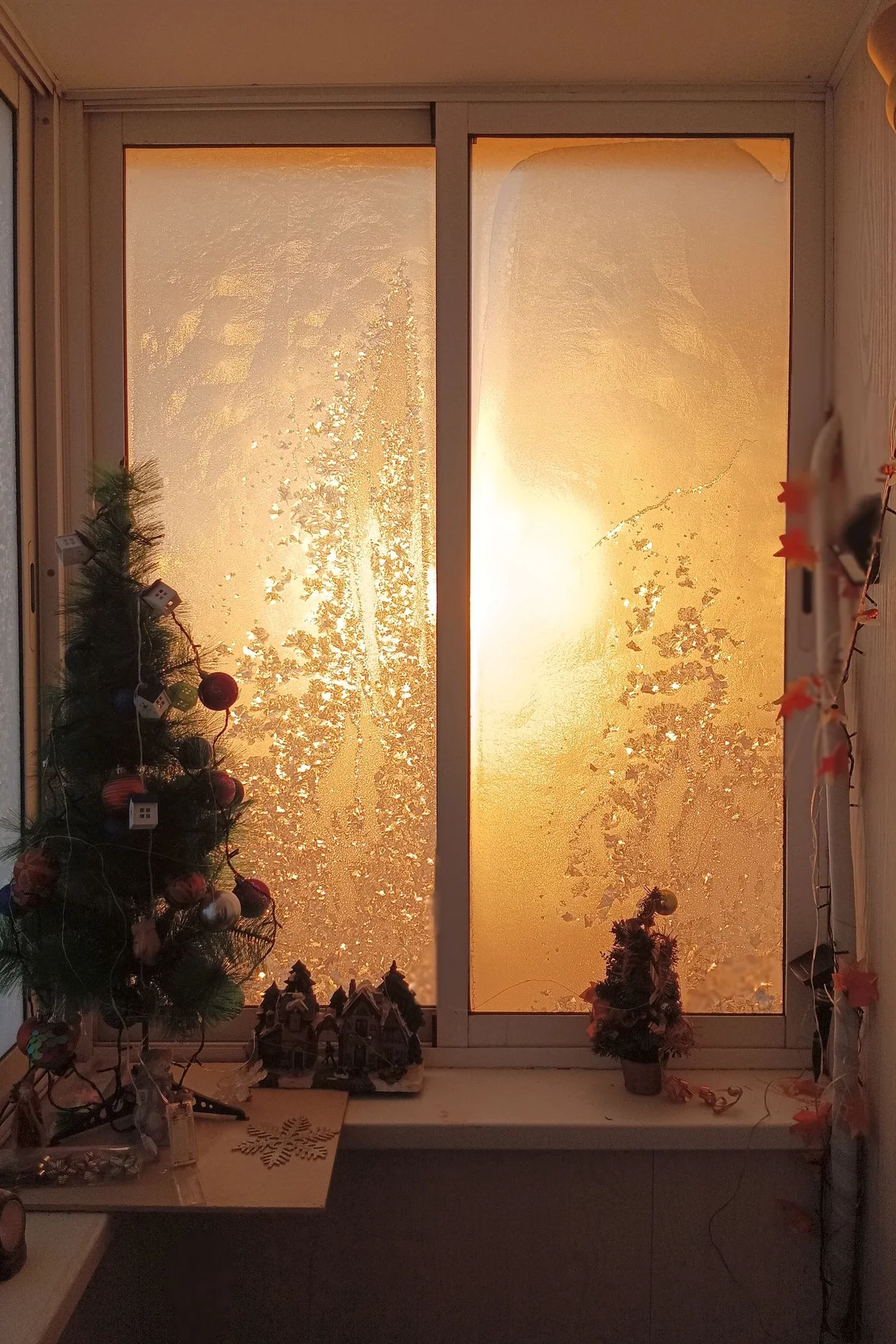
Gifts arrive one at a time and nobody notices them piling up. A bag by the door, a box on the chair, wrapping paper on the dining table, ribbon on the sofa — and by the week before Christmas the room is not decorated, it is occupied. The gifts are not the problem. The problem is that they have no home, so they spread across every surface the decor has not already taken.
The fix is to contain them in one place from the start. Pick a corner — under the tree, one basket by the door, the bottom shelf of the bookcase — and make it the gift corner. Everything that arrives goes there, wrapped or not, and the wrapping happens there too, on a tray that lives in the same spot. A small windowsill display shows how it works: one little tree, a few miniature houses, everything inside its own small space, and the rest of the sill left clear. Contained, gifts look like anticipation. Spread out, they look like clutter.
Tip: Keep one basket by the front door for everything that arrives. When the basket is full, wrap what is in it. A basket that empties and fills again is a system; a pile on the chair is just a pile.
The Bedroom Gets Forgotten
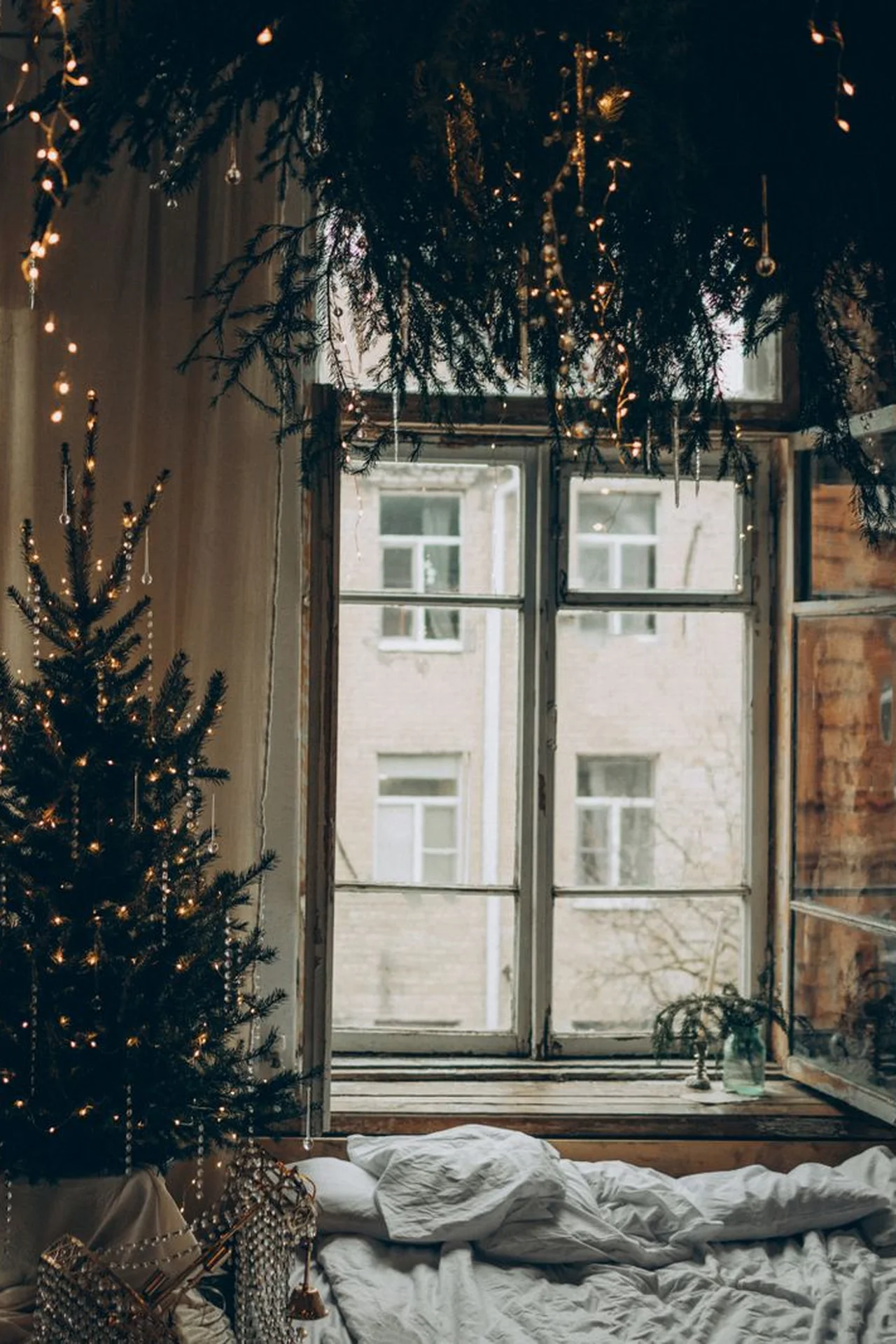
The living room gets the tree, the garland and the lights, and the bedroom gets nothing — because the bedroom is small, and because nobody sees it but you. Then December feels festive everywhere except the room where you wake up, and the contrast makes the living room feel like a stage set while the rest of the home stays ordinary. A small home decorated in one room only feels half finished, and the half that is finished feels like too much.
The fix is to carry the scheme into the bedroom in miniature. The same palette, the same warm light, at a tenth of the scale: a small tree on the dresser, one string of fairy lights along the headboard, a festive cushion on the bed. It takes five minutes and one small bag of decor, and it changes the whole feeling of the home — because now Christmas is something the house has, not something one room is wearing. The bedroom is also where a small tree makes the most sense: a two-foot tree on a dresser is charming in a way it never is in a living room.
Tip: Decorate the bedroom last, with whatever is left over from the living room. If the palette matches, the leftovers will look intentional — and the bedroom will feel like part of the same home.
There Is Nowhere to Put the Extras
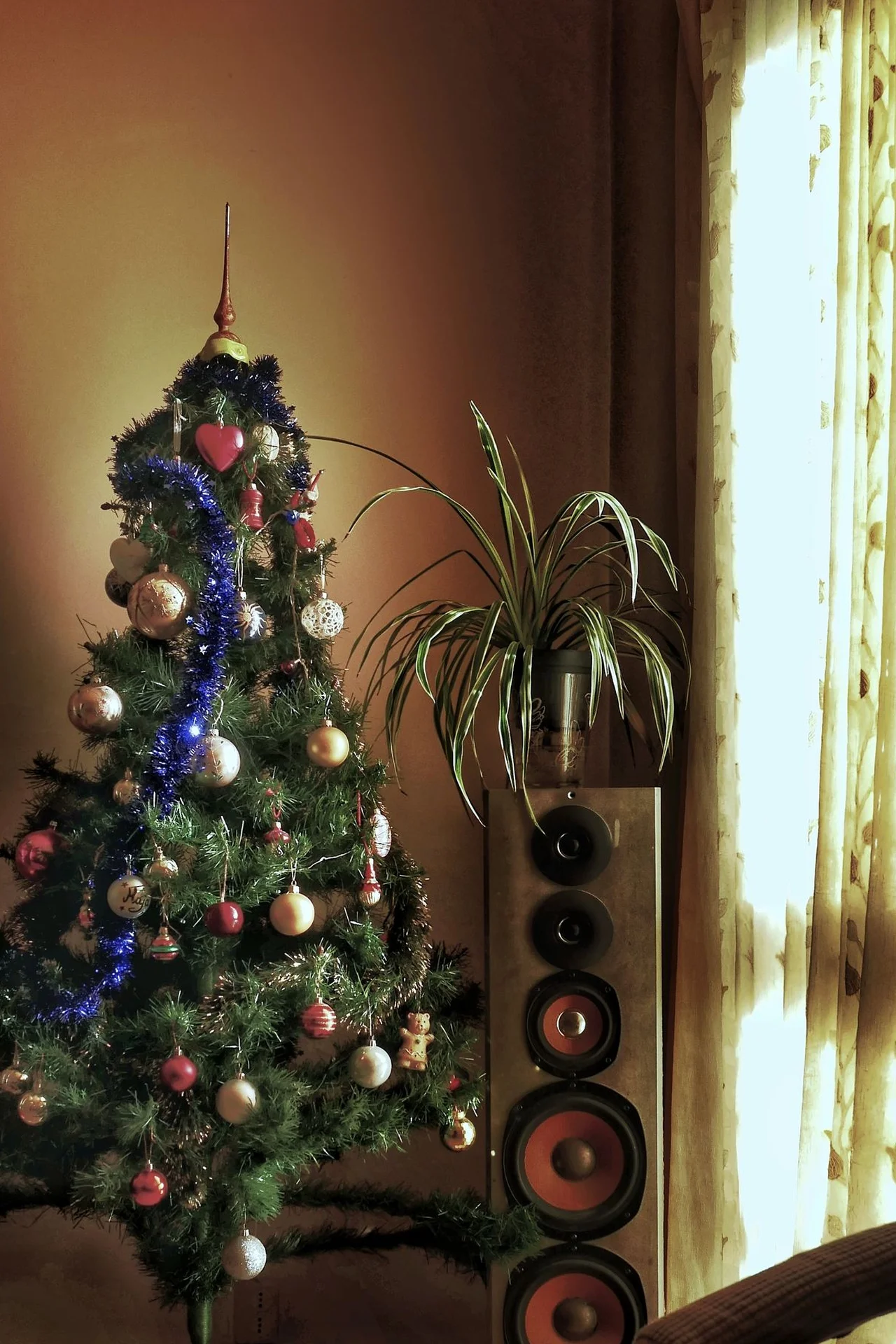
Every small home has the same December problem: the decor comes out of its box, and the box has nowhere to go. The empty boxes live on top of the wardrobe, the spare baubles live in a bag by the door, the extra garland drapes over a chair — and the room ends up holding both the Christmas and the storage for Christmas at the same time. It is not the decor that clutters the room. It is the extras with no home.
The fix is decor that doubles as storage. A lidded basket under the tree holds the spare baubles and looks like part of the display. A pretty box on the bookshelf holds the ribbons and the spare lights. The tree skirt hides the stand and the spare wrapping paper underneath it. Even the furniture can help: a speaker with a plant on top, a trunk as a side table, a basket as a tree stand — in a small home, everything should earn its floor space twice. Pack the empty boxes flat and slide them under the bed the day the tree goes up, and the room gets its space back immediately.
Tip: Buy one lidded basket in your palette before December. It holds the extras all month, hides the clutter, and looks like decor the whole time it is doing the job.
The Small-Space Christmas Checklist
Run through this before the first weekend of December, and again the week before Christmas:
- Tree measured to its corner, narrower than the walkway beside it
- One surface decorated properly, the rest left clear for living
- One palette — two colours and one metallic — repeated on the tree, the cushions and the wrapping
- One hero corner the eye lands on from the doorway
- One warm strand of lights, on a timer, where you sit in the evening
- One gift corner or basket, and wrapping done in the same spot
- Bedroom dressed in miniature, same palette as the living room
- Extras in a lidded basket or box, empty boxes flattened under the bed
- One clear surface in every room, with room for a mug
Can a small apartment really feel festive at Christmas?
Yes — and often more festive than a big house, because everything is close together and the glow reaches every corner. The trick is scale, not quantity: a slim tree, one decorated surface, one warm strand of lights. A small room with three things done well feels more like Christmas than a large room with thirty things competing.
What size Christmas tree works best in a small living room?
A four to five foot slim or pencil tree in the corner, or a two to three foot tabletop tree on a sideboard. Measure the corner first: if the tree is wider than the space between the wall and the nearest chair, it will always feel in the way. A slim tree gives you the height and the lights with half the width of a full tree.
How do I decorate a small space without it looking cluttered?
Decorate one surface and one corner, and leave the rest alone. Pick one palette of two colours and one metallic, and let everything answer to it. Keep one surface in every room clear enough for a mug. Clutter in a small home is almost never about owning too much decor — it is about spreading it across too many places at once.
Where should I put gifts in a small home?
In one contained spot from the start: under the tree, in one basket by the door, or on the bottom shelf of a bookcase. Wrap them in the same two papers as your palette, and do the wrapping in the same corner. Contained, gifts look like anticipation; spread across every surface, they look like clutter.
Can I reuse the same decor every year in a small space?
Yes, and a small home is the best place to do it. One palette, one tree, one set of lights and one basket, packed away in a single box under the bed, comes out the same every year and looks intentional rather than repeated. Add one small new piece a year — a cushion, a set of baubles — and the scheme stays fresh without growing.
Read Next
If the small rooms are starting to feel festive instead of full, keep going: our small Christmas tree decorating ideas show how a little tree carries the whole season, our apartment living room ideas on a budget keep a small room calm and liveable, our Christmas bedroom decor ideas carry the feeling into the smallest room in the house, and our Christmas living room decor idea dresses the room the tree lives in.