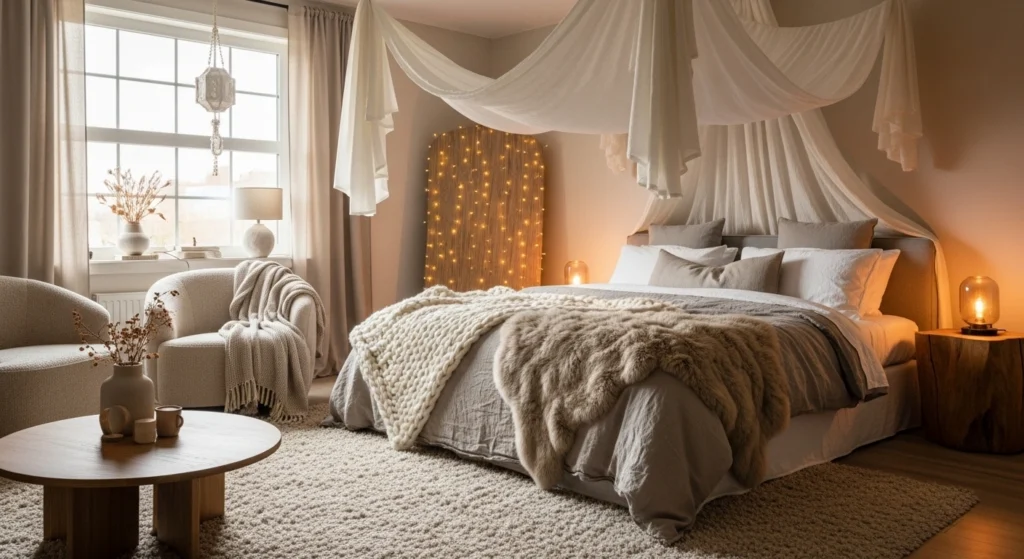

New Year Living Room Decor Ideas: Why Your Room Feels Tired

The tree is out the door, the boxes are taped shut, and the living room looks… empty. Not tidy-empty. Tired-empty, like the room used up all its energy in December and has nothing left for January.
The fix is not a redecoration. It is a reset: a few swaps that give the room its light, its colour, and its purpose back. These New Year living room decor ideas start with the empty corner where the tree stood, and they work just as well in a small flat as in a big family room. If you are still planning the night itself, these New Year party decor ideas will help with the celebration, and the wider New Year decor ideas cover the rest of the house. The room you are fixing spent December as a Christmas living room, so it makes sense that it feels lost now — the season that dressed it is gone.
1. The Tree Came Down and the Room Went Blank
For a month, the biggest thing in the room was the tree. It filled the corner, it caught the light, and it gave your eye somewhere to land the moment you walked in. Take it away and the corner does not look empty in a clean way. It looks unfinished, like a sentence that stops halfway.
The corner still needs something tall — just not something that needs watering every day or a box in the attic. A tall potted plant does the same job the tree did: it fills the height, it softens the corner, and it gives the room a living thing to look at. Palms and ficus are the easy choices because they grow upward without taking over the floor. Set the pot where the tree stood, let it catch the window light, and the room stops feeling like something is missing.
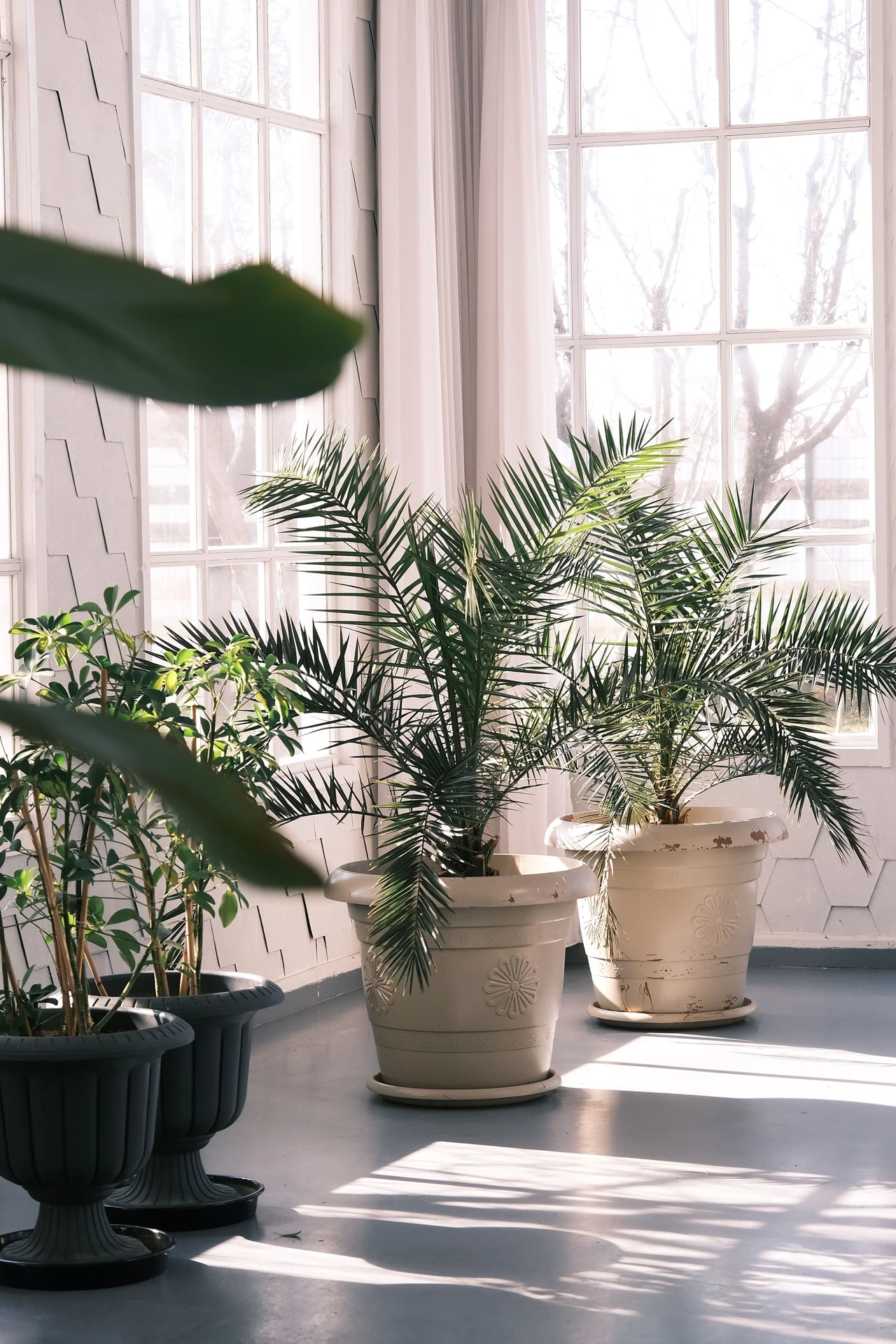
Tip: Pick a plant taller than the sofa back. Anything shorter disappears behind the cushions, and the corner goes blank again. A plain cream or terracotta pot keeps the focus on the leaves, not the container.
2. The Colour Left With the Ornaments
Christmas colour is loud on purpose: red baubles, gold ribbon, green garland. When it all comes down, the room does not go back to how it looked in November. It goes quieter than that, because your eye spent a month getting used to colour everywhere, and now the sofa looks grey in a way it never did before.
You do not need to repaint anything. One cushion in a clear, cheerful stripe does more than a whole new set of matching ones, because a single strong pattern gives the eye the same anchor the ornaments used to give. Keep the rest plain — cream, grey, or the sofa’s own colour — and let the one bright cushion do the work. If the stripe feels too bold on its own, echo it once, in a small vase or a book on the coffee table, and stop there.

Tip: Buy the cushion in January, when the shops are full of fresh stock, and keep the receipt. Live with it for a week before deciding whether it earns a second one — most rooms only need the one.
3. The Lights Are Still on Christmas Time
Tree lights and fairy lights do a lot of quiet work in December. They fill the room with points of warm light at different heights, and once they are packed away, the single ceiling light has to do everything on its own. That is why the room looks flat in January even though nothing in it has changed: the light went from layered to one flat wash from above.
The fix is to put light back at more than one height, without putting the fairy lights back up. Open the sheer curtains fully during the day so the window becomes the room’s main light again, and in the evening let a floor lamp do what the tree lights did: a warm pool of light at sitting height, in the corner where people actually sit. One lamp, switched on before dark, changes the whole mood of the room.
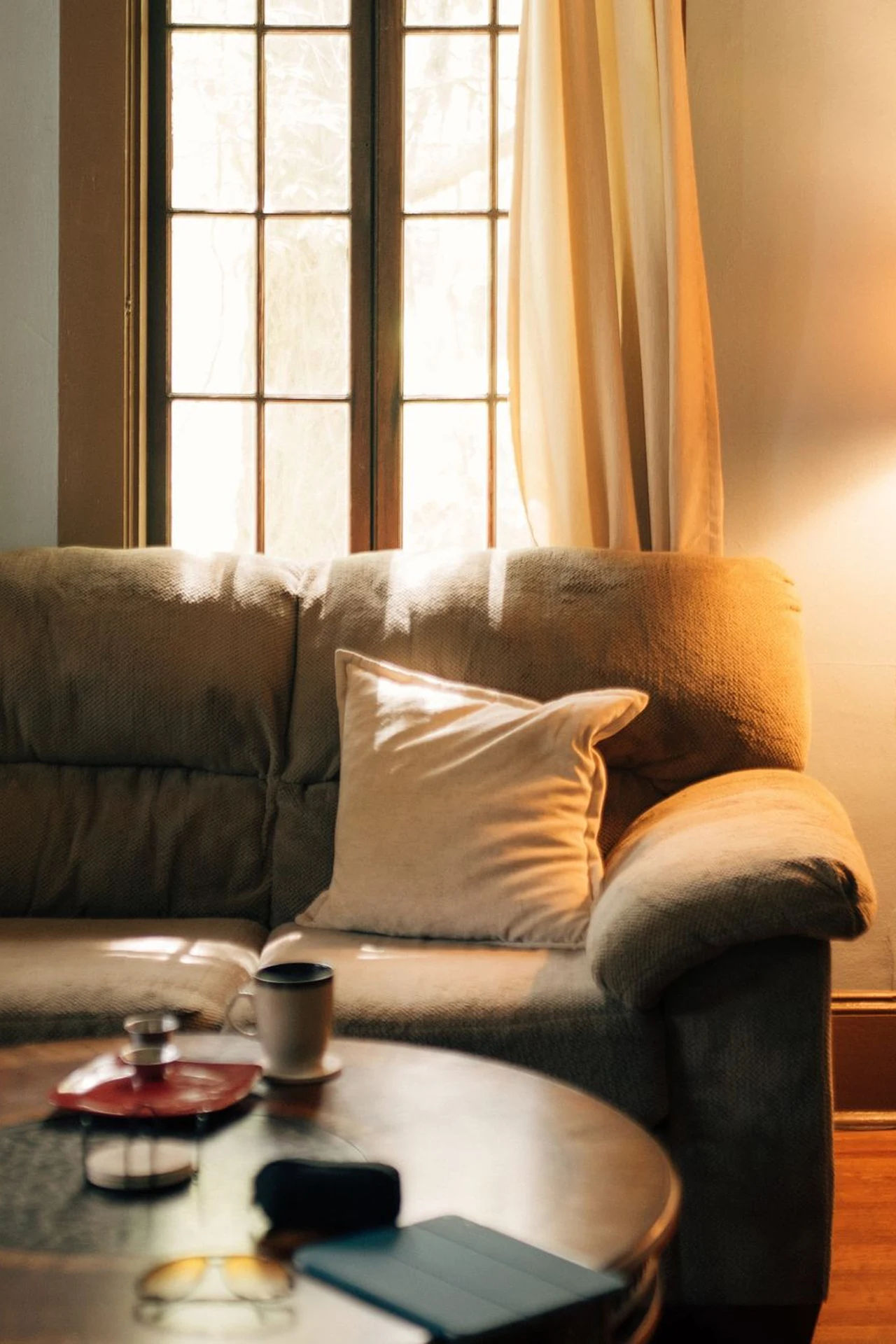
Tip: Use warm-white bulbs (2700K) in the floor lamp. A cool white bulb in January light looks like an office, and it will fight the daylight instead of joining it.
4. The Mantel Is Empty Again
The mantel is the first surface anyone looks at, and in December it was the busiest one in the house: garland, stockings, candles, cards. Strip it bare and it does not look minimal. It looks forgotten, a long white shelf with nothing to say.
January wants almost nothing on the mantel — three things, at most, with space between them. A tall vase of pampas grass or bare branches gives it height, one small jug or ceramic piece gives it weight, and a single leaning print gives it colour. The trick is the empty space around them: that is what makes the mantel look intentional instead of abandoned.
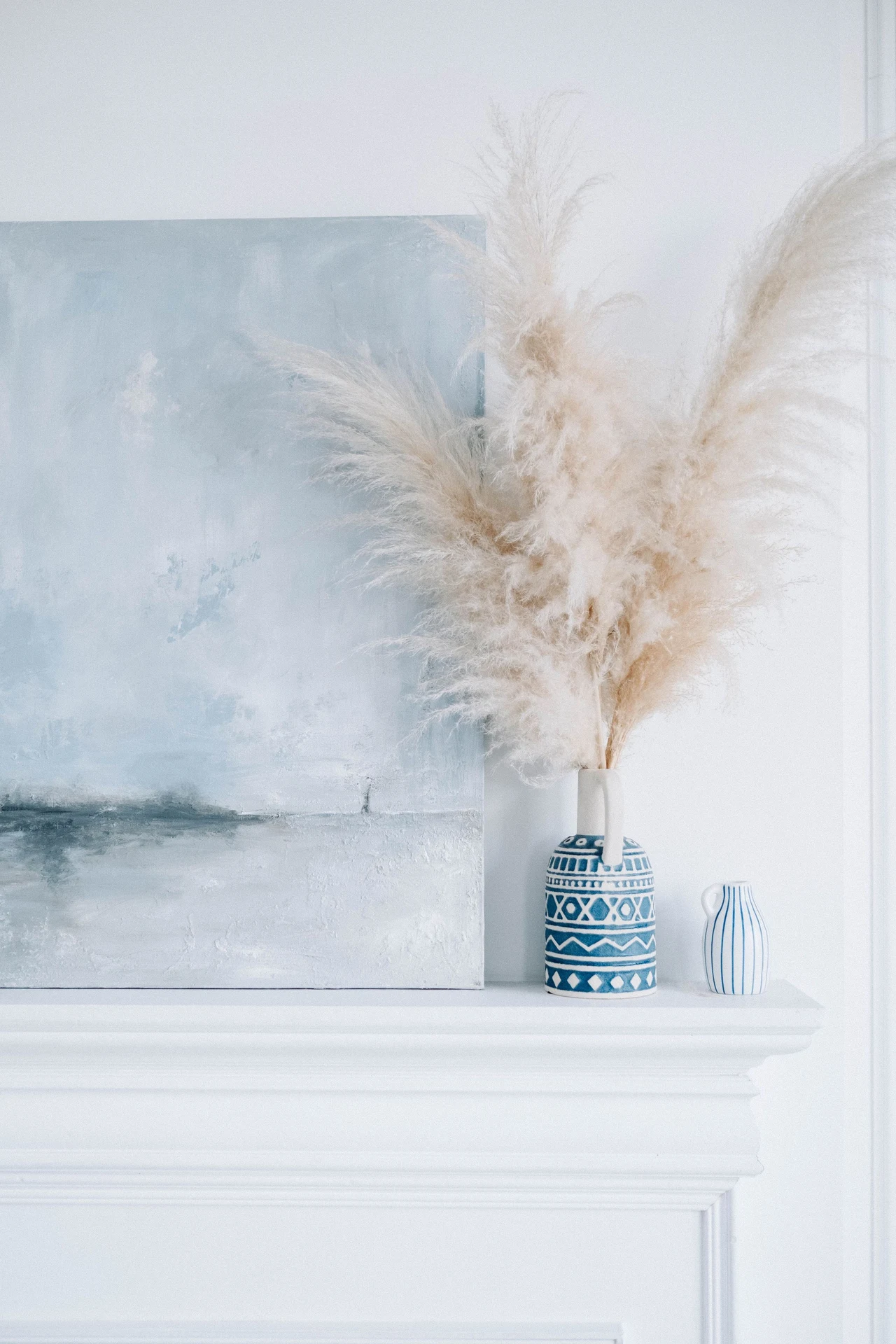
Tip: Lean the print against the wall instead of hanging it. A leaning frame looks relaxed and takes thirty seconds to swap, so the mantel can change with the seasons without a single nail.
5. The Coffee Table Lost Its Centrepiece
In December the coffee table styled itself: a bowl of ornaments, a candle cluster, a stack of wrapped presents. Take those away and the table becomes a flat, empty surface in the middle of the room, and every mug and remote control left on it looks like clutter instead of living.
A low wooden tray fixes this in one move, because it gives the table a boundary. Inside the tray, a tall vase with one stem, a coffee pot and a cup, with a small stack of books beside it — everything the table needs, and nothing it does not. The tray makes the everyday things look arranged instead of abandoned, and it can be lifted off in one go when you need the whole table.
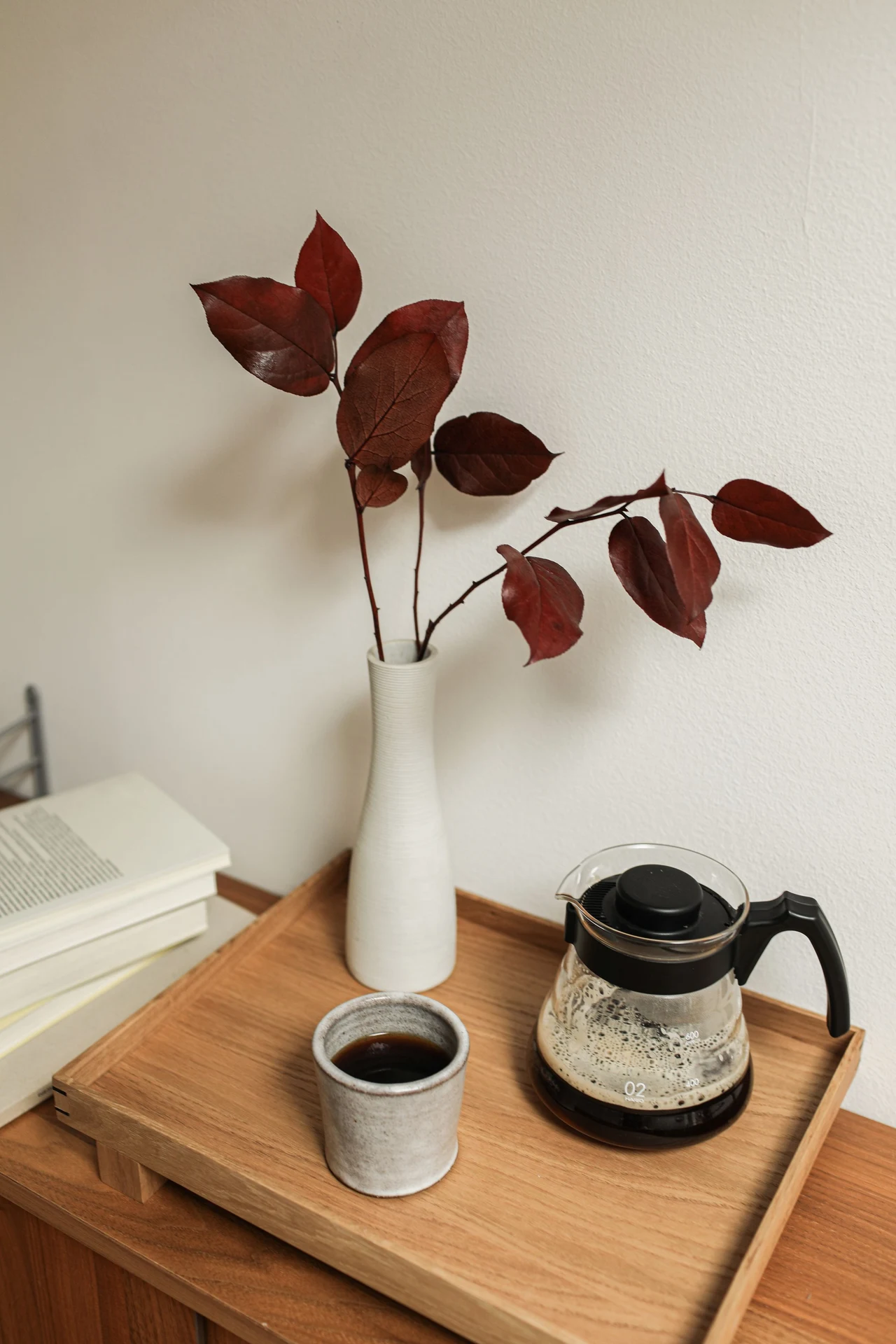
Tip: Keep the tray to three things or fewer. A tray full of small objects is just a tidier version of the same clutter, and the coffee table goes back to looking busy.
6. The Sofa Still Wears Its Christmas Throw
The Christmas throw did a lot of work in December: it covered the worn arm of the sofa, it added red or green to a plain room, and it was always there when someone wanted to curl up. In January it is still there, and it is the first thing that dates the room, because every time you look at the sofa you see December.
Swap it for a light linen throw in cream or pale stone, folded loosely across the seat instead of draped over the back. Linen reads as fresh in a way wool and velvet do not, and the paler colour bounces the January light instead of soaking it up. Keep the fresh cushions from the last section with it — throw and cushions in the same pale family make the whole sofa look new without spending anything like new-sofa money.
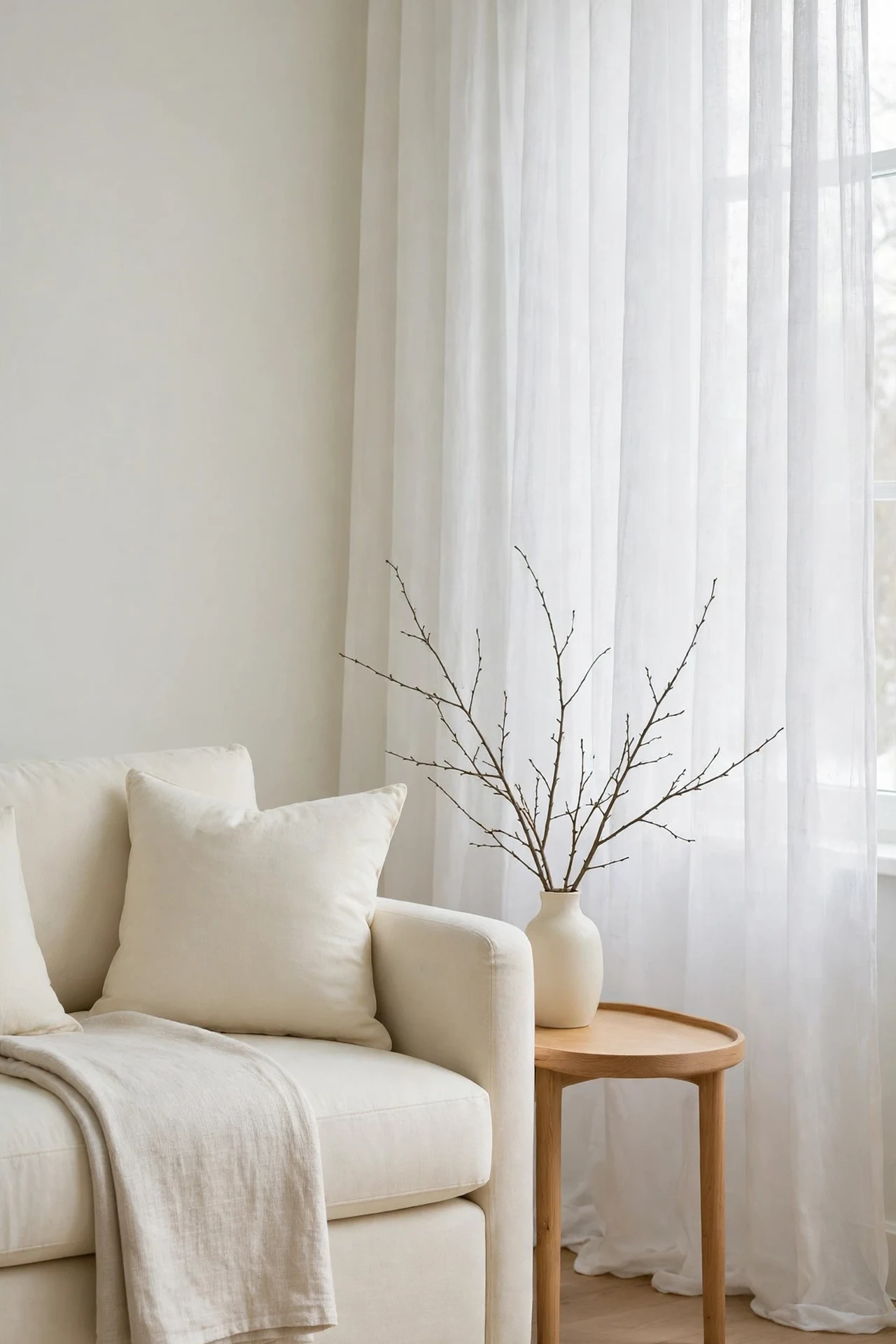
Tip: Fold the throw in thirds and lay it across the seat, not the back. A throw over the back slides off all day; a folded throw on the seat stays put and looks like you meant it.
7. The Walls Still Say December
The walls are the last place December hides. The wreath is down, but the nail is still there. The Christmas cards are in a drawer, but the big empty patch where the garland hung is still the first thing you notice. Walls remember the season longer than any other surface, because you look at them without really looking.
Give the walls one fresh thing to say. A round mirror above the sideboard bounces the window light across the room and makes the wall feel twice as bright, and two small abstract prints in pale blue and cream give it colour without shouting. The mirror does the most work: in a January room, reflected daylight is the cheapest brightness there is.
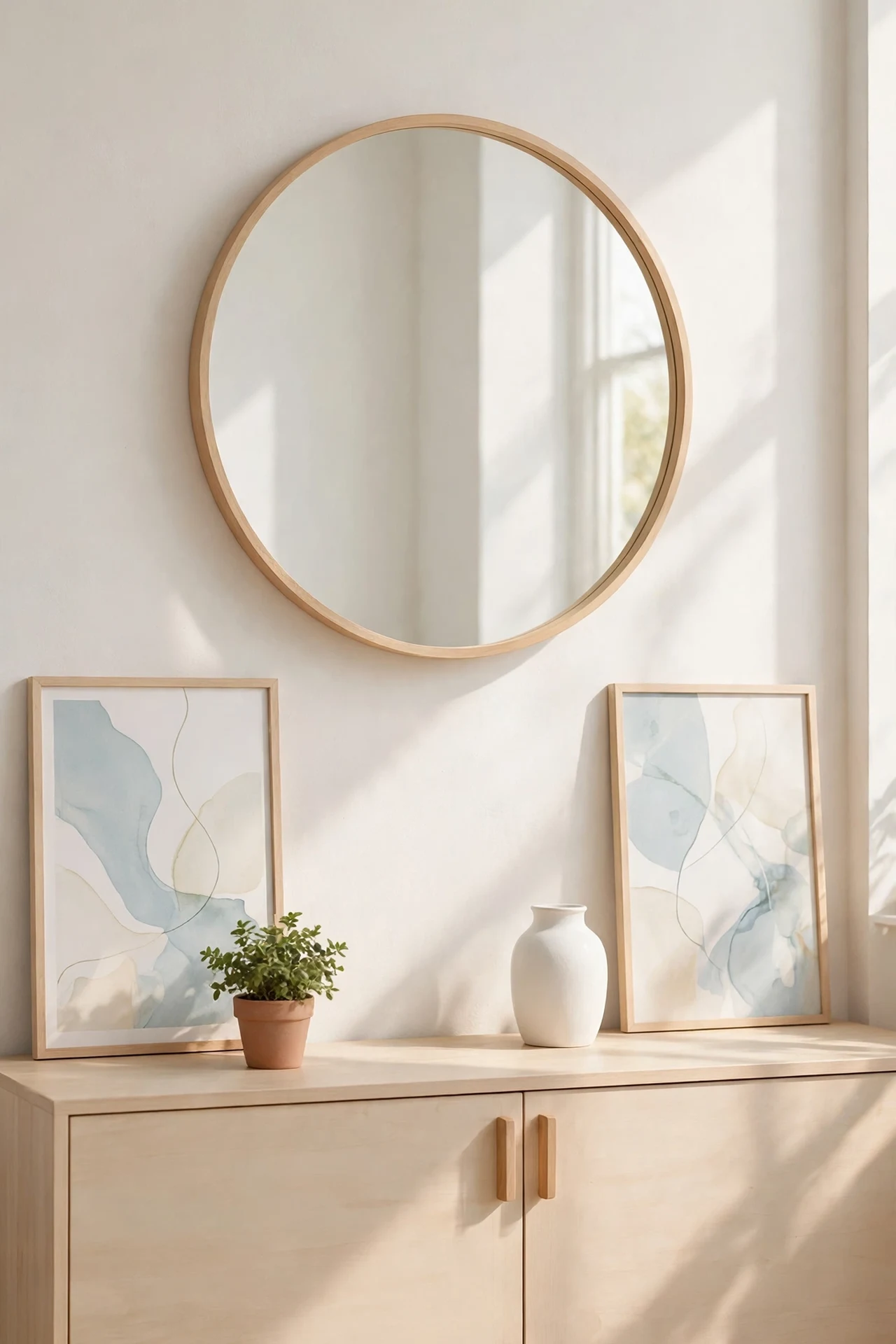
Tip: Hang the mirror opposite a window, not beside one. Opposite the window it catches the daylight and throws it back into the room; beside the window it only reflects the wall.
8. The Room Has No Reason to Gather Anymore
In December, the living room had a job: it was where everyone gathered, where presents were opened, where the evening happened. In January, the job is gone, and the room shows it. The chairs face the place where the tree was, the sofa faces a television nobody watches, and nobody quite knows where to sit.
Give one corner a reason to be sat in again. Pull an armchair into the sunlight by the window, add a floor lamp for the evening, and set a tall plant beside it so the corner feels like a place, not a piece of furniture. A chair in good light with a lamp and a plant is an invitation, and invitations are what make a room feel lived in. Slide a small side table in with a stack of books and the corner is finished — somewhere to sit, something to read, and light to read by.
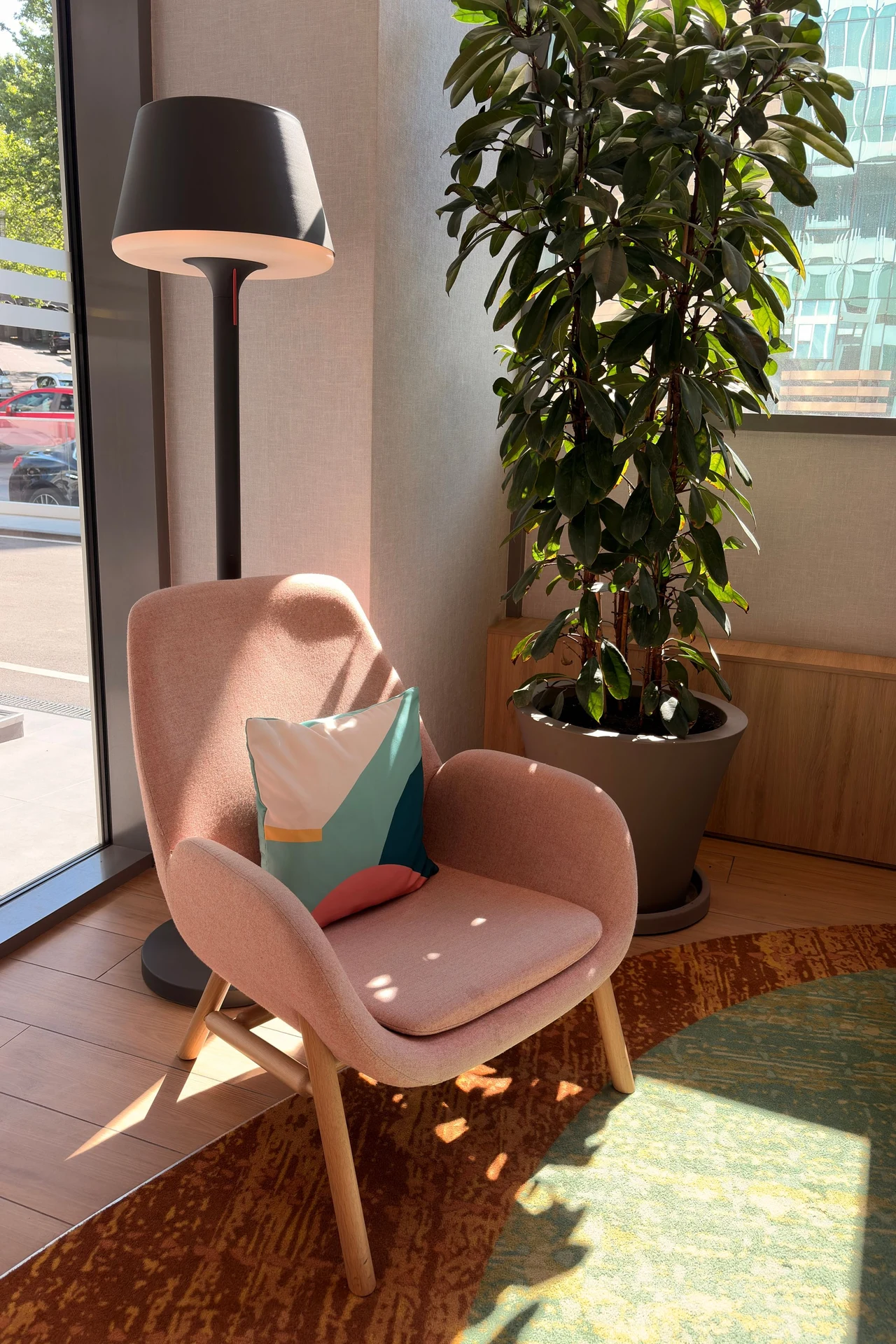
Tip: Turn the chair slightly toward the room, not flat against the wall. A chair angled into the room says someone sits here; a chair squared to the wall says it is on display.
The January Swap: What Goes, What Stays
| Spot | The December version | The January version | Why it works |
|---|---|---|---|
| Tree corner | The Christmas tree | A tall potted palm | Fills the height without a box in the attic |
| Sofa cushions | Red and gold cushions | One bright striped cushion, rest plain | One strong pattern anchors the eye |
| Lighting | Tree lights and fairy lights | Sheer curtains by day, one floor lamp by night | Light at two heights, no wires |
| Mantel | Garland, stockings, cards | Tall vase, one jug, one leaning print | Three things with space between them |
| Coffee table | Ornaments and candle clusters | A low tray with a vase, books and coffee | A boundary that makes everyday things look arranged |
| Sofa throw | Heavy Christmas throw | Light linen throw in cream | Pale linen bounces the January light |
| Walls | Wreath and garland hooks | A round mirror and two pale prints | Reflected daylight is the cheapest brightness |
| Gathering corner | Chairs facing the tree | An armchair in the sun with a lamp and a plant | A corner with a reason to sit in it |
Your Fresh January Room Checklist
- Move a tall plant into the corner where the tree stood.
- Swap in one bright cushion and keep the rest plain.
- Open the sheer curtains fully and let the window light in.
- Switch on one floor lamp before dark, warm white only.
- Clear the mantel to three things: a tall vase, one small piece, one print.
- Set a low tray on the coffee table with a vase, books, and coffee.
- Fold a light linen throw across the sofa seat.
- Hang a mirror opposite the window and two pale prints beside it.
- Pull an armchair into the sun with a lamp and a plant beside it.
- Take the empty hooks and nails down — the walls will thank you.
Worth having on hand: a tall potted palm, a light linen throw, a plain tall vase, and one round mirror — the four things that do most of the January reset.
Frequently Asked Questions
How soon after Christmas should I redecorate the living room for the New Year?
As soon as the tree comes down, and ideally in the same afternoon. The reset works best as one job, not a slow drift: once the tree is out, the empty corner, the bare mantel, and the quiet sofa are all staring at you at once, and fixing them together takes less time than fixing them one at a time over two weeks. If you are short on time, do the plant, the cushions, and the throw first — those three change the room the most — and leave the walls for the weekend.
Do I have to take all my Christmas decor down at once?
No, but take the tree and the lights first, because they are the two things that make the room read as December. Everything else — a plain white candle, a bowl of pinecones, a bare branch in a vase — can stay as long as it does not say Christmas on it. The rule is simple: if it is red, gold, or shaped like a holiday, it goes. If it is plain, natural, and quiet, it is already January decor.
What colours work best in a New Year living room?
Pale, fresh colours: cream, soft sage, pale blue, warm white, with one clear accent to keep the room from going flat. The accent can be anything you like — a striped cushion, a blue vase, a terracotta pot — as long as it is one note and not a whole chord. Avoid the deep reds and forest greens of December for a few weeks; your eye needs a rest from them before they feel fresh again.
Can I keep any Christmas decor out in January?
Yes, the plain pieces. White pillar candles, bare branches, pinecones in a bowl, a simple evergreen wreath with no ornaments, and any white or cream fairy lights in a glass jar all read as winter rather than Christmas, and they keep the room from feeling stripped bare. What has to go is anything with a season on it: baubles, stockings, tinsel, Santa shapes, and anything that says the word Christmas.
How do I make my living room feel fresh without buying new furniture?
Move what you already have. The armchair by the window, the sideboard under the mirror, the plant from the hallway — a room feels new when its furniture sits in a different relationship to the light, not when the furniture itself is new. After that, spend small and spend once: one cushion, one throw, one plant. The January reset in this article costs less than a single new armchair, and it changes the room more.
Read Next
If the living room feels fresh again, carry the same reset through the house. Start with the wider New Year decor ideas for the whole home, then plan the night itself with these New Year party decor ideas. And if you want to see what the room looked like dressed for the season it just left, look back at the Christmas living room it started as — the best January ideas are often the December ones, with the holiday taken out.