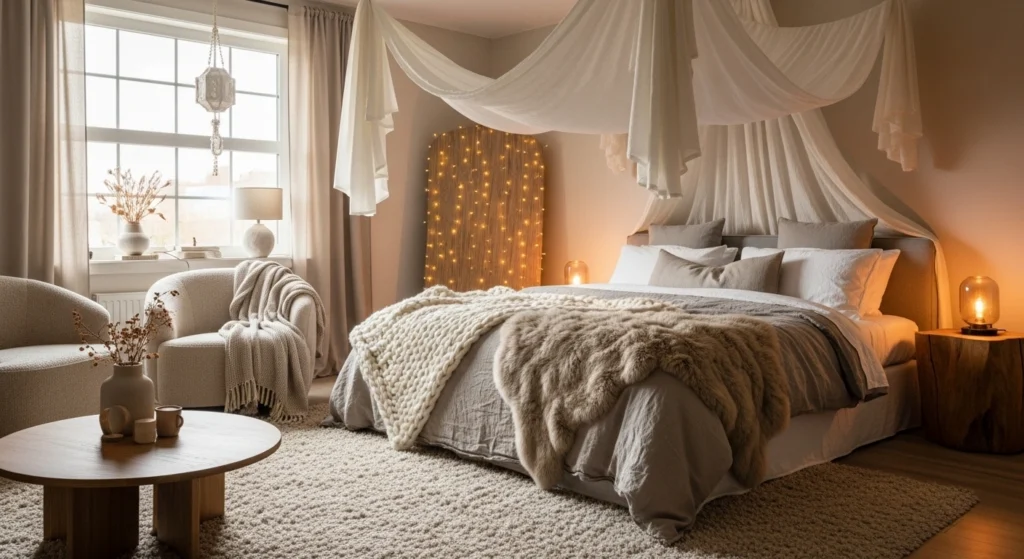
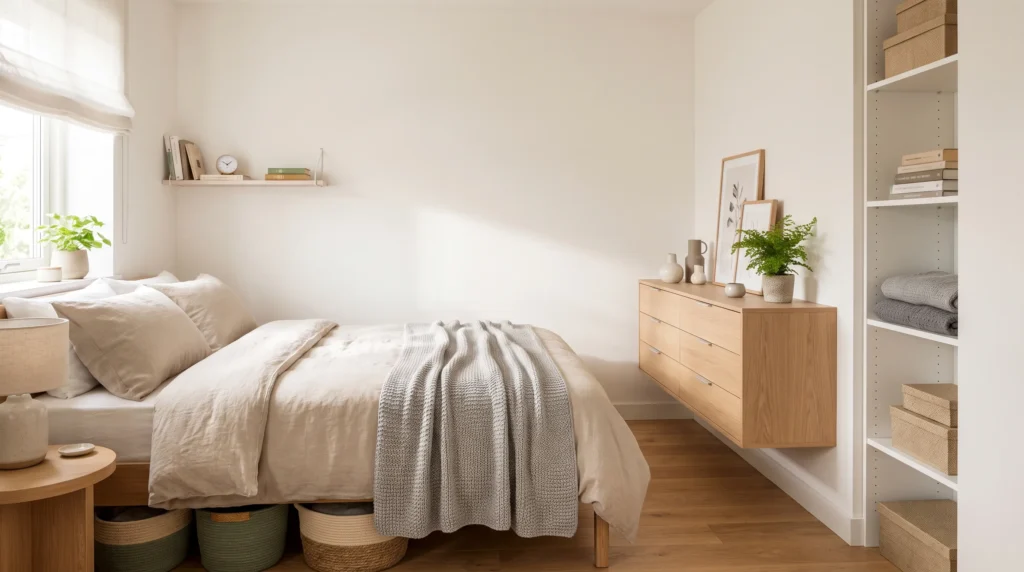
A small bedroom runs out of storage long before it runs out of things to store. Clothes, shoes, bedding, books — all competing for the same drawers and shelves.
The instinct is to add another dresser. But in a small room, more furniture creates a second problem: the bedroom starts feeling tighter. The better approach is finding storage in unused space — under the bed, behind the door, above existing furniture, in narrow gaps — without adding bulk.
The key: match the solution to what you actually need to store and what the room can realistically give up.
Start by Finding the Storage You’re Missing
Before buying organizers, inventory what’s actually causing the problem. A bedroom overflowing with clothes needs a different fix than one buried in books or shoes.
Look at what’s sitting on the floor, the dresser top, a chair, the nightstand, open shelves, the bed. Those surfaces reveal where the shortage is. Clothes everywhere? Fix the closet before buying furniture. Shoes on the floor? Go low-profile or vertical. Bedding eating closet shelves? Under-bed storage solves it without touching the footprint.
Storage works best when designed around what needs storing.
Use Vertical Space Before Sacrificing Floor Space
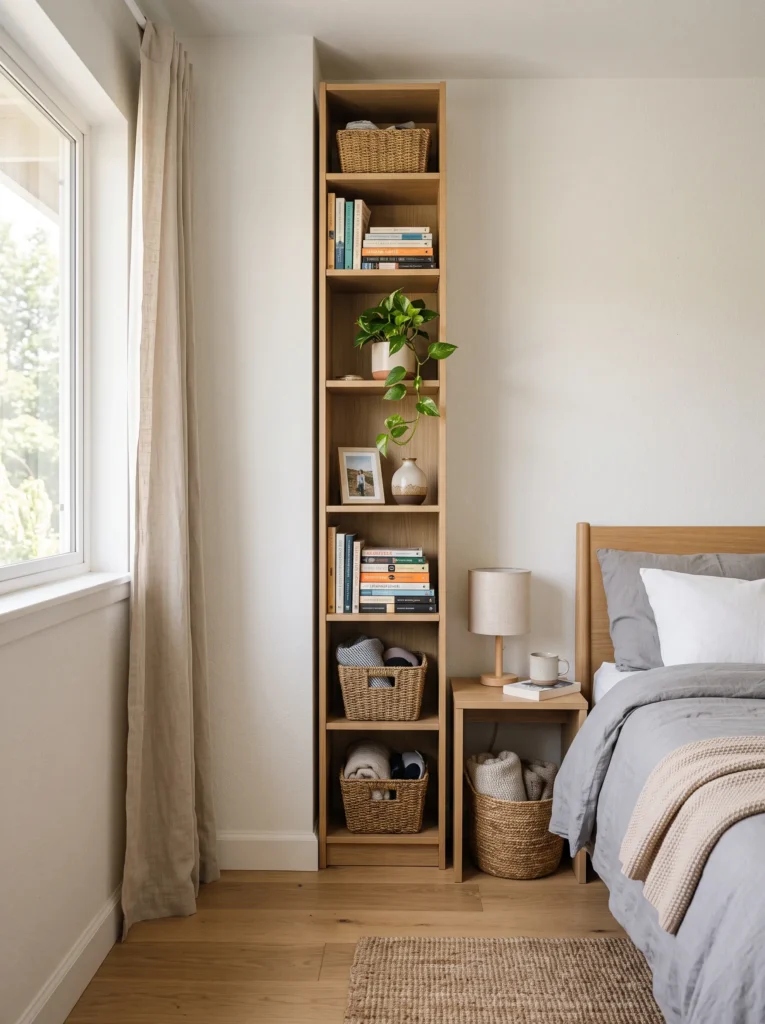
Look up. The walls above the dresser, desk, nightstand, or headboard hold storage that never touches walking space. Floating shelves for books and baskets; a tall narrow unit that out-stores a wide cabinet on half the footprint; wall hooks for bags, hats, robes.
The catch is visual weight — filling every inch of wall makes the room feel busy even with clear floors. Use vertical storage selectively; leave some wall empty.
Make Under-Bed Space Work Harder
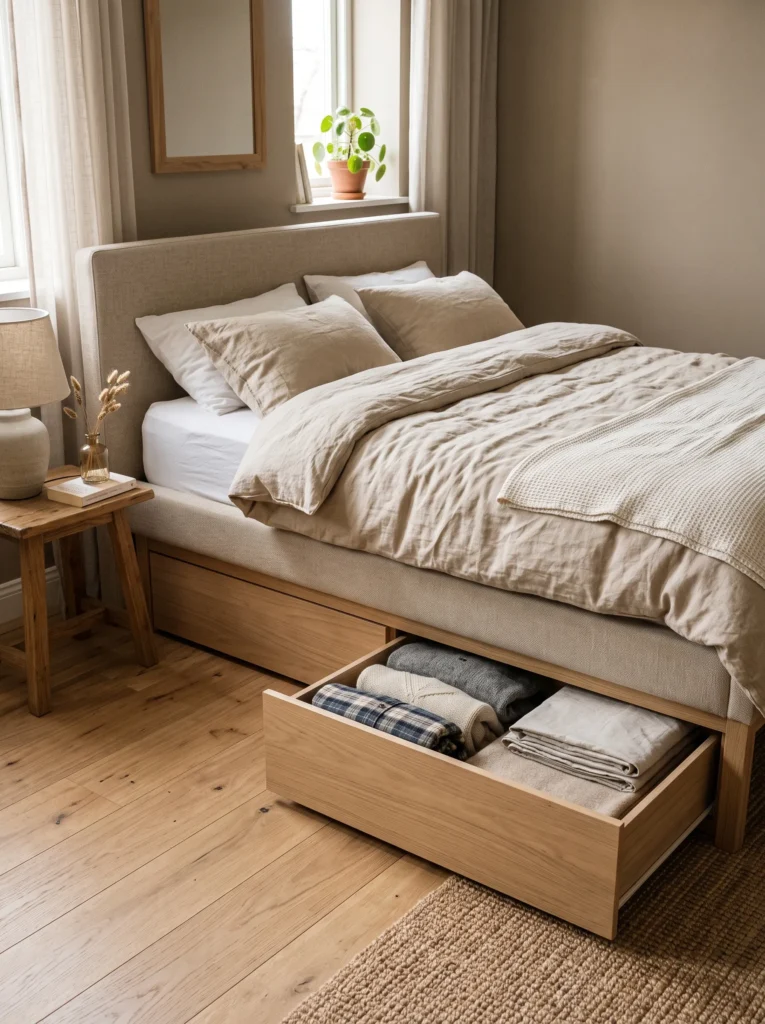
The area under the bed is often the room’s largest storage zone — and the most ignored. Best for things you don’t need daily: seasonal clothes, extra bedding, shoes, luggage, spare blankets.
Measure your clearance before buying containers — half an inch decides whether a box slides. Low-profile boxes or purpose-built drawers keep it contained. Rule of thumb: everyday items live elsewhere; under-bed is for things that can disappear for weeks.
Rethink the Nightstand
A traditional nightstand eats floor space while storing almost nothing. Ask whether yours earns its footprint: a narrow nightstand with a drawer beats a big open table; a wall-mounted shelf beats both. A small vertical cabinet can combine bedside function with real storage.
If all you keep there is a phone, lamp, and water glass, you don’t need a large table at all.
Fix the Closet Before Adding a Dresser
Closets hide unused capacity: dead space above the hanging rail, awkward corners, single-level layouts. A second rail doubles capacity for shorter items; shelf dividers and slim bins organize upper shelves; hooks take bags and accessories. Slim hangers across a whole wardrobe free surprising space.
Organize around how you actually dress: everyday pieces within reach, seasonal stuff up high.
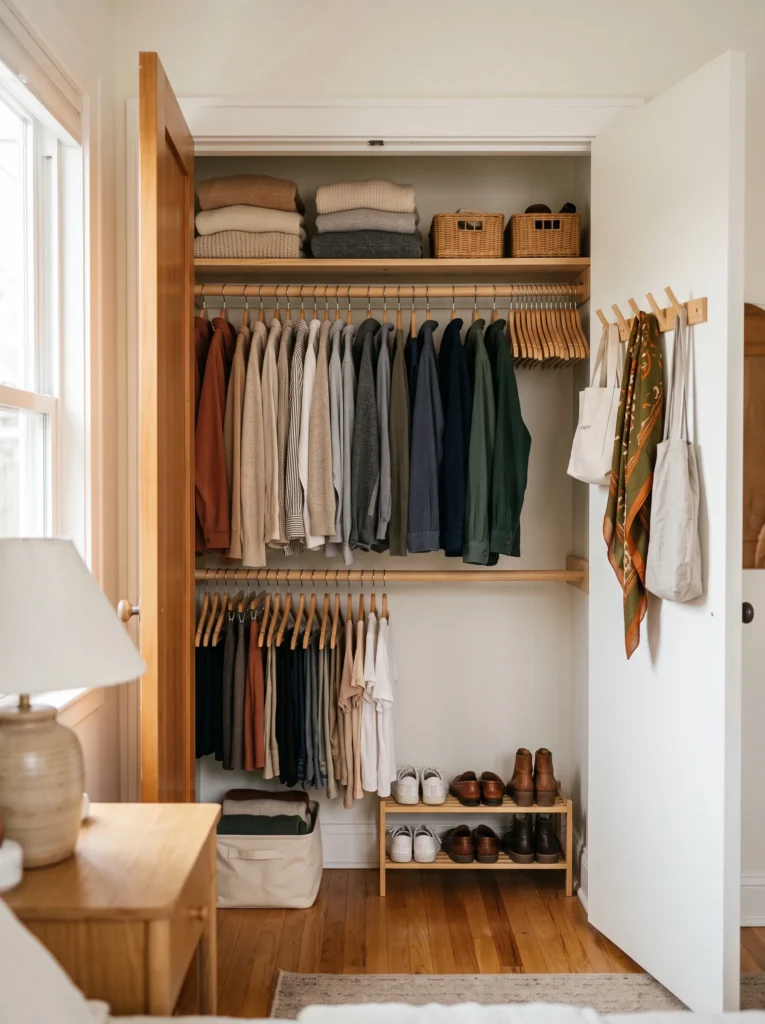
Don’t organize a closet you haven’t edited
Systems fail when they’re sized for things you don’t wear. Before buying organizers, remove what doesn’t fit, hasn’t been worn in a year, or doesn’t belong in the bedroom. Sometimes the fix is needing less capacity, not adding more.
Use the Back of the Door
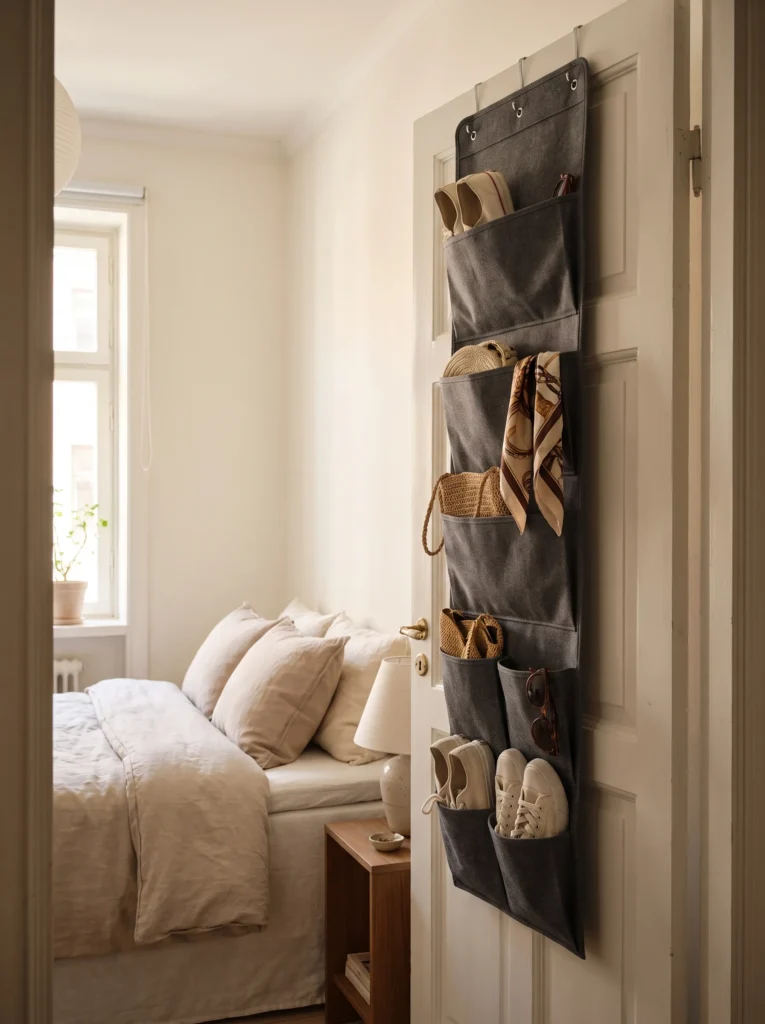
An over-door organizer holds shoes, accessories, hair tools — no floor space required. Hooks take robes and bags. Perfect for rooms where every square foot is claimed.
Keep it slim: bulky door storage makes the door hard to operate and the room feel busier. Lightweight items only.
Claim the Narrow Gaps
Awkward gaps — beside the wardrobe, next to the desk, shallow wall runs — can hold narrow shelving, a vertical basket tower, or a slim cabinet. Measure carefully; a narrow piece only earns its place if the capacity justifies the footprint. Sometimes the best decision is leaving the gap empty.
Choose Furniture That Does Two Jobs
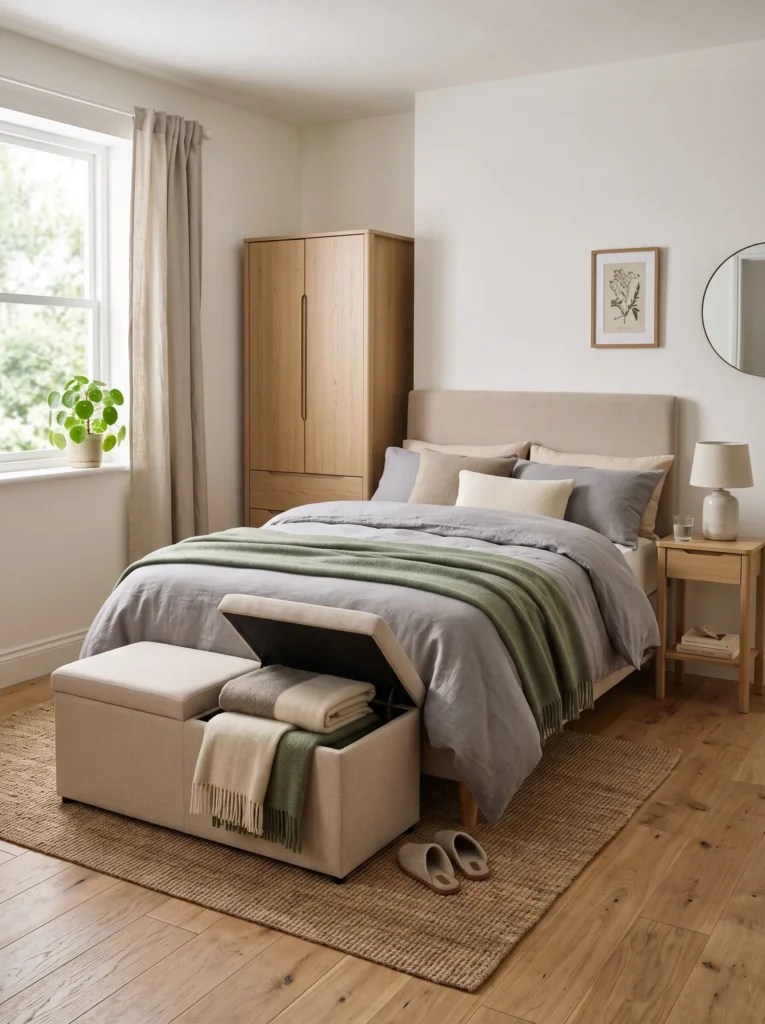
Storage beds, hidden-storage benches, desks with drawers — multifunctional pieces earn their floor space twice. But the piece has to solve two real problems without going oversized; a giant storage bed that kills walking space is a net loss. In a small bedroom, proportion matters as much as capacity.
Going vertical with the bed itself? Our loft bed ideas free up the entire footprint underneath for storage, desk, or seating.
Keep Daily Items Within Reach
Good storage makes daily life easier, not just fuller. Everyday items between waist and eye level; high shelves, under-bed, and deep storage for the rarely used. Everyday clothes in the closet’s easy zone; holiday decor and spare linens in the hard zone. A system that requires constant digging isn’t efficient — it’s just hidden clutter.
Don’t Let Storage Become Clutter
Shelves and baskets everywhere can still feel chaotic if everything’s visible. Open shelving for attractive or frequent items; closed storage — drawers, baskets, cabinets — for visual noise like paperwork, chargers, and toiletries. Leave some shelves empty on purpose; negative space makes storage look intentional.
Use the Wall Above the Bed Carefully
A shallow shelf works for books and light decor; anything heavier needs secure installation — and honestly, a big cabinet above the bed can make the sleeping area feel enclosed, especially with low ceilings. When in doubt, keep it open and let the room breathe.
Make the Dresser Earn Its Place
Divide drawers by function: everyday up top, accessories in small sections, rarely-used at the bottom. Keep the surface intentional — a mirror, lamp, tray, or plant — not a landing pad for mail and electronics. And if the dresser is simply too deep for the room, a narrower replacement creates more usable space than any organizer.
Use Corners (But Don’t Fill Them All)
A narrow shelving unit, corner shelf, or vertical basket system can activate a dead corner. But open floor is valuable — if filling a corner narrows the walking path, the storage isn’t worth it. Ask: does this solve a problem without creating another one? If no, leave it open.
Give Small Items a System
Jewelry, chargers, keys, cosmetics — small things create the most visible clutter. One drawer with dividers beats five decorative organizers scattered around. The best system is the one that takes no effort to maintain.
Know When to Stop Adding
There’s a point where more storage hurts: the wardrobe that eats the walkway, deep shelves jutting into the room, a wall of open shelving that’s pure visual noise. Before adding anything, check floor space lost, visual weight gained, and whether the capacity actually solves a real problem. If it fails any of the three, go slimmer, taller, hidden, or multifunctional — or don’t add it.
Prioritize in This Order
1. Edit what you no longer need.
2. Maximize existing storage (closet, under-bed, doors, walls).
3. Exploit overlooked spaces (gaps, above-bed, corners).
4. Add compact or multifunctional furniture.
5. Decorate with storage only where it serves a purpose.
Match the Solution to the Problem
Too many clothes → improve the closet or add a second rail. Shoes on the floor → slim shoe storage or under-bed boxes. Extra bedding → under-bed or a storage bench. Bags and accessories → wall hooks or behind-door. Books → narrow vertical shelving. Small everyday items → drawer dividers. Tiny floor space → wall-mounted everything. Start from the problem, not the product.
What to Avoid
Oversized dressers bought for drawer count. Walls fully covered in open shelving. Deep cabinets in narrow paths. Organizers bought before measuring. And storing things just because there’s technically room — if a box hasn’t been opened in years, another container isn’t organization.
The best strategy combines editing, organizing, and adding capacity — not just new furniture.
Quick Answers
Where should I add storage first in a small bedroom?
The closet — it’s the highest-capacity space you already own. A second hanging rail, shelf dividers, and slim hangers often solve the problem without new furniture.
How do I store things under a low bed?
Measure your clearance first, then use low-profile rolling containers or zippered fabric bags. Bed risers can add an inch or two if you need it.
How can I make a small bedroom feel bigger while adding storage?
Go vertical and hidden: wall-mounted shelves, behind-door organizers, under-bed boxes, multifunctional furniture. Keep floors as clear as possible and leave visual breathing room on walls and shelves.