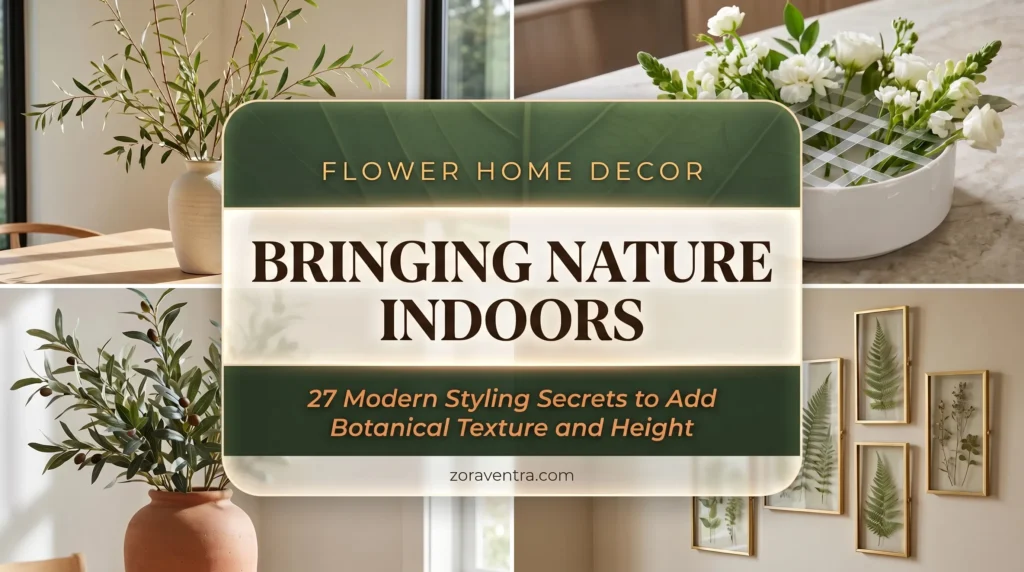
Let’s address the shared design trauma: the dusty, stiff artificial floral arrangements of the 1990s. We want the organic essence of plants in our homes, but fear of looking dated, synthetic, or cluttered keeps tabletops bare. The good news: modern floral styling has abandoned the rigid rules. Today’s botanical decor isn’t about perfect symmetry or overwhelming color — it’s about treating stems, branches, and blooms as sculptural, living art. Intentional asymmetry, raw textures, varied heights: flora brings physical warmth and movement into neutral architecture. Whether you use fresh market stems, preserved elements, or modern faux materials, bringing nature indoors is entirely accessible. Here are 27 ideas to elevate your space.
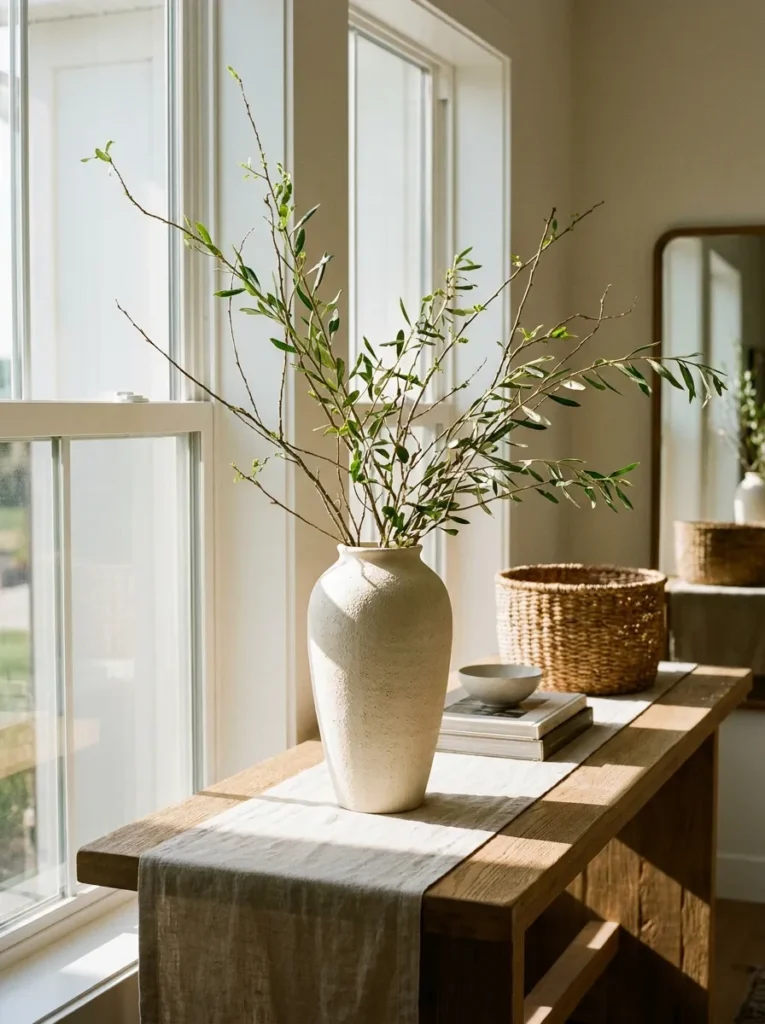
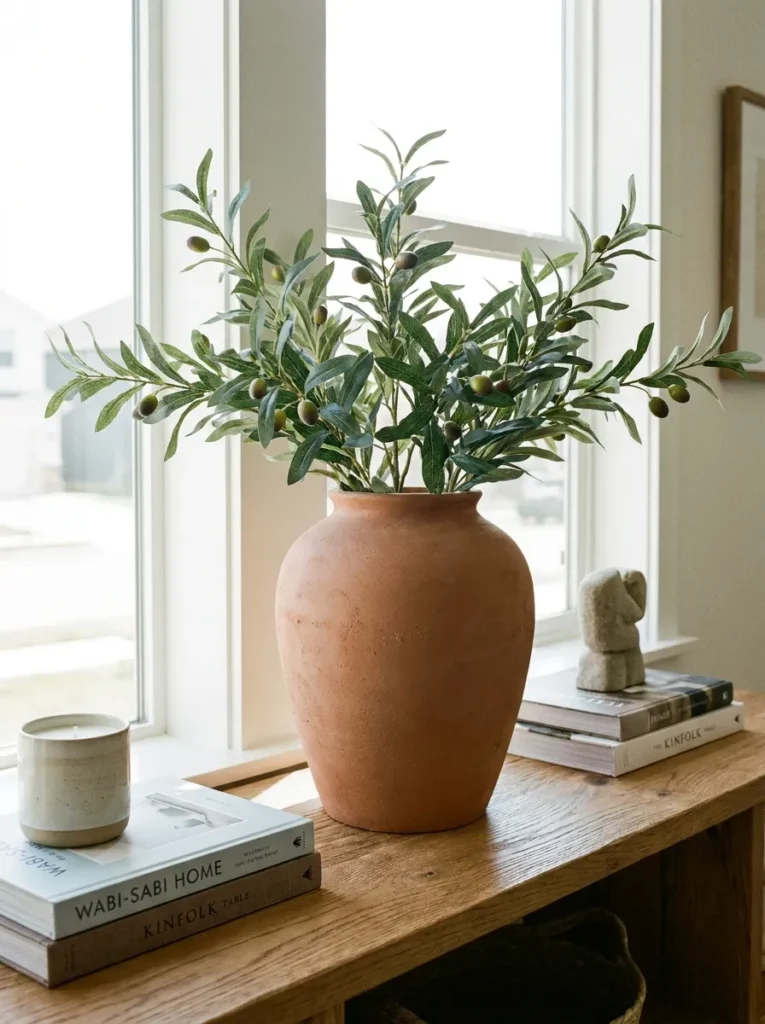
1. Minimalist Branch Arrangement for the Entryway
An entryway console needs height to balance the front door’s visual weight — small bouquets look lost. Use a heavy opaque ceramic or stoneware vase at least 14 inches tall; add two or three large asymmetric branches (fresh or faux olive, silver dollar eucalyptus, budding magnolia) stretching at least twice the container’s height, leaning naturally to one side. The negative space between leaves creates a sculptural focal point without crowding the tabletop.
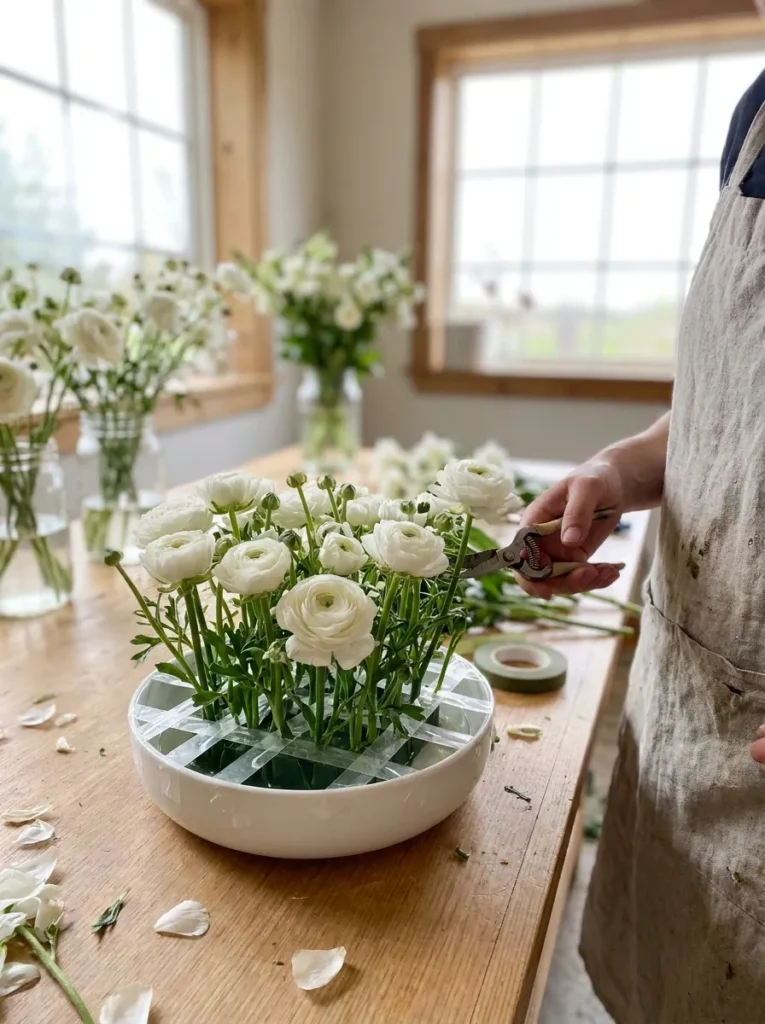
2. The Grid Tape Method for Grocery Store Flowers
Weekly florist arrangements aren’t realistic — but dropping grocery store stems into a wide vase leaves them flopping with an empty center. The fix: clear waterproof floral tape. Take a low, wide ceramic bowl or glass vessel, tape an even grid across the mouth (firmly over the edges), fill with water, trim stems short, and insert them into the grid squares from outside inward. The grid holds each bloom upright for a dense, low-profile mound that looks intentionally designed.
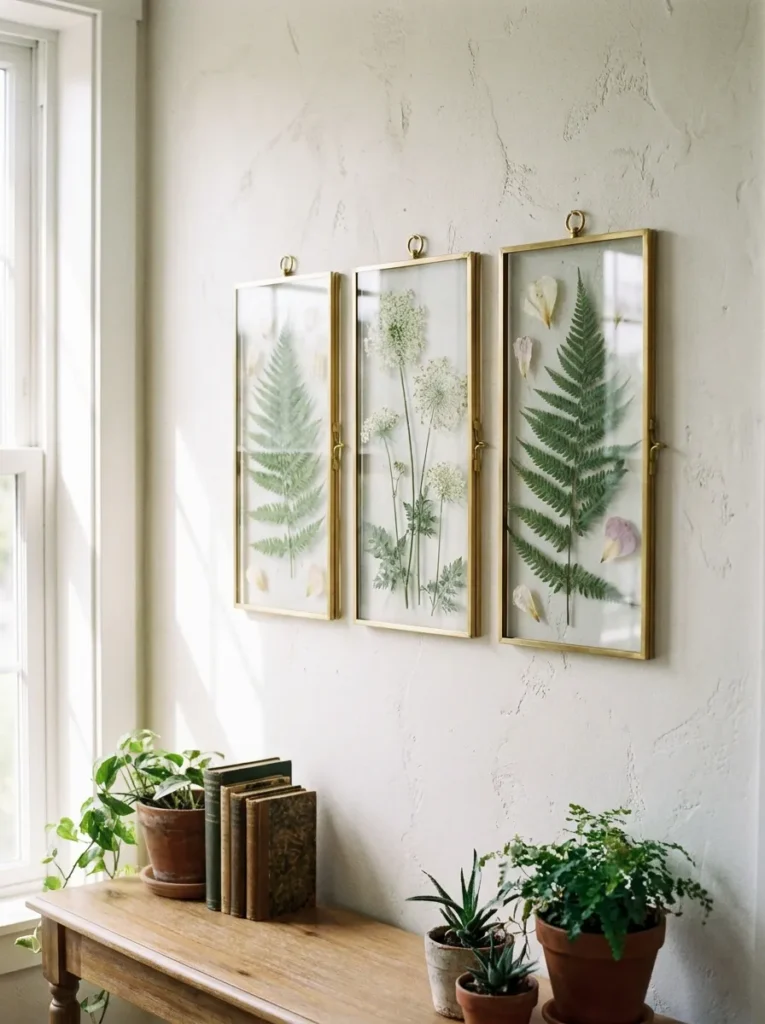
3. Pressed Flower Wall Art
Generic mass-produced prints strip a home of personality; preserved botanicals behind glass are the organic alternative. Press fresh blooms or delicate ferns flat between parchment paper inside a heavy book for two weeks. Position the dried specimens on a floating glass frame’s pane with tweezers, close the frame, and hang on a neutral wall. Group three or four in a vertical row for a custom botanical gallery.
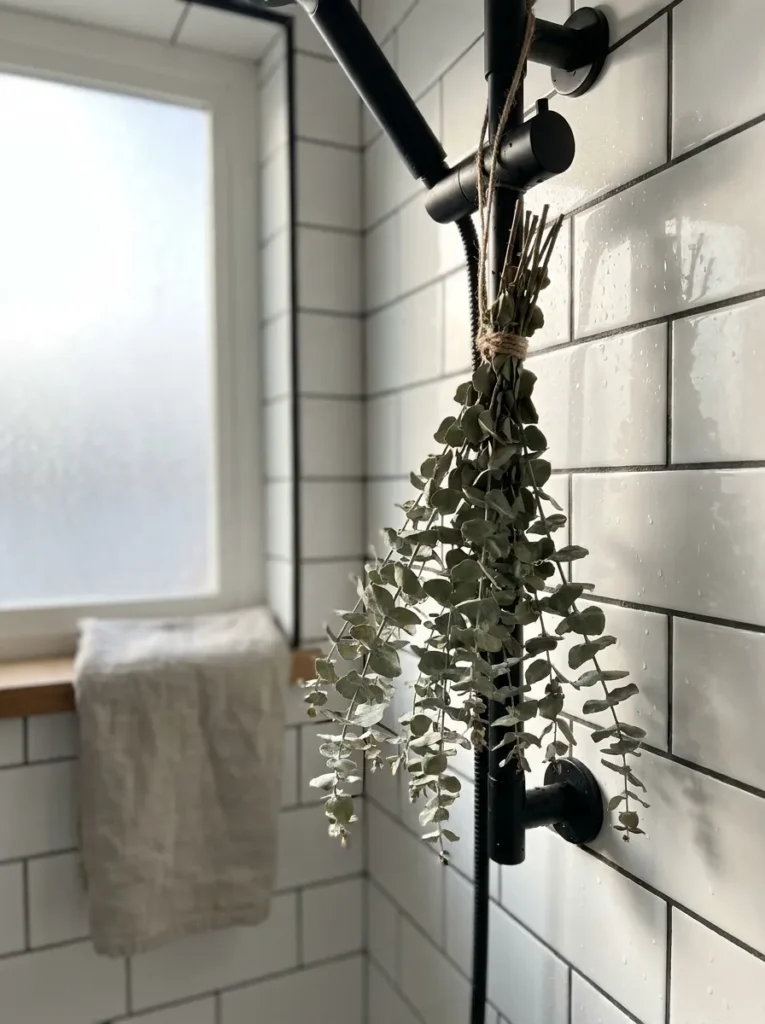
4. Hanging Eucalyptus in the Bathroom
Bathrooms feel cold and utilitarian with all that tile, porcelain, and glass. Bundle ten fresh eucalyptus stems (ironbark or baby blue), tie the base with natural jute twine leaving a long loop, and hang upside down from the shower head extension — behind the water stream so it stays dry but catches steam. The heat releases natural essential oils, infusing the room with therapeutic aroma while adding organic texture to the tile.
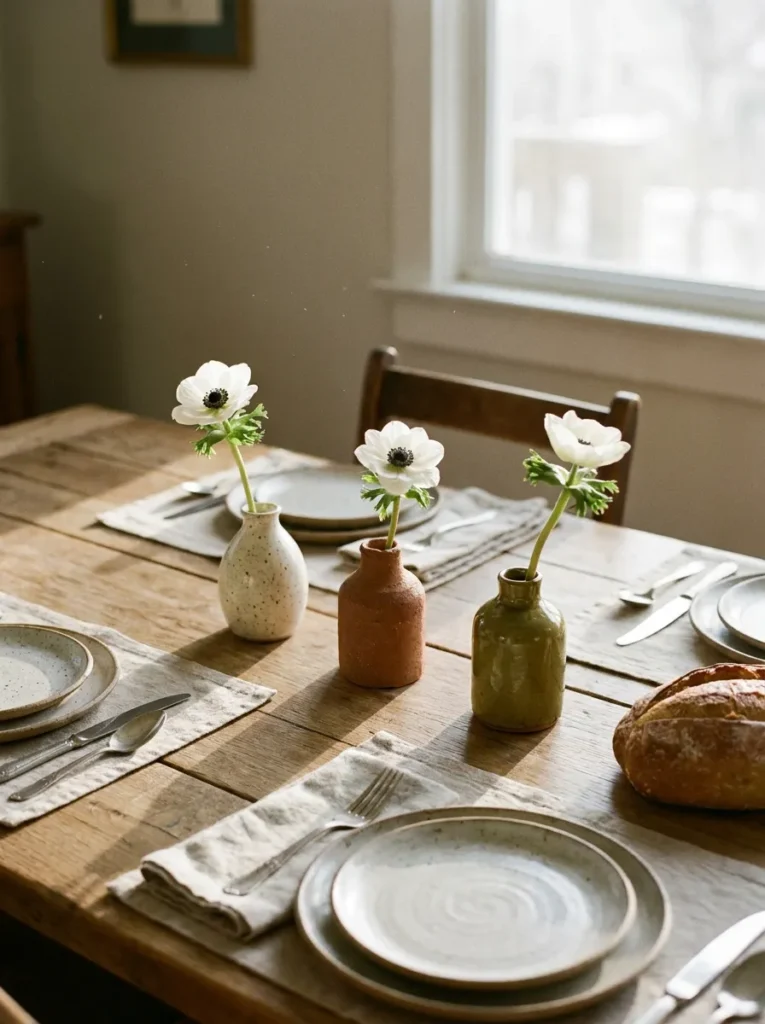
5. Low-Profile Floral Centerpieces
Tall centerpieces block sightlines and dinner conversation. Go horizontal: arrange three to five small mismatched ceramic bud vases down the center of a bare wooden table, with just one or two delicate architectural stems in each (single white anemones, dried poppy pods, jasmine vine sprigs). The split format spreads natural texture across the table while keeping eye level completely clear.
6. Mantel Makeover With Trailing Greenery
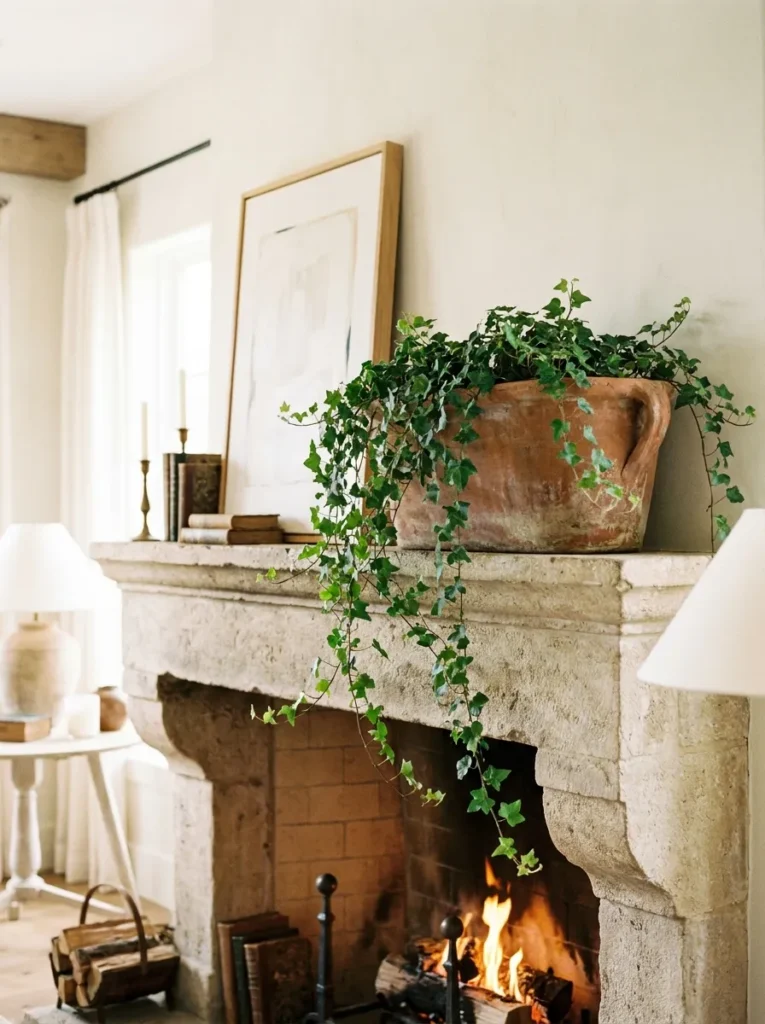
Mantels collect clutter — small frames, loose candles, trinkets that wreck the living room’s visual balance. Clear everything; replace with one elongated asymmetrical installation: a wide stoneware trough vase on one side filled with trailing faux or fresh greenery (English ivy, smilax vines) cascading over the fireplace masonry’s edge. Balance the other side with a single framed art piece. Elegant, uncrowded, dramatic.
7. The Acrylic Water Trick for Faux Stems
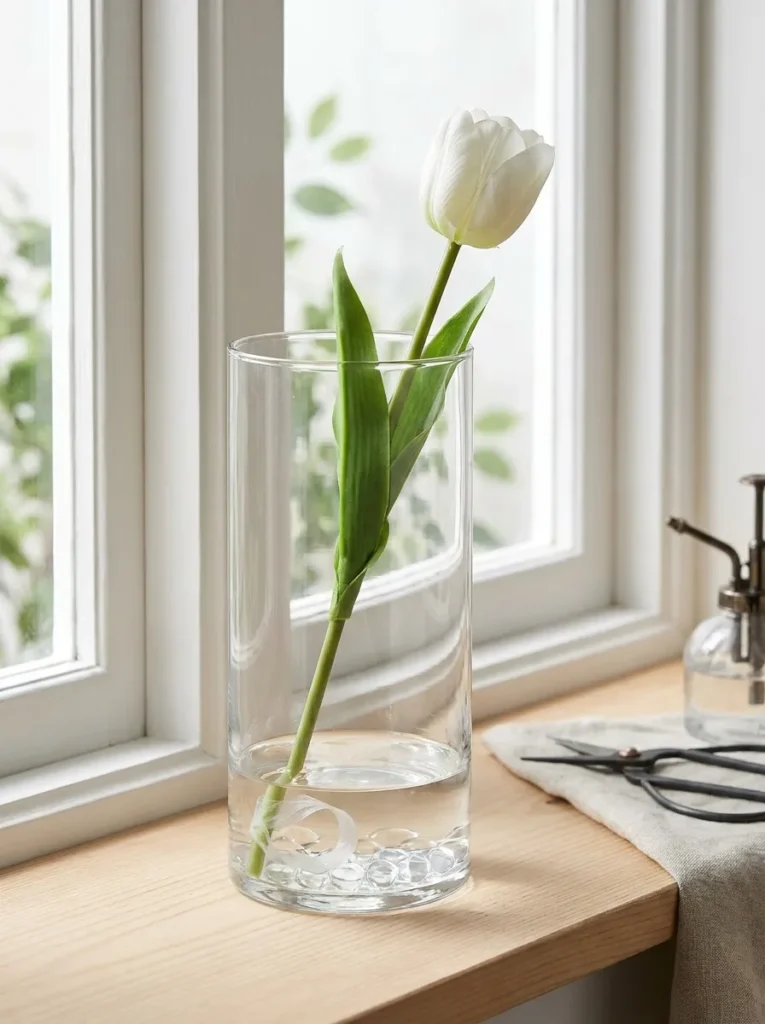
The biggest faux-flower giveaway: stems floating in dry air inside a clear vase. The fix is simple — if your premium faux stems have plastic-coated wires, fill the vessel with two inches of real, clean water. The illusion instantly reads as fresh. Change the water every few days to keep it clear.
8. Monochromatic Arrangements
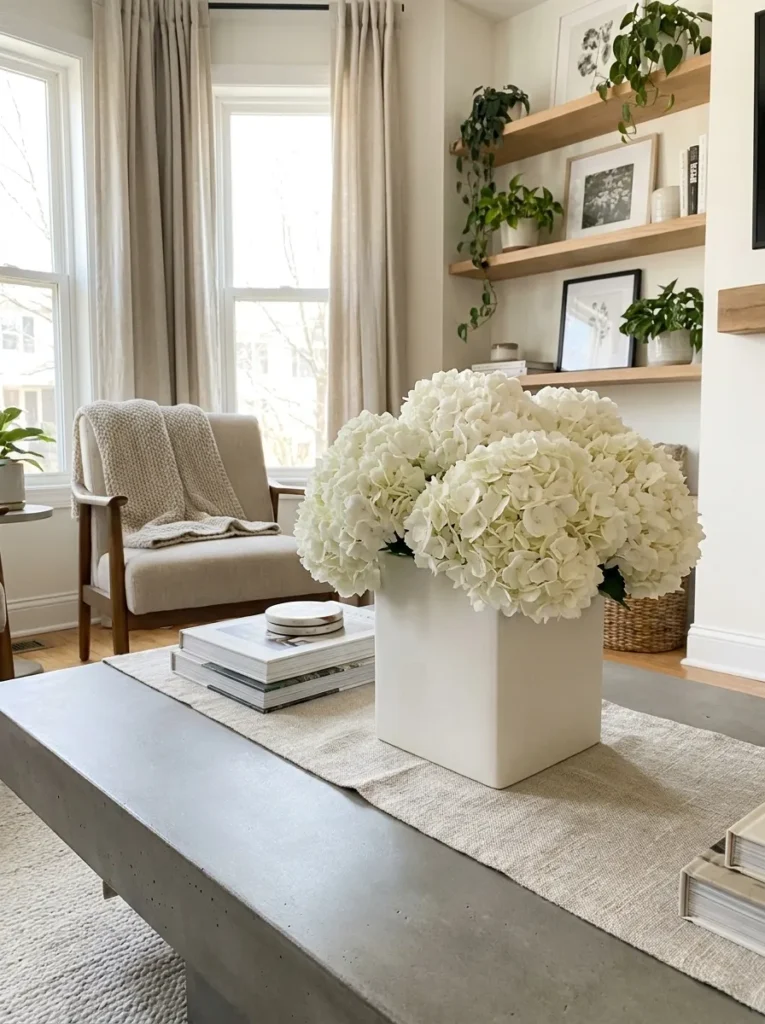
Five different bright flowers in one vase usually reads chaotic and dated. Instead, practice monochromatic isolation: one flower variety in one solid neutral color — ten all-white hydrangeas, all-pale-pink roses, all-burgundy calla lilies. Trim to equal lengths, pack tightly into a simple opaque geometric vase. Single texture, single palette: tailored, modern, soothing.
9. Faux Greenery for Empty Corners
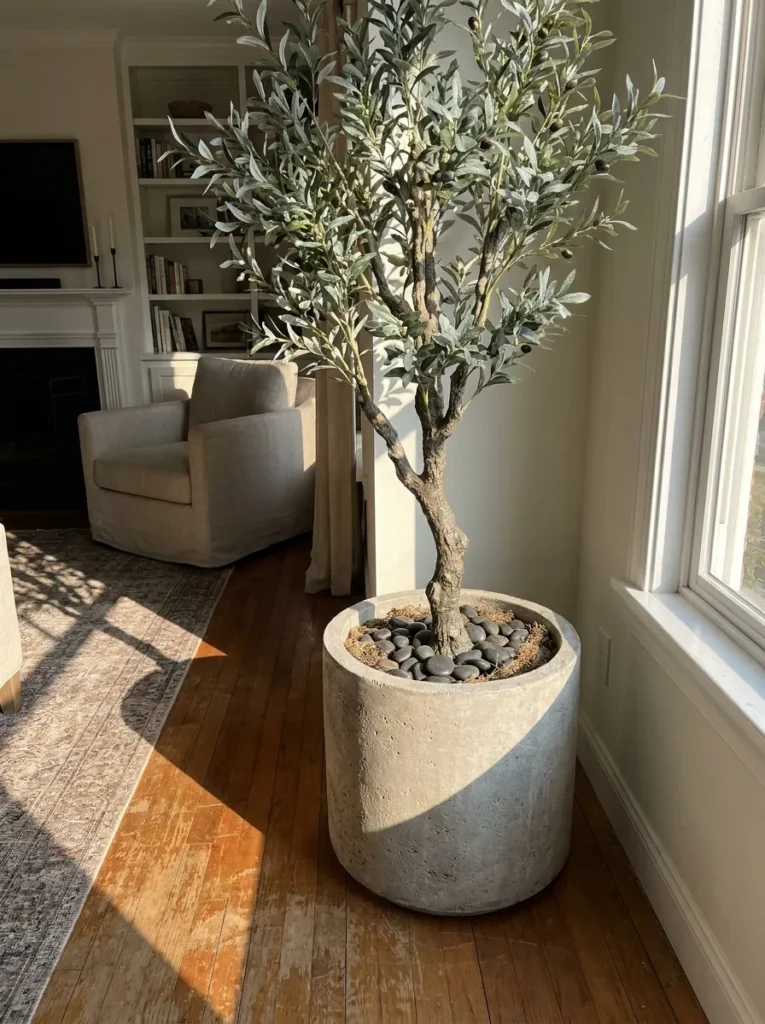
Empty corners feel unfinished; filling every corner with furniture feels cramped. The middle ground: a large heavy concrete or terracotta floor planter (at least 18 inches tall) with a realistic faux tree or tall fronds — faux fiddle leaf fig, olive tree, or giant monstera stems. Pack the base with real dried moss or dark river stones to hide the foam insert. A structural column of green that anchors the corner.
10. Dried Pampas Grass in Floor Vases
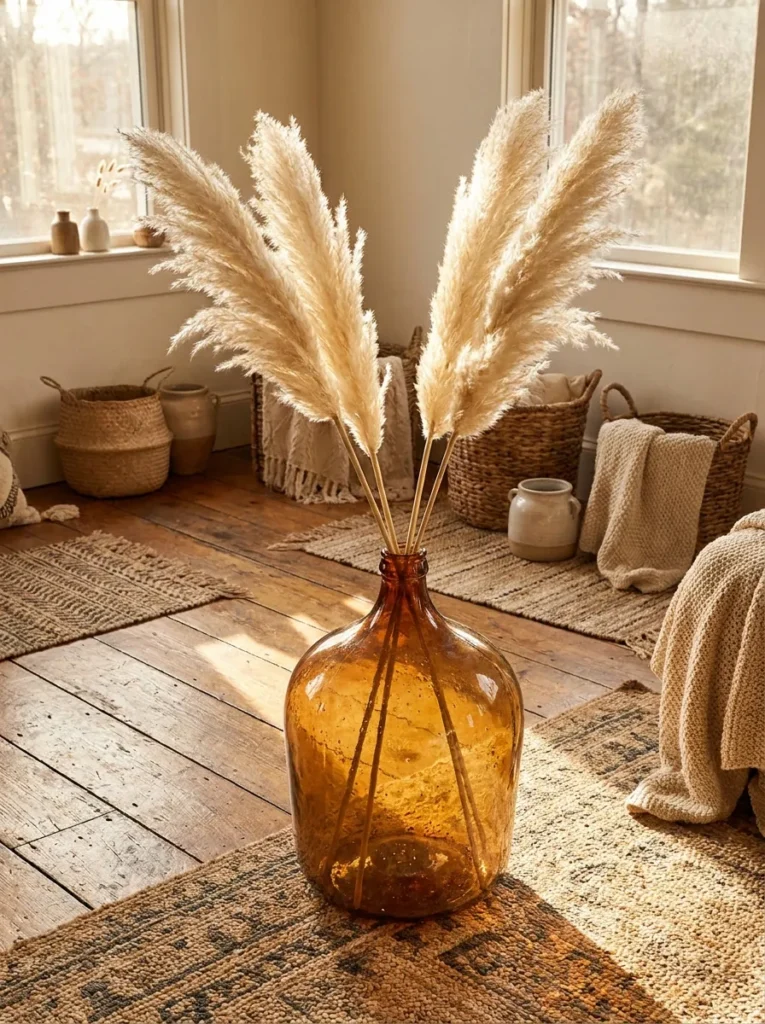
Preserved grasses bring architectural line and feathery texture that fresh or plastic flowers can’t match. Arrange three to five tall preserved pampas stems in a large glass demijohn jar or vintage clay vessel on the floor — natural un-dyed shades of cream, sand, or warm beige. Lightly spray the plumes with aerosol hairspray first to lock the fibers and prevent shedding as people walk past.
11. Faux Magnolia Branches for Contrast
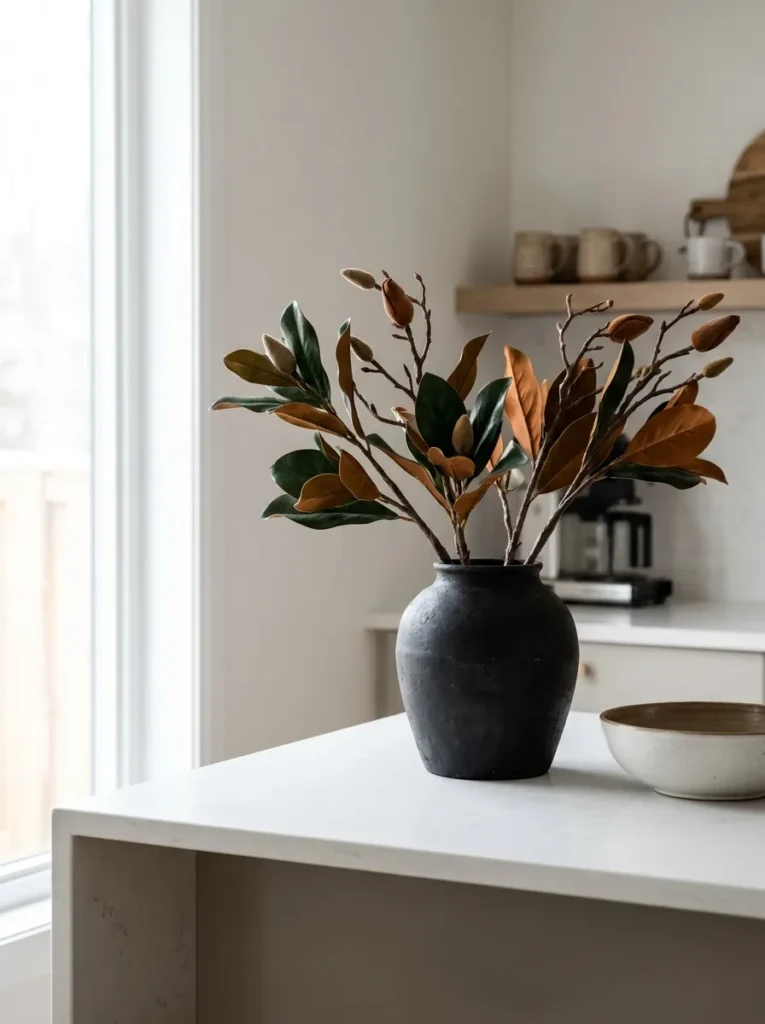
Light walls can look washed out without depth. Faux magnolia branches fix that: glossy deep emerald green on the front, soft velvety rust-brown suede underneath. A bundle of these thick structural branches in a matte black iron vase creates a contrast point that grounds white kitchens and neutral living rooms beautifully.
12. Floating Bud Vase Shelf
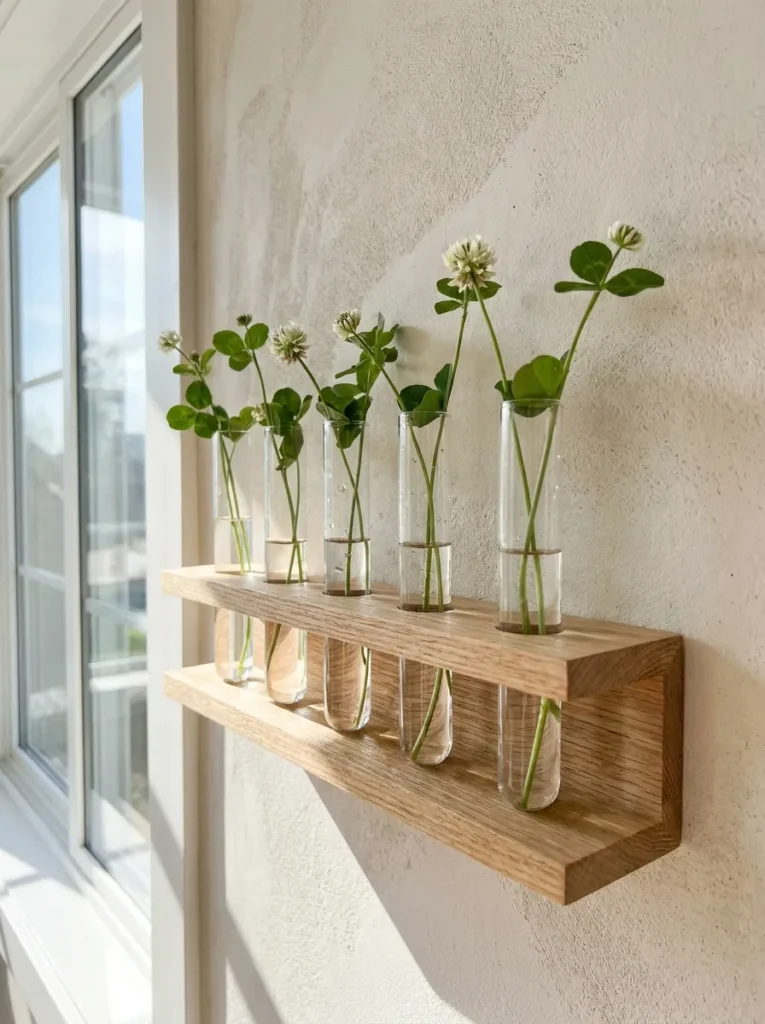
When windowsills and tabletops are packed, mount a thin wooden picture ledge solely for bud vases. Line up identical glass test-tube bud vases along it, each holding a single fresh green leaf or small wildflower. A horizontal ribbon of nature across an empty wall — zero counter space used.
13. The Single Drooping Orchid
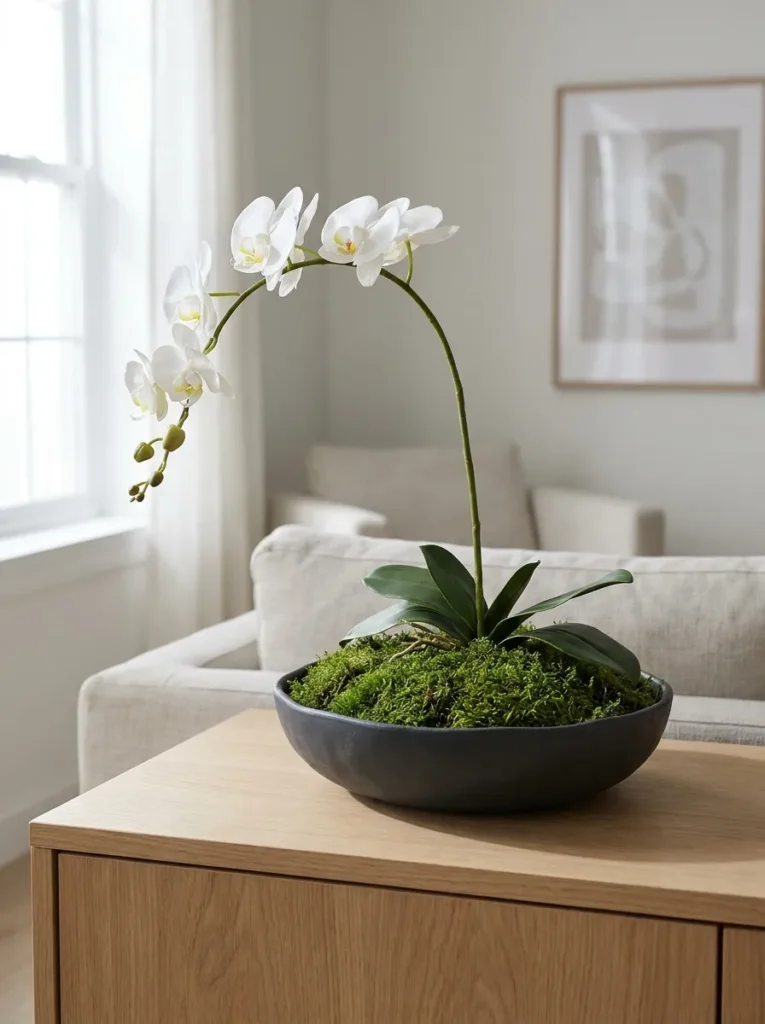
Orchids have the most elegant curved silhouettes in modern design — but keeping real ones blooming at home is genuinely hard. Use one premium faux white phalaenopsis stem in a shallow matte concrete or charcoal clay bowl. Curve the wire stem so it droops elegantly over the rim; cover the base with real dried sheet moss and a few black lava rocks. A sculptural arching bloom that works as living art on a desk or bathroom counter.
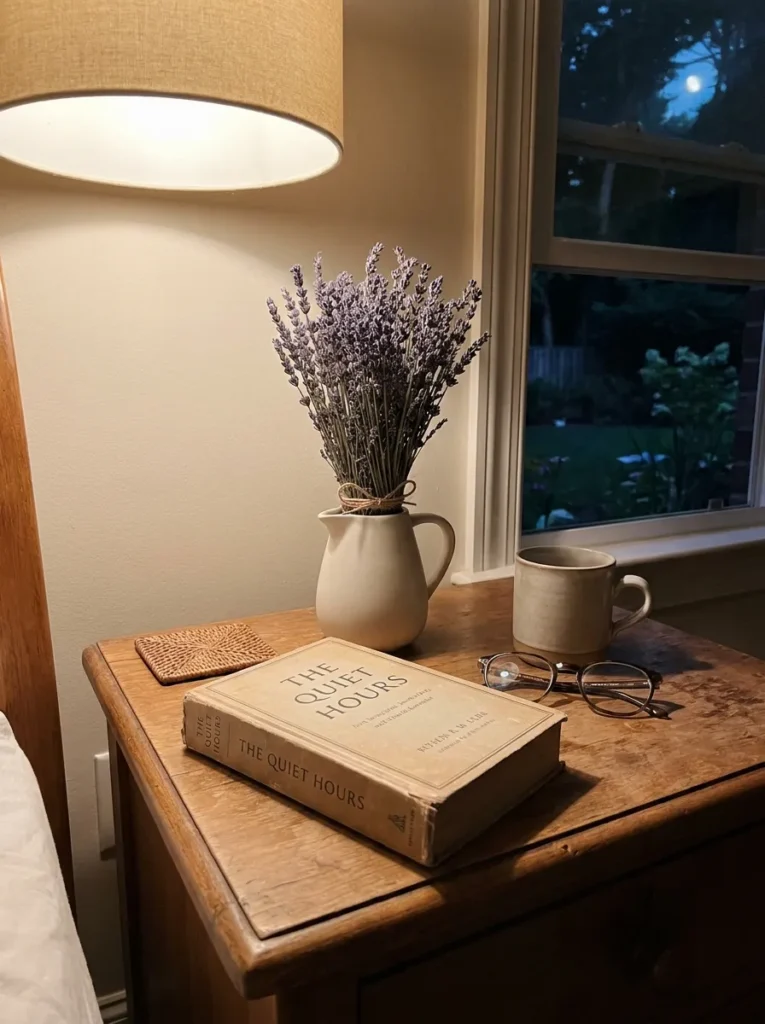
14. Preserved Lavender on the Nightstand
Nightstands should stay calm for restful sleep — heavy fragrant fresh bouquets overwhelm closed bedrooms overnight. Instead, place a small untied bundle of preserved French lavender in a matte white ceramic pitcher or ribbed clay cup. The dusty blue-violet adds a subtle calming pop to neutral palettes, and the gentle scent stays localized and soothing.
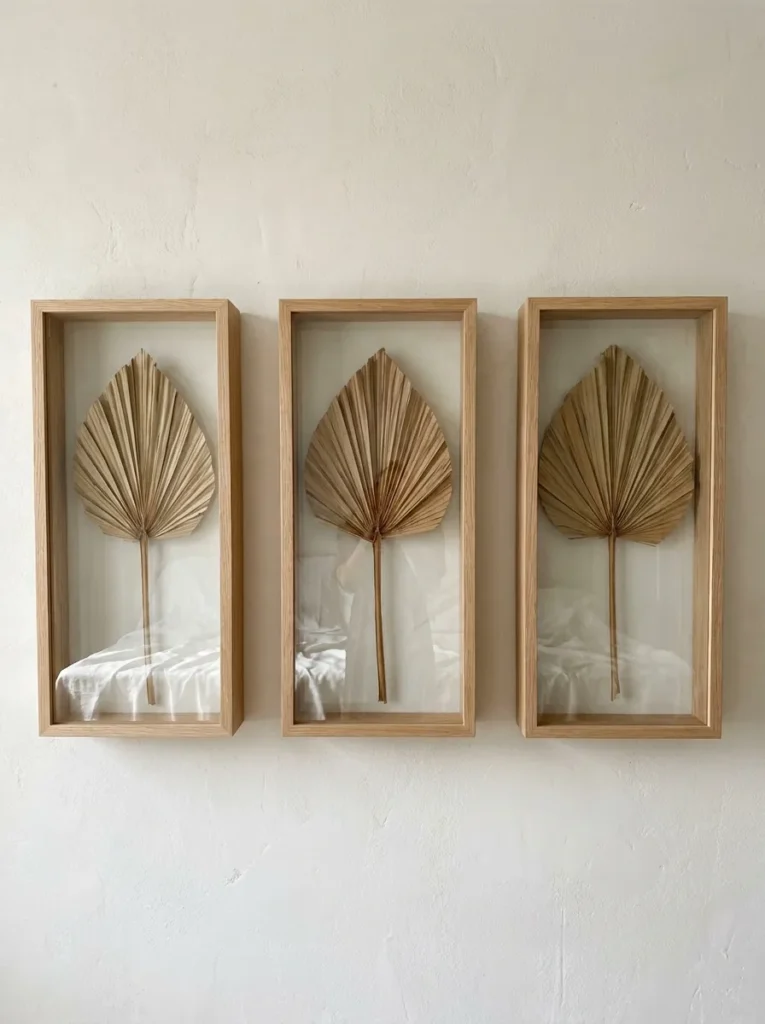
15. Dried Botanical Shadow Boxes
Flat framed photos can feel dull on a gallery wall; dimensional enclosed objects create texture and curiosity. Mount three uniform wood-framed shadow boxes in a row; secure one structural preserved specimen in each with a dot of silicone adhesive — a dried protea bloom, a palm spear, an oversized lotus pod — against the linen backing. The frames’ depth casts clean architectural shadows, turning dried flora into high-end gallery work.
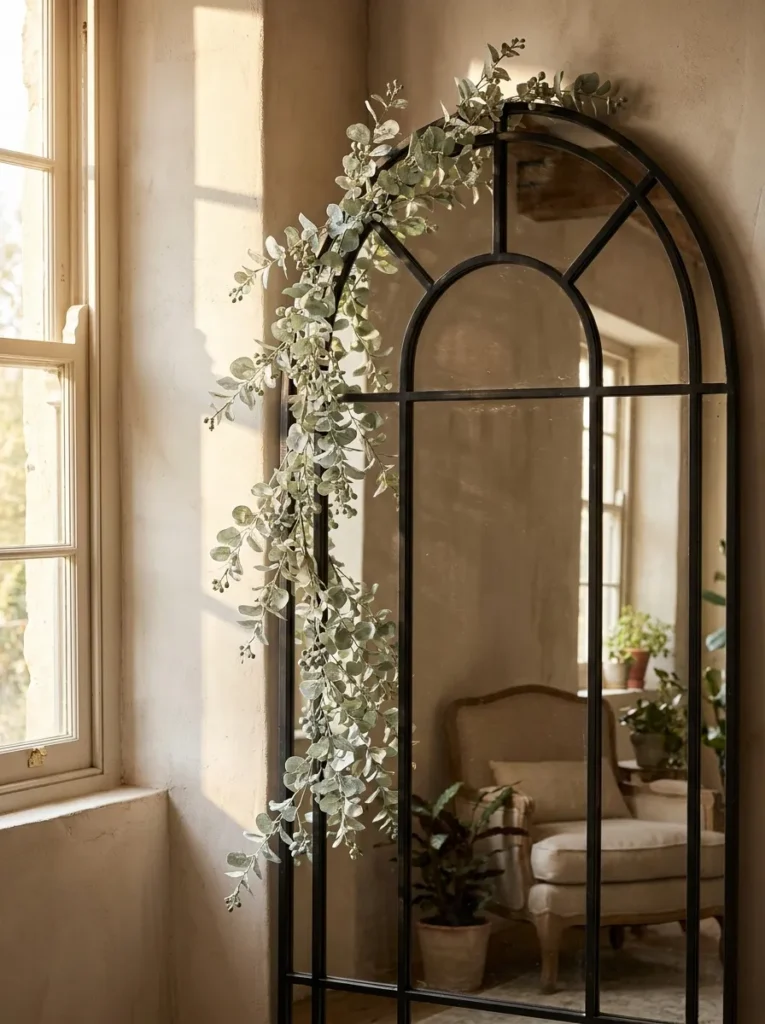
16. Greenery Draped on Mirrors
Large mirrors expand rooms visually, but bare glass and metal frames can read cold. Drape one slender strand of realistic faux silver dollar eucalyptus or trailing willow vine across the top corner of a large arched mirror, cascading down one side over roughly a third of the frame. Asymmetric organic movement that breaks up straight lines without blocking your reflection.
17. Hide Faux Stems With Opaque Vases
The most immediate faux giveaway: visible plastic coating or exposed wire at the stem base inside a clear container. The vessel choice matters more than the stems — always use completely opaque ceramic, stoneware, or matte metal vases for faux arrangements. The barrier conceals the synthetic construction entirely, letting the visible leaves and petals carry the illusion of fresh growth.
18. The Monobloom Bud Vase Row
One massive mixed centerpiece overwhelms low coffee tables and narrow islands, creating a visual barrier. Instead, use linear repetition: five identical clear glass cylindrical bud vases in a straight line down the surface’s center, each holding a single fresh stem of the same flower — white tulips, pale pink poppies — trimmed to identical heights. Natural texture spread horizontally with strict visual minimalism.
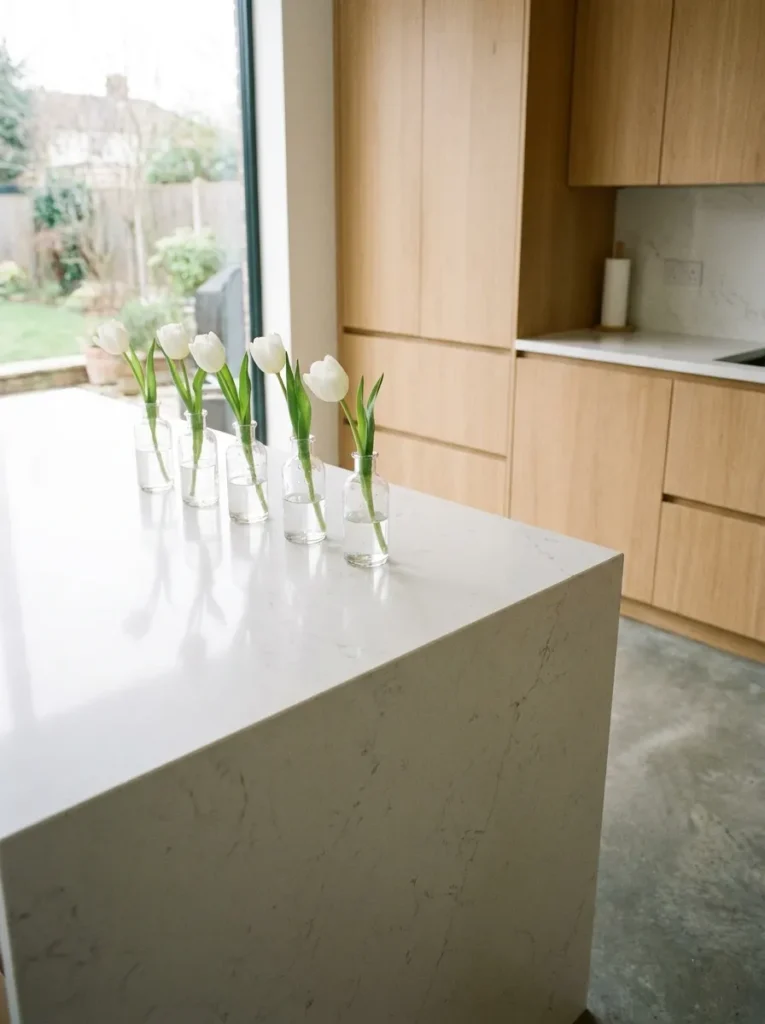
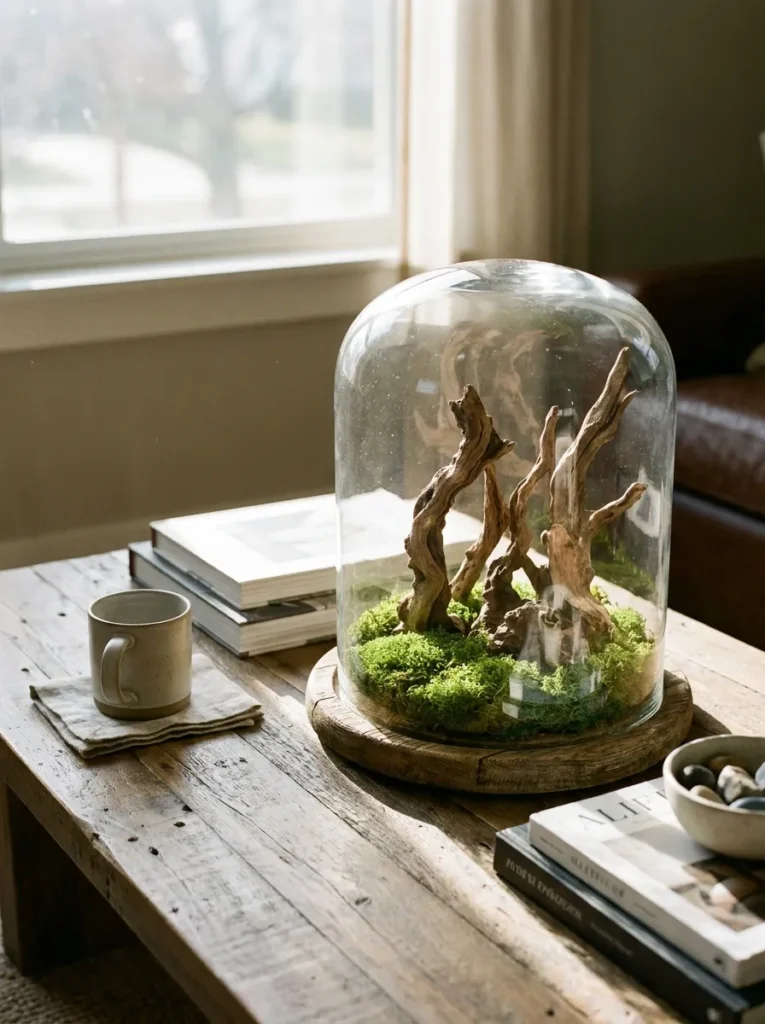
19. Botanical Landscape Under Glass
Loose dried elements on a console look unorganized and collect dust. Build an enclosed botanical landscape under a clear glass cloche: a glass dome on a raw concrete or pale oak base, one piece of architectural driftwood anchored in, small patches of preserved green sheet moss and a few dried seed pods glued around the footer with floral glue. Set it on a stack of neutral books — texture and dimension, completely sealed from dust.
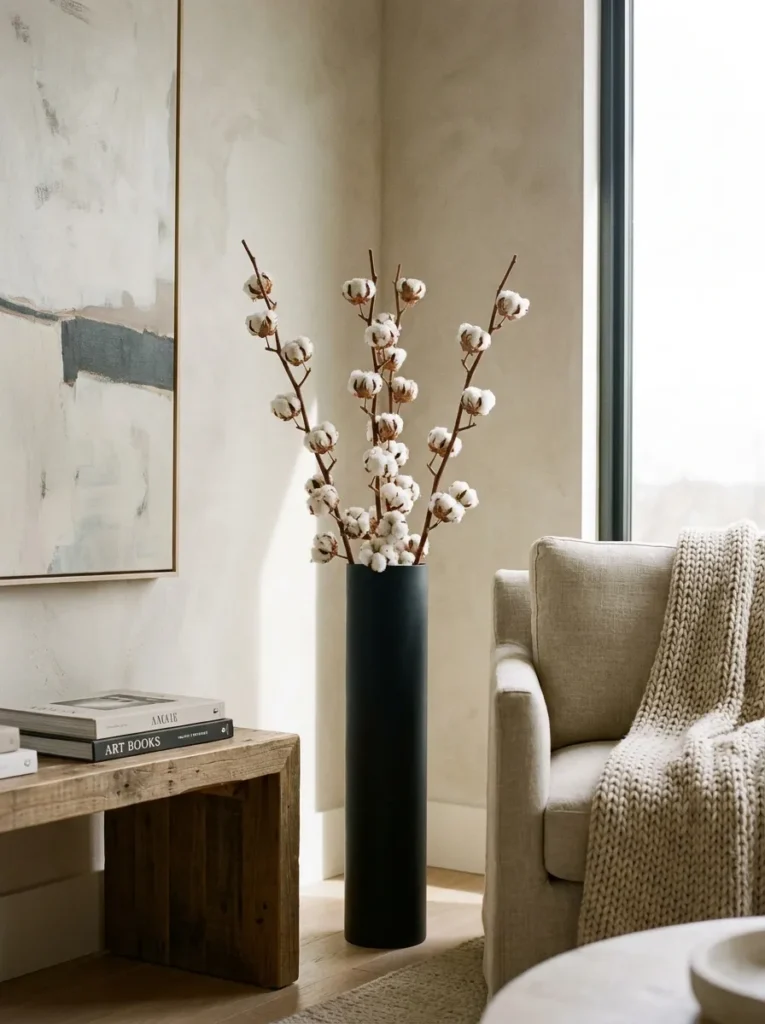
20. Dried Cotton Stems in Tall Vessels
Industrial and minimalist rooms with metal and concrete can feel cold or aggressive. Balance them with organic softness: five tall real dried cotton pods in a heavy matte black iron floor vase. The twisted brown branches draw a graphic outline against neutral walls while the fluffy white tufts add cloud-like softness — rugged metal against soft fiber, perfectly balanced.
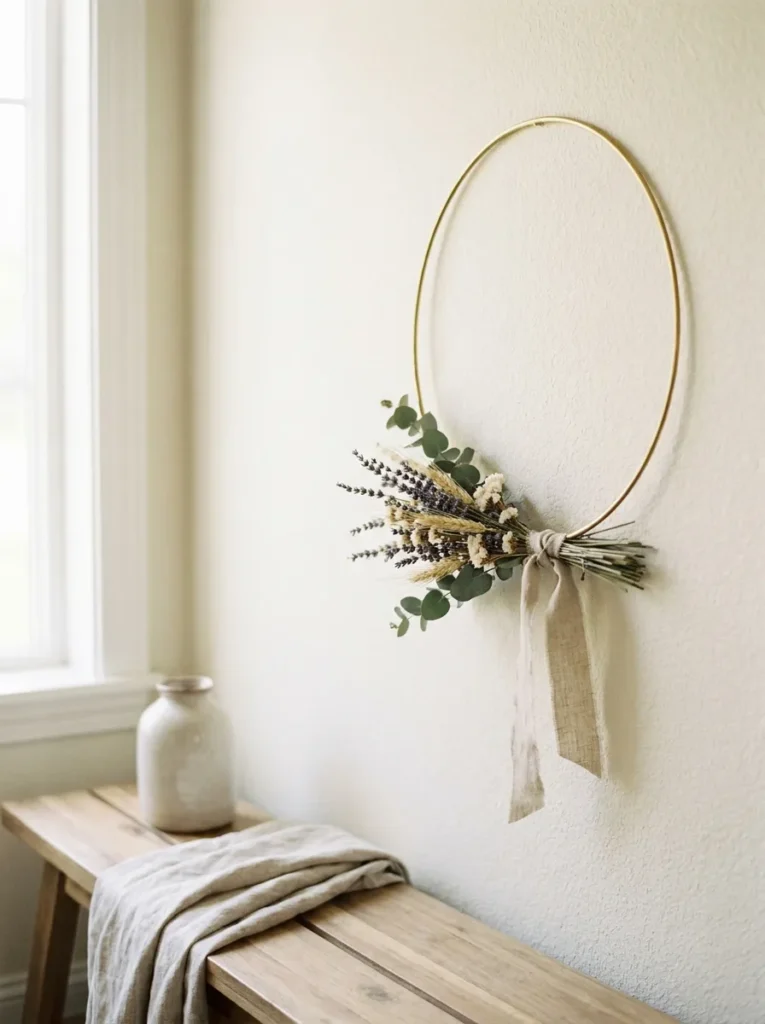
21. The Asymmetric Hoop Wreath
Traditional thick pine or berry wreaths look heavy and season-locked — hard to integrate into everyday modern rooms. Try a thin minimalist brass ring (about 18 inches): wire a sparse asymmetric cluster of dried lavender, preserved bunny tails, and a single faux air plant to only the bottom curve, leaving the upper two-thirds bare. Your wall color breathes through the open center.
22. Faux Eucalyptus Table Runner
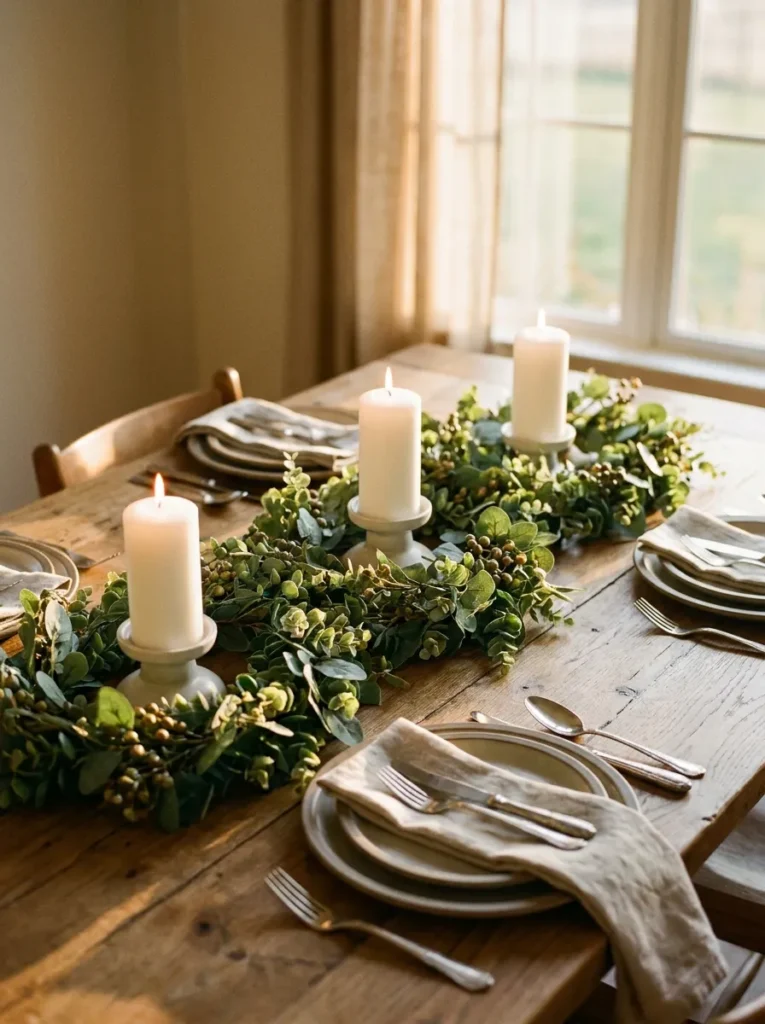
A bare dining table feels uninviting between meals; a permanent formal runner with heavy centerpieces creates daily clutter. The alternative: a low-profile greenery runner directly on the wood. Interlace three or four long flexible faux silver dollar eucalyptus garlands down the table’s center length, weaving branches into a continuous vine; nestle white pillar candles of varied heights into the leaves. Constant organic texture along the table’s axis, zero obstruction of daily use.
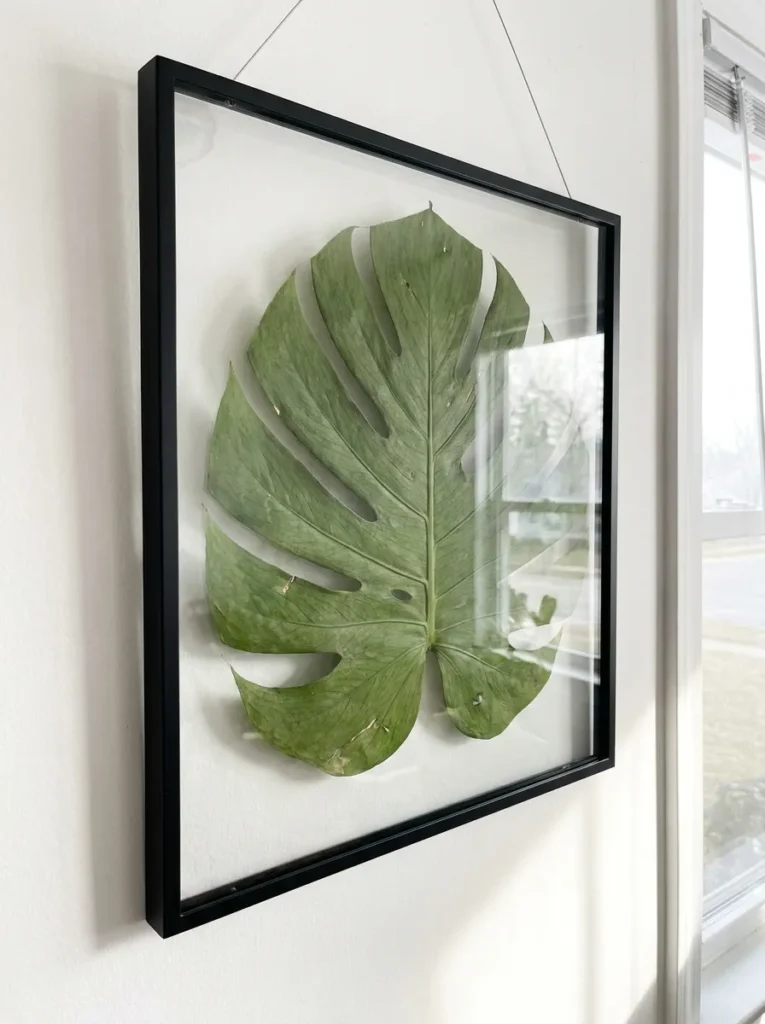
23. Double-Glass Leaf Panels
Solid opaque paintings can close in a small hallway or entry. Add transparency instead: oversized double-glass floating frames holding large structural pressed leaves — monstera fronds, ginkgo, split-leaf philodendrons (pressed flat for one week). With no solid backing, the leaf appears to float mid-air while wall color and room light pass through the glass.
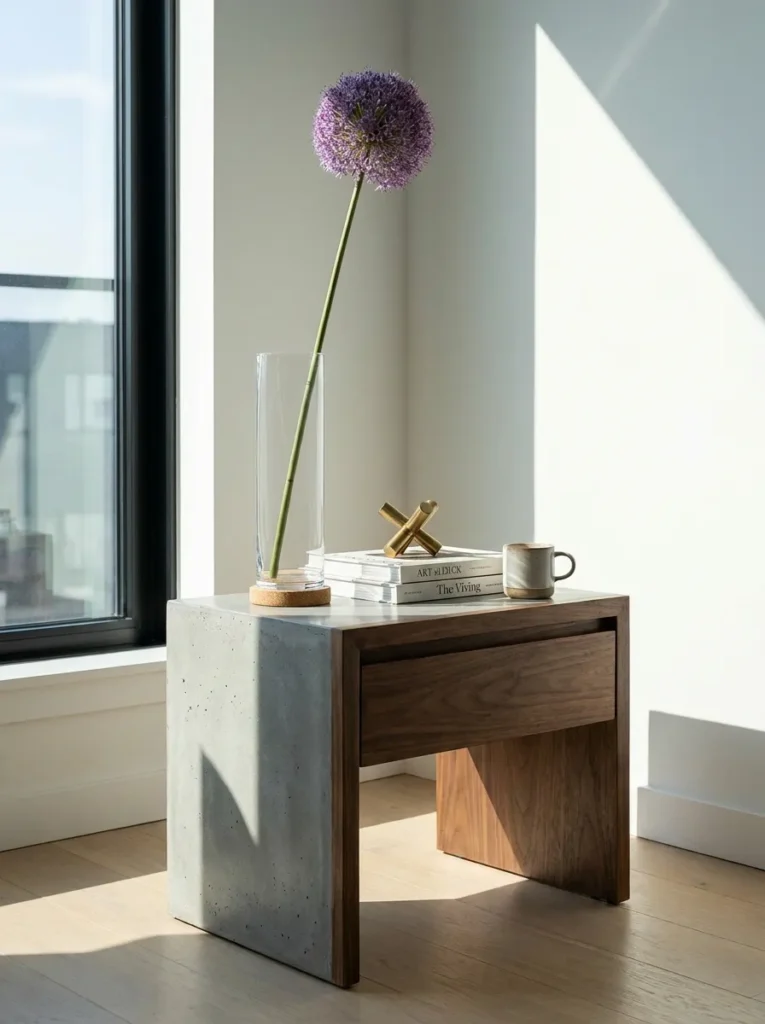
24. Faux Allium Stems for Modern Spaces
Round bouquets with soft blending lines look indistinct against structured modern minimalist furniture. Introduce graphic boundaries with faux allium or thistle stems: a perfectly spherical structural seed head on a long straight stem. One oversized faux purple or white allium globe in a slender architectural glass cylinder creates a clean vertical line and unexpected geometric form that complements modern cabinetry.
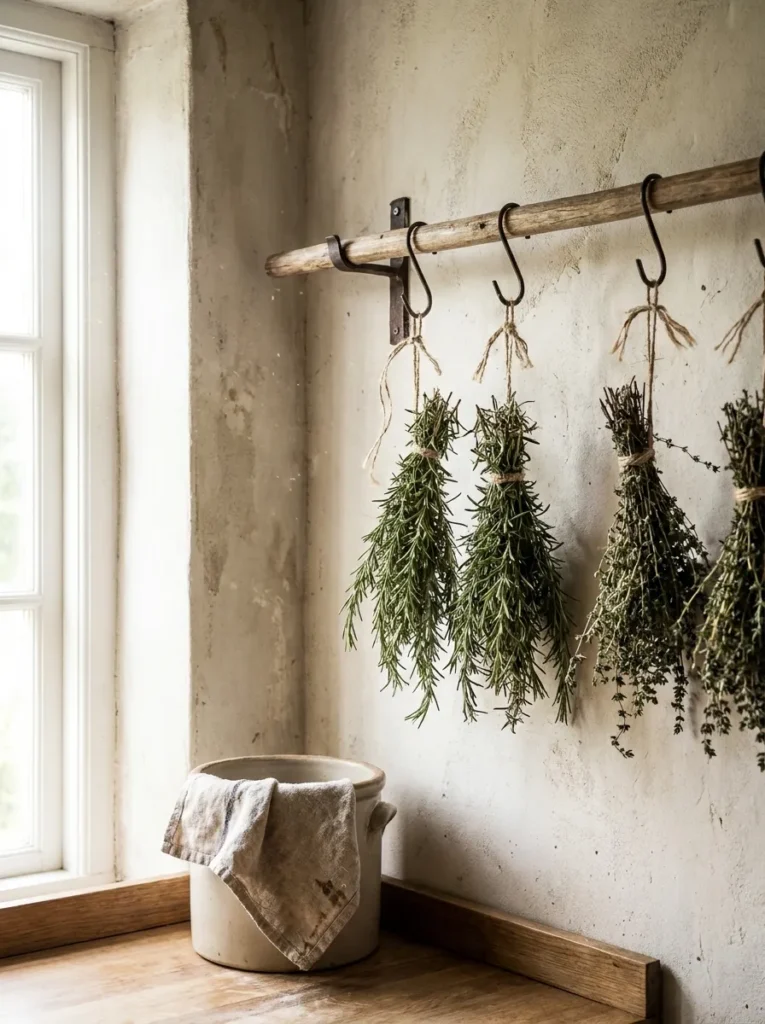
25. Dried Herb Hanging Rack for the Kitchen
Kitchen walls default to utility clocks and generic signage. Build a functional hanging herb rack instead: a beautiful piece of raw driftwood or a simple iron bar, with small bundles of fresh rosemary, thyme, and bay leaves tied with baker’s twine and hung upside down at varied lengths. As the herbs air-dry over weeks, they shift into muted earthy tones — organic texture against kitchen tile plus a subtle savory aroma.
26. Floating Blossom Water Bowl
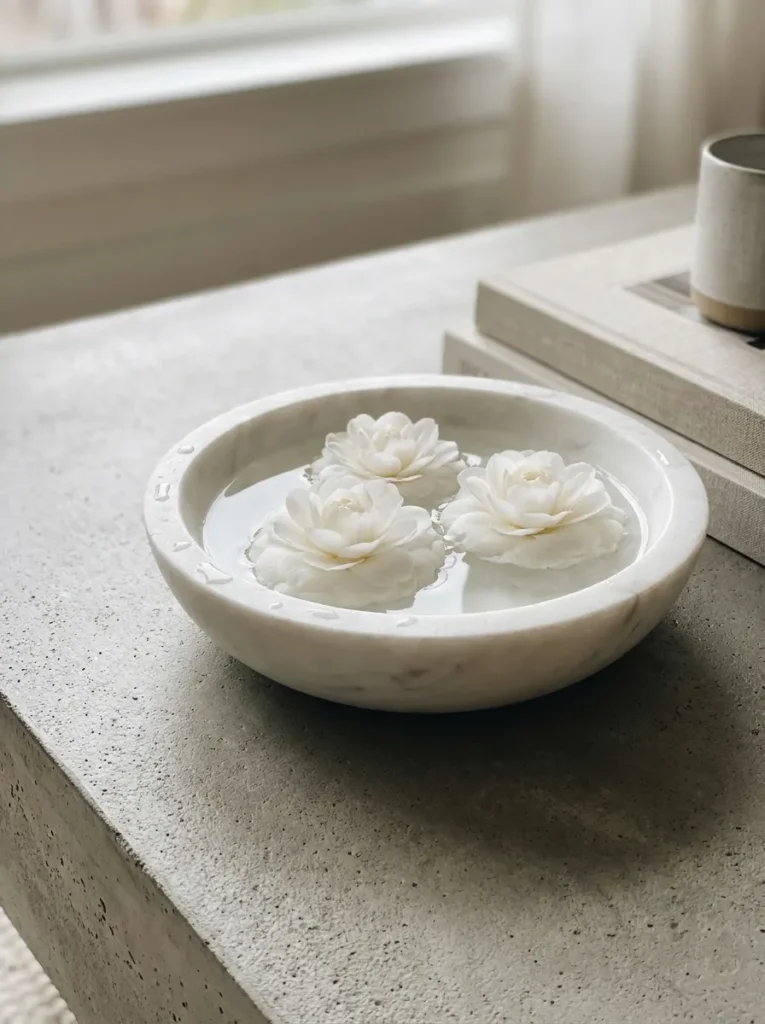
Heavy arrangements on coffee tables block the TV and eat the space where books and remotes live. Go low-profile with water immersion: fill a shallow wide white ceramic or marble bowl with two inches of clean water, trim the stems completely off three fresh flower heads (white camellias, open roses, gardenias), and float the blooms on the surface. A zero-footprint pop of natural texture, entirely below your line of sight.
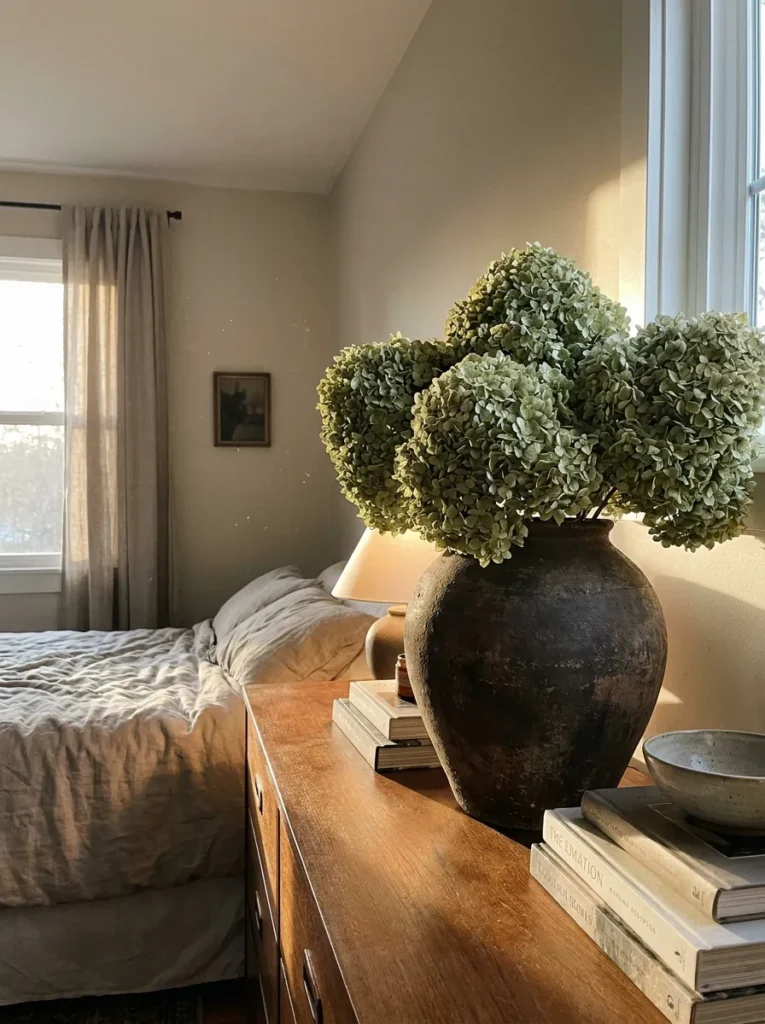
27. The Dried Hydrangea Cloud
Fresh hydrangeas fade within days, demanding constant clipping and water changes. Preserved hydrangea globes solve it: as they dry naturally, petals shift into muted sage green, antiqued cream, or dusty rose. Pack three large dried heads tightly into a dark iron or weathered clay chalice vase — a dense cloud-like statement with rich antiqued texture for a dining buffet or bedroom dresser, not a drop of water required.
Shop the Botanical Look
Bringing botanicals home doesn’t require messy soil or dusty synthetic arrangements. Prioritize clean lines, opaque vessels, and natural preservation techniques. The essentials:
- Realistic faux stems: shop realistic faux stems on Amazon — look for plastic-coated branches with printed leaf details for a convincing fresh-growth illusion.
- Opaque ceramic and stoneware vases: shop opaque vases on Amazon — mandatory for hiding synthetic stem bases and dry vessel interiors.
- Waterproof floral tape and shears: shop floral tape and shears on Amazon — the essentials for the grid tape method.
- Brass floating frames: shop brass floating frames on Amazon — double-glass frames for displaying pressed ferns and leaves.
- Dried pampas grass and plumes: shop dried pampas grass on Amazon — fluffy architectural height for floor jugs, no shedding worries.
Quick Answers
How do I make faux flowers look real?
Use opaque vases to hide stem bases, add two inches of real water to clear vessels (for plastic-coated stems), and choose stems with printed leaf details. The vessel and finishing details sell the illusion more than the flowers themselves.
What is the easiest flower arrangement for beginners?
The grid tape method: tape a grid across a low wide vessel’s mouth, trim grocery store stems short, and insert them square by square from outside inward. It produces a professional-looking dense mound with minimal skill.
How do I decorate with flowers without clutter?
Think sculptural, not abundant: single-variety monochromatic arrangements, asymmetric branch placements, and low-profile formats (bud vase rows, floating blossom bowls) add nature without visual noise.
Affiliate Disclosure: As an Amazon Associate, I earn from qualifying purchases. If you click a link and buy, I may receive a small commission at no extra cost to you. Thank you for supporting my content!