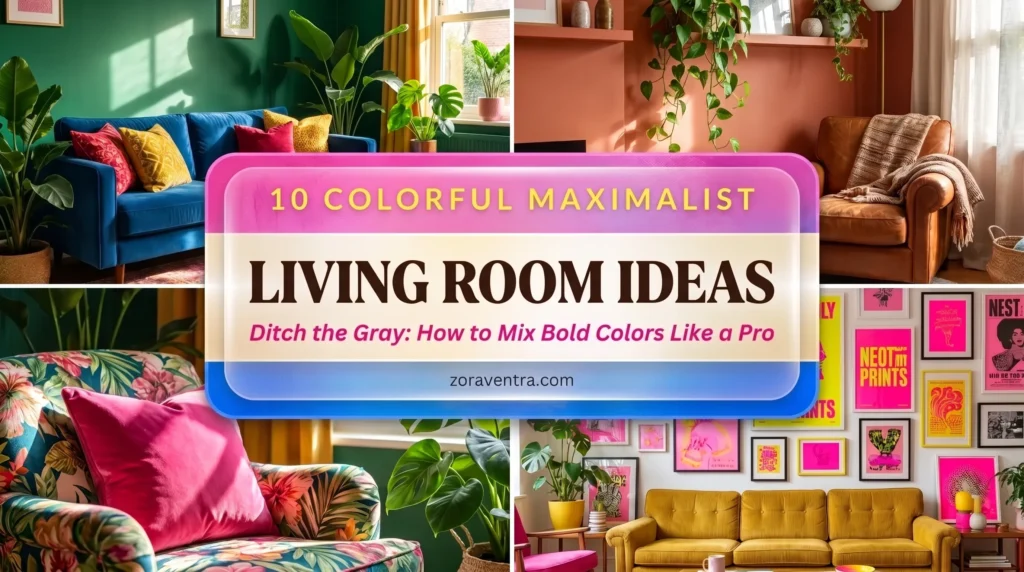
For years the advice was the same: keep it neutral. Gray sofa, beige walls, play it safe. The result? Beautiful rooms that feel predictable — and a little forgettable. Colorful maximalism does the opposite: it uses bold color to create personality, warmth, and a home that feels genuinely lived in. The challenge isn’t using color — it’s combining it so the room feels intentional, not chaotic. One simple principle makes all the difference.
The “Anchor, Bridge, Pop” Rule
This is the secret that stops a colorful room from feeling chaotic. Give every color a job:
The Anchor: one dominant color for large surfaces (walls or a massive rug). This grounds the room.
The Bridge: a second color for medium pieces (sofa, heavy curtains). This connects everything.
The Pop: everything else — pillows, art, small chairs, trinkets — goes wild with contrasting color.
Anchor first and your eyes have a place to rest; then you can go bold everywhere else. Designers use a similar 60–30–10 balance: ~60% anchor, ~30% bridge, ~10% pops.
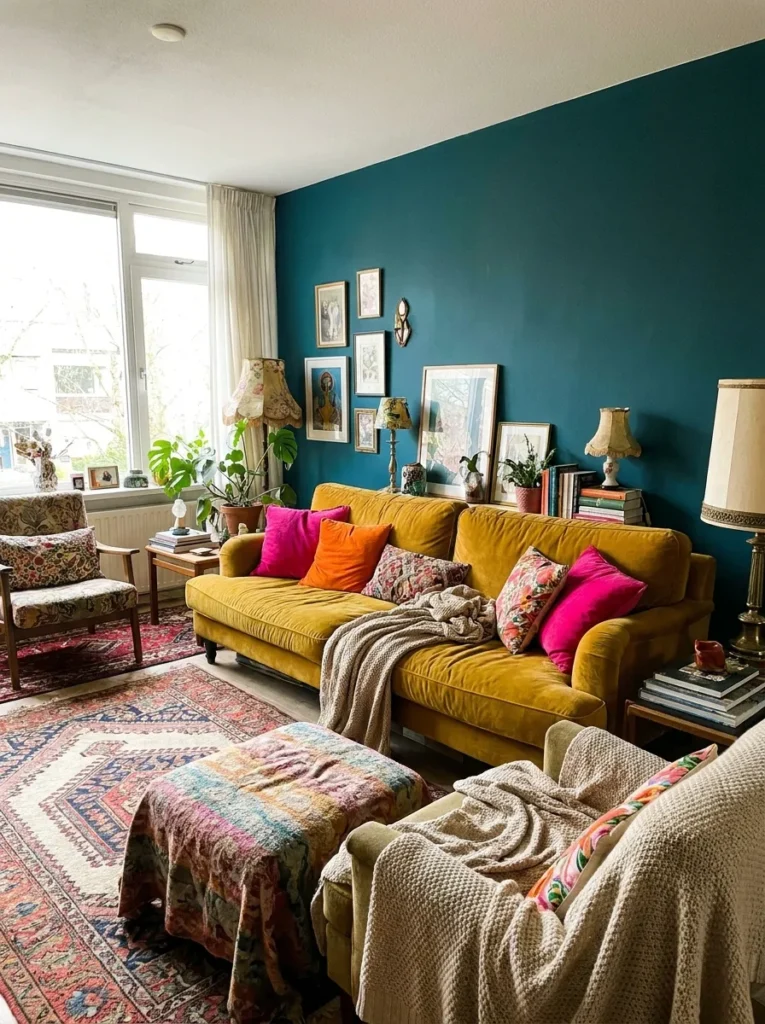
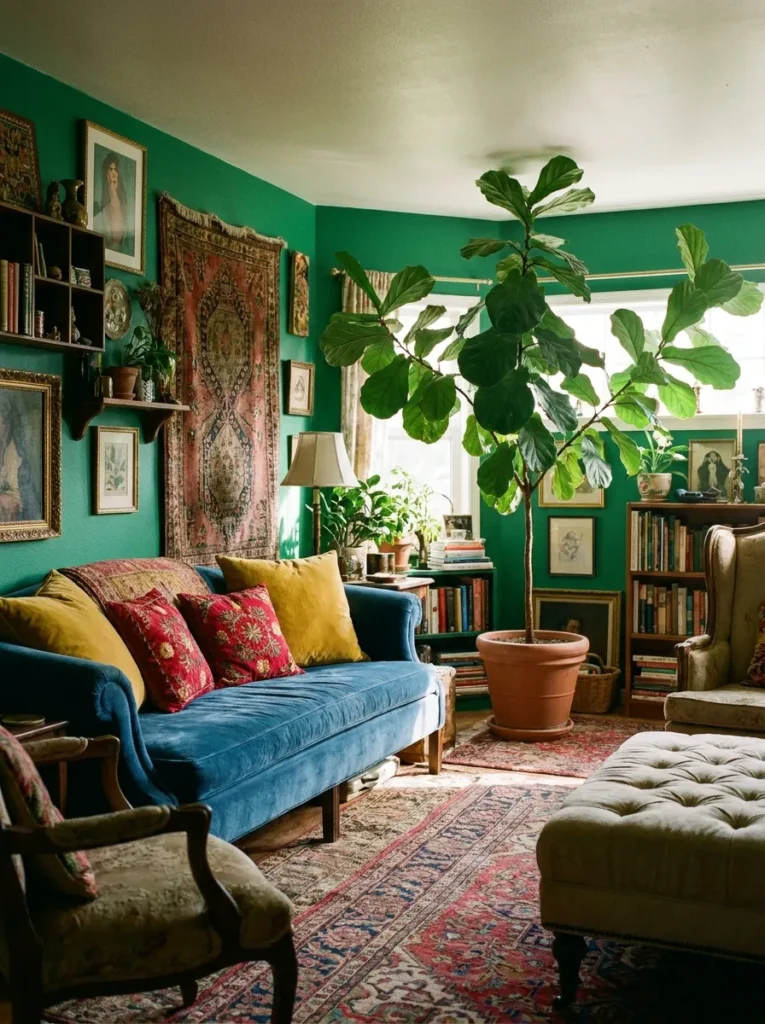
1. Jewel Tones (Emerald + Sapphire)
For a rich, luxurious embrace: anchor in emerald green walls, bridge with a sapphire blue velvet sofa, pop with mustard yellow and ruby red pillows and lampshades. Jewel tones are naturally saturated so they play together without clashing. Get the look: deep blue stretch sofa slipcover. A tall fiddle leaf fig’s dark glossy leaves melt right into the palette.
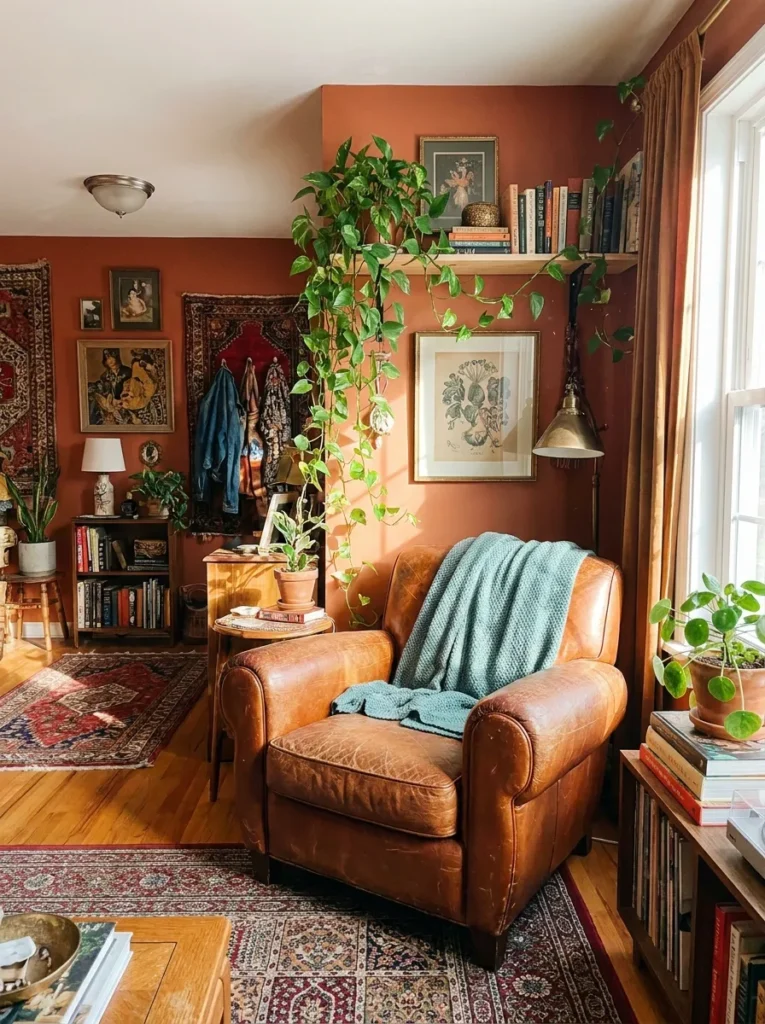
2. Warm Earth (Terracotta + Cognac)
Jewel tones too dark? Go warm: terracotta walls as the anchor, a worn cognac leather armchair as the bridge, soft teal and sage in blankets and ceramics to cool the heat. Get the look: round pleated velvet throw pillows (4-piece set). Permanent golden hour — cozy, inviting, happy. A trailing golden pothos pops brilliantly against terracotta.
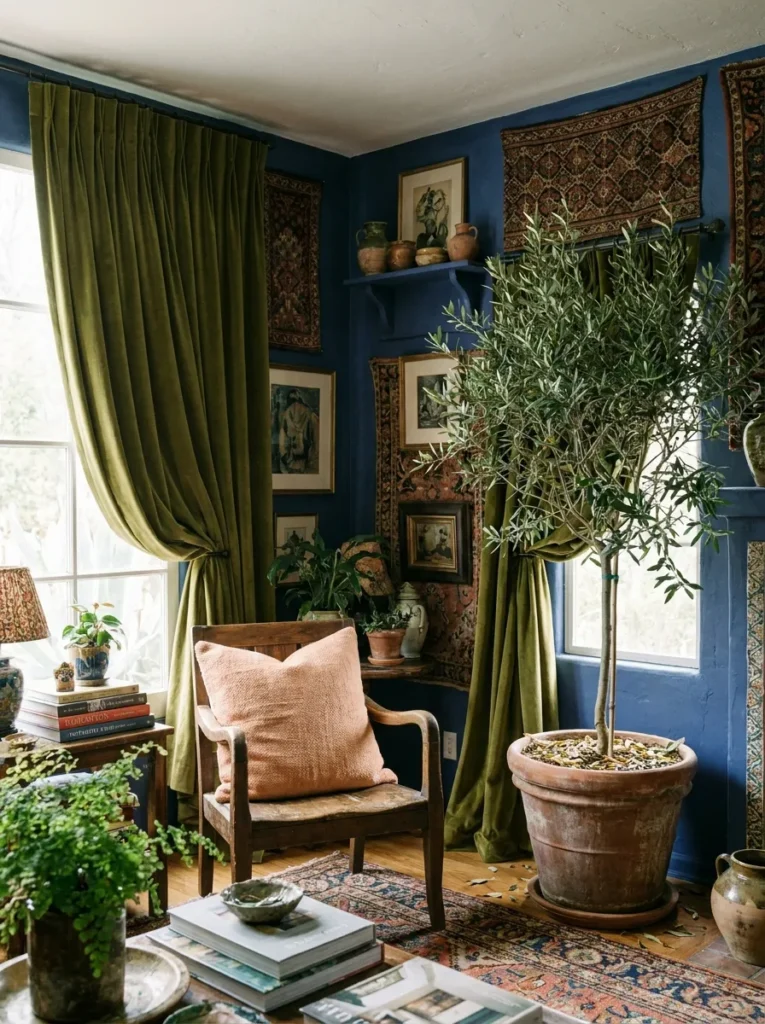
3. Cool Mediterranean (Indigo + Olive)
Bold but calming: indigo blue walls anchor, olive green (ottoman, heavy velvet curtains) bridges, soft coral and peach in art and pillows add gentle warmth. An indoor olive tree’s silvery leaves look incredibly chic against the indigo.
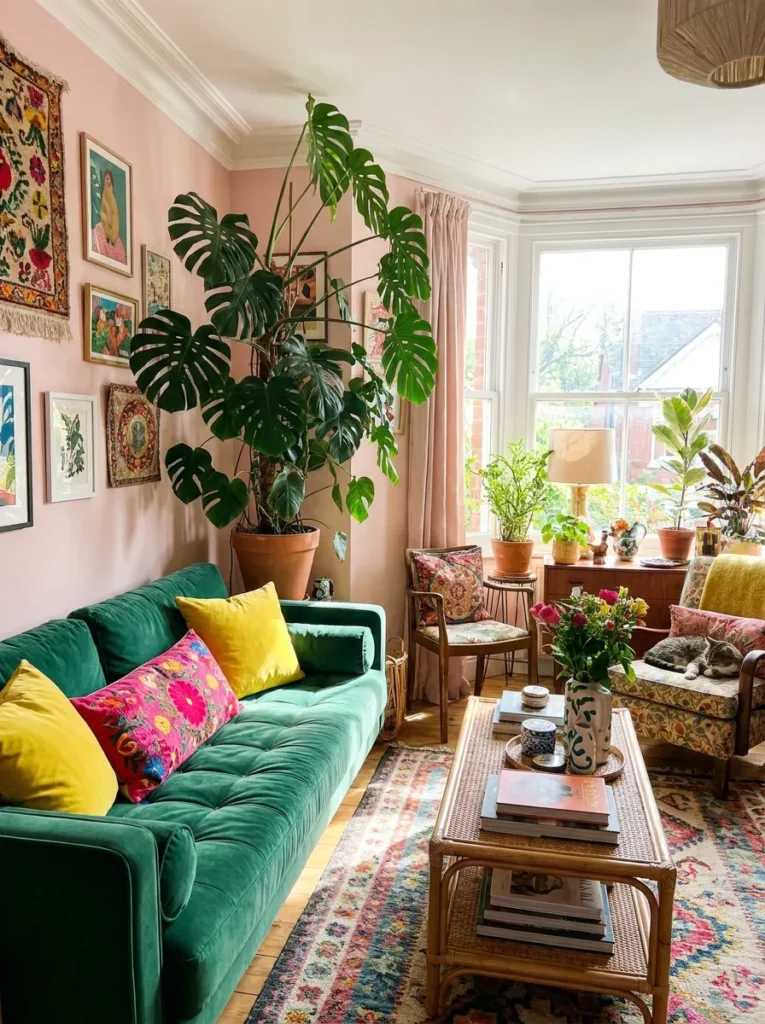
4. Tropical Bright (Blush + Jungle Green)
Vacation-every-day energy: soft blush pink walls (yes, pink can anchor — it acts as a warm neutral against brights), a jungle green sofa or geometric rug as bridge, lemon yellow and hot pink going wild on lampshades and art. A massive monstera adds architectural drama.
Match Colors to Your Light
Daylight changes everything. North-facing rooms get cooler light — warm them up with terracotta, mustard, coral, clay. South-facing rooms handle saturated blues, emeralds, and deep jewel tones without going gloomy. Match the palette to your light and bold choices feel comfortable, not risky.
5. Retro 70s (Mustard + Chocolate)
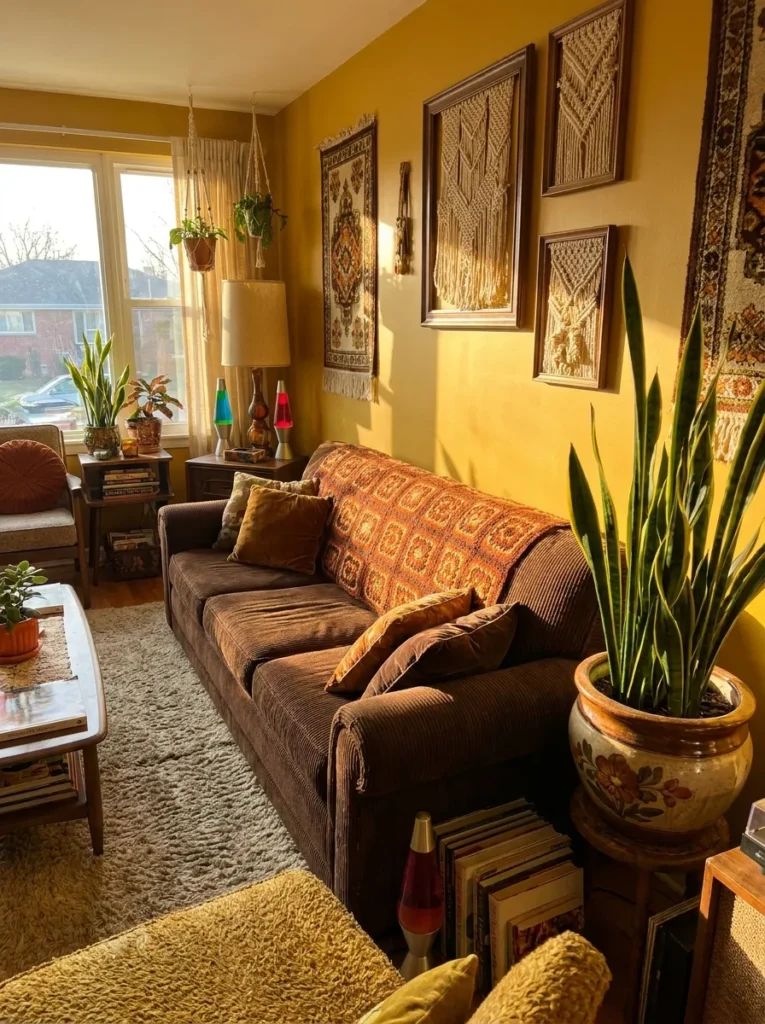
The 70s are back and they’re maximalism’s natural era. Mustard yellow walls anchor (it wraps the room like a warm hug), chocolate brown corduroy sofa or walnut furniture bridges, burnt orange and avocado green pop through retro geometric throws and vintage glassware. A tall snake plant nails the vintage architectural vibe.
6. The Renter’s Gallery Wall
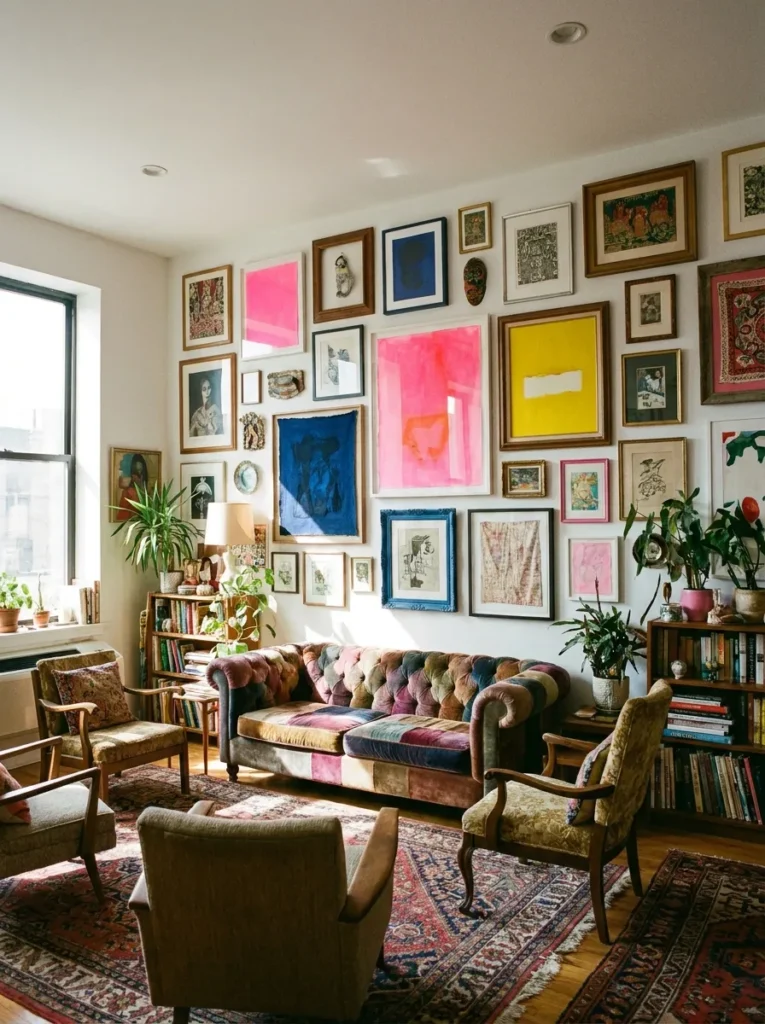
Can’t paint? Let art be your anchor. A floor-to-ceiling gallery wall of vibrant saturated prints — neon pinks, deep blues, bright yellows — covers so much wall that the white paint underneath practically disappears. Maximalist feel, security deposit intact.
7. Paint the Ceiling
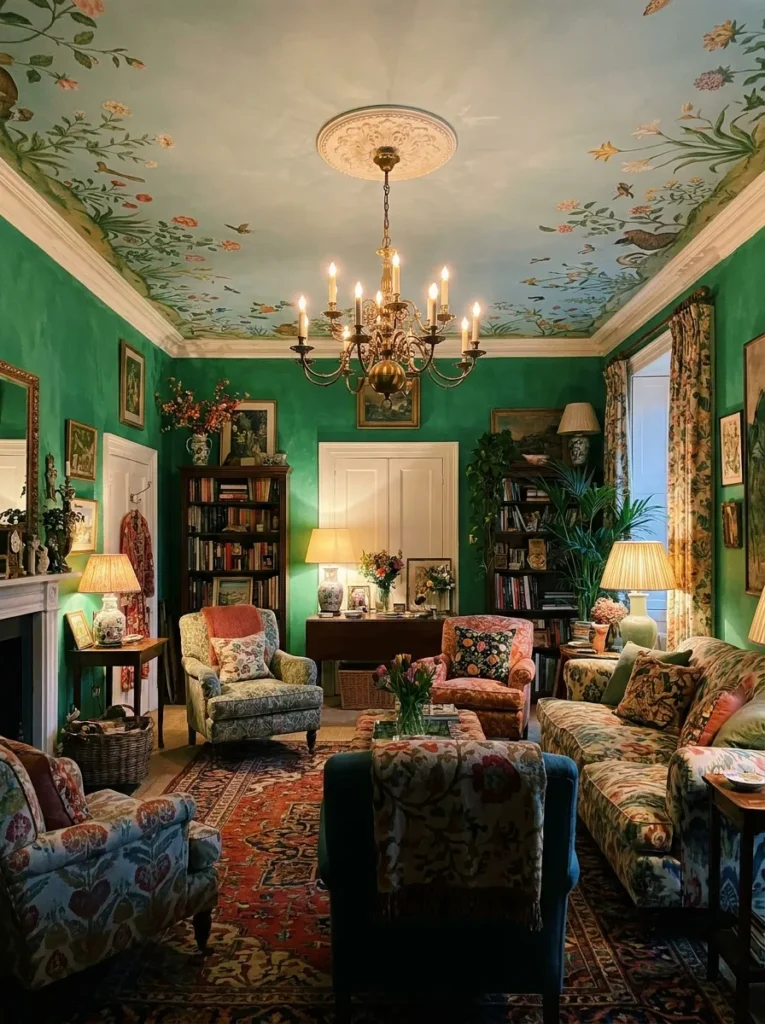
The fastest level-up: don’t leave the ceiling flat white against colorful walls — it looks jarring. Color-drench it the same as the walls, or paint it a contrasting pop (pale blue ceiling, emerald walls). The room feels enveloped, cozier, and fiercely intentional.
8. Let the Rug Lead
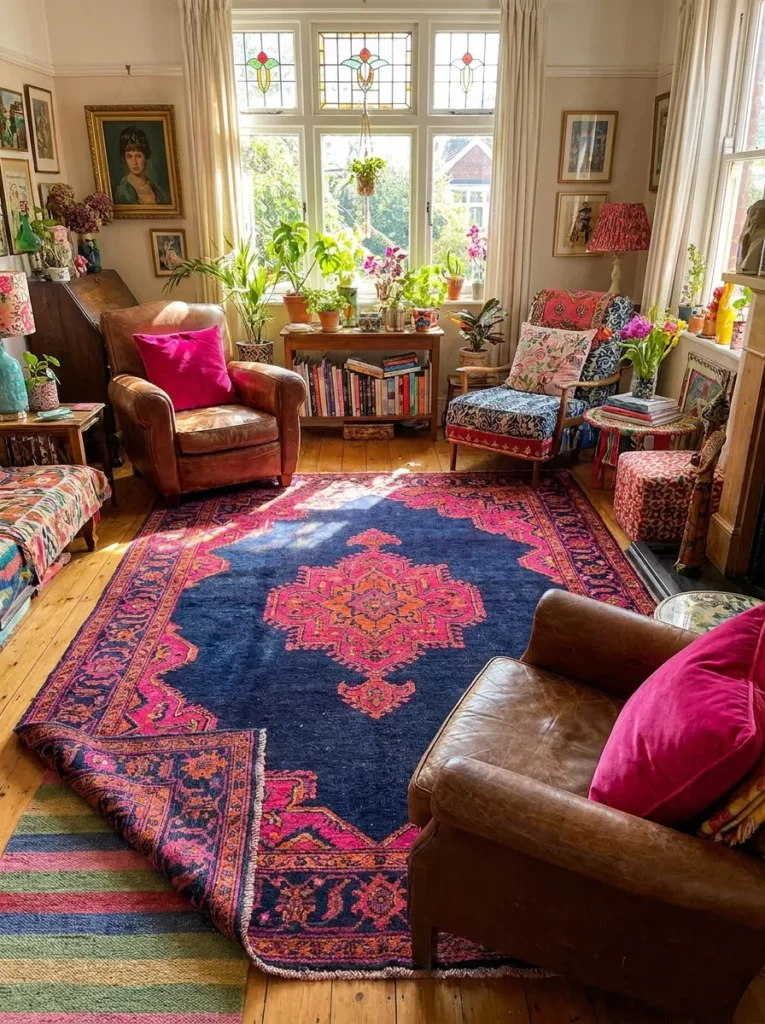
Nervous about colorful furniture? A vibrant oversized Persian or over-dyed vintage rug makes the perfect bridge. Then pull your pop colors directly from the rug’s minor threads — flecks of hot pink and tangerine become your pillow and lampshade colors. Cohesive instead of accidental.
9. Mix Patterns Fearlessly
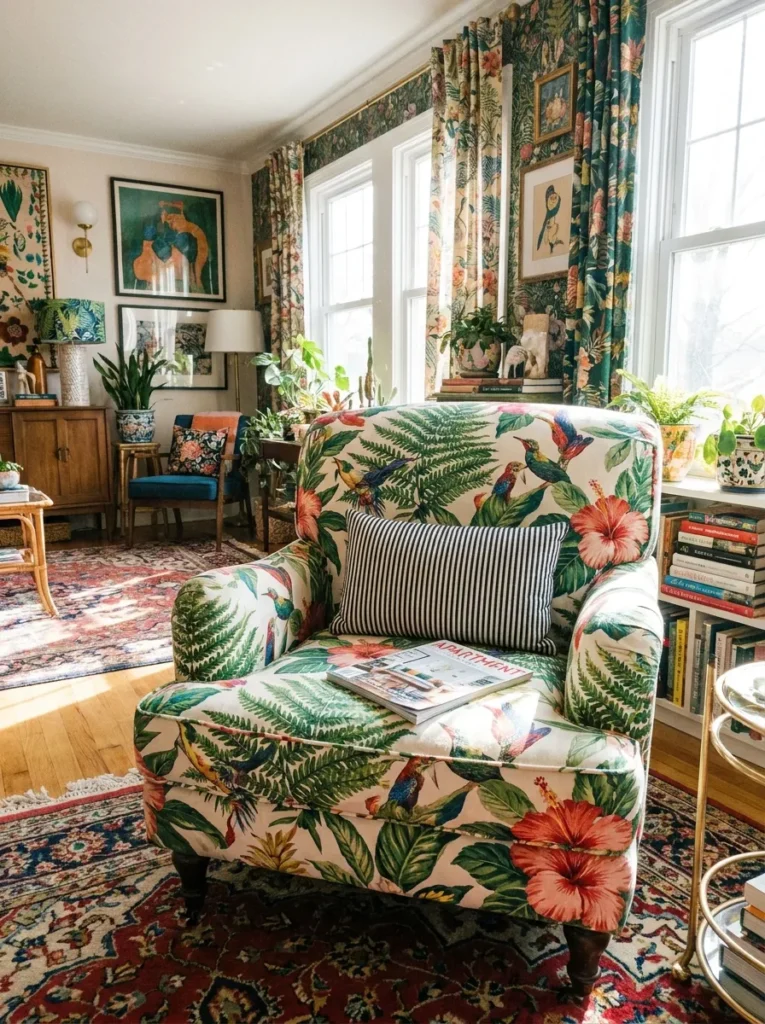
Maximalism loves pattern. The trick is varying the scale: one large-scale print (oversized tropical floral curtains), one medium geometric, one small repeating pattern (stripes, checks). Keep one shared color across all three and they belong together — no headache.
Mistakes That Kill the Vibe
Using every bright color equally with no anchor. Filling every shelf — the eye needs rest. Mixing unrelated styles instead of committing. Forgetting negative space. And burying good furniture under oversized art. A colorful room still needs places to breathe.
Start Small, Go Bold Later
Nervous? Don’t start with walls. Start with one colorful rug, one oversized artwork, or one statement chair. Live with a single bold piece, learn which colors energize you, then commit bigger. Paint is the cheapest transformation per dollar when you’re ready — pillows, throws, thrifted lamps, and vintage rugs let you experiment first.
Love the layered look with history? Our vintage maximalist guide does the same thing with antiques — and for small budgets, see apartment living room ideas on a budget.
Quick Answers
How do I start with maximalism without it looking messy?
Use the anchor-bridge-pop rule: one dominant color, one supporting color, then wild pops. The anchor is what keeps it intentional.
Can I do maximalism in a small living room?
Yes — anchor with a rug instead of wall paint, keep furniture silhouettes simple, and let color and pattern (not clutter) do the work.
What if I’m renting and can’t paint?
Gallery walls, rugs, curtains, and slipcovers give you full maximalism with zero paint. The color comes from layers, not walls.
Affiliate Disclosure: As an Amazon Associate, I earn from qualifying purchases. If you click a link and buy, I may receive a small commission at no extra cost to you. Thank you for supporting my content!