
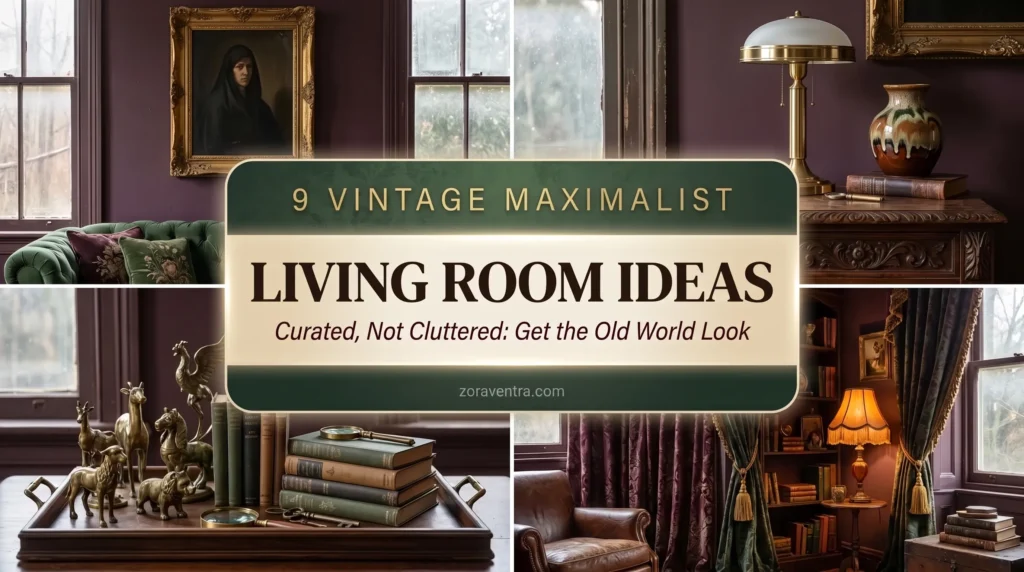
You’ve been pinning Victorian photos, antique furniture setups, and moody jewel-toned rooms for months. You crave that rich, historical depth — but you freeze, terrified your space will cross from “chic historical sanctuary” into “dusty flea market.” Here’s the one rule of vintage maximalism: everything should look collected with intention over decades, not bought in a matching set on a Tuesday. Mix eras, go dark, source smart — here’s exactly how.
1. Let Dark Paint Unify Everything
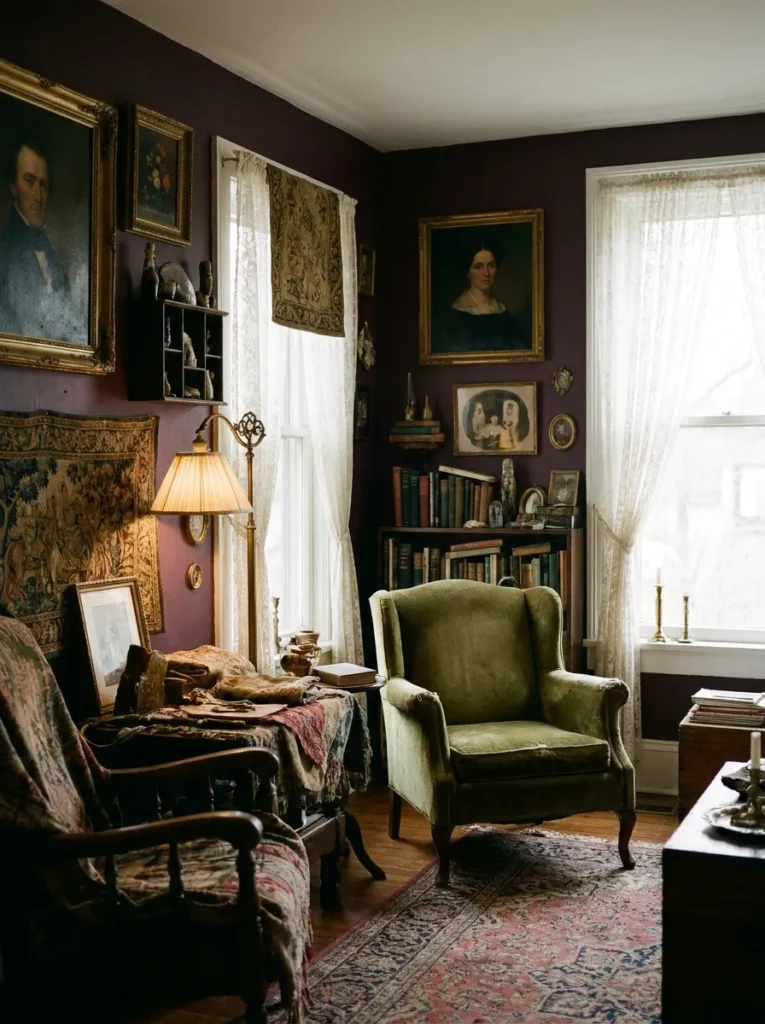
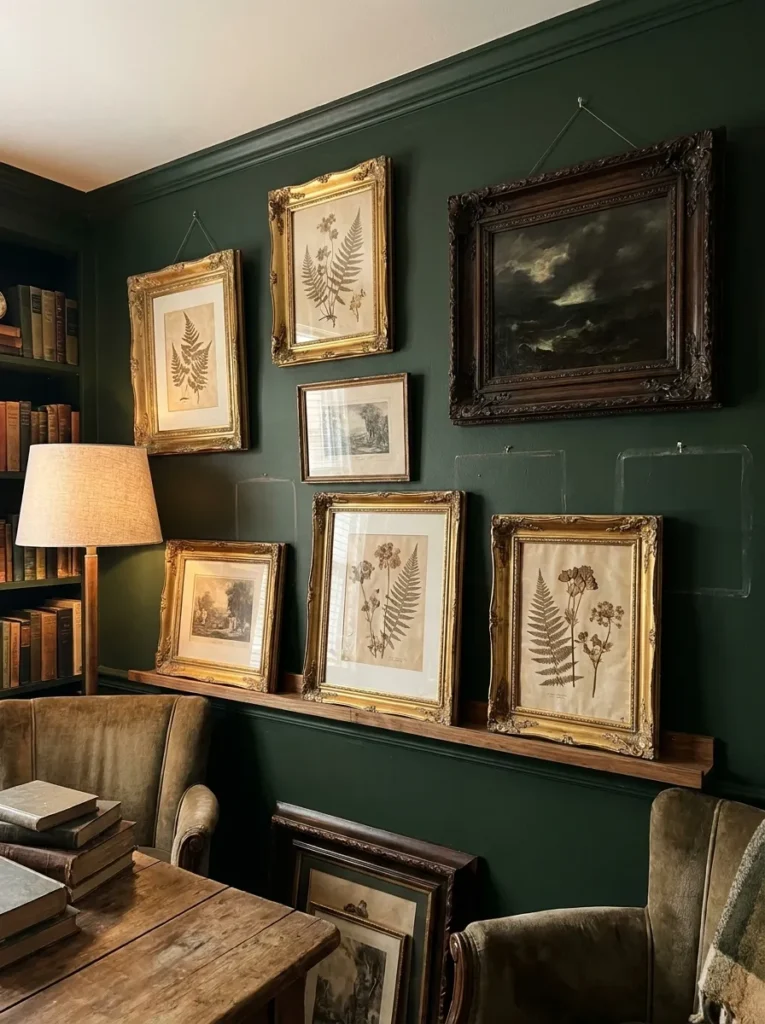
Mismatched vintage pieces against white walls look like a garage sale. Wrap the room in deep plum, hunter green, or inky navy and suddenly every disparate object shares a sophisticated backdrop. Dark walls absorb shadows, make gold frames and warm woods pop, and turn random antiques into a deliberate gallery.
2. Mix Eras (Never Match Them)
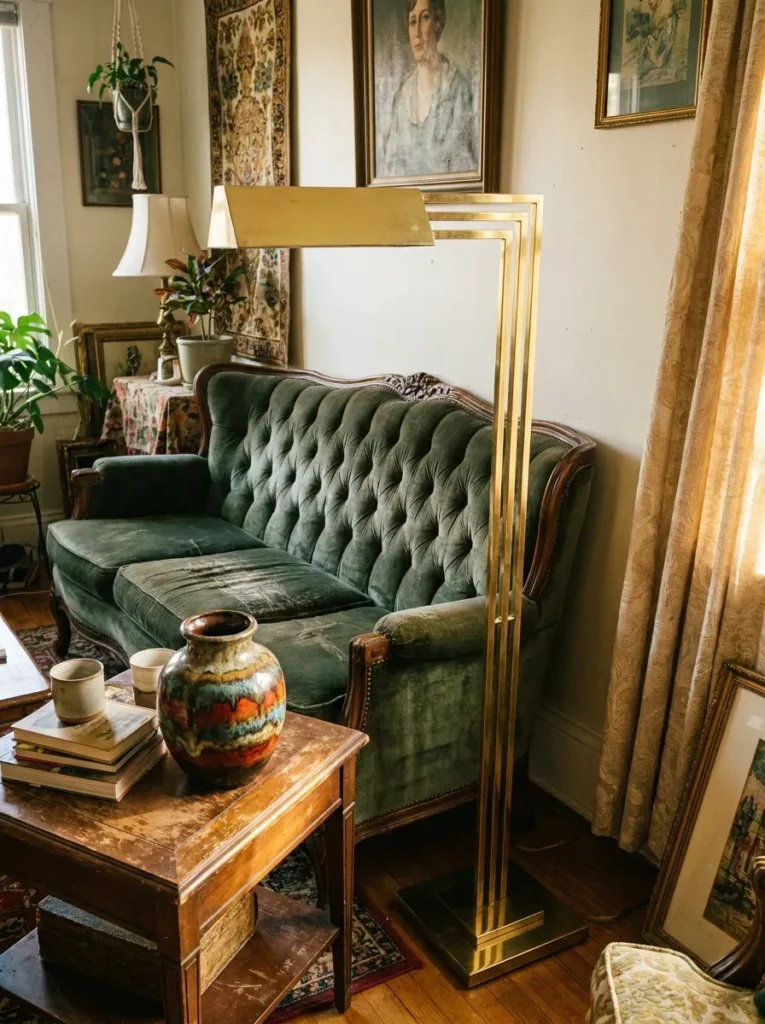
The fastest way to build a museum instead of a living room: buying everything from one period. The magic is in the tension — a sleek 1920s Art Deco lamp next to a tufted Victorian sofa, a funky 70s ceramic on the coffee table. Get the look: antique mid-century modern floor lamp. Contrast proves you curated a timeline instead of ordering a set.
3. Hunt, Don’t Shop
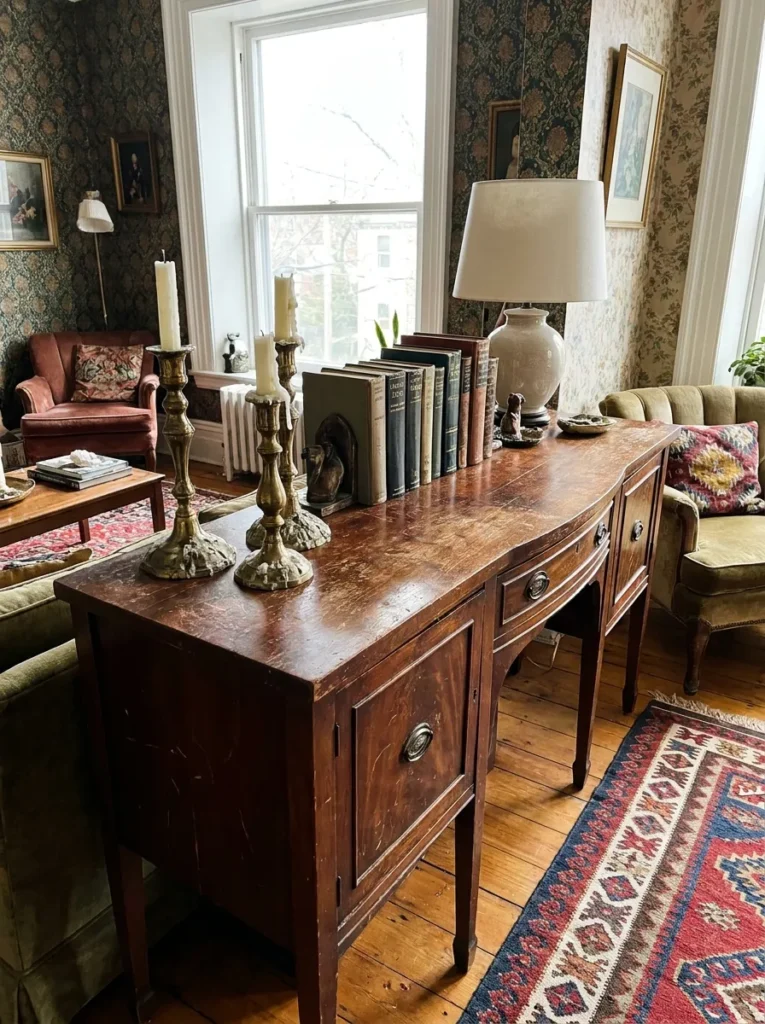
Skip the curated antique dealers — the best pieces come from hunting. Estate sales on the final day, thrift stores, Facebook Marketplace. Look for solid wood with scratches (buff them out with scratch cover) and naturally tarnished brass. Finishing touch: vintage cast iron taper candle holders (set of 3). The imperfections are the soul of the room.
4. Build an Evolving Gallery Wall
Matching black frames scream “bought yesterday.” Mix shamelessly: chipped gold, dark carved wood, vintage brass. Fill them with an odd mix — a thrifted moody oil portrait, a page from an antique botanical book, an old family photo. Hang close, let it grow organically over time.
5. Layer Heavy Textiles
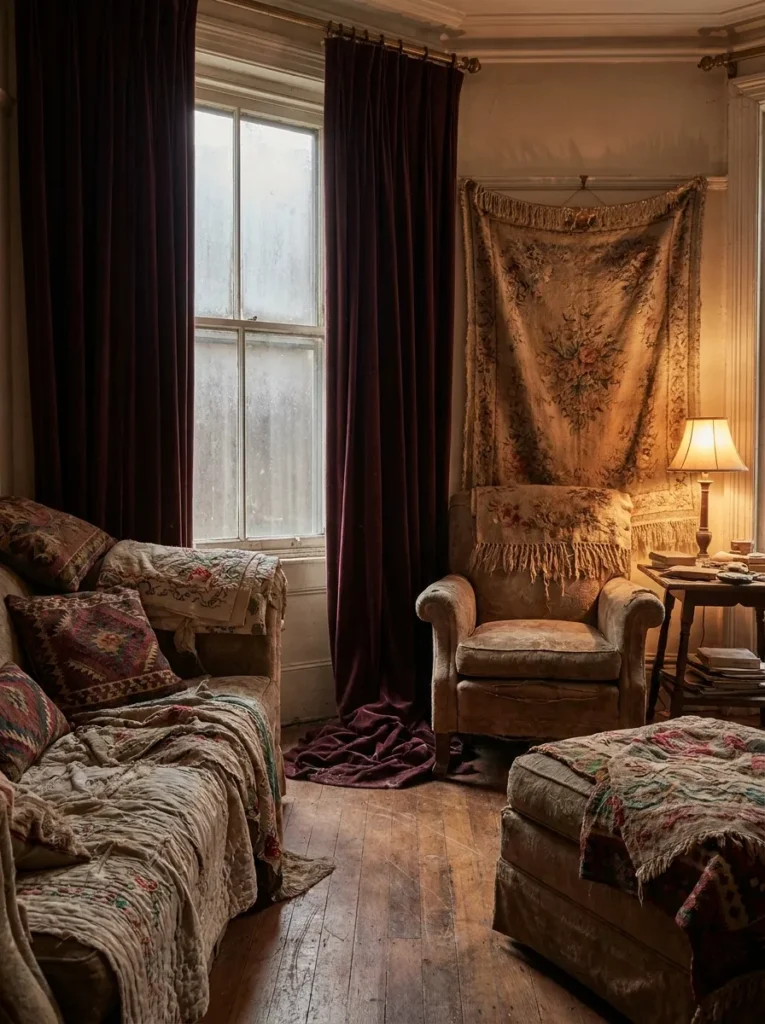
Vintage maximalism is tactile — it should feel heavy, soft, luxurious. Thick velvet drapes pooling on the floor, a fringed tapestry over a chair back, worn Persian-style rugs layered over each other. Bonus: heavy fabrics absorb sound, creating that quiet cocoon feeling that makes the room so restorative.
6. One Massive Ornate Mirror
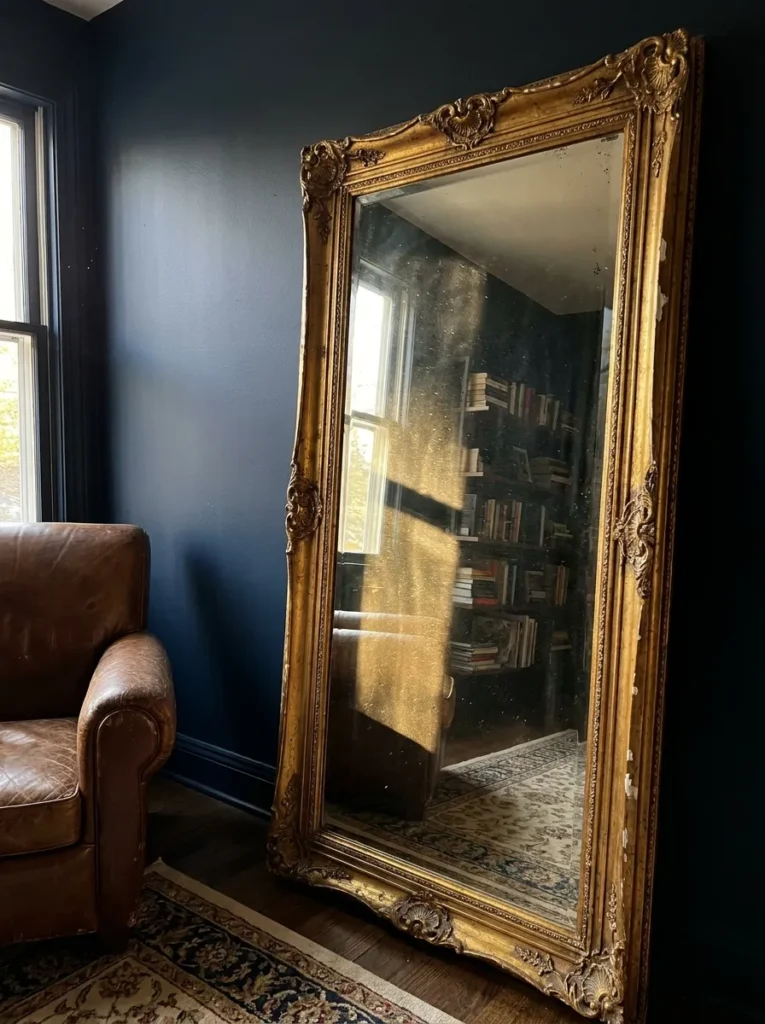
Dark walls + heavy furniture can cave in. The classic fix: a huge floor-leaning gold mirror with intricate, slightly chipped detailing, placed opposite the window. It acts as a second window — bouncing light into dark corners and visually doubling the space.
7. Use Books as Decor
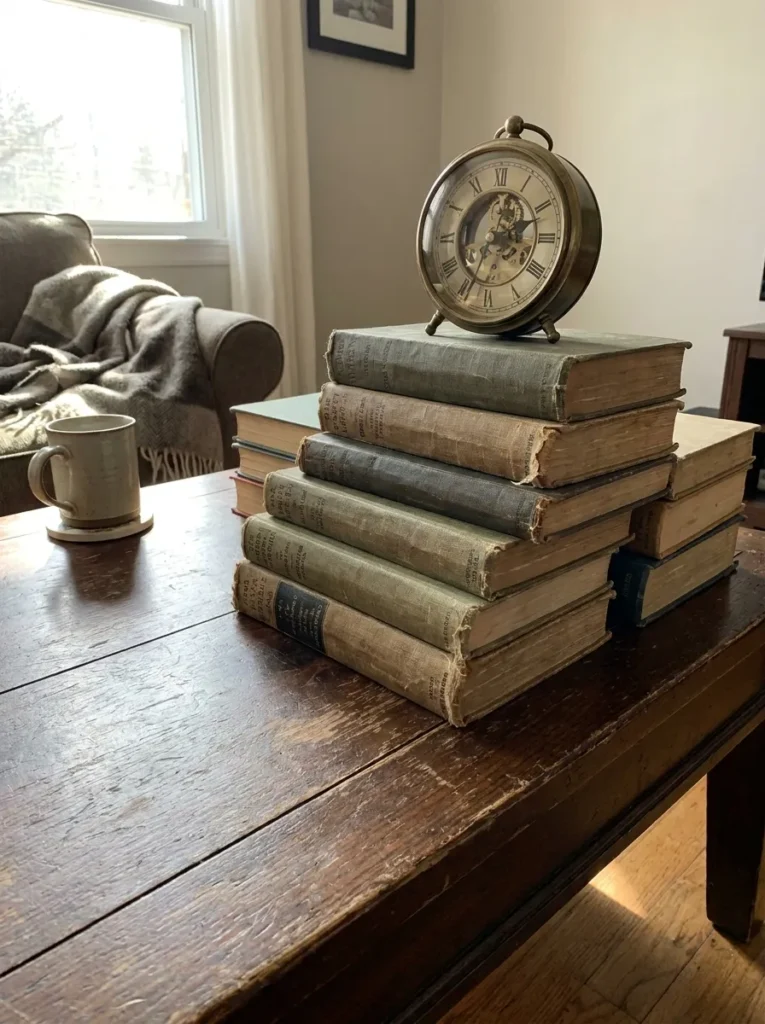
Cheapest vintage charm there is. Strip the modern dust jackets to reveal cloth-bound covers; stack them horizontally on the coffee table as a pedestal for a clock or bowl; shelve them vertical and horizontal, a little messy, well-read. Books tell a story — literally and visually.
8. Kill the Big Light
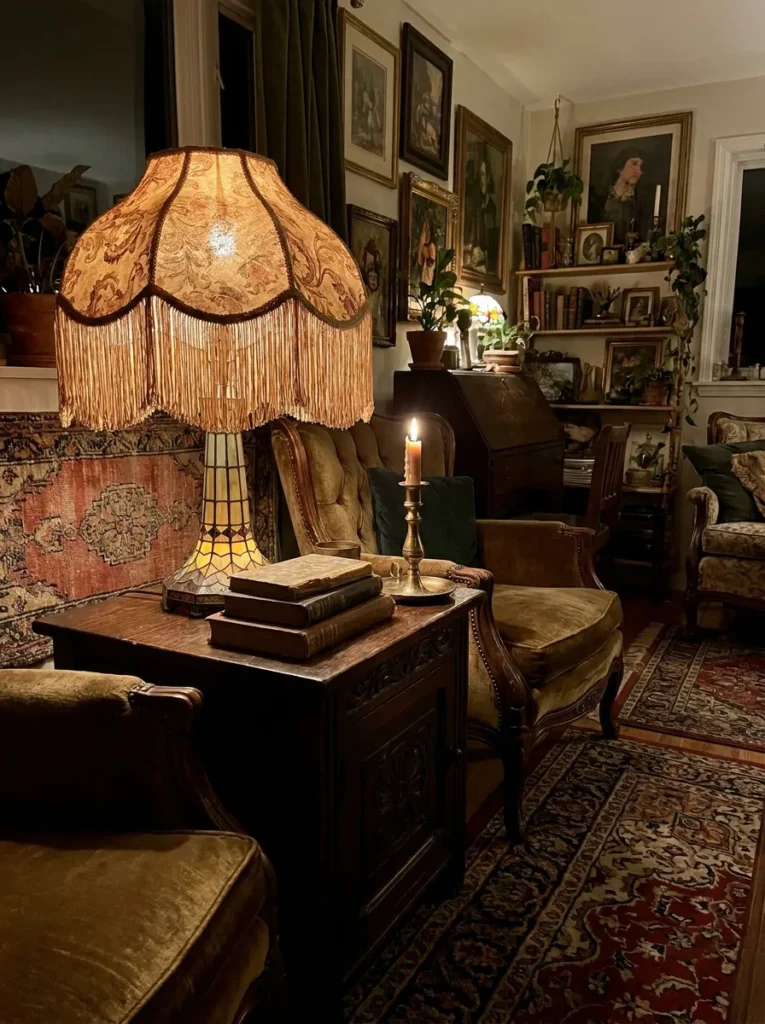
Vintage rooms predate harsh overhead LEDs — flip on the big light and the moody historical vibe dies instantly. Layer low lighting instead: table lamps with fringed or pleated shades, a floor lamp by the reading chair, real candles in brass holders. Warm amber bulbs (2700K or lower) make every antique look incredible.
9. Curated, Not Cluttered
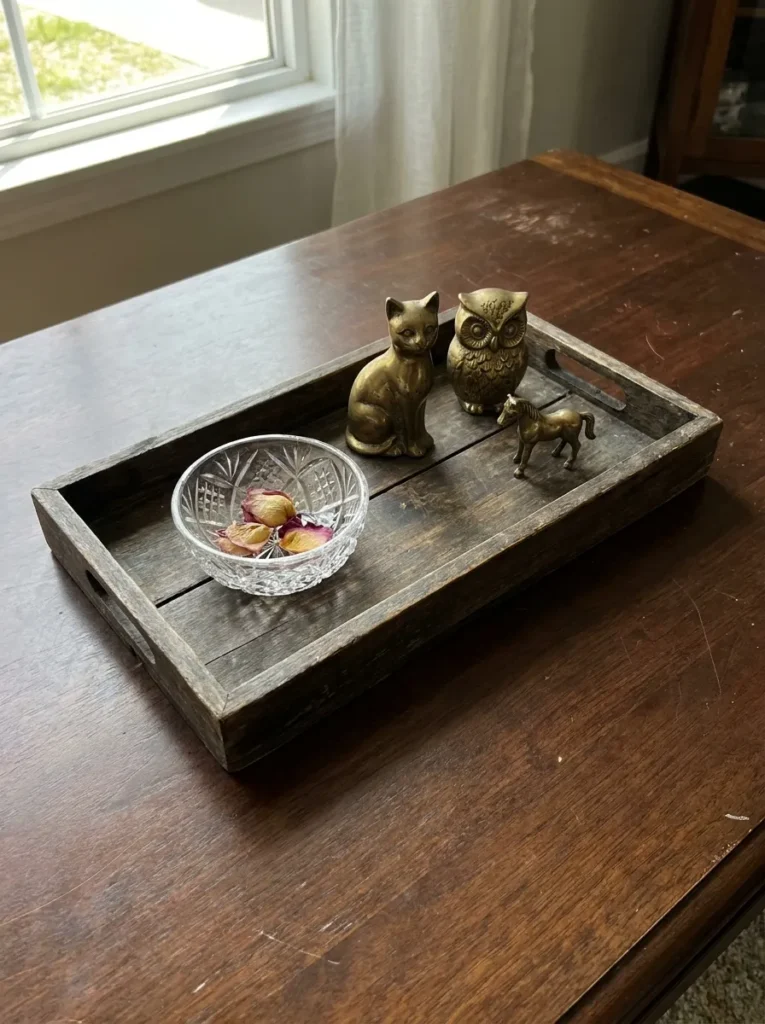
The big fear, answered: clutter is random scattering; curation is deliberate grouping. Don’t put one trinket on every surface — group three vintage brass objects on a tray and leave the rest of the table empty. Give groupings breathing room. Grouped items read as one collection, not twenty distractions.
Your 5-Step Start
1. Paint the walls dark — a unified moody backdrop.
2. Layer a vintage rug (or a good faux-vintage one) to ground the space.
3. Mix three eras minimum — avoid the museum look.
4. Group smalls on trays — curated moments, not clutter.
5. Kill the overhead — three warm low light sources instead.
Want the same energy with fresh colors? Our colorful maximalist guide uses the anchor-bridge-pop method for bold modern palettes.
Quick Answers
How do I keep vintage maximalism from looking like clutter?
Group items deliberately (three objects on a tray, not one on every surface) and leave breathing room around each grouping. Curation is grouping; clutter is scattering.
Where do I find affordable vintage decor?
Estate sales (last day = discounts), thrift stores, Facebook Marketplace. Look for solid wood and tarnished brass — imperfections add character.
What paint colors work for vintage maximalism?
Deep plum, hunter green, inky navy — dark saturated colors unify mismatched pieces and make woods and brass glow.
Affiliate Disclosure: As an Amazon Associate, I earn from qualifying purchases. If you click a link and buy, I may receive a small commission at no extra cost to you. Thank you for supporting my content!
Pingback: 11 Maximalist Living Room Ideas on a Budget: Ditch the Boring Beige - zoraventra.com