
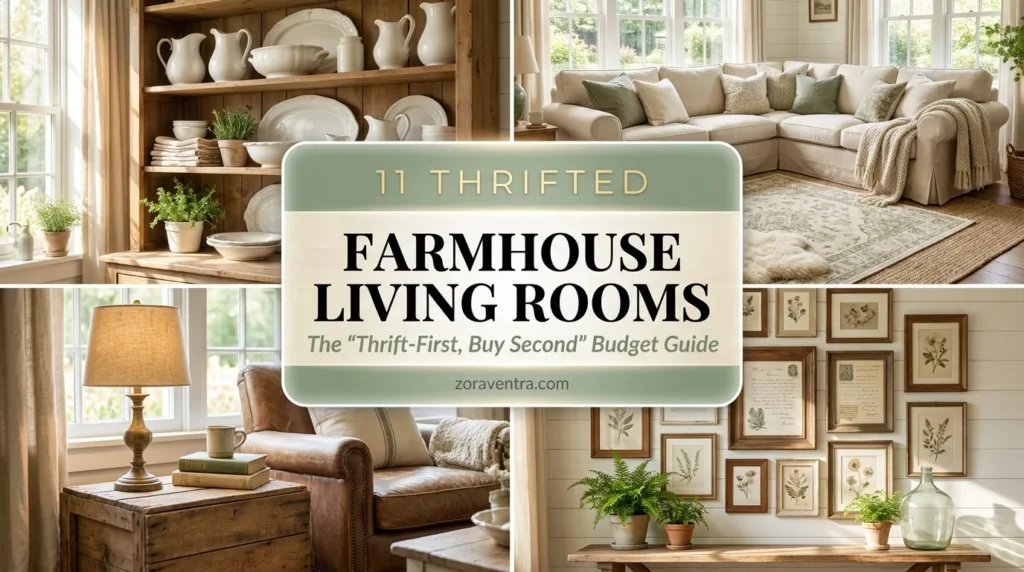
The secret to a high-end farmhouse living room isn’t a big credit limit — it’s a sharp eye for potential in the overlooked. True farmhouse style is rooted in the lived-in and the repurposed, not the brand-new. The method: thrift first, buy second. Curate over time instead of buying in a weekend, and texture plus history will beat price tags every time.
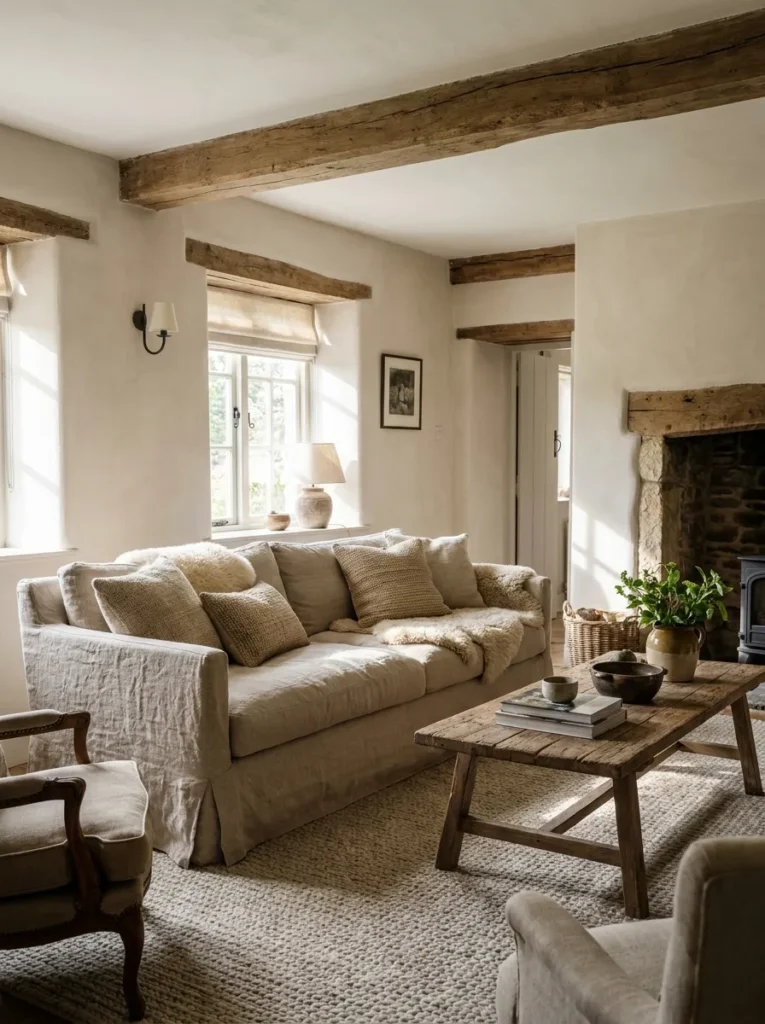
1. The Slipcover Transformation
Don’t replace a dated sofa — cover it. A loose-fit linen or heavy cotton slipcover in oatmeal or crisp white hides tired upholstery and adds that slightly wrinkled, breathable texture farmhouse is built on. Bonus: it goes in the wash when pets and kids happen. Biggest visual impact per dollar in the room.
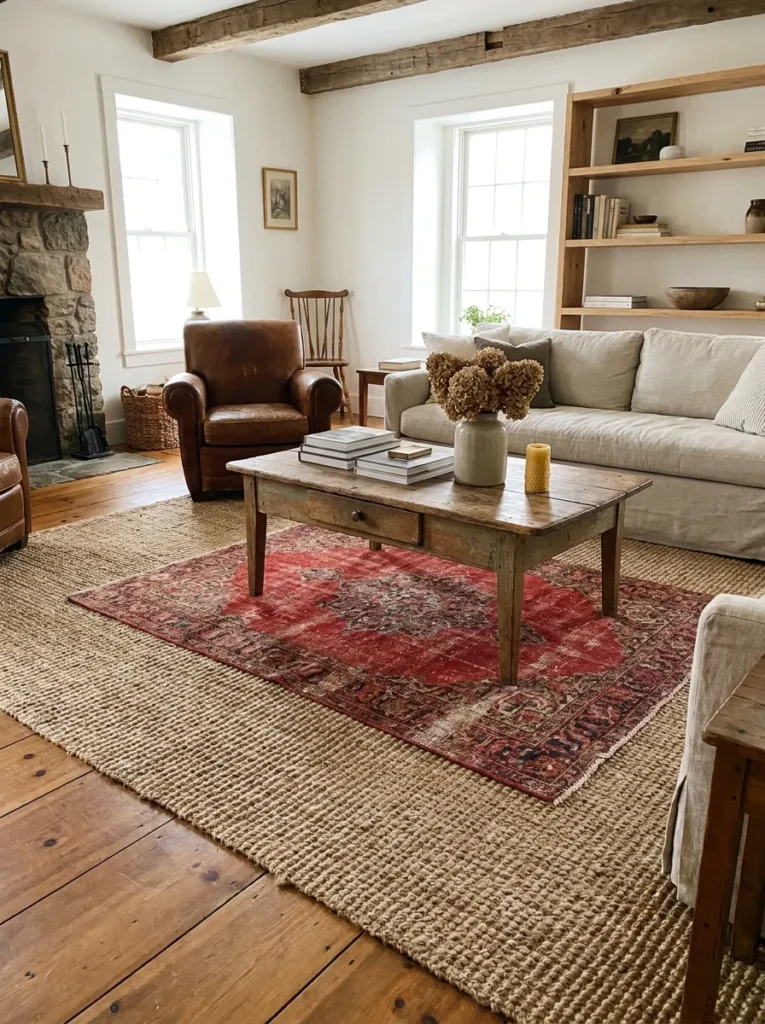
2. Layer Jute With Thrifted Wool
Rugs are expensive — layering beats buying big. A large budget jute or sisal rug as the base, plus a smaller vintage-inspired wool rug in earthy tones on top. Depth, groundedness, and the “found textile” look for a fraction of one big rug.
The base layer: Vintage-Style Low-Pile Area Rug (8×10)
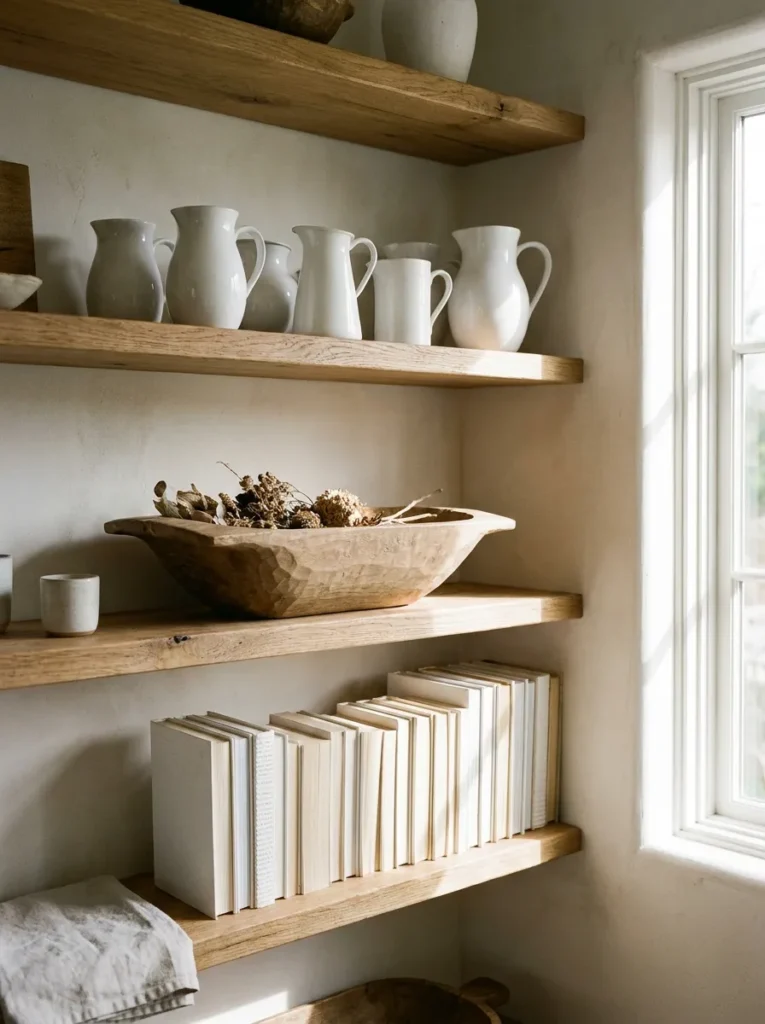
3. Open Shelving With Found Objects
Pull the doors off a cabinet or mount simple wood planks on brackets, then style with thrifted white ironstone pitchers, old wooden bowls, and stacks of neutral books. Leave generous breathing room between items — open-air styling makes even a small apartment feel like a spacious farmhouse.
Do it simply: Solid Reclaimed Wood Floating Shelves
4. Thrifted Gallery Wall
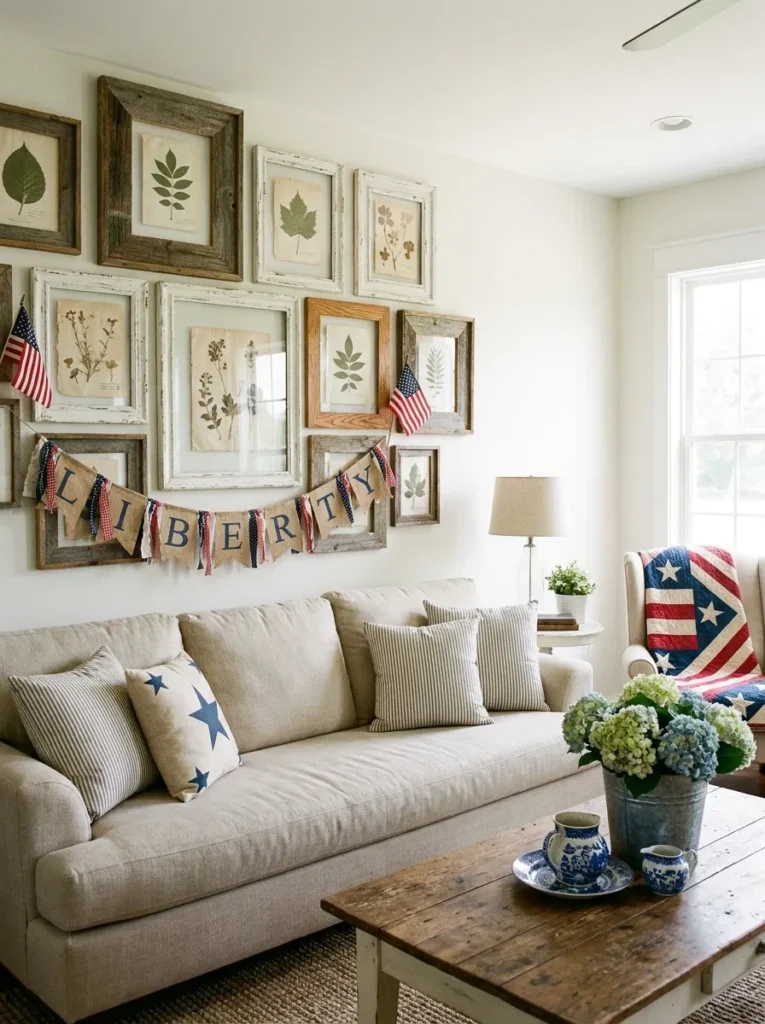
Skip pre-packaged gallery sets. Collect mismatched wooden and gold-toned frames from thrift shops; paint them all soft black or leave the weathered wood as-is. Fill with botanical sketches, landscape prints, or pressed flowers from your own garden — a personal focal point connected to nature.
5. Crates as Side Tables
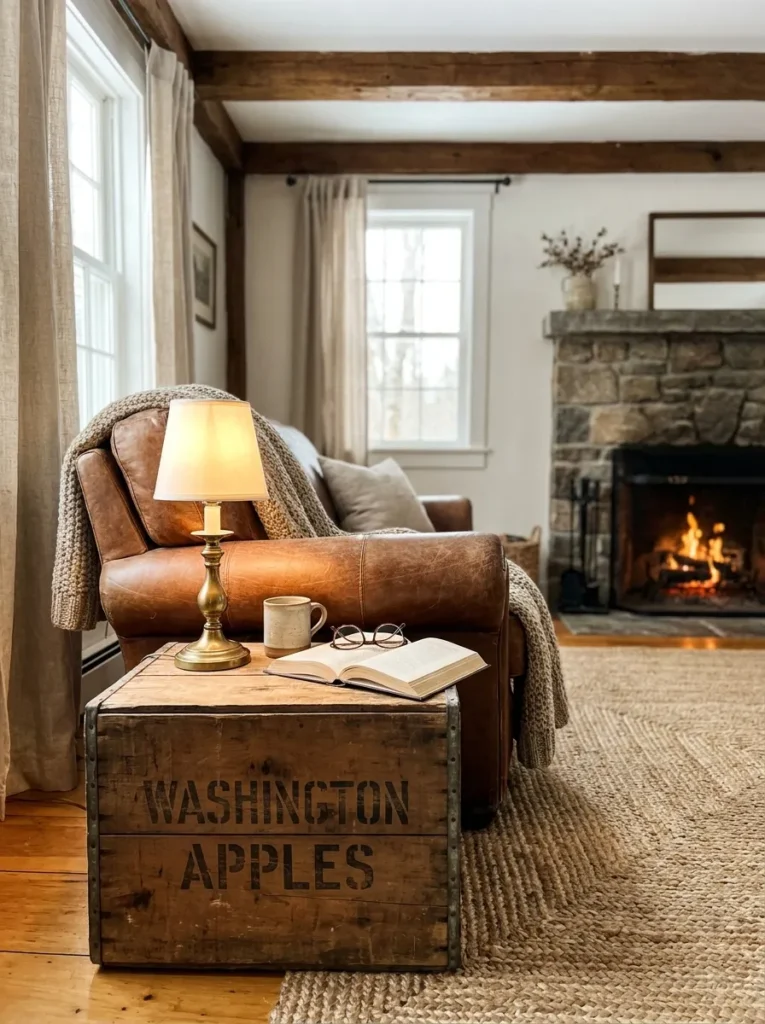
Old wooden crates or galvanized buckets cost nearly nothing at flea markets. Flip a crate on its side: instant rustic side table with built-in magazine and blanket storage. Weathered wood brings the warmth brand-new furniture can’t fake.
6. Architectural Salvage as Art
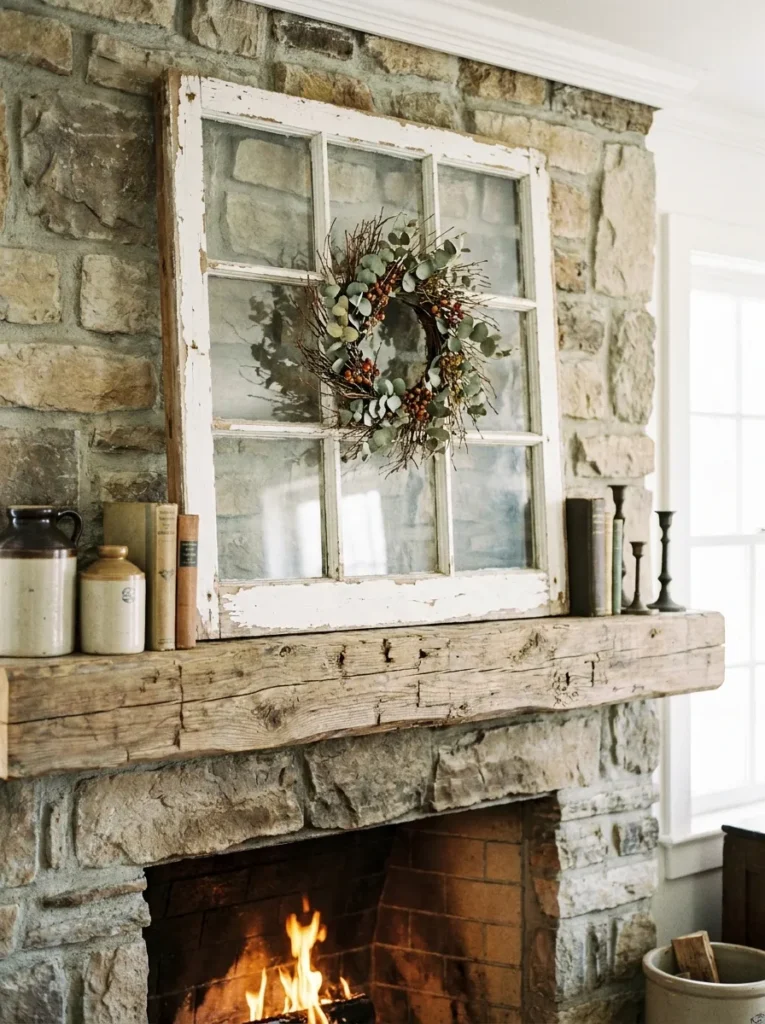
Hunt “junk” with good bones: old window frames, shutters, corbels. A vintage window frame hung over the sofa or mantel adds architectural interest for almost nothing — a “fake window” that brings light and openness, using vertical space cleverly.
7. Baskets Everywhere
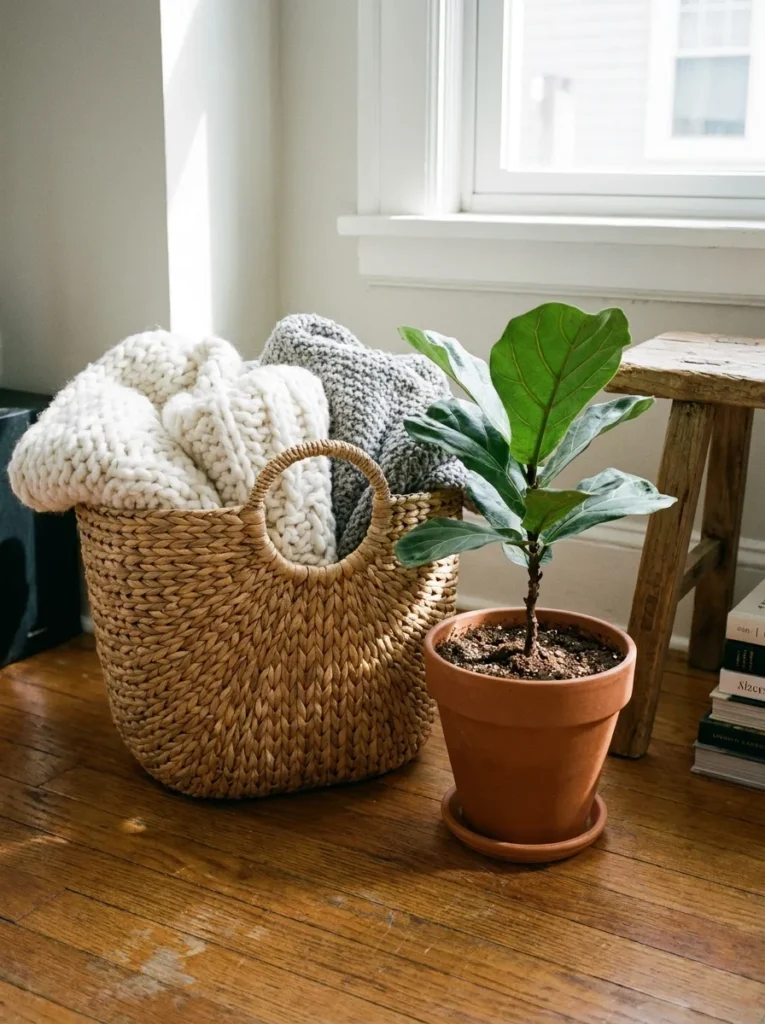
Baskets are the unsung heroes: they hide modern clutter (remotes, chargers) while adding organic texture. Big wicker baskets for pillows or firewood — woven materials plus soft textiles create the earthy inviting feel.
Hide the clutter: Handmade Natural Seagrass Storage Basket
8. DIY Signage, Not Store Signs
Don’t buy the mass-produced “Farmhouse” sign. Paint an old thrifted frame with chalkboard paint for a message board, or hand-paint a date or family name on scrap wood. Handmade beats mass-produced on soul — and on budget.
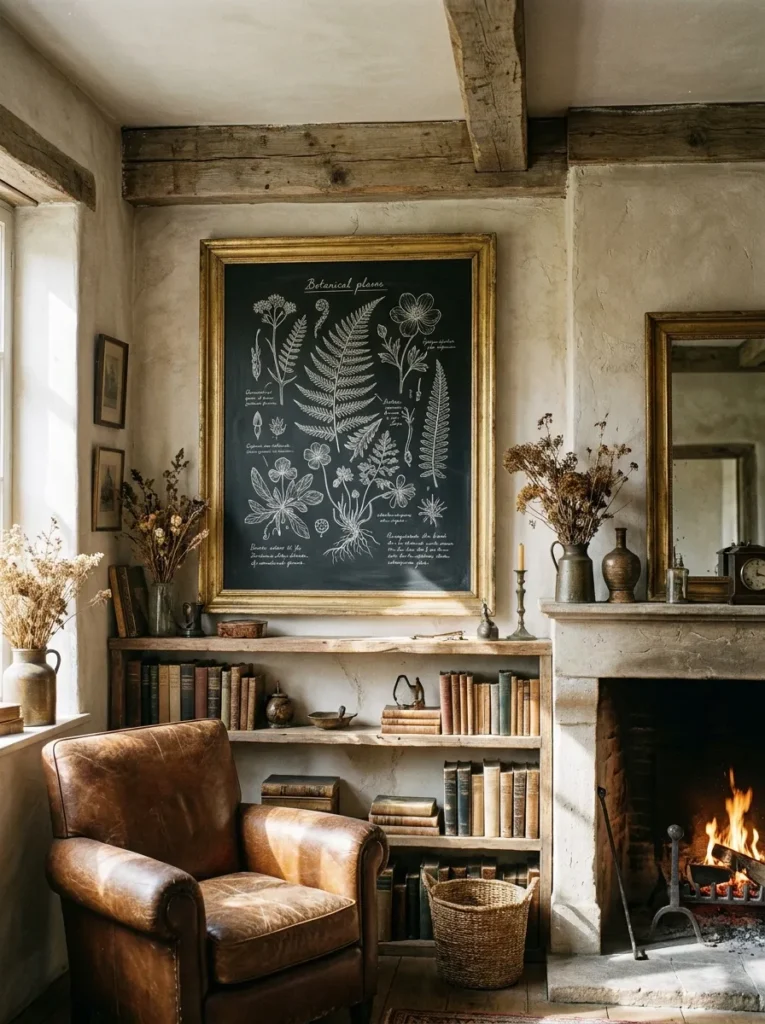
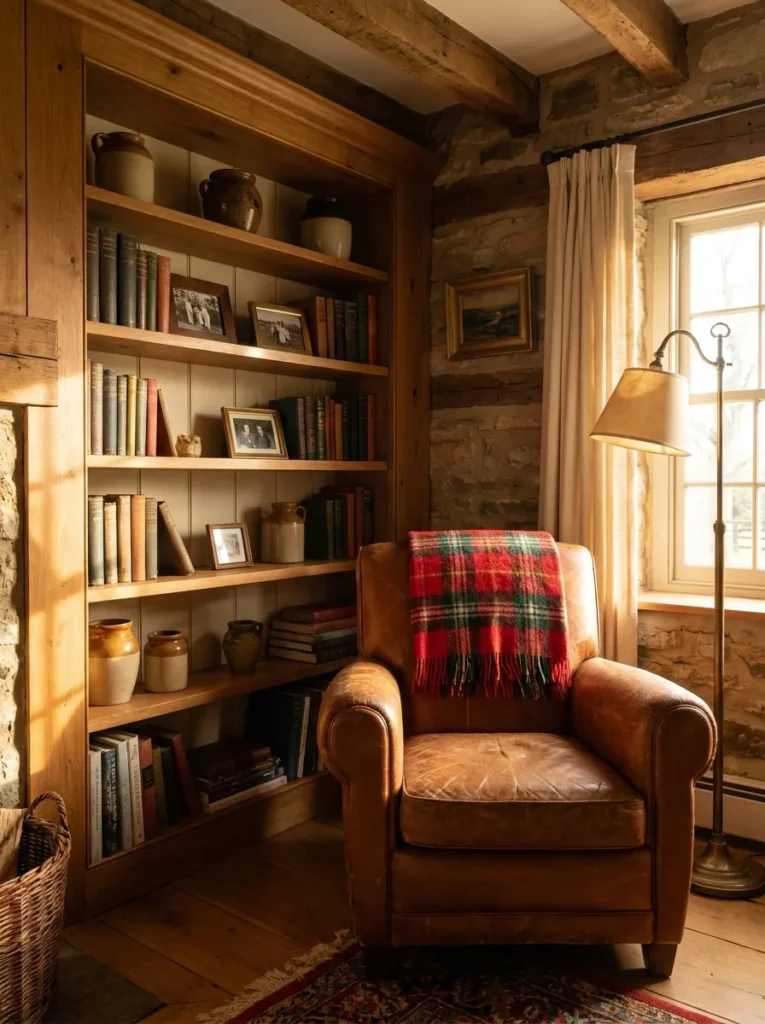
9. The Worn Leather Chair
One thrifted worn-in leather armchair — patina, light scratches and all — adds history and a “heavy” texture that balances all the soft linen and cotton. The timeless anchor of the room.
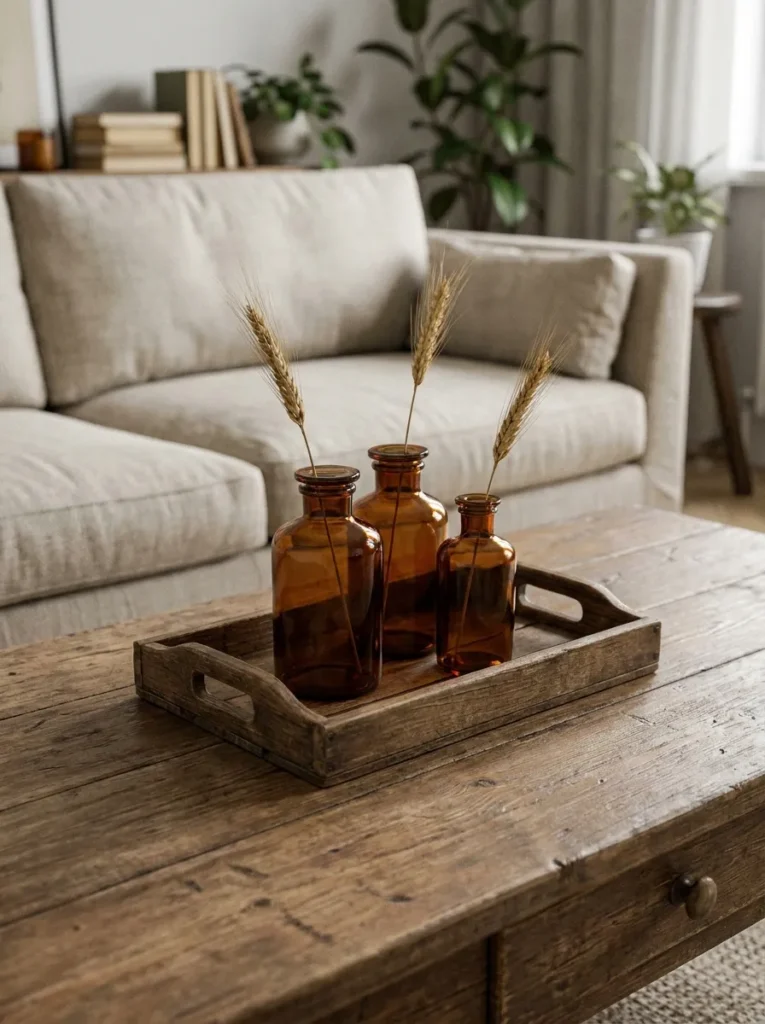
10. Mason Jar Vignettes
Old mason jars and amber glass bottles ($1–2 at antique shops), grouped in odd numbers on the coffee table or mantel, filled with dried wheat or wildflowers. The amber glass glows golden in sunlight — the definition of a small detail doing big work.
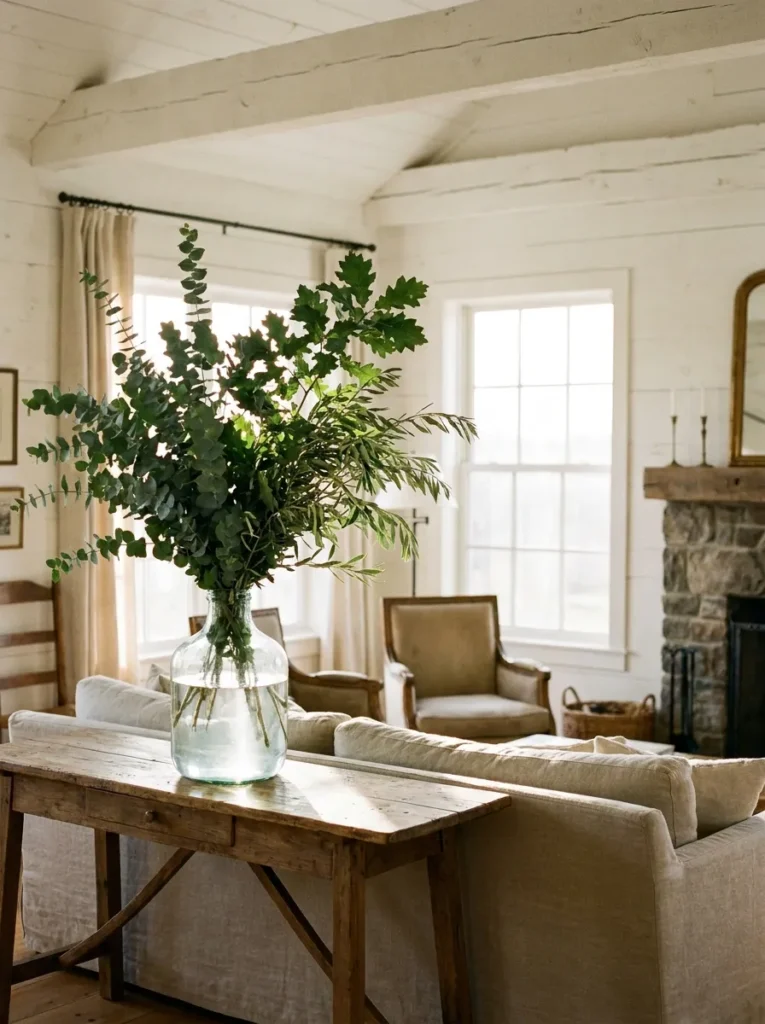
11. Bring the Outside In (Free)
The final touch costs nothing: oversized branches from your yard in a large glass jar, a bowl of pinecones, smooth river stones. Natural elements change with the seasons, keeping the room feeling fresh year-round without a single purchase.
Your 5-Step Thrift-First Makeover
1. Purge the plastic — shiny, neon, overly modern items go. Farmhouse runs on wood, metal, glass.
2. Shop your own house — attic and kitchen finds (wooden bowls, pitchers) become living room decor.
3. Set marketplace alerts — the best thrifted finds go fast (“linen sofa,” “jute rug,” “vintage trunk”).
4. Embrace imperfection — scratches and chips are the rustic story, not flaws.
5. Stick to a palette — creams, browns, sage, soft blacks keep mismatched finds looking intentional.
More budget style: our maximalist-on-a-budget guide and apartment living room ideas.
Quick Answers
How do I decorate farmhouse style on a budget?
Thrift first: slipcovers, layered rugs, open shelving with found objects, baskets, and DIY signage. Texture and history beat new purchases.
What colors define farmhouse living rooms?
Earthy and muted: creams, warm browns, sage greens, soft blacks, natural wood tones. Keep it cohesive so thrifted pieces look intentional.
How do I keep farmhouse from looking cluttered?
Breathing room between styled objects, baskets to hide modern clutter, and a restrained palette. Curated, not crowded.
Affiliate Disclosure: As an Amazon Associate, I earn from qualifying purchases. If you click a link and buy, I may receive a small commission at no extra cost to you. Thank you for supporting my content!

Pingback: 11 Farmhouse Cottage Kitchen Decor Ideas: The No-Renovation Guide- zoraventra.com