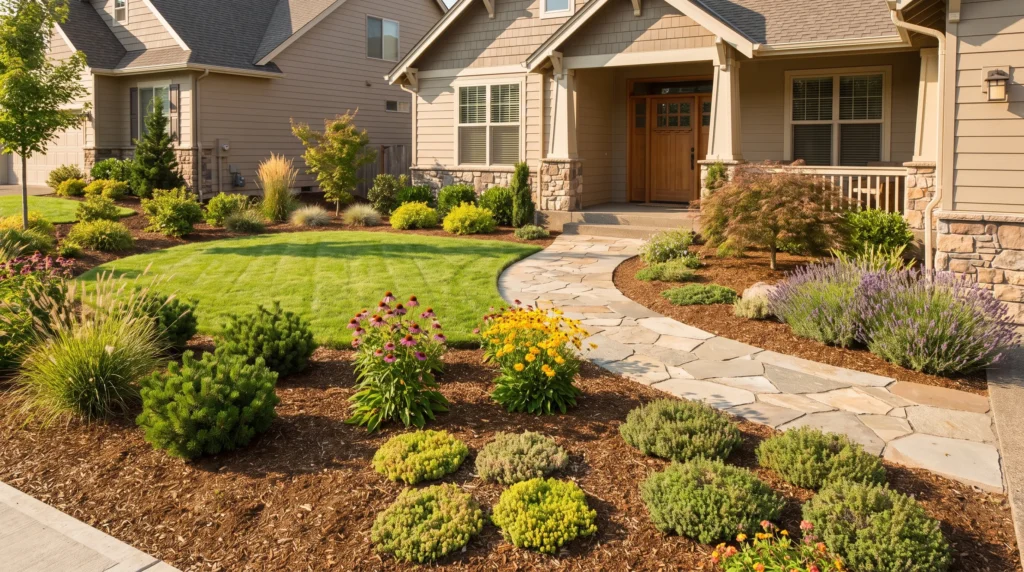
A front yard doesn’t have to be high-maintenance to look cared for.
In fact, some of the most attractive landscapes rely on fewer plant varieties, simpler planting beds, less lawn, and materials that don’t demand constant attention. The trick is designing around what will naturally thrive in your space — not just what looks good on installation day.
A low-maintenance landscape should reduce your workload without making your home’s entrance feel empty or utilitarian. Here’s where to start.
Start by Deciding What You Don’t Want to Maintain
Before choosing plants, identify the chores eating most of your time. Mowing? Weeding? Watering? Pruning fast-growing shrubs? Replacing seasonal flowers?
A low-maintenance landscape works best when it removes the source of the problem. If mowing is the biggest chore, shrinking the lawn matters more than finding a different grass. If pruning never ends, choose plants that naturally stay within their space.
Start with the work you want to eliminate. Then design around it.
Less Lawn Can Mean Less Work
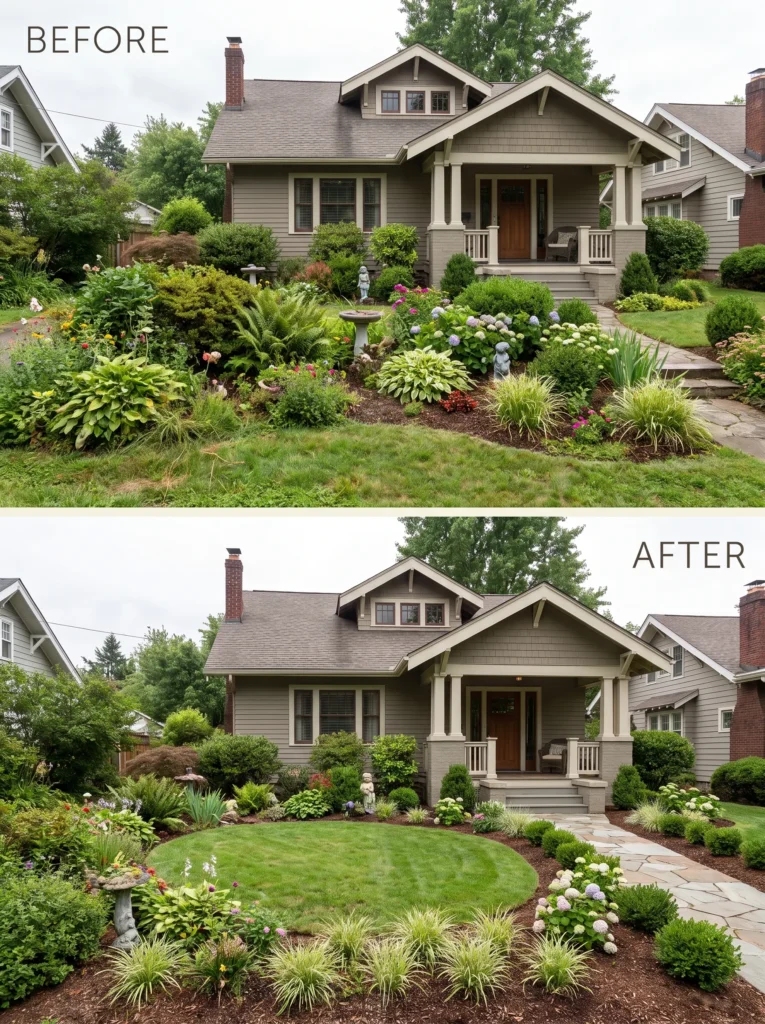
A big lawn looks clean but generates a standing chore list: mowing, edging, fertilizing, weed control, irrigation, seasonal treatments.
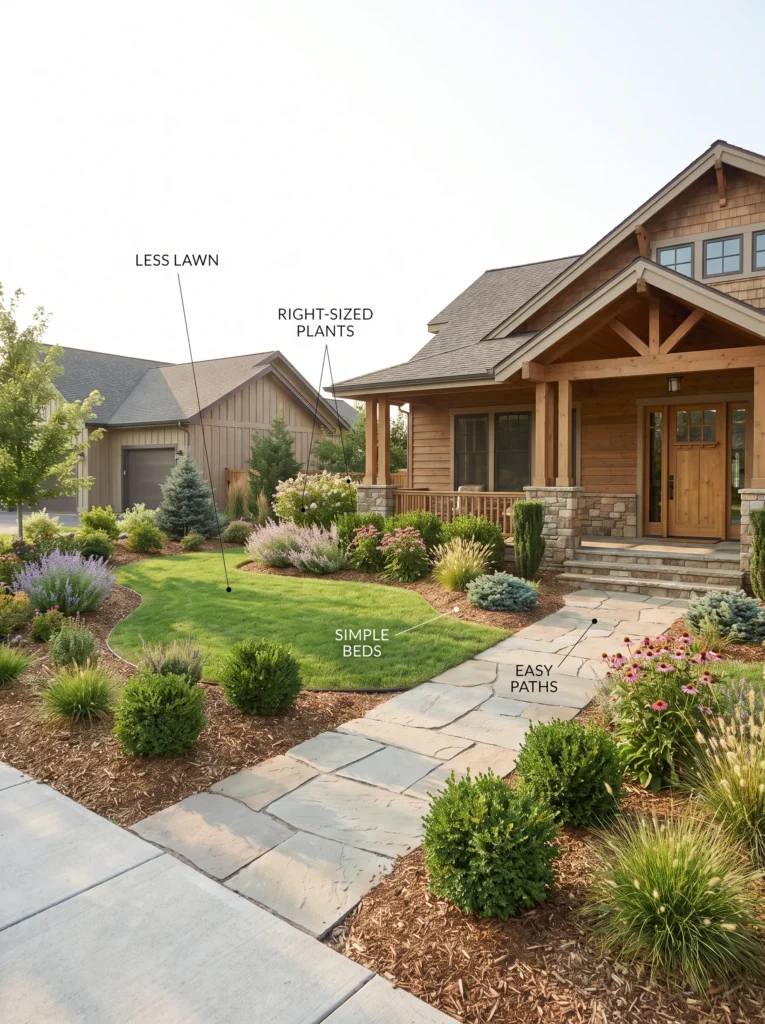
You don’t have to remove it entirely. A smaller, clearly defined lawn framed by planting beds keeps the visual foundation while slashing mowing time. The key is making the remaining grass look intentional — a simple shaped lawn with consistent planting around it, not a random patch.
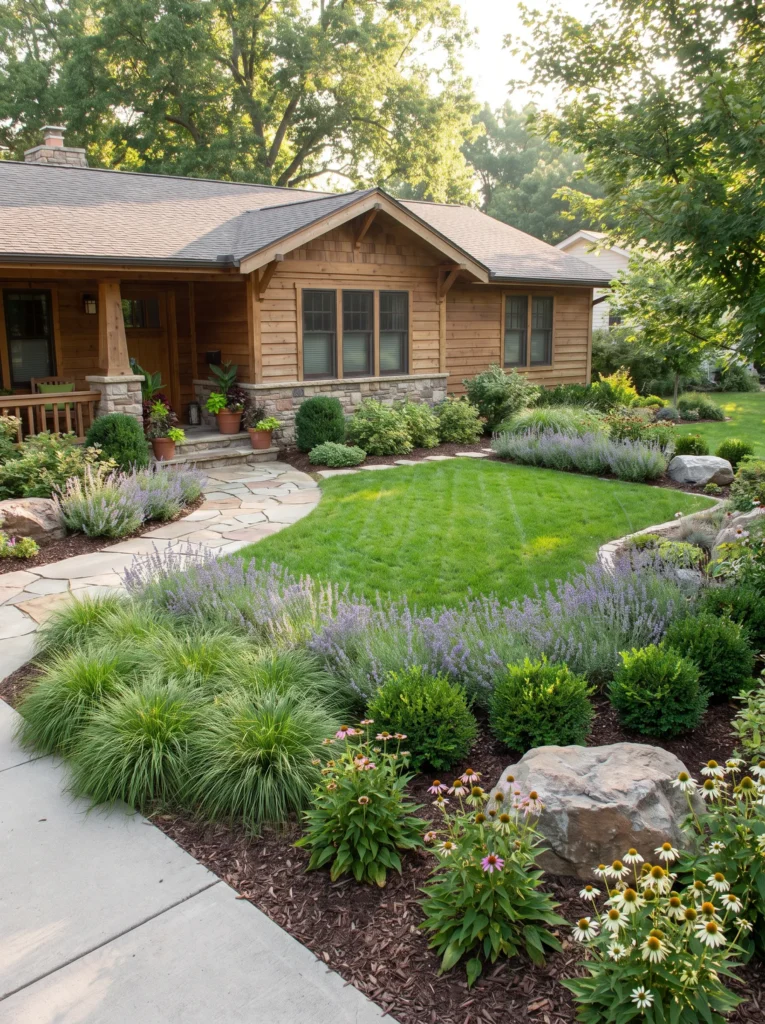
Choose Plants for the Site, Not Just the Flower Color
A plant can be beautiful and completely wrong for your yard. Before buying, ask: How much sun? Does soil drain or stay wet? How much rain? Will it fit at mature size? Does it suit your climate?
These questions matter more than how pretty it looks at the garden center. A plant thriving in your conditions needs a fraction of the care of one fighting them. Native plants help, but “native” isn’t magic — the plant still has to suit your specific site.
Low-Maintenance Plants Worth Knowing by Name
Principles are great, but let’s get specific. These are proven low-effort performers:
Sun-loving perennials: Black-eyed Susans, coneflowers, daylilies, and lavender — drought-tolerant once established, long blooming seasons, minimal fuss.
Structure shrubs: Boxwood and dwarf holly hold their shape with little pruning and look lush year-round.
Ornamental grasses: Muhly grass and sedum varieties add texture and movement with almost no care.
Ground covers (lawn alternatives): Creeping thyme, vinca minor, and ajuga spread to smother weeds where grass struggles.
Shade picks: Hostas and ferns thrive where sun-lovers fail — match the plant to the spot, not the wishlist.
Buy small and give them room (more on that below). A $12 one-gallon plant that fits its space beats a $40 specimen you’ll be pruning forever.
Give Plants Room to Reach Mature Size
This is the simplest way to prevent a low-maintenance yard from becoming high-maintenance later. That small shrub looks lost today — in three years it’s crowding its neighbors, and then comes the pruning. And more pruning.
Check mature width and height before planting. Year one looks a little open; that’s by design. You’re planning for what the landscape becomes, not faking maturity on day one.
Group Plants Instead of Scattering Them
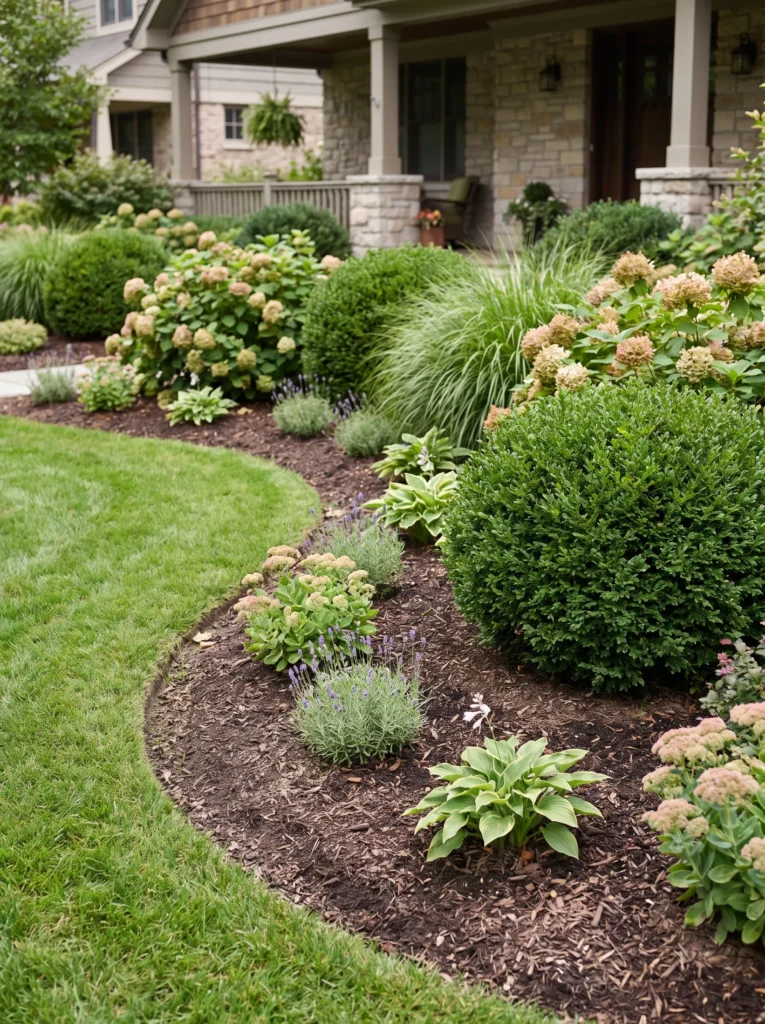
You don’t need a different plant every three feet. Repeating a smaller selection in drifts — a tall structural shrub, medium plants, low ground cover, a few seasonal accents — looks more polished and is easier to maintain. Fewer plant types, consistent care, visual rhythm.
Keep Planting Beds Simple
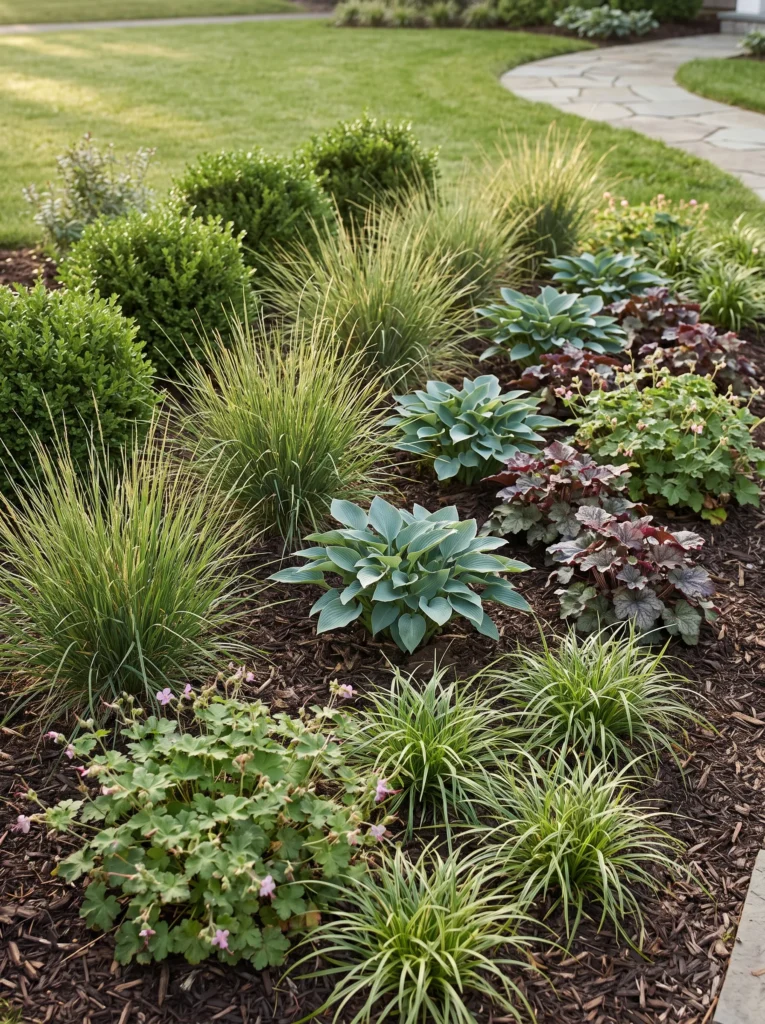
Every curve, island, and border on a plan becomes an edge you maintain in real life. A few well-defined beds beat a scattering of fussy ones. Natural curves are fine — just avoid complexity for its own sake. If it looks hard to maintain on paper, it will be in real life.
Use Hardscape Where It Solves a Problem
Hardscape should earn its place: a walkway creating a clear route to the door, a gravel transition between driveway and beds, edging that keeps mulch where it belongs. But paving half the yard just to avoid planting makes it feel harsh. Support the layout with hardscape, then let planting soften it.
Specific Low-Effort Ideas That Work
Concrete or stone edging. Permanently defines beds and paths — no more string-trimmer edging, no mulch spillover.
Gravel beds with boulders. Decorative rock with a few architectural plants (agave, ornamental grasses) looks intentional and needs almost nothing.
Solar path lights. No wiring, no electrician — stick them along the walkway for evening curb appeal and safety.
Fresh mulch, done right. Pine bark or cedar mulch suppresses weeds and holds moisture. Keep it off tree trunks and plant stems.
Layered planting. Tall in back, medium in the middle, ground cover in front — depth and richness from a simple formula.
Make the Walkway Part of the Design
The walkway is the most visible element you’ve got. Is the path to the door obvious? Wide enough? Does planting crowd it? A simple material with good planting around it beats an expensive path surrounded by chaos.
Don’t Overplant the Foundation
Foundation planting connects house to landscape — but burying the facade in shrubs creates pruning work and blocks light and access. Leave clearance, layer heights outward, and respect mature sizes near windows and doors.
Choose Foliage Over Flowers for the Foundation
Flowers give bursts; foliage gives structure. Contrasting leaf shapes, textures, and evergreen-vs-seasonal variety keep beds interesting even when nothing’s blooming — and cut your dependence on seasonal replanting.
Mulch Helps — But Isn’t a Design
A good mulch layer conserves moisture and suppresses weeds, but a bed that’s mostly bare soil under mulch is still a weed bed. Plants + spacing + mulch together. That’s the formula.
Be Careful With Aggressive Ground Covers
Fast-spreading sounds great until it’s in the lawn, the neighbor’s bed, and under the porch. Check spread rates for your region (local extension services beat generic plant lists) before planting anything described as “vigorous.”
Group Plants by Water Needs
Irrigation gets simple when neighbors drink alike. Cluster plants with similar needs, note where water naturally collects or runs off, and put thirsty plants there. The goal isn’t just watering less — it’s stop watering plants that don’t belong there.
Where to Spend and Where to Save
Spend on what’s hard to change: soil prep, drainage, durable edging, irrigation layout, and healthy well-suited plants.
Save on decor: you don’t need garden ornaments and five edging types. Plants, paths, and the house itself carry the design.
Spend where maintenance compounds: fixing a drainage headache beats another decorative feature every time.
Be Honest: Low-Maintenance Isn’t No-Maintenance
Trees still need occasional pruning. Leaves fall. Plants grow. The goal is reducing the frequency and intensity — a yard that feels manageable, not demanding. Design for that reality and you won’t be disappointed.
Quick Answers
What are the lowest maintenance front yard plants?
Black-eyed Susans, coneflowers, daylilies, lavender, boxwood, ornamental grasses, and sedum — all drought-tolerant once established with minimal pruning needs.
How do I reduce lawn maintenance?
Shrink the lawn area, define its edges with permanent edging, and replace struggling sections with ground covers like creeping thyme or gravel beds.
Is gravel landscaping really low maintenance?
Yes, with landscape fabric underneath to block weeds. Without it, gravel beds become weed beds — the fabric is non-negotiable.
How much does low-maintenance landscaping cost?
A DIY refresh with mulch, edging, and young plants can run a few hundred dollars. Professional design and install for a full front yard typically starts in the low thousands.
Design for the Yard You’ll Have in Five Years
Don’t design for the first season. Ask: will the shrubs still fit? Will trees shade what’s beneath? Will you still happily edge all those curves? Give the landscape room to grow into itself — a beautiful low-maintenance yard isn’t about doing less to the landscape. It’s about designing one that asks less of you.