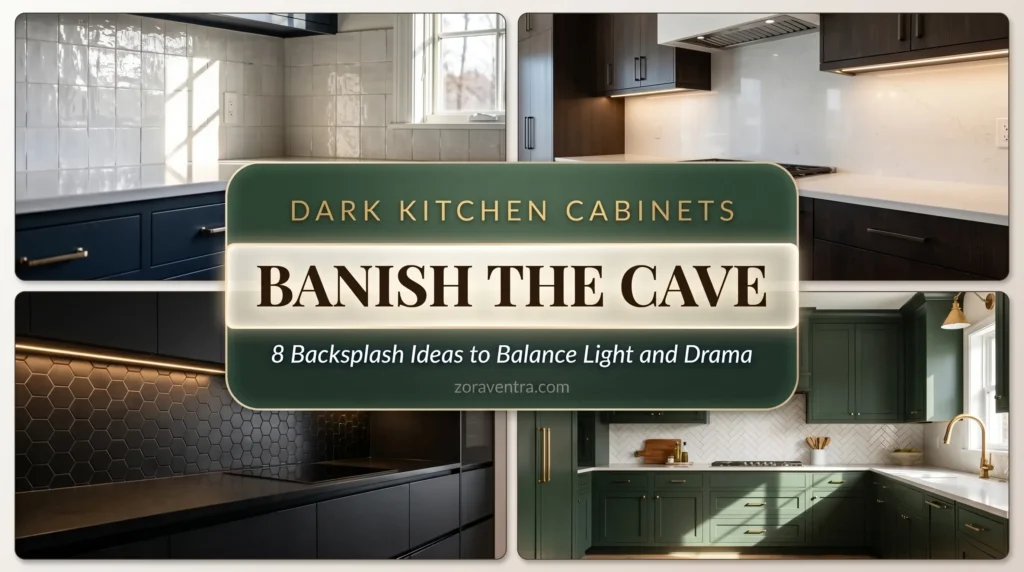
Dark kitchen cabinets — deep navy, forest green, espresso brown, matte black — bring instant depth and character that lighter kitchens struggle to achieve. The challenge isn’t choosing dark cabinets; it’s deciding what surrounds them. A backsplash does more than protect the wall: it controls how light moves through the room, influences the space’s warmth, and determines whether the kitchen feels dramatic, balanced, or unexpectedly bright. The right material, color, texture, and finish makes dark cabinetry feel sophisticated rather than heavy. Here are 8 ideas showing how designers use contrast, reflection, and natural materials for timeless, inviting, deep kitchens.
1. White Subway Tile With Dark Grout
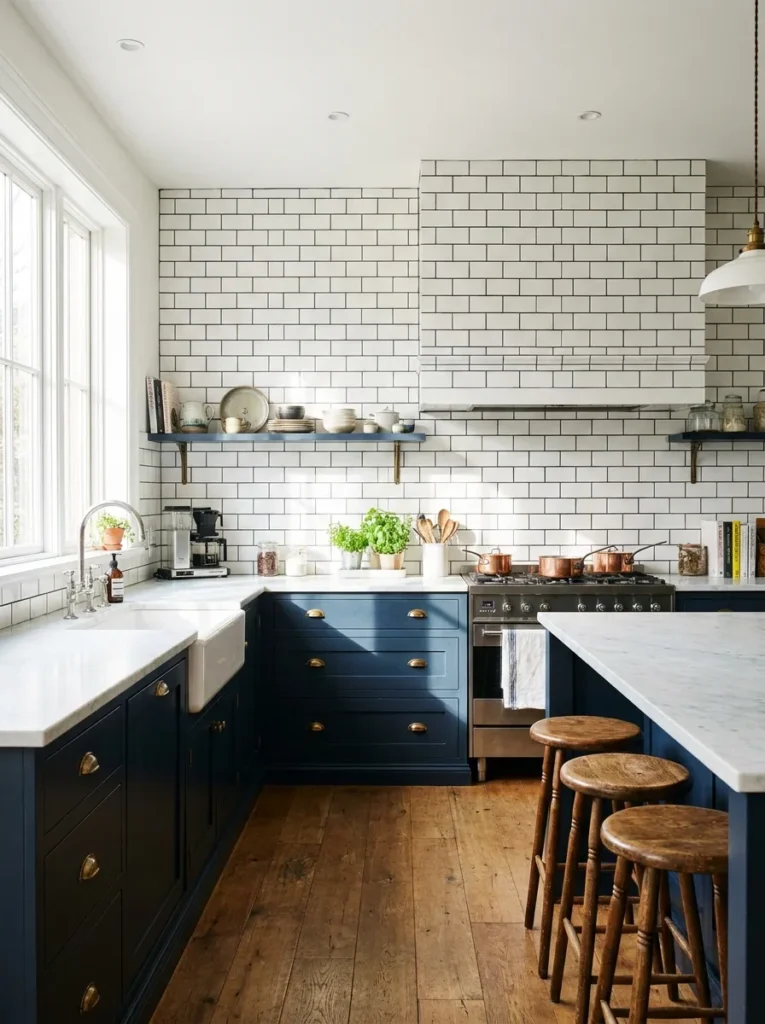
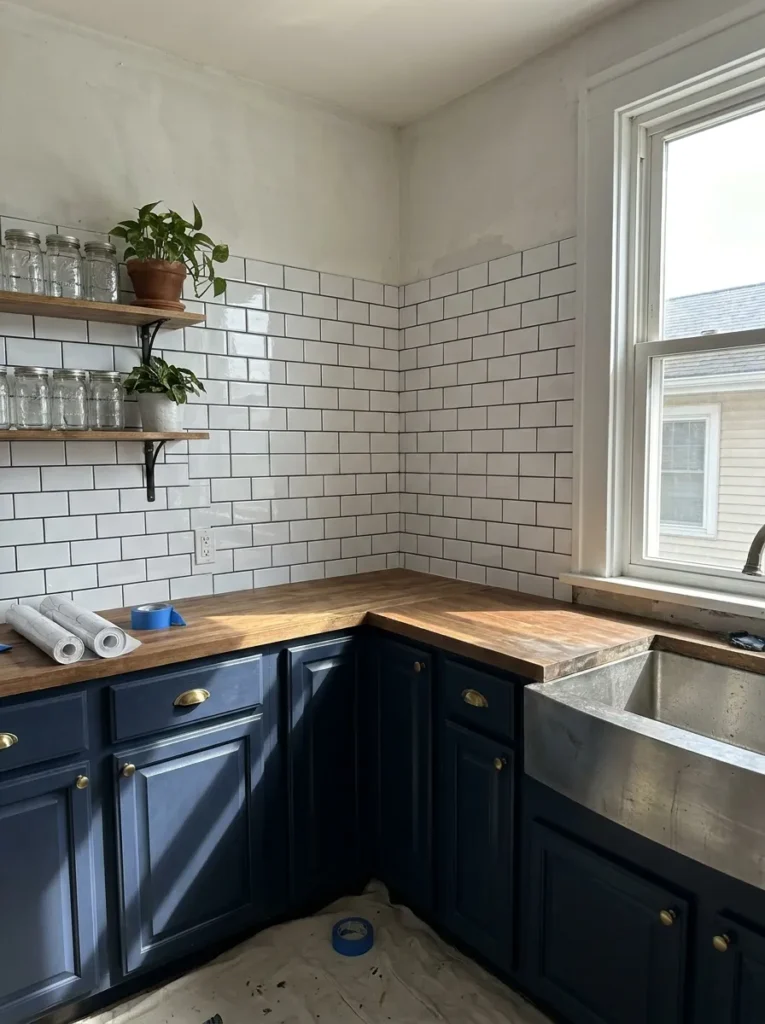
For a timeless look that guarantees brightness, pair crisp light tile with your dark cabinets. Install classic white subway tiles with dark charcoal or black grout instead of white: the dark grout lines “talk” to your dark cabinets, bridging the bright wall and the moody wood. Sharp tailored contrast that stays incredibly bright while honoring a dramatic palette.
Choosing Grout Color
Grout shapes the finished look more than most people expect. White grout: clean, seamless, makes walls feel larger. Gray grout: softer transition, hides everyday dirt. Charcoal or black grout: graphic contrast that highlights individual tile shapes and pairs beautifully with dark cabinetry. Contrasting grout makes tile stand out; matching grout keeps things quiet.
2. High-Gloss Zellige Tiles
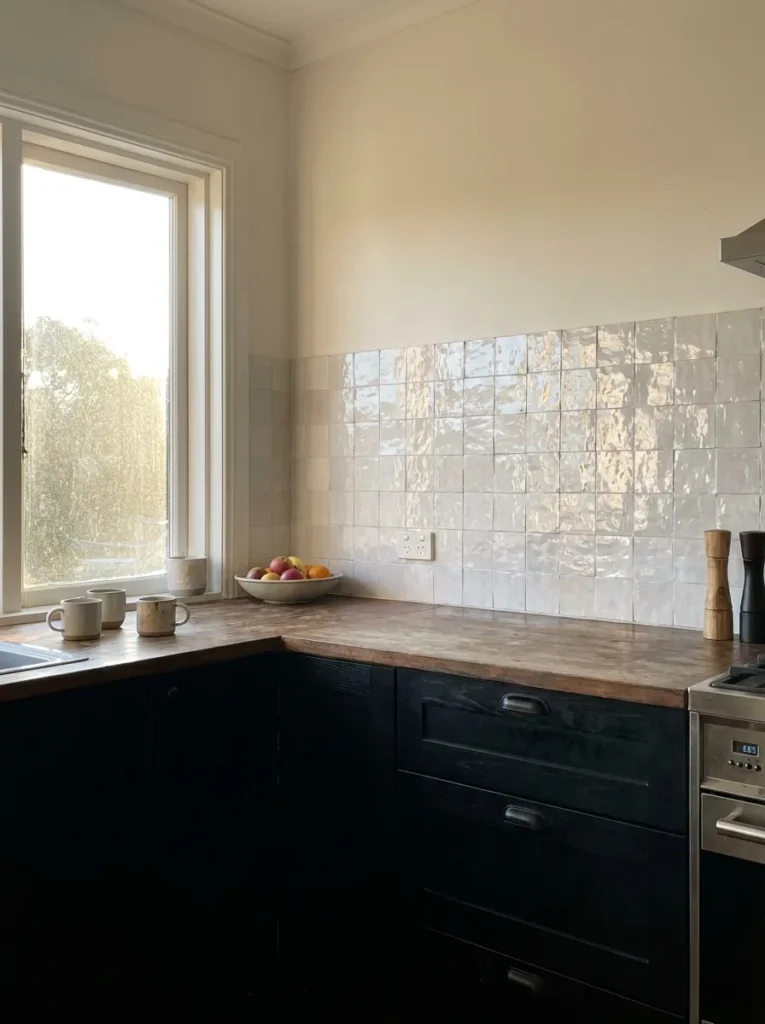
One of the most effective brightness tricks: highly reflective surfaces. Handmade clay Zellige tiles have a glossy rippled imperfect surface — in pearlescent white or soft cream against dark cabinets, the uneven glaze acts like hundreds of tiny mirrors, bouncing under-cabinet and window light around the room. A soft watery glow that eliminates cave-like shadows.
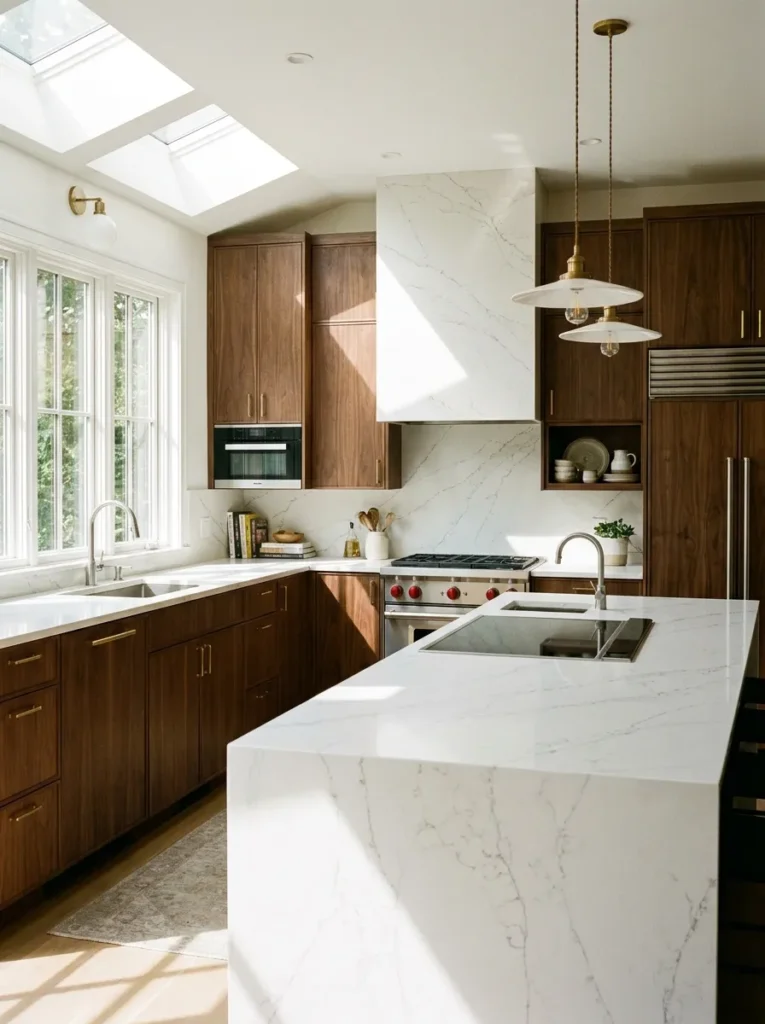
3. A Seamless Quartz Slab Up the Wall
For true luxury, skip grout lines entirely: run a bright white marble or heavily veined quartz slab continuously from the countertop straight up to the upper cabinets. This monolithic seamless look is a high-end hallmark — especially effective with dark wood, where crisp cool stone modernizes and lifts heavy walnut or espresso warmth.
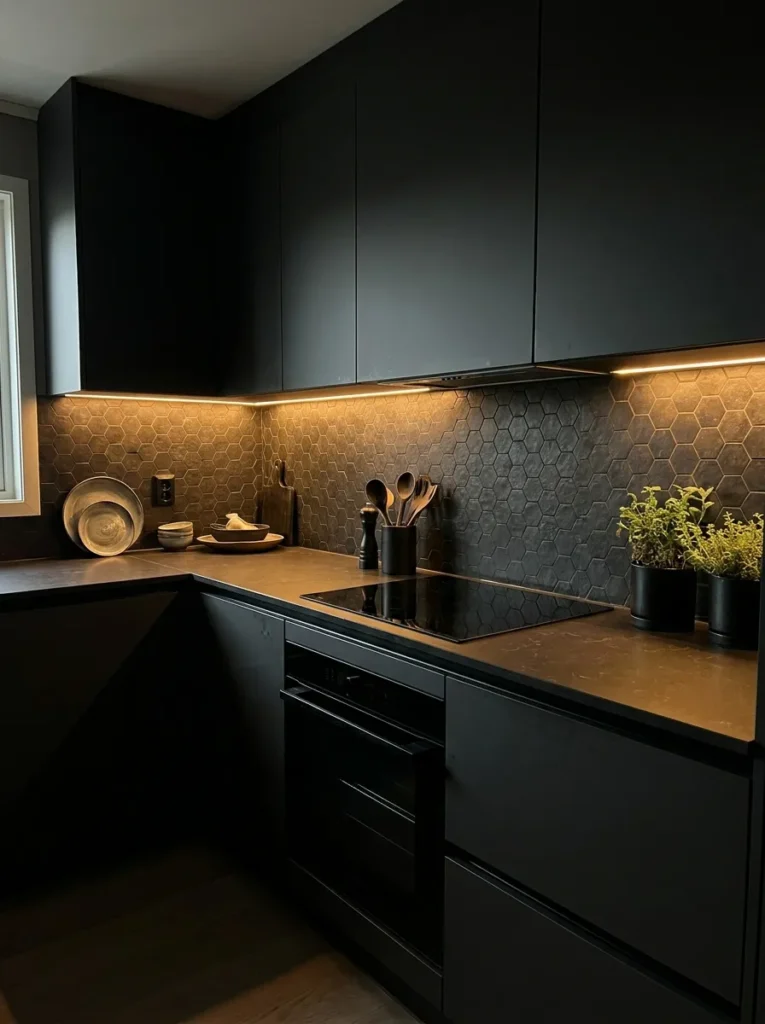
4. Tone-on-Tone With Strategic Lighting
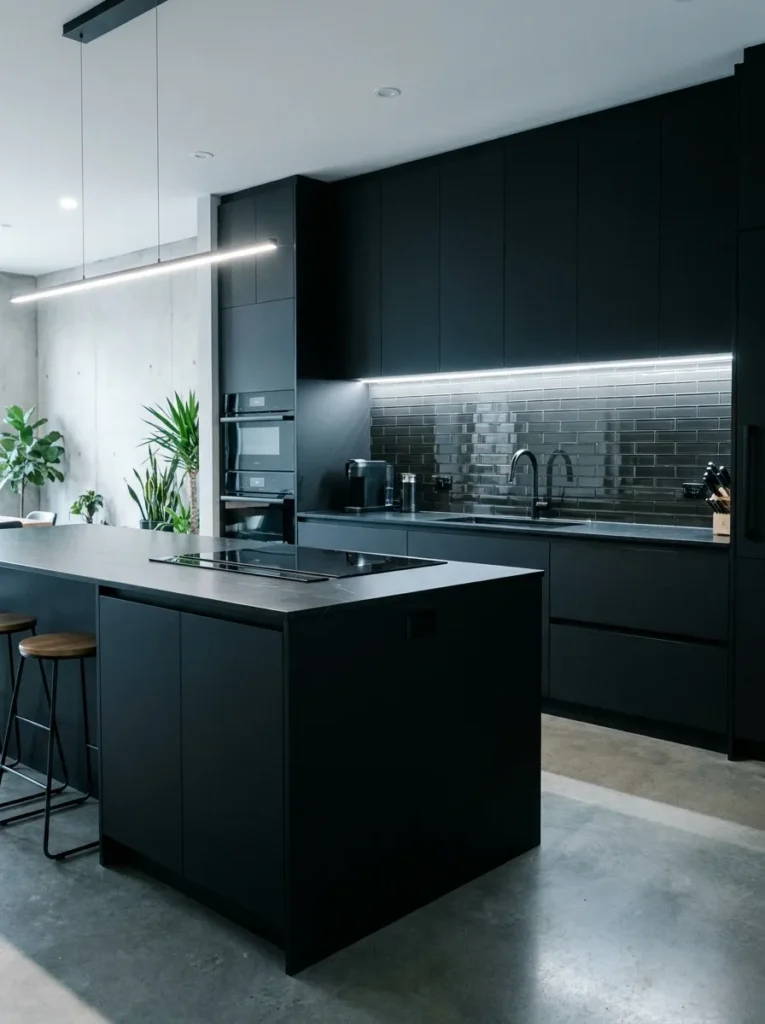
You don’t have to use white. Sometimes the best move is leaning fully into the drama: paint walls or use backsplash tile in the exact same dark color as the cabinets. To keep it from feeling oppressive, you must install bright LED under-cabinet lighting strips — intense focused task lighting washing down a dark moody wall creates an intimate sophisticated atmosphere like an upscale cocktail lounge.
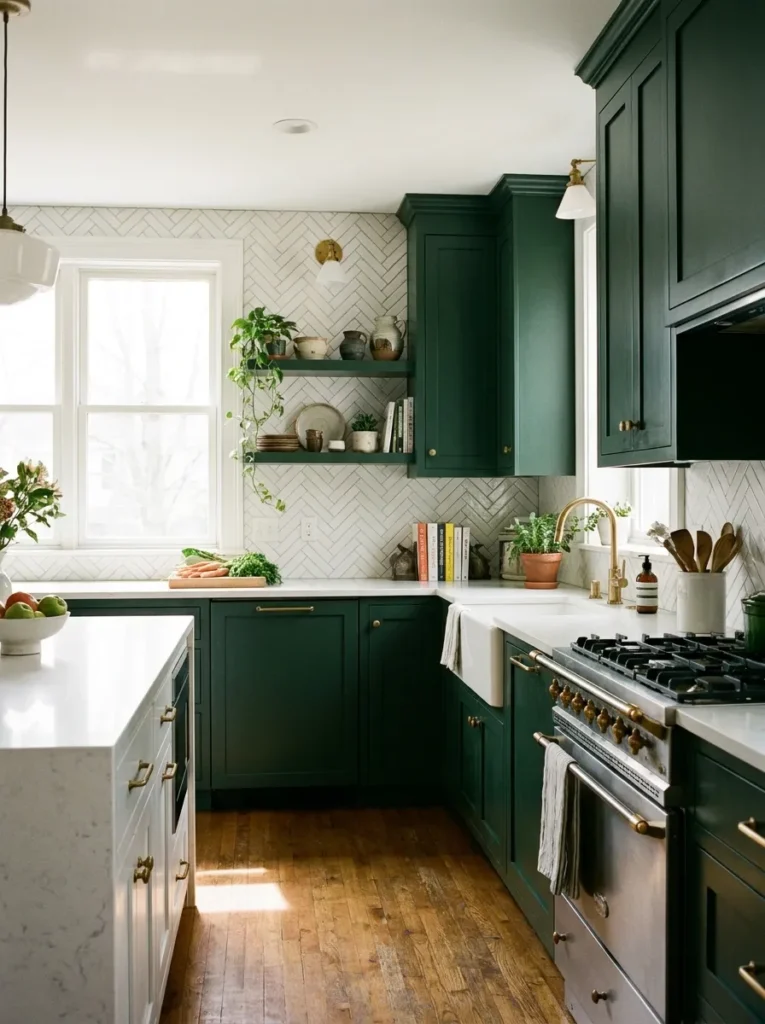
5. Geometric Patterns for Green Cabinets
Green cabinetry brings earthy grounded feeling — but needs sharp contrast to stay fresh and intentional. Pair dark green with white tile in a dynamic herringbone or chevron pattern instead of standard horizontal rectangles: crisp energetic zig-zags cut through heavy calming green, injecting life and modern movement.
Matching Countertops to Dark Cabinets
The countertop matters as much as the backsplash. Bright quartz and lightly veined marble maximize contrast and reflect natural light; warm cream stone softens espresso or walnut; dark countertops create dramatic uninterrupted flow but need extra lighting to avoid visual heaviness. Think of countertop and backsplash as one continuous surface for a cohesive design.
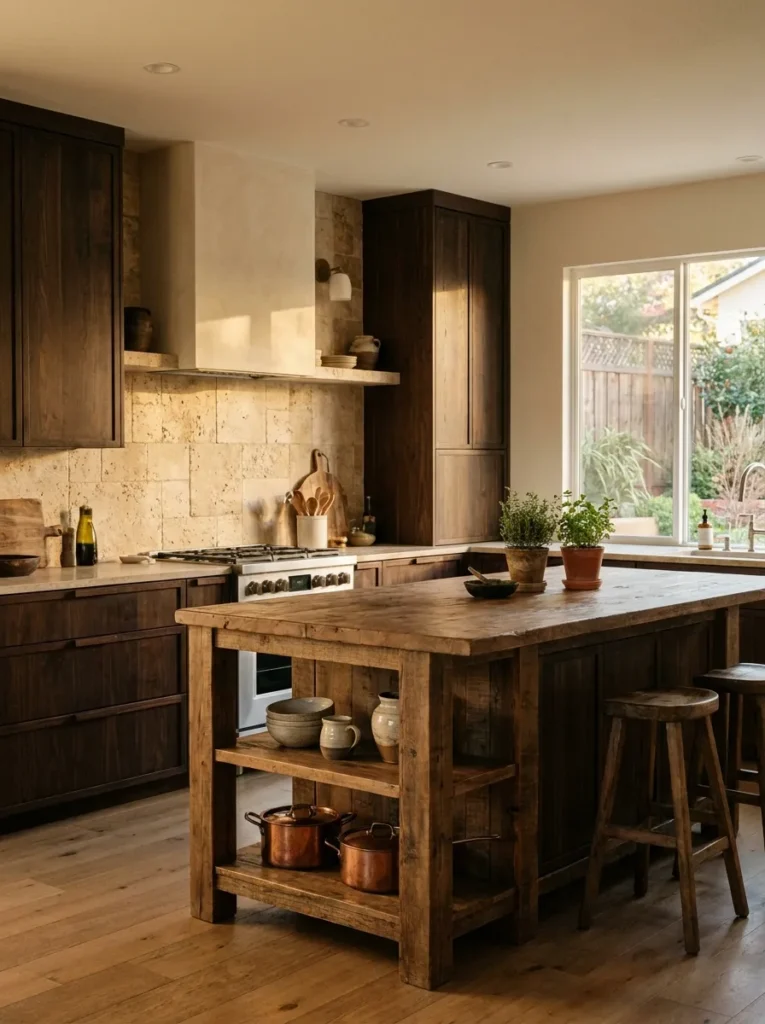
6. Warm Travertine for Espresso Wood
Dark brown cabinets can look like an early-2000s relic with the wrong materials — stark cool white tile clashes violently with warm brown tones. The fix: warm textured natural stone. Tumbled travertine, creamy limestone, or soft beige tumbled marble complement brown wood naturally, pulling the kitchen into a cozy Tuscan-inspired or organic modern aesthetic.
DIY or Professional Installation?
DIY-friendly: peel-and-stick panels, standard ceramic subway tiles, simple stacked layouts. Hire a pro for: Zellige tile, natural stone, herringbone patterns, full-height quartz slabs — clean alignment, consistent spacing, and long-term durability. The right installation method prevents material waste and costly repairs.
7. Dark Metallic or Glass for Modern Kitchens
With flat-panel black cabinets, traditional white subway tile can read too farmhouse. Go sleek and industrial: dark smoked glass subway tiles, or porcelain with dark metallic, oxidized iron, or bronze finishes. The metallic sheen reflects light subtly without introducing stark white — cohesive, edgy, high-tech.
8. The Peel-and-Stick Transformation
On a strict budget, you can still get an unbelievable before-and-after: paint cabinets dark, cover dated tile with premium high-gloss white peel-and-stick vinyl. Modern peel-and-stick is heat and water-resistant — one bright high-gloss surface against dark cabinets changes the room’s visual weight in a single afternoon.
Keeping Your Backsplash Looking New
Wipe splashes before they dry. Use pH-neutral cleaners for natural stone. Avoid abrasive scrubbers on glossy finishes. Reseal porous materials like travertine when recommended. Clean grout lines periodically. A few minutes of routine care keeps even budget materials looking fresh for years.
Which Styles Stay Timeless?
White subway tile suits traditional and modern homes alike. Natural stone develops character as it ages. Large quartz slabs create seamless luxury that rarely dates. Handmade Zellige offers handcrafted texture without bold patterns. Classic materials let you update hardware, lighting, or paint later without replacing the backsplash.
Material Cost Comparison
Peel-and-stick vinyl: $5–$12/sq ft, very easy, best for renters and weekend makeovers. Ceramic subway tile: $8–$18, moderate, timeless on a reasonable budget. Handmade Zellige: $25–$45, professional recommended, organic luxury. Quartz slab: $60–$120+, professional installation, high-end seamless. Natural travertine: $15–$35, moderate to pro, warm classic earthy. Glass tile: $20–$40, professional recommended, modern light reflection. Budget tip: spend on quality lighting first — even affordable tile looks upscale with warm under-cabinet lighting and cohesive hardware.
Shop the Kitchen
You don’t need a sledgehammer to balance light in a dark kitchen — just the right tools:
- High-gloss peel-and-stick tiles: shop peel-and-stick tiles on Amazon — the budget-friendly way to add light-reflecting bright surfaces.
- LED under-cabinet lighting strips: shop under-cabinet lighting on Amazon — mandatory for tone-on-tone dark kitchens; wash counters in warm light.
- Grout pens: shop grout pens on Amazon — dark charcoal on existing white tile modernizes instantly without demolition.
- Metallic cabinet hardware: shop metallic hardware on Amazon — unlacquered brass or brushed gold pops against navy, green, or black.
- Countertop accessories: shop countertop accessories on Amazon — warm wooden cutting boards and bright white ceramic vases break up dark surfaces.
For more backsplash ideas, explore our boho backsplash, subway tile patterns, and colorful backsplash guides.
Quick Answers
What backsplash goes best with dark cabinets?
Light-reflecting options: white subway tile (with dark grout for tailored contrast), high-gloss Zellige, seamless quartz slabs, or warm travertine for brown wood tones. The goal is contrast and light movement.
How do you brighten a kitchen with dark cabinets?
Combine a light backsplash with bright LED under-cabinet lighting, reflective surfaces (glossy tile, metallic hardware), and lighter countertops. Lighting matters as much as the tile choice.
Can I use dark tile with dark cabinets?
Yes — tone-on-tone can be stunning, but it requires strong under-cabinet lighting to avoid a cave-like feel. The focused light washing down a dark wall creates a sophisticated cocktail-lounge atmosphere.
Affiliate Disclosure: As an Amazon Associate, I earn from qualifying purchases. If you click a link and buy, I may receive a small commission at no extra cost to you. Thank you for supporting my content!