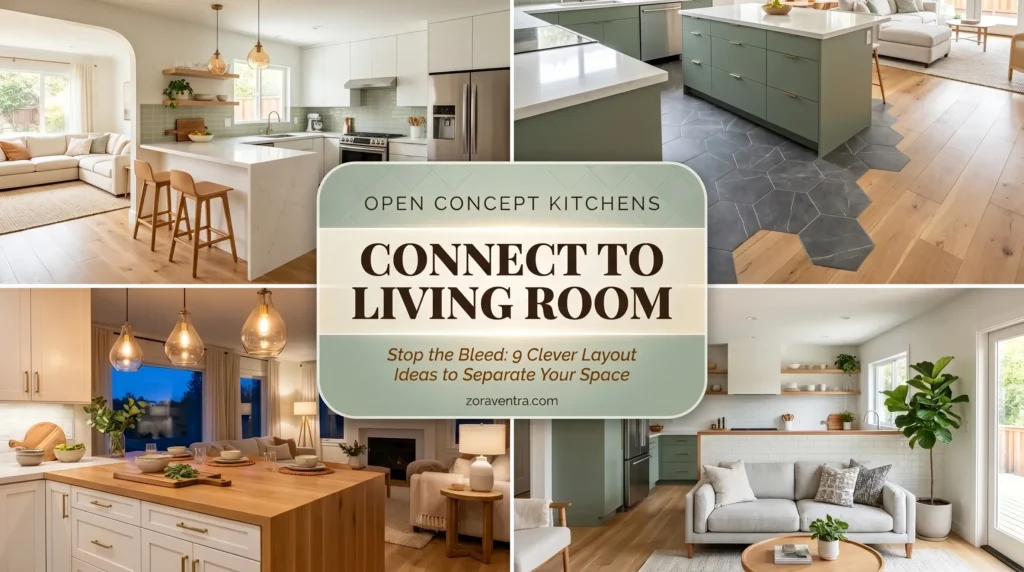
You tore down the wall (or bought the open-plan dream) — and now you’re staring at your kitchen sink from the sofa. Dinner-prep dishes in full view, the trash can way too close to the TV, and the whole main floor feels like one giant studio apartment. The kitchen is bleeding into the living room with zero boundaries, and there’s no room for a massive island to fix it. The secret is architectural zoning: you don’t need walls to build boundaries. Lighting transitions, half-walls, flooring breaks, and color blocks can give your kitchen its own defined territory while keeping the open feel. Nine ways to do it:
1. Anchor With a Peninsula
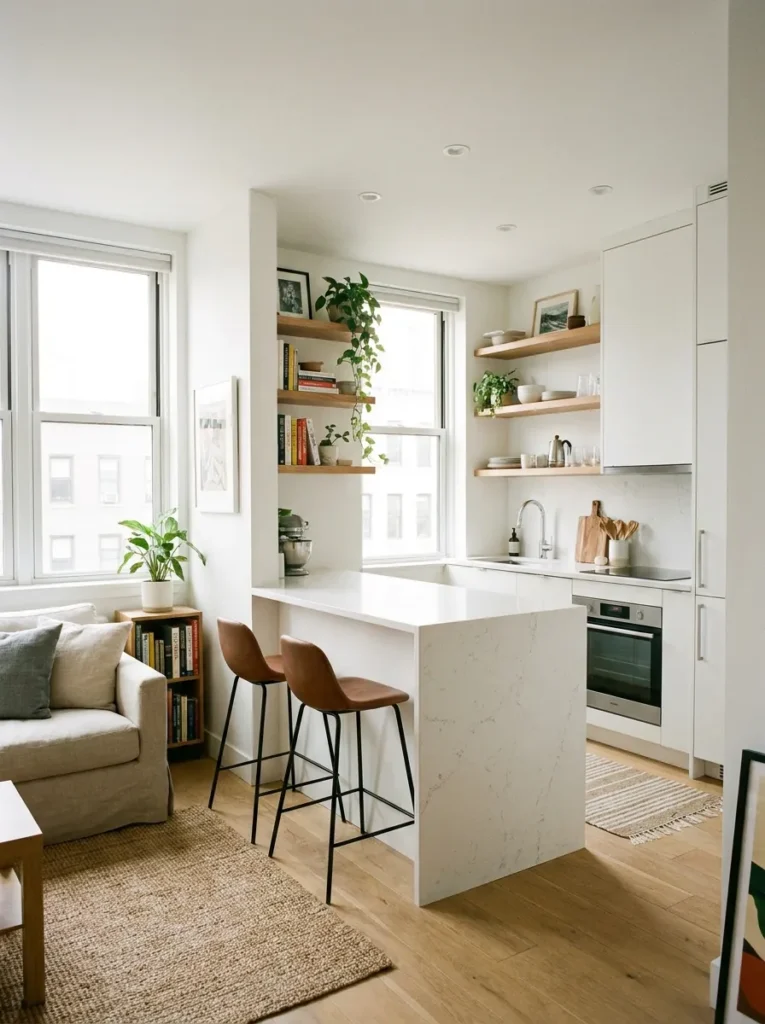
A freestanding island is a space hog in a compact footprint — tight corridors on all four sides. A peninsula attaches to an existing wall or counter line on one side and juts out like a pier. Same prep space and breakfast-bar utility as an island, but it seals the cooking zone off from the living-area walkway — guests stop wandering into your prep space.
2. Break the Flooring
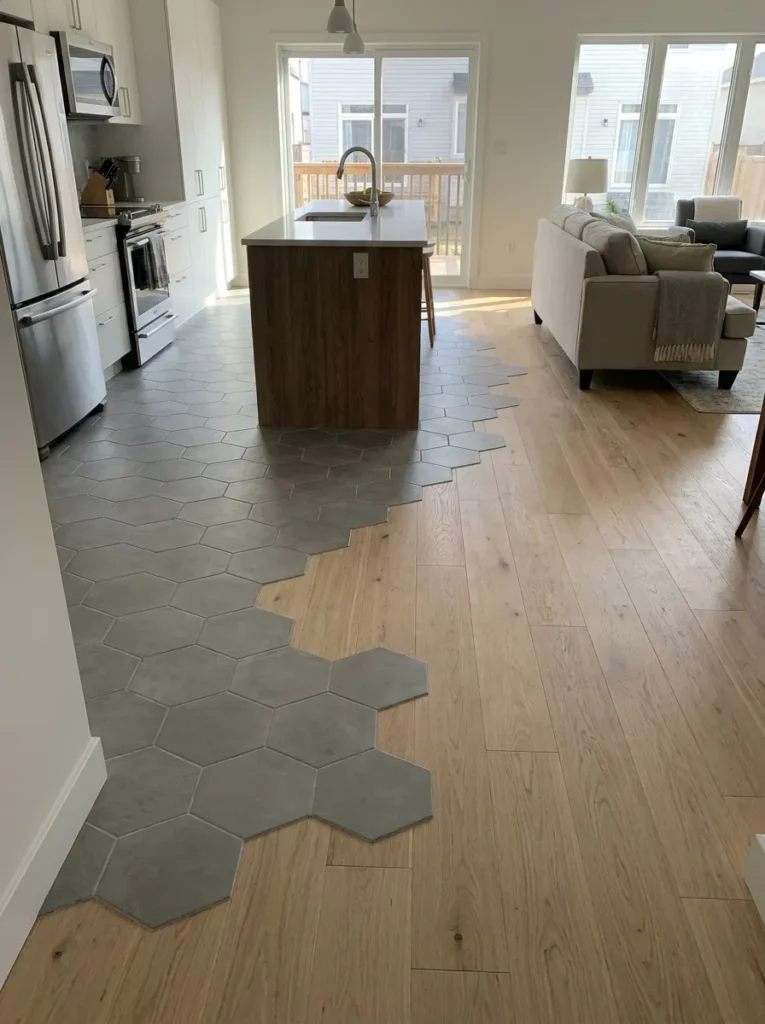
Continuous hardwood from stove to media console tricks the brain into seeing one endless room. Create a hard border: hexagonal porcelain tiles in the kitchen interlocking into the living room’s wood planks. That scalloped transition is an unmissable line telling the eye exactly where cooking ends and relaxing begins.
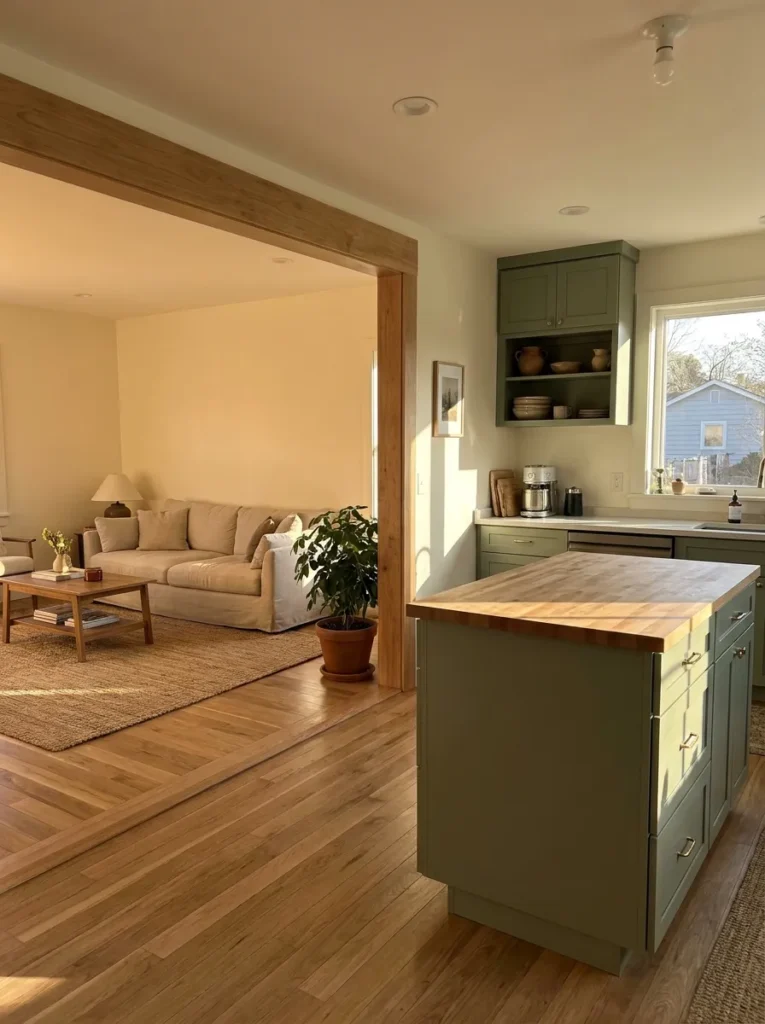
3. Color-Drench the Kitchen Zone
Same white everywhere makes the kitchen look like cabinets randomly stuck on a living room wall. Pick a boundary line and paint the whole kitchen zone a contrasting shade — sage green or deep slate against a soft ivory living room. Color-blocked architecture acts like an invisible wall, framing the kitchen as its own deliberate destination.
4. Drop the Ceiling Line
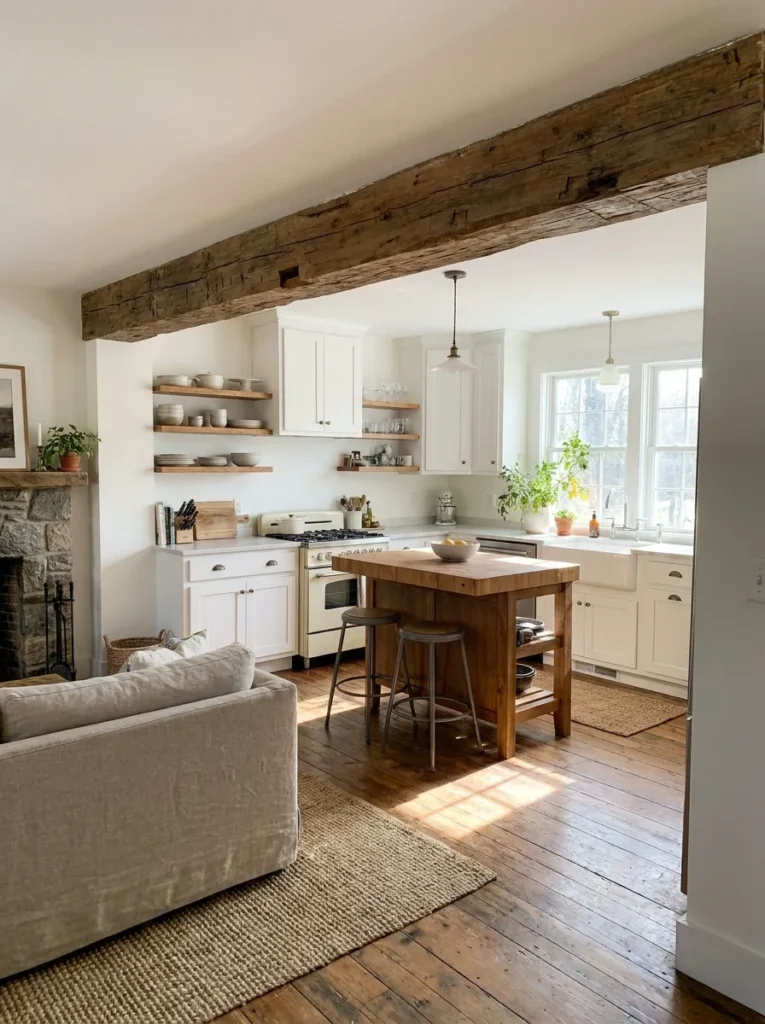
Can’t build borders with furniture or floors? Look up. Frame a shallow drywall bulkhead or a raw timber beam directly over the kitchen’s entry boundary. Dropping the ceiling just 6–12 inches over the kitchen footprint creates an overhead threshold that anchors the space — enclosed, intimate, high-end.
5. Separate the Lighting
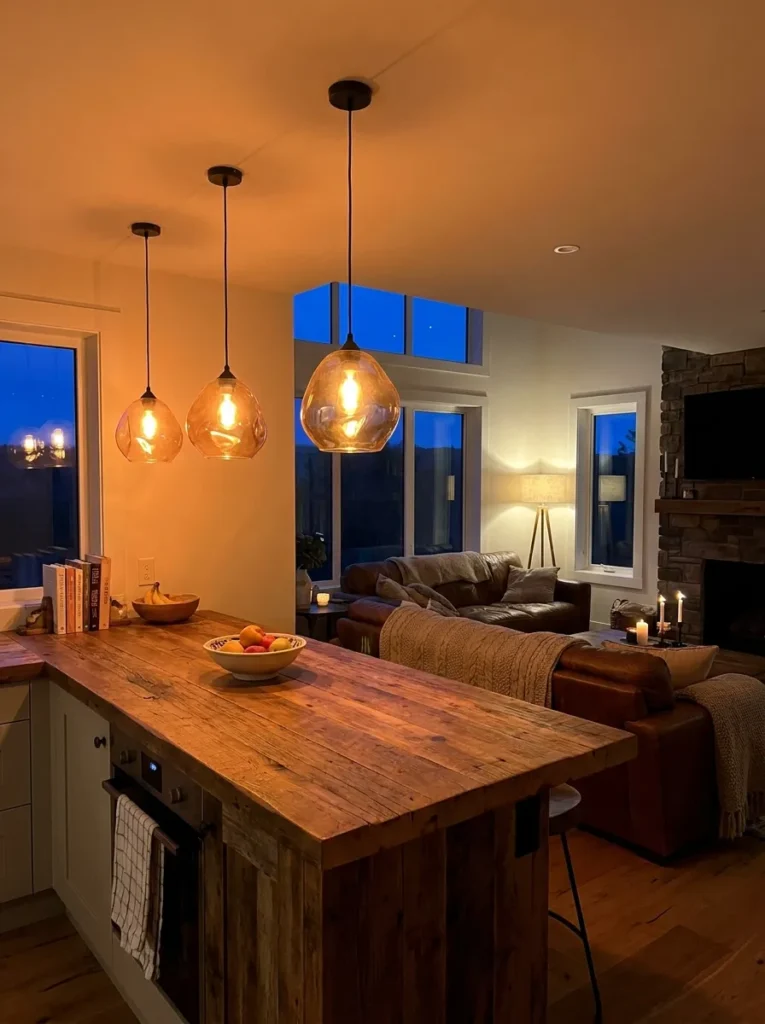
One grid of recessed lights across the whole space kills every mood — movie night with a spotlight over the sink is miserable. Hang two or three low sculptural pendants over the peninsula, then run a strict separation: evenings, kill the bright kitchen ceiling lights and keep only the pendants glowing. Zone with light: brushed gold kitchen island pendant lights (3-pack). They act like a soft light curtain — kitchen drops into shadow, living room stays cozy.
6. The Pony-Wall Mess Shield
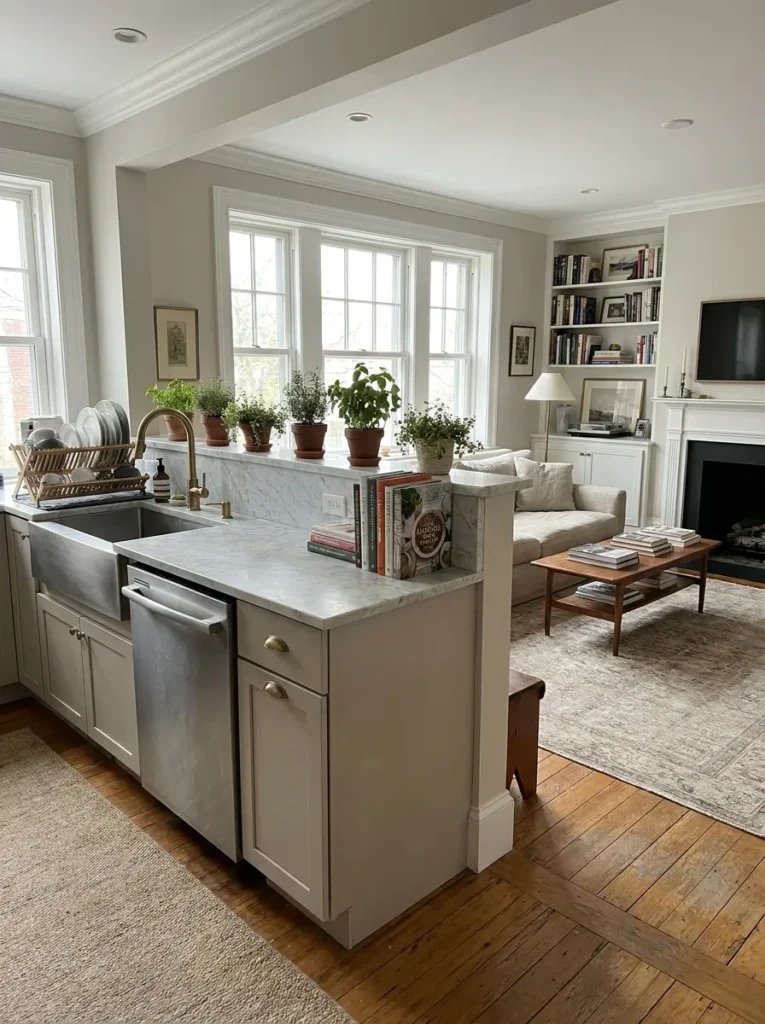
An open counter puts every stray plate and sponge on display from your armchair. Don’t make the peninsula flat — build a 42-inch pony wall along the back of the base cabinets (standard counter is 36) topped with a narrow ledge. Those extra 6 inches block the sightline of active cooking mess from anyone on the sofa.
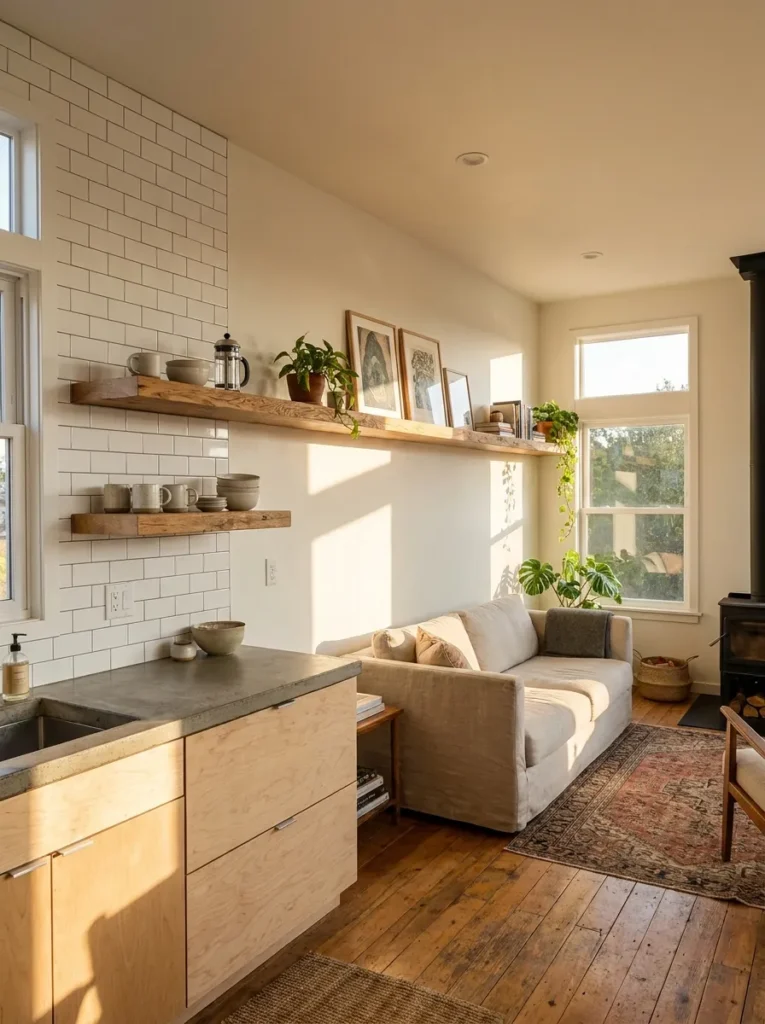
7. One Shelf That Bridges Both Zones
Zoning without harmony feels like two rooms at war. Run one long floating timber shelf across the kitchen wall and extend it past the boundary into the living room. Kitchen side: coffee mugs and spice jars. Living room side: framed photos, art, a trailing plant. One visual thread unifying the whole floor.
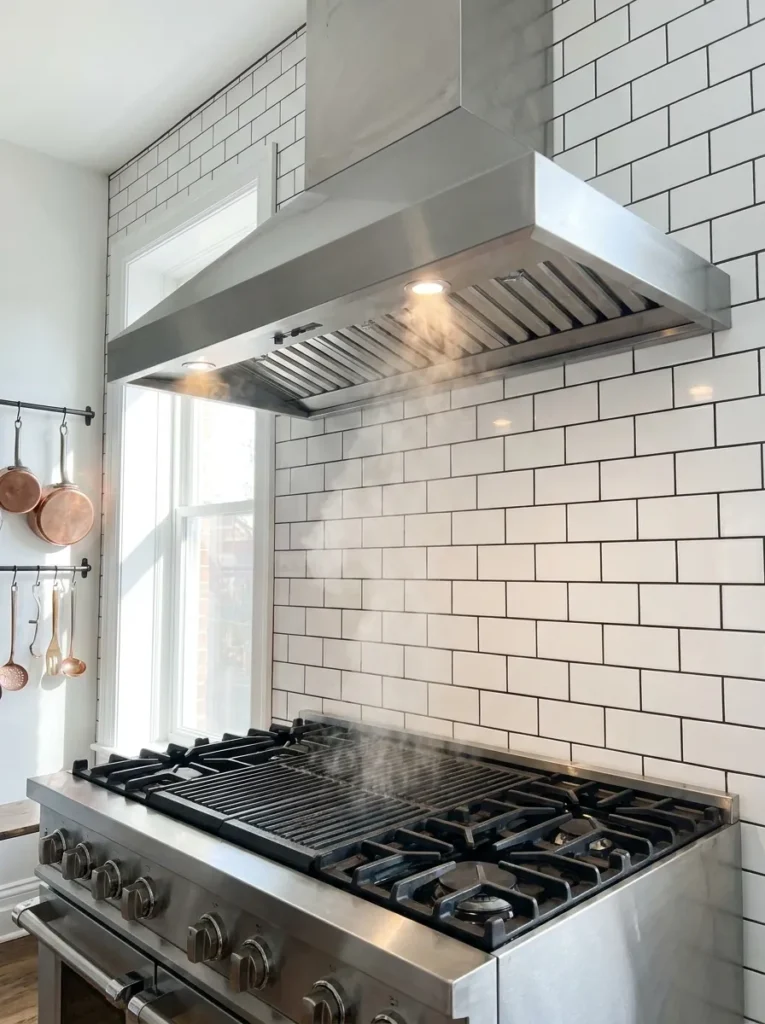
8. Vent Like You Mean It
No walls means cooking smells travel straight into your couch cushions. A weak recirculating microwave hood won’t cut it. Invest $300–$500 in a high-CFM ducted range hood that vents fully outside — not back into the room. Kill the smells: low-profile ducted range hood. It pulls air, steam, and odors out before they ever reach your living room fabrics.
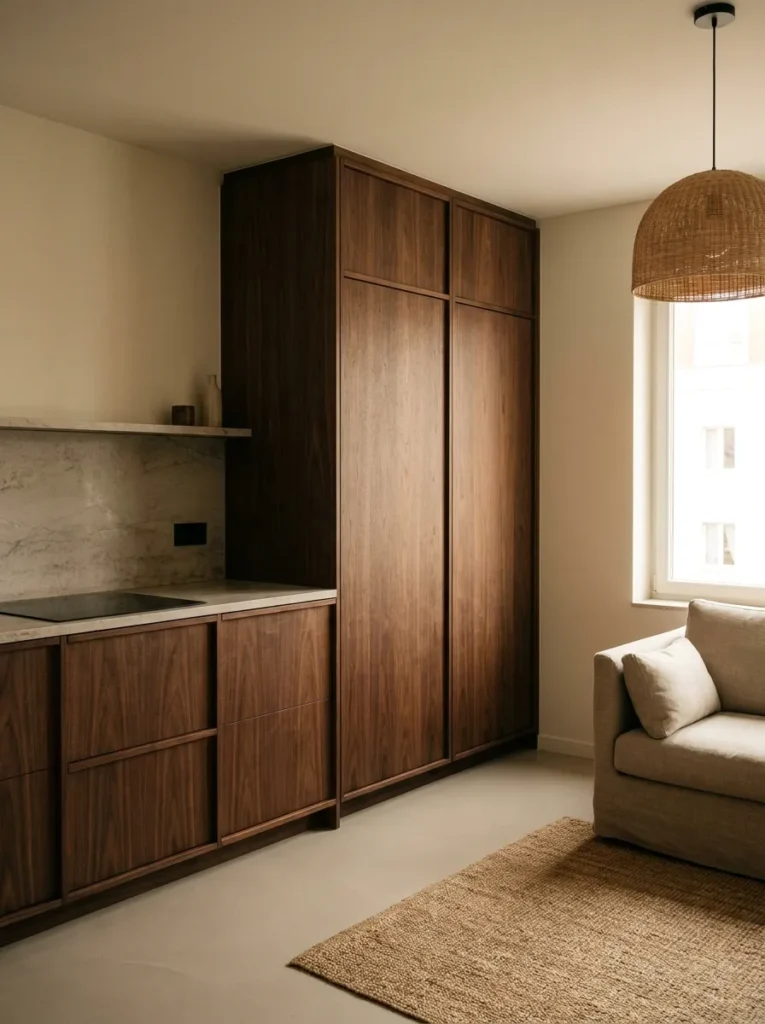
9. Hide Appliances Facing the Sofa
Appliances on the living-room-facing edge need to disappear. Build a pocket-door appliance garage into the outer edge: microwave, coffee maker, toaster inside. Doors slide open for breakfast, closed after — presenting a clean, furniture-like cabinet face to the living room all evening.
Start With One Boundary
Pick the project that bugs you most — the sightline, the smells, the lighting — and fix that first. One intentional boundary changes how the whole floor feels. More kitchen planning: our small kitchen lighting guide and L-shaped kitchen layouts.
Quick Answers
How do I separate my kitchen from my living room without a wall?
Peninsulas, flooring transitions, color-blocked paint zones, dropped ceiling beams, and separated lighting all create boundaries without walls. Pick the cues that fit your space and budget.
How do I stop cooking smells in an open plan kitchen?
A high-CFM ducted range hood vented outside — recirculating hoods can’t handle open spaces. It’s the single best investment for open-plan cooking.
Can I have an open concept kitchen in a small apartment?
Yes — use a peninsula instead of an island, zone with lighting and color, and hide clutter behind pony walls and appliance garages. Boundaries matter more than square footage.
Affiliate Disclosure: As an Amazon Associate, I earn from qualifying purchases. If you click a link and buy, I may receive a small commission at no extra cost to you. Thank you for supporting my content!